Perbandingan
Perbandingan
/
10 Minutes
/
10 Minutes
12/24/25, 4:24 PM
Diperbarui
Diperbarui
Diperbarui
Remote work didn’t just change how teams collaborate: it transformed how game testing gets done.
Today’s QA teams are global, developers work across time zones, and playtests happen far beyond a single studio. That makes screen sharing no longer optional, but essential. The challenge is that most remote tools weren’t built for real gameplay. They lag, drop frames, and blur the details QA teams rely on.
DeskIn is different. It’s engineered for high-FPS visuals, ultra-low latency, and accurate gameplay feedback, making it a modern screen-sharing solution built specifically for remote game testing and remote gameplay.
Let’s break down why DeskIn is quickly becoming the best screen-sharing tool for game developers, and why tools like AnyDesk, TeamViewer, and even Parsec fall short for serious QA work.
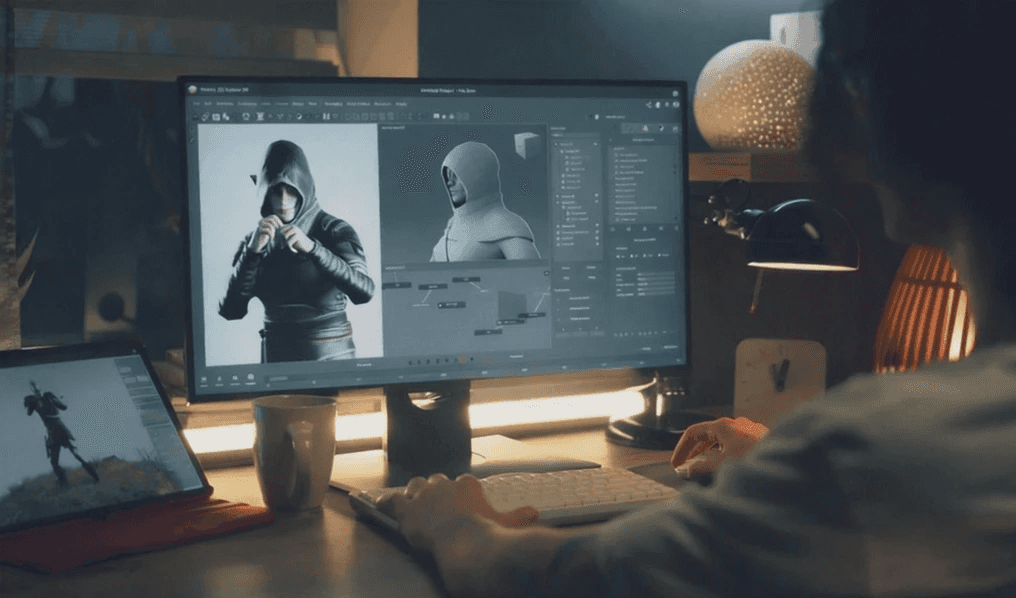
Remote screen sharing has moved from a "nice-to-have" to a critical, indispensable tool in modern game Quality Assurance (QA). Its adoption is driven by fundamental shifts in how games are developed, tested, and collaborated on.
Here’s a breakdown of why it's now essential:
Real-time bug reproduction
QA shares live gameplay while developers observe inputs and system behavior, allowing issues to be reproduced and fixed immediately: no back-and-forth recordings required.
VFX and visual review
Teams review lighting, shaders, and effects with crisp color accuracy during screen sharing for game testing, without compression hiding defects.
Remote prototype playtesting
Testers play early builds remotely, enabling fast feedback without large downloads or complex setup using remote game testing software.
Cross-play testing (mobile & PC)
Teams can test mobile and PC gameplay side by side, mirroring mobile screens to desktop while validating controls, UI behavior, and performance across platforms, an essential use case for remote QA tools.
Animation timing review
Animation teams benefit from high-FPS streaming to review movement and timing frame by frame. Subtle issues in transitions, hit reactions, or camera motion are easier to spot when playback is smooth and accurate.
Multiplayer latency testing
QA can conduct latency and synchronization tests while developers watch live sessions. This helps teams identify network-related issues faster using effective remote dev tools.
Secure external QA access
External QA partners can securely access builds and testing environments through DeskIn, making collaboration smoother while keeping pre-release content protected.

Today’s game testing workflows rely on tools that go far beyond simple screen viewing solutions like Zoom. Modern remote platforms such as DeskIn, AnyDesk, TeamViewer, and Parsec introduce capabilities specifically designed to support game QA.
Choosing the right tool comes down to which features best support real-time testing and collaboration, including:
High frame rate and low latency — critical for spotting fast-paced visual bugs and timing-sensitive issues.
Remote input control — allows developers to take over instantly and test hypotheses without lengthy explanations.
Built-in file transfer — enables quick delivery of new builds, patches, or configuration files.
Real-time screen mirroring — makes it easy to share bug reproduction steps for immediate analysis.
Audio calls and whiteboard tools — support clear communication and visual guidance without relying on third-party apps.
Together, these features transform remote sessions into efficient, collaborative QA environments, bringing teams closer to the feel of in-studio testing.
Choosing the right screen sharing tool can make the difference between a lengthy, ambiguous bug report and a swift, precise fix.
For Game QA, the ideal solution must go beyond basic screen viewing; it needs to deliver high visual fidelity, ultra-low latency, cross-platform compatibility, and interactive control to keep up with the real-time, detail-sensitive nature of game testing.
Below, we break down what to look for and compare top contenders shaping how modern game teams test.
DeskIn is designed around real game testing workflows, not just office tasks. Its features focus on what QA teams and developers actually need: low latency, high FPS, visual accuracy, and smooth collaboration.
Ultra-Low Latency for Accurate Gameplay
High-FPS Streaming: Up to 2K240FPS & 4K60FPS
Screen Mirroring, Sharing, and Extension for Flexible Testing
DeskIn screen extension between desktop and laptop supports multiple operating systems
Color Accuracy & Crisp Visuals
DeskIn supports 4:4:4 true color mode, preserves visual clarity and color accuracy, which is critical for inspecting textures, lighting, shaders, and VFX. Multi-Device, Cross-System Testing
Modern studios work across platforms.
DeskIn supports Windows, macOS, Chromebook, iOS, and Android, enabling seamless cross-system testing.
Remote Mobile Game Testing (Unique Advantage)
Mobile screens can be mirrored and accessed remotely for iOS and Android testing.
Remote File Transfer for Builds + Logs
Built-in file transfer speeds of up to 12MB/s, allowing teams to quickly share builds, crash logs, and save files during QA sessions.
External Controller & Peripheral Support (Xbox and More)
DeskIn supports external device adaptation, including Xbox controllers and other common game peripherals, allowing QA teams to test real input behavior and control mapping during game testing.
Remote Terminal Access for Faster Debugging
Developers and QA can use command-line tools remotely without interrupting gameplay, making it easier to pull logs, run scripts, and validate fixes in real time during game testing.
Stable Performance Under Heavy Load
Powered by 200+ global nodes and smart network navigation, DeskIn maintains smooth, reliable performance even during GPU-intensive scenes, multiplayer testing, or large-scale playtests.
Whether you’re reproducing a graphical glitch, debugging a physics bug, or collaborating across continents, DeskIn is the best tool for turning remote QA into a seamless extension of the development floor. Try DeskIn today and experience high-FPS streaming, low latency, and crystal-clear visuals.
AnyDesk is primarily designed for IT support and remote troubleshooting, which limits its effectiveness for screen sharing for game testing.
Cross-platform compatibility: Supports Windows, macOS, Linux (Ubuntu, Debian, RHEL, SUSE, Mint), Android, iOS/iPadOS, plus specialized platforms like Raspberry Pi and ChromeOS.
Image quality & FPS: Supports up to 60 FPS, which is often insufficient for reviewing fast animations, camera motion, or combat flow.
Latency: Acceptable for support tasks (typically around 80–120ms), but inconsistent for timing-sensitive gameplay such as combat, physics interactions, or input validation.
Network stability: Generally stable for light workloads, but performance degrades under GPU-heavy scenes.
External device adaptation: Does not support game controllers, limiting accurate input and control testing.
Interactive features: Basic remote control; lacks advanced collaboration features tailored for QA.
File transfer speed: Supported, but slower and less integrated into rapid QA iteration cycles.
Recommended Read:
Why Should You Choose DeskIn Remote Desktop Instead Of Anydesk?
TeamViewer is a strong enterprise remote access tool, but its business-first design creates friction for real-time game QA.
Cross-platform compatibility: Supports Windows, macOS, Linux (including Ubuntu, Debian, Raspberry Pi), Android, iOS, and iPadOS.
Image quality & FPS: Resolution is auto-adjusted based on network conditions, which can reduce clarity during fast gameplay or visual reviews.
Latency: Higher baseline latency, which becomes obvious during fast-paced or competitive gameplay testing.
Network stability: Stable for meetings and management tasks, but less reliable during long playtests or open-world stress testing.
External device adaptation: Does not support game controllers, limiting realism for gameplay input testing.
Interactive features: Strong for meetings and presentations, but lacks QA-focused interaction like seamless gameplay takeover.
File transfer speed: Supported at low speed, with a single file size limited to under 4GB, which can be restrictive for large builds.
Recommended Read:
TeamViewer Alternatives for People Who Just Want Something Simple
Parsec comes closer to gaming needs, but still has gaps for structured QA and dev pipelines.
Cross-platform compatibility: Strong on Windows and macOS; mobile and broader cross-system workflows are more limited.
Image quality & FPS: Capable of high FPS (Max at 4K60FPS) streaming, but visual quality and color fidelity depend heavily on manual configuration.
Latency: Low latency (50-80 ms) when well-tuned, but performance varies based on network setup and user expertise.
Network stability: Performs well in controlled environments, but requires tuning for consistent results across teams.
External device adaptation: Supports controllers, but setup can vary and may require additional configuration.
Interactive features: Focused on gameplay streaming rather than full QA collaboration (logs, builds, multi-device testing).
File transfer speed: Does not support built-in file transfer, requiring third-party tools for builds and logs.
Recommended Read:
Why DeskIn is the Best Parsec Alternative for Gamers
Individually, these tools work. But for teams that need reliable, accurate, and efficient screen sharing for game testing, these gaps add friction fast.
If your QA team needs accuracy, speed, and stability, not just remote access, DeskIn is the upgrade that makes the difference.
Getting started with DeskIn for game testing takes just a few minutes: no complex setup or technical configuration required.
Install DeskIn on both devices
Download and install DeskIn on the test machine and the device used by QA or developers.
Log in on both devices
Sign in to your DeskIn account on both devices
Start a secure remote session
Select the test device, click connect, and enter the password to begin a secure, low-latency session.
Use screen sharing during testing
Click the screen mgt in the left toolbar, select 'Mirror My Screen' feature.
Can I test fast-paced or competitive games remotely?
Yes. DeskIn’s ultra-low latency and high-FPS streaming allow accurate testing of FPS, fighting games, and other timing-sensitive gameplay.
Is screen sharing reliable for VFX, rendering, or art QA?
Yes. DeskIn supports 4:4:4 true color mode, ensures color accuracy and sharp visuals, making it suitable for reviewing textures, lighting, shaders, and effects without compression blur.
Can I use DeskIn to test mobile games remotely?
Yes. DeskIn supports wireless screen mirroring for iOS and Android, enabling mobile game testing without cables or complex setup.
Does DeskIn support file transfers for build sharing?
Yes. DeskIn includes built-in file transfer up to 12MB/s for sharing builds, logs, and save files during QA sessions.
Is DeskIn secure enough for pre-release testing?
Yes, DeskIn uses AES-256 encryption (bank-level security) to protect remote sessions and file transfers for confidential, pre-release workflows.
Traditional remote desktop tools were built for meetings, support, and office workflows: not for real game testing. When QA teams rely on tools that lag, drop frames, or blur visuals, critical gameplay issues slip through, and feedback loses accuracy.
DeskIn changes that. With gaming-grade performance, ultra-low latency, high-FPS screen sharing, and flexible cross-device testing, it gives QA and development teams a clear, responsive view of gameplay—no matter where they’re working from. From PC and mobile testing to art review and multiplayer validation, DeskIn supports modern remote game testing without compromise.
Start free with DeskIn today and see how smooth, accurate, and effortless remote game testing can be.
Remote work didn’t just change how teams collaborate: it transformed how game testing gets done.
Today’s QA teams are global, developers work across time zones, and playtests happen far beyond a single studio. That makes screen sharing no longer optional, but essential. The challenge is that most remote tools weren’t built for real gameplay. They lag, drop frames, and blur the details QA teams rely on.
DeskIn is different. It’s engineered for high-FPS visuals, ultra-low latency, and accurate gameplay feedback, making it a modern screen-sharing solution built specifically for remote game testing and remote gameplay.
Let’s break down why DeskIn is quickly becoming the best screen-sharing tool for game developers, and why tools like AnyDesk, TeamViewer, and even Parsec fall short for serious QA work.
Remote screen sharing has moved from a "nice-to-have" to a critical, indispensable tool in modern game Quality Assurance (QA). Its adoption is driven by fundamental shifts in how games are developed, tested, and collaborated on.
Here’s a breakdown of why it's now essential:
Real-time bug reproduction
QA shares live gameplay while developers observe inputs and system behavior, allowing issues to be reproduced and fixed immediately: no back-and-forth recordings required.
VFX and visual review
Teams review lighting, shaders, and effects with crisp color accuracy during screen sharing for game testing, without compression hiding defects.
Remote prototype playtesting
Testers play early builds remotely, enabling fast feedback without large downloads or complex setup using remote game testing software.
Cross-play testing (mobile & PC)
Teams can test mobile and PC gameplay side by side, mirroring mobile screens to desktop while validating controls, UI behavior, and performance across platforms, an essential use case for remote QA tools.
Animation timing review
Animation teams benefit from high-FPS streaming to review movement and timing frame by frame. Subtle issues in transitions, hit reactions, or camera motion are easier to spot when playback is smooth and accurate.
Multiplayer latency testing
QA can conduct latency and synchronization tests while developers watch live sessions. This helps teams identify network-related issues faster using effective remote dev tools.
Secure external QA access
External QA partners can securely access builds and testing environments through DeskIn, making collaboration smoother while keeping pre-release content protected.
Today’s game testing workflows rely on tools that go far beyond simple screen viewing solutions like Zoom. Modern remote platforms such as DeskIn, AnyDesk, TeamViewer, and Parsec introduce capabilities specifically designed to support game QA.
Choosing the right tool comes down to which features best support real-time testing and collaboration, including:
High frame rate and low latency — critical for spotting fast-paced visual bugs and timing-sensitive issues.
Remote input control — allows developers to take over instantly and test hypotheses without lengthy explanations.
Built-in file transfer — enables quick delivery of new builds, patches, or configuration files.
Real-time screen mirroring — makes it easy to share bug reproduction steps for immediate analysis.
Audio calls and whiteboard tools — support clear communication and visual guidance without relying on third-party apps.
Together, these features transform remote sessions into efficient, collaborative QA environments, bringing teams closer to the feel of in-studio testing.
Choosing the right screen sharing tool can make the difference between a lengthy, ambiguous bug report and a swift, precise fix.
For Game QA, the ideal solution must go beyond basic screen viewing; it needs to deliver high visual fidelity, ultra-low latency, cross-platform compatibility, and interactive control to keep up with the real-time, detail-sensitive nature of game testing.
Below, we break down what to look for and compare top contenders shaping how modern game teams test.
DeskIn is designed around real game testing workflows, not just office tasks. Its features focus on what QA teams and developers actually need: low latency, high FPS, visual accuracy, and smooth collaboration.
Ultra-Low Latency for Accurate Gameplay
High-FPS Streaming: Up to 2K240FPS & 4K60FPS
Screen Mirroring, Sharing, and Extension for Flexible Testing
DeskIn screen extension between desktop and laptop supports multiple operating systems
Color Accuracy & Crisp Visuals
DeskIn supports 4:4:4 true color mode, preserves visual clarity and color accuracy, which is critical for inspecting textures, lighting, shaders, and VFX. Multi-Device, Cross-System Testing
Modern studios work across platforms.
DeskIn supports Windows, macOS, Chromebook, iOS, and Android, enabling seamless cross-system testing.
Remote Mobile Game Testing (Unique Advantage)
Mobile screens can be mirrored and accessed remotely for iOS and Android testing.
Remote File Transfer for Builds + Logs
Built-in file transfer speeds of up to 12MB/s, allowing teams to quickly share builds, crash logs, and save files during QA sessions.
External Controller & Peripheral Support (Xbox and More)
DeskIn supports external device adaptation, including Xbox controllers and other common game peripherals, allowing QA teams to test real input behavior and control mapping during game testing.
Remote Terminal Access for Faster Debugging
Developers and QA can use command-line tools remotely without interrupting gameplay, making it easier to pull logs, run scripts, and validate fixes in real time during game testing.
Stable Performance Under Heavy Load
Powered by 200+ global nodes and smart network navigation, DeskIn maintains smooth, reliable performance even during GPU-intensive scenes, multiplayer testing, or large-scale playtests.
Whether you’re reproducing a graphical glitch, debugging a physics bug, or collaborating across continents, DeskIn is the best tool for turning remote QA into a seamless extension of the development floor. Try DeskIn today and experience high-FPS streaming, low latency, and crystal-clear visuals.
AnyDesk is primarily designed for IT support and remote troubleshooting, which limits its effectiveness for screen sharing for game testing.
Cross-platform compatibility: Supports Windows, macOS, Linux (Ubuntu, Debian, RHEL, SUSE, Mint), Android, iOS/iPadOS, plus specialized platforms like Raspberry Pi and ChromeOS.
Image quality & FPS: Supports up to 60 FPS, which is often insufficient for reviewing fast animations, camera motion, or combat flow.
Latency: Acceptable for support tasks (typically around 80–120ms), but inconsistent for timing-sensitive gameplay such as combat, physics interactions, or input validation.
Network stability: Generally stable for light workloads, but performance degrades under GPU-heavy scenes.
External device adaptation: Does not support game controllers, limiting accurate input and control testing.
Interactive features: Basic remote control; lacks advanced collaboration features tailored for QA.
File transfer speed: Supported, but slower and less integrated into rapid QA iteration cycles.
Recommended Read:
Why Should You Choose DeskIn Remote Desktop Instead Of Anydesk?
TeamViewer is a strong enterprise remote access tool, but its business-first design creates friction for real-time game QA.
Cross-platform compatibility: Supports Windows, macOS, Linux (including Ubuntu, Debian, Raspberry Pi), Android, iOS, and iPadOS.
Image quality & FPS: Resolution is auto-adjusted based on network conditions, which can reduce clarity during fast gameplay or visual reviews.
Latency: Higher baseline latency, which becomes obvious during fast-paced or competitive gameplay testing.
Network stability: Stable for meetings and management tasks, but less reliable during long playtests or open-world stress testing.
External device adaptation: Does not support game controllers, limiting realism for gameplay input testing.
Interactive features: Strong for meetings and presentations, but lacks QA-focused interaction like seamless gameplay takeover.
File transfer speed: Supported at low speed, with a single file size limited to under 4GB, which can be restrictive for large builds.
Recommended Read:
TeamViewer Alternatives for People Who Just Want Something Simple
Parsec comes closer to gaming needs, but still has gaps for structured QA and dev pipelines.
Cross-platform compatibility: Strong on Windows and macOS; mobile and broader cross-system workflows are more limited.
Image quality & FPS: Capable of high FPS (Max at 4K60FPS) streaming, but visual quality and color fidelity depend heavily on manual configuration.
Latency: Low latency (50-80 ms) when well-tuned, but performance varies based on network setup and user expertise.
Network stability: Performs well in controlled environments, but requires tuning for consistent results across teams.
External device adaptation: Supports controllers, but setup can vary and may require additional configuration.
Interactive features: Focused on gameplay streaming rather than full QA collaboration (logs, builds, multi-device testing).
File transfer speed: Does not support built-in file transfer, requiring third-party tools for builds and logs.
Recommended Read:
Why DeskIn is the Best Parsec Alternative for Gamers
Individually, these tools work. But for teams that need reliable, accurate, and efficient screen sharing for game testing, these gaps add friction fast.
If your QA team needs accuracy, speed, and stability, not just remote access, DeskIn is the upgrade that makes the difference.
Getting started with DeskIn for game testing takes just a few minutes: no complex setup or technical configuration required.
Install DeskIn on both devices
Download and install DeskIn on the test machine and the device used by QA or developers.
Log in on both devices
Sign in to your DeskIn account on both devices
Start a secure remote session
Select the test device, click connect, and enter the password to begin a secure, low-latency session.
Use screen sharing during testing
Click the screen mgt in the left toolbar, select 'Mirror My Screen' feature.
Can I test fast-paced or competitive games remotely?
Yes. DeskIn’s ultra-low latency and high-FPS streaming allow accurate testing of FPS, fighting games, and other timing-sensitive gameplay.
Is screen sharing reliable for VFX, rendering, or art QA?
Yes. DeskIn supports 4:4:4 true color mode, ensures color accuracy and sharp visuals, making it suitable for reviewing textures, lighting, shaders, and effects without compression blur.
Can I use DeskIn to test mobile games remotely?
Yes. DeskIn supports wireless screen mirroring for iOS and Android, enabling mobile game testing without cables or complex setup.
Does DeskIn support file transfers for build sharing?
Yes. DeskIn includes built-in file transfer up to 12MB/s for sharing builds, logs, and save files during QA sessions.
Is DeskIn secure enough for pre-release testing?
Yes, DeskIn uses AES-256 encryption (bank-level security) to protect remote sessions and file transfers for confidential, pre-release workflows.
Traditional remote desktop tools were built for meetings, support, and office workflows: not for real game testing. When QA teams rely on tools that lag, drop frames, or blur visuals, critical gameplay issues slip through, and feedback loses accuracy.
DeskIn changes that. With gaming-grade performance, ultra-low latency, high-FPS screen sharing, and flexible cross-device testing, it gives QA and development teams a clear, responsive view of gameplay—no matter where they’re working from. From PC and mobile testing to art review and multiplayer validation, DeskIn supports modern remote game testing without compromise.
Start free with DeskIn today and see how smooth, accurate, and effortless remote game testing can be.

Ubah iPad Menjadi Monitor Kedua Untuk Komputer Windows Dan Mac
A second monitor can make everyday work feel much easier, especially when you are switching between research, documents, meetings, design files, or dashboards. If you already own an iPad, you may be able to use it as an extra display instead of buying another monitor.
This guide explains how to use an iPad as a second monitor for Mac with Apple Sidecar, and how Windows or cross-platform users can use DeskIn screen extension on supported paid plans.
Increase screen space so you can view more content at the same time. This helps reduce constant window switching during multitasking.
Keep each screen focused on a different task. For example, you can edit a video on one screen and keep source materials on the other, or write a paper while browsing references side by side.
Use the iPad display you already have. For students, remote workers, and light creative work, an iPad can be a convenient and cost-effective second-screen option.
Save desk space and avoid carrying another external monitor when you work from home, travel, or move between rooms.
Apple Sidecar lets compatible iPads work as an external display for compatible MacBook and iMac devices. It is a good native option if both devices support Sidecar and are signed in with the same Apple ID.
Note: To use Apple Sidecar, your Mac and iPad should use the same Apple ID, have Bluetooth and Wi-Fi turned on, and stay within close wireless range. Sidecar availability depends on Apple device and operating system compatibility.
Open the Mac System Settings >> Click "Display" in the sidebar >> Click the "+" pop up menu on the right and choose your iPad.
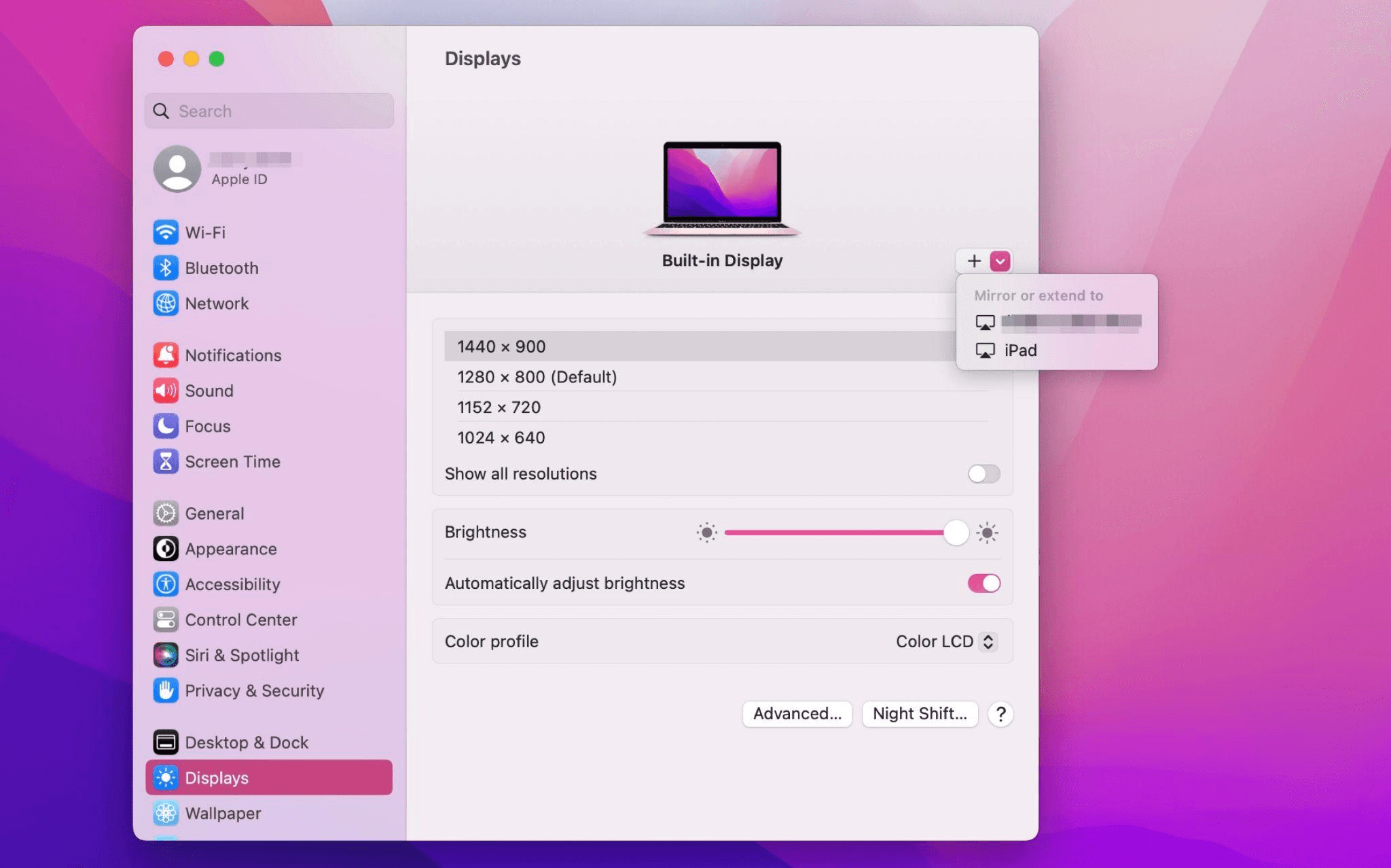
Select the iPad, change the Use as settings to "Extended Display". Check the Airplay settings on the top toolbar of the mac and set iPad as "Use As Separate Display".
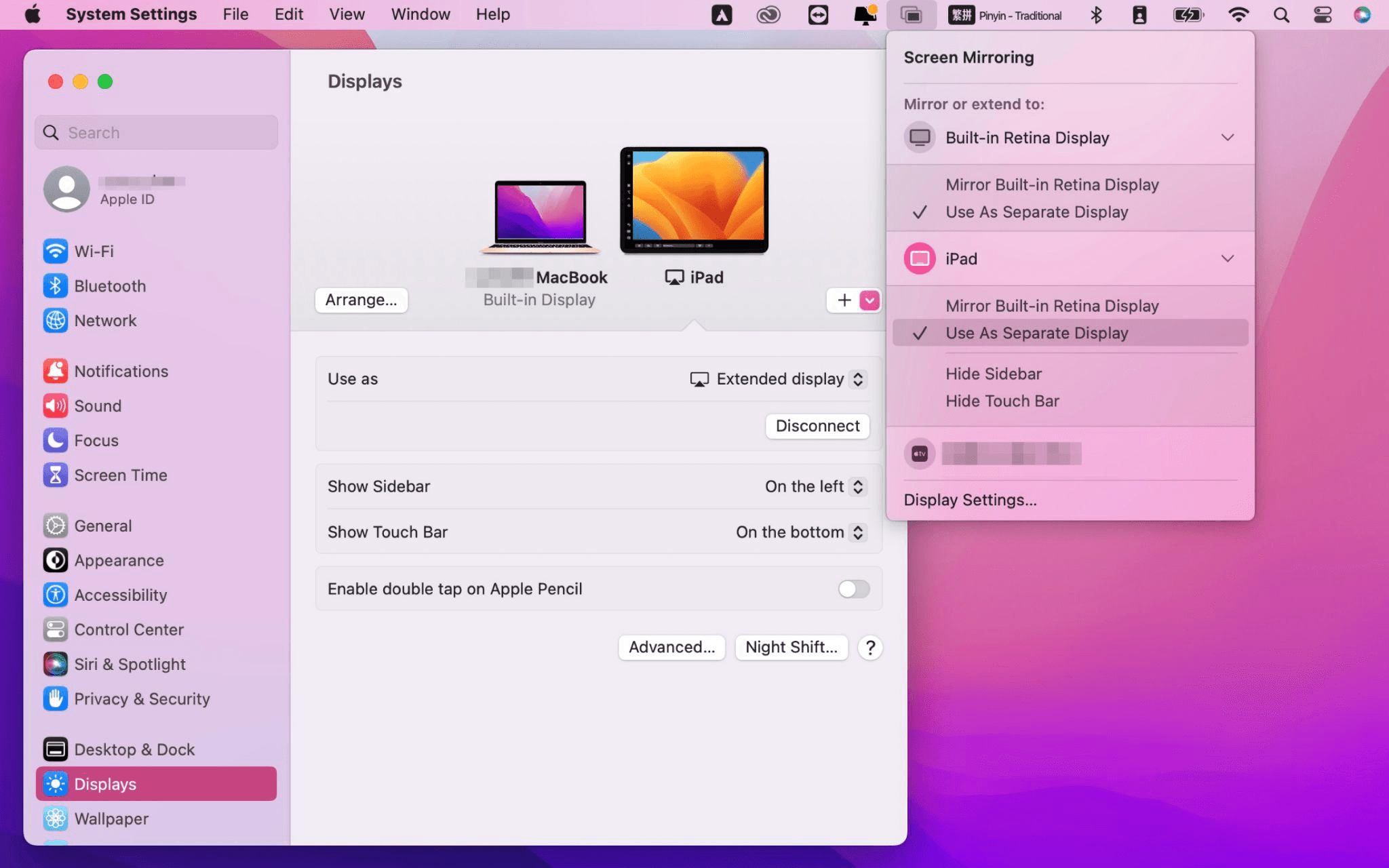
After completing the settings, your iPad will become the second display for your Mac. You can drag windows from your Mac to your iPad smoothly. You can also use the sidebar on the iPad or change the position of the sidebar on the system display settings.
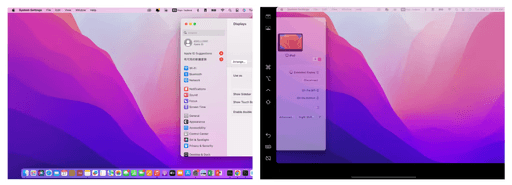
MacBook Screen (Left) and iPad Screen (Right)
Apple Sidecar only supports mac released after 2016 and iPadOS13 or newer. If you are using an old Apple device or a Windows device, you can still use DeskIn remote software to do the screen extension. It supports using iPad as a second display for Mac and Windows, and the smoothness is no worse than sidecar.
Install DeskIn on both your computer and iPad. Sign in to your DeskIn account on each device. When you log in on a new device for the first time, you may need to complete email verification to help protect your account.

To use Screen Extension, you'll need to subscribe to any Premium plan. Click here to view DeskIn plans.
Open DeskIn on your Windows or Mac computer, go to the screen management area, and choose the screen extension option. Select your iPad as the target display and start extending.
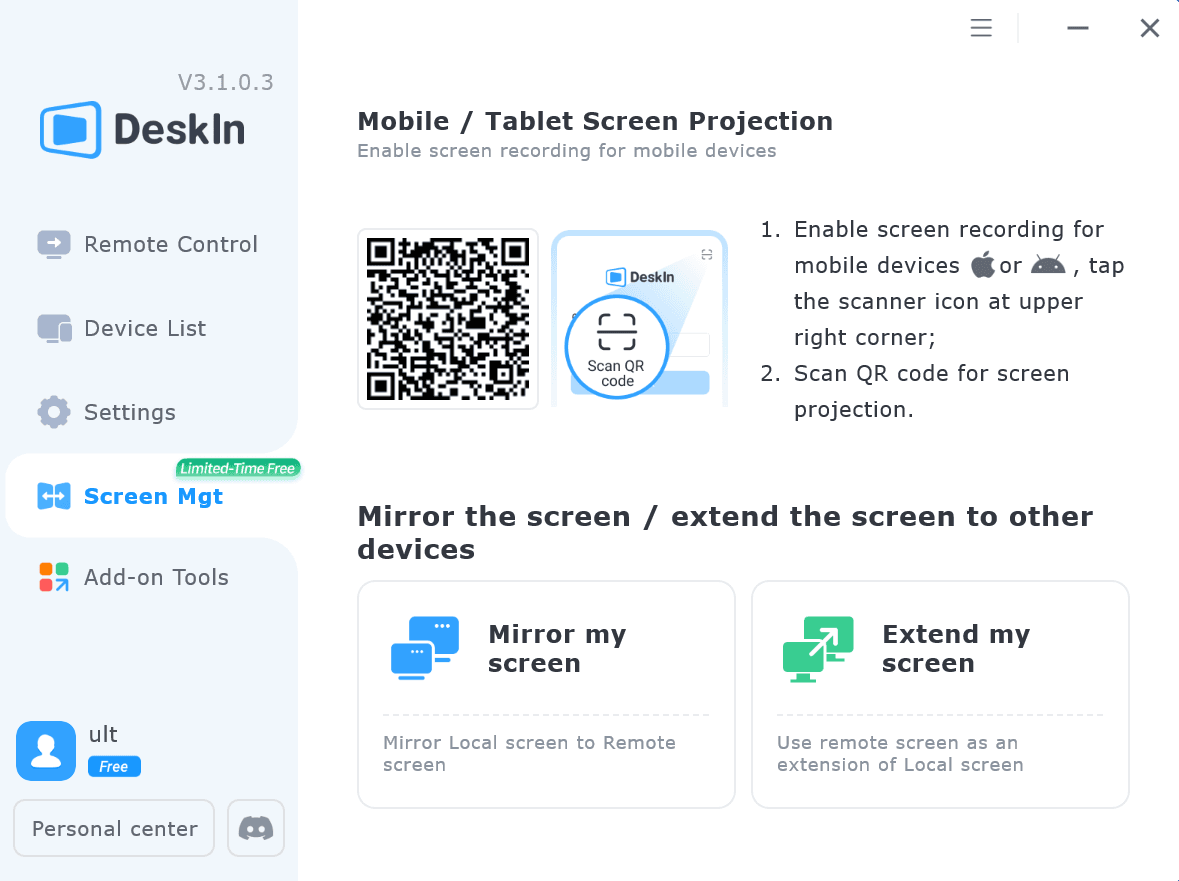
Once connected, your iPad can work as an additional display, letting you move windows between your computer and iPad for a wider workspace.
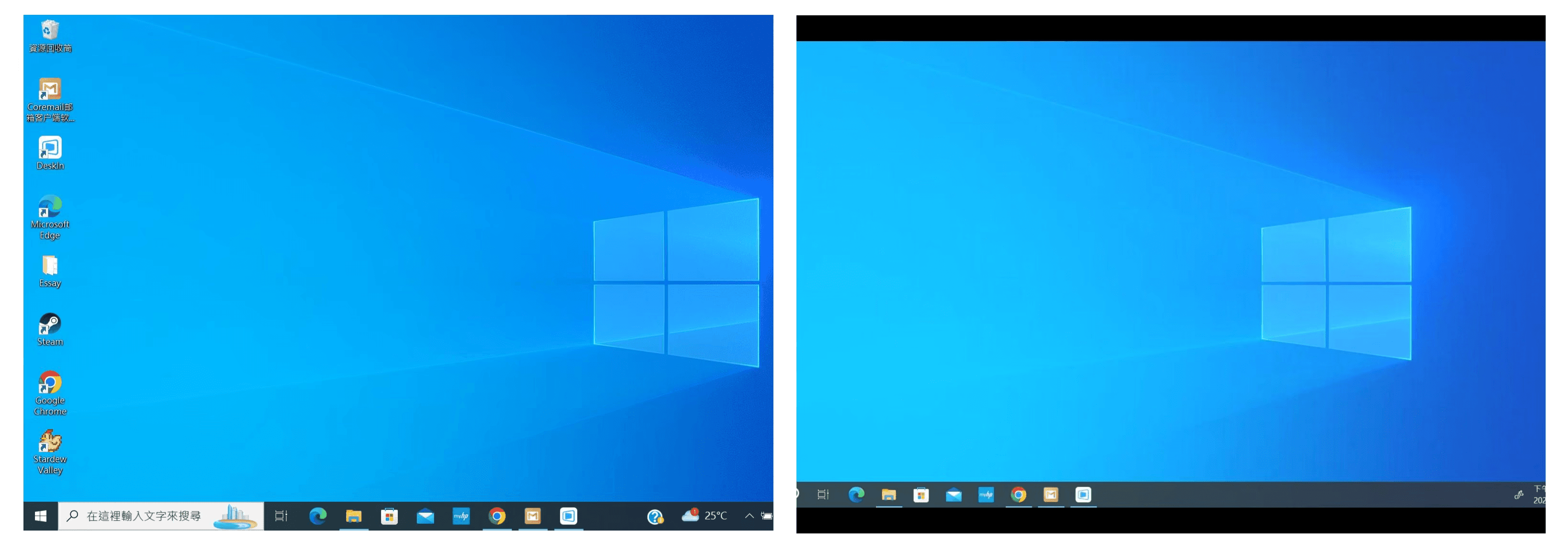
Computer Screen (Left) and iPad Screen (Right)
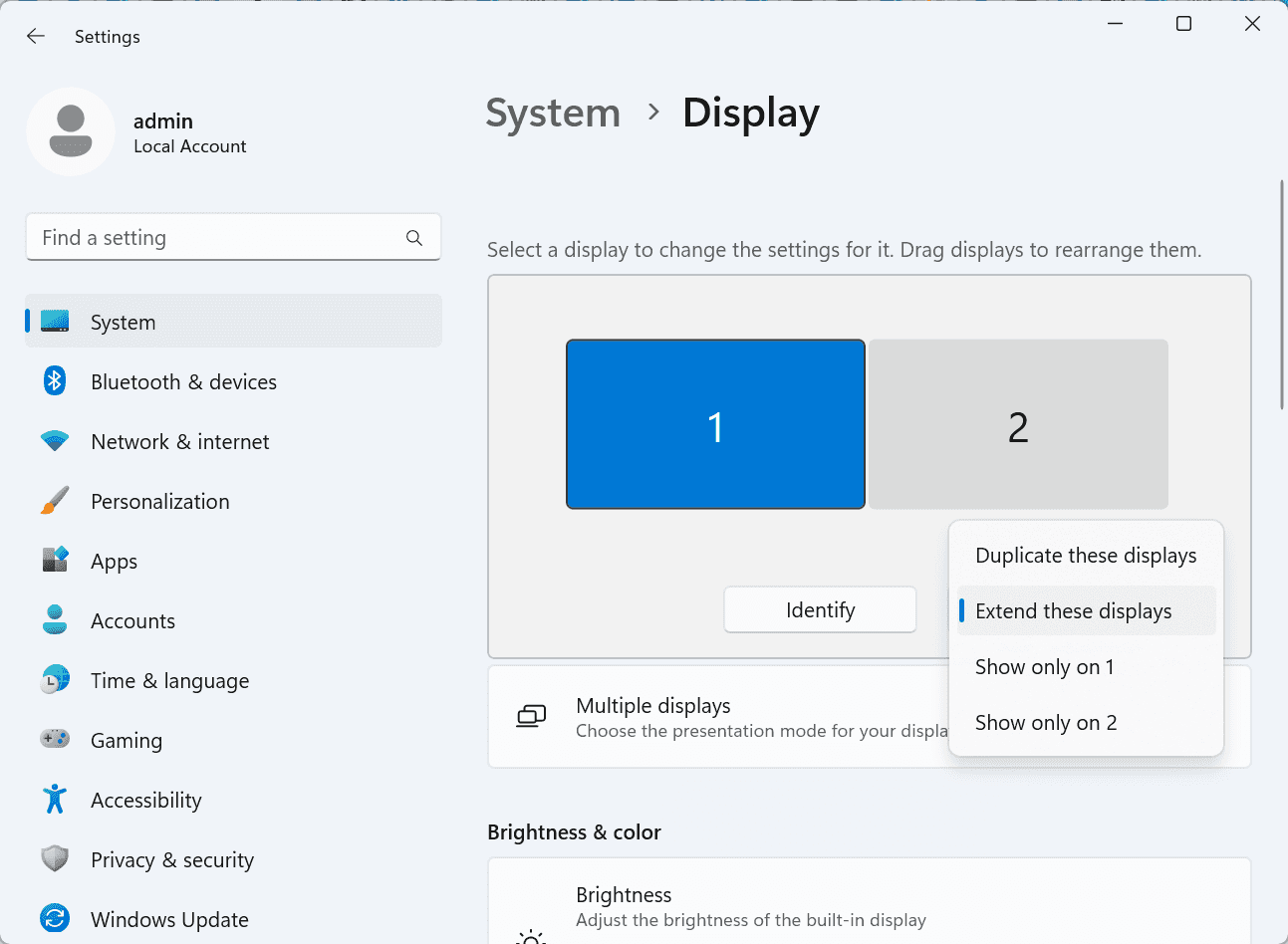
After extension, if you find that your iPad is only mirroring the content on your computer screen, please go to Windows System Settings >> Display Settings and change the screen option to "Extend these displays". You can also modify the screen position by dragging the 2 screens.
Need | Best Option | Why |
Use iPad as a second monitor for a compatible Mac | Apple Sidecar | Built into Apple devices and easy to set up when both devices are compatible. |
Use iPad as a second monitor for Windows | DeskIn | Sidecar does not support Windows, while DeskIn supports cross-platform screen extension on eligible plans. |
Work across Windows, macOS, iPad, Android tablets, and mobile devices | DeskIn | Better suited for users who need cross-platform remote access and flexible device combinations. |
Yes. Windows does not support Apple Sidecar, but you can use DeskIn screen extension on a paid plan that includes this feature to turn your iPad into an additional display for a Windows computer.
DeskIn Screen Extension is included in all paid plans. After subscribing, you can use it across all supported systems with no restrictions.
Yes. DeskIn supports using an iPad as an additional screen with Windows and Mac computers when your plan includes screen mirroring or screen extension.
Using an iPad as a second monitor is a practical way to expand your workspace without buying another display. Mac users with compatible devices can use Apple Sidecar, while Windows and cross-platform users can use DeskIn screen extension on eligible paid plans.
If you want to work across Windows, macOS, iPad, and other devices, DeskIn gives you a flexible way to build a portable multi-screen workspace. Download DeskIn and choose the plan that fits your screen extension and remote access needs.

Top 6 RustDesk Alternative Tools for Faster, Easier Remote Access
Remote access should feel like flipping a light switch, not decoding a control panel. Yet many users exploring RustDesk eventually run into friction: connection IDs, server setup, or occasional lag. While RustDesk is powerful, it’s not always the easiest or smoothest option, especially for non-technical users.
That’s why more people are actively searching for a reliable RustDesk alternative that combines performance, simplicity, and flexibility. Whether you want a plug-and-play solution or something more advanced, this guide will help you find the best fit.
RustDesk stands out as a privacy-friendly, self-hosted remote desktop tool. However, real-world usage reveals a few common challenges:
Complicated setup for the RustDesk self-hosted environments
Manual connection steps requiring IDs and passwords
Occasional latency or unstable connections
Limited user-friendly features out of the box
For many users, especially those helping family or managing multiple devices, simplicity matters just as much as control.
When evaluating a RustDesk alternative, focus on these key factors:
Ease of use: Quick setup without technical overhead
Performance: Smooth, low-latency remote sessions
Compatibility: Support for Windows, macOS, Linux, and mobile
Security: Strong encryption and access controls
Flexibility: Options ranging from cloud-based to open source
The ideal tool strikes a balance between power and convenience, something many modern solutions now deliver better than traditional setups.
Here’s a quick breakdown of the top tools and where they shine:
DeskIn – Best all-in-one RustDesk alternative for performance and ease of use
AnyDesk – Best lightweight tool for fast connections
TeamViewer – Best for enterprise-grade remote support
MeshCentral – Best open-source and self-hosted solution
DWService – Best free browser-based tool
Chrome Remote Desktop – Best simple, no-frills option
Ultra-low latency with smooth high-frame-rate streaming
No complex setup or server deployment required
Cross-platform including Rustdesk alternative for Android
Secure with encryption and device control features
Built-in file transfer and multi-device management
Smaller awareness than legacy competitors
Best for: Users who want a powerful yet simple remote desktop solution
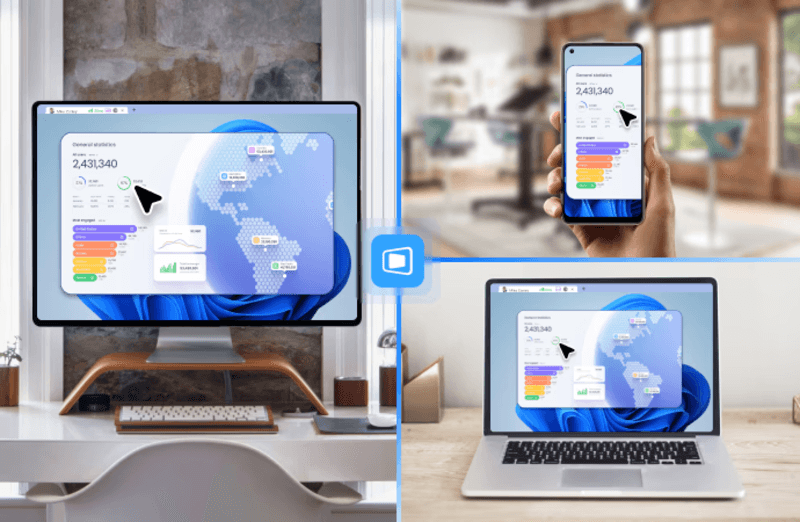
DeskIn removes the friction that often comes with remote access tools. Instead of relying on IDs or manual configurations, it offers a streamlined connection experience that works right out of the box. This makes it especially valuable for users supporting non-technical family members or managing multiple remote devices.
Performance is where DeskIn truly distinguishes itself. Compared to RustDesk, which can sometimes struggle with latency, DeskIn delivers consistently smooth sessions with minimal lag. It also eliminates the need for self-hosting, making it a strong free RustDesk alternative option for users who want powerful features without the complexity.
For those exploring options beyond the RustDesk alternative GitHub projects, DeskIn provides a polished, ready-to-use experience that balances simplicity with professional-grade performance.
Lightweight and fast installation
Good performance on low bandwidth
Cross-platform support
Easy-to-use interface
Performance may drop during long sessions
File transfer can be inconsistent
Best for: Users needing quick and simple remote access
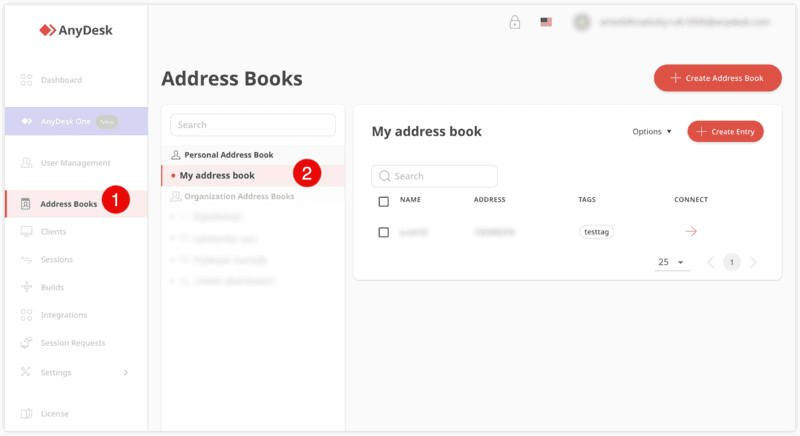
AnyDesk is often considered a natural step up from RustDesk for users who want something easier to deploy. It offers a lightweight application that connects quickly and performs well under normal conditions. This makes it suitable for quick troubleshooting or occasional remote access.
However, performance consistency can be an issue. Users frequently report lag or instability during extended sessions or when handling more demanding tasks. While AnyDesk is a solid option for basic needs, it may not fully satisfy users looking for a more robust, all-in-one solution.
👀 You may also be interested in: |
|---|
Enterprise-grade security with encryption and 2FA
Stable performance across global networks
Rich features like file transfer and session recording
Broad device compatibility
Expensive for commercial use
Free version has limitations
Heavier resource usage on some systems
Best for: Businesses and IT teams managing multiple endpoints
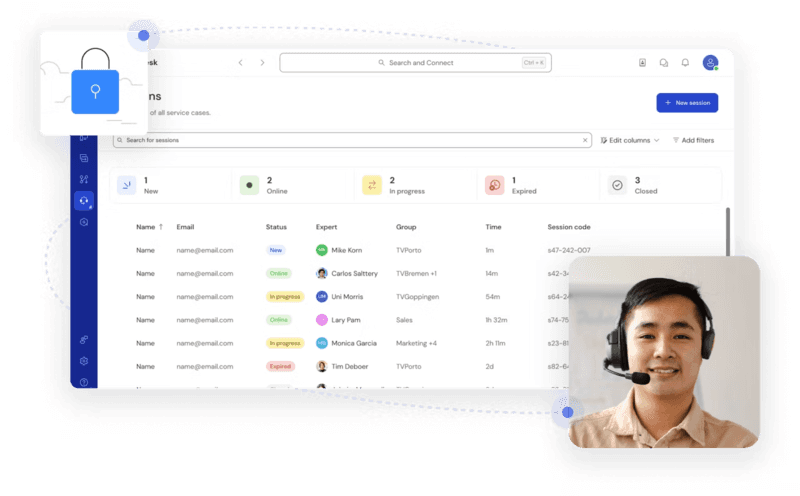
TeamViewer has long been a dominant player in the remote desktop space, offering a comprehensive suite of features designed for enterprise environments. It excels in reliability and global connectivity, making it a popular choice for IT support teams.
That said, its pricing model is a major drawback for many users. Frequent users may quickly encounter licensing restrictions, and costs can escalate for businesses. Additionally, its heavier footprint can impact performance on lower-end devices. DeskIn offers a more modern alternative by delivering similar performance and essential features without the same cost barriers. For users who want enterprise-level capabilities with better efficiency, it presents a compelling option.
👀 You may also be interested in: |
|---|
Fully RustDesk alternative open source solution
Web-based management dashboard
Supports multi-device environments
Strong customization and control
Complex setup and maintenance
Requires technical expertise
Best for: Advanced users needing a Rustdesk alternative self-hosted
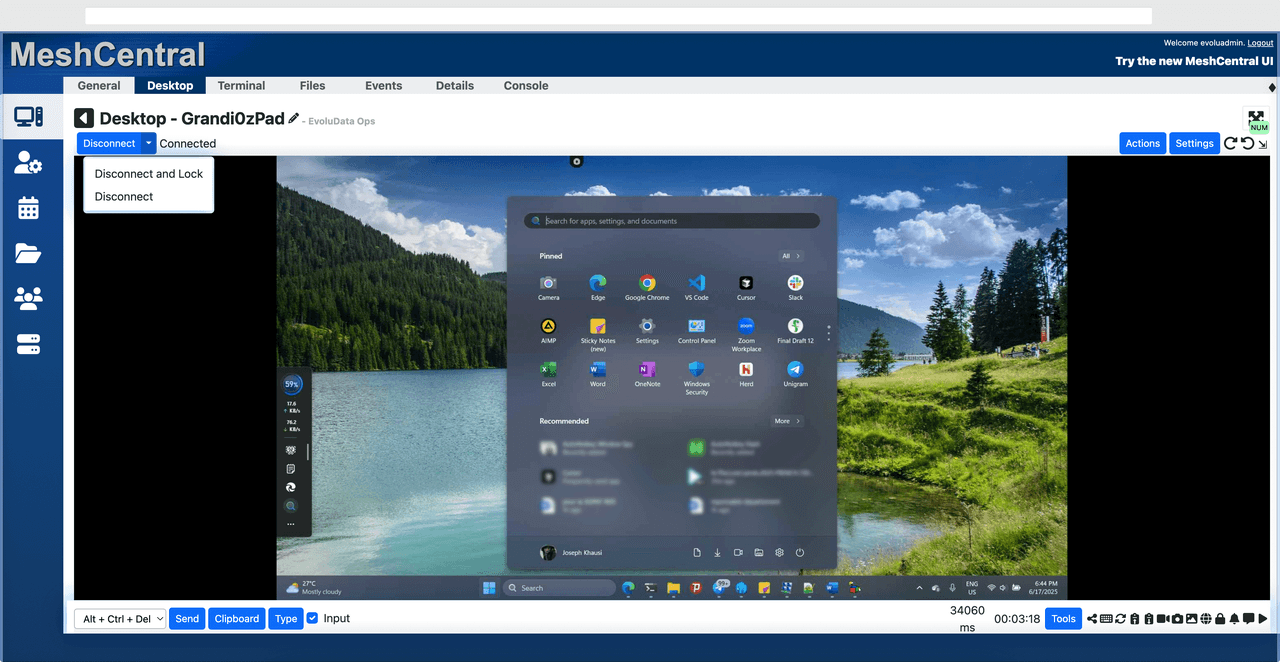
MeshCentral is a powerful open-source platform designed for users who want full control over their remote access infrastructure. It supports multiple devices and provides a centralized dashboard for management, making it attractive for IT professionals.
However, this flexibility comes with complexity. Setting up and maintaining a MeshCentral server requires technical knowledge, which can be a barrier for many users. Compared to this, DeskIn offers a much simpler deployment process while still delivering strong performance and security. For users who prioritize ease of use over full control, modern solutions like DeskIn provide a more accessible alternative.
Completely free
Browser-based access
Open-source foundation
Simple setup
Limited performance
Basic feature set
Best for: Users looking for a simple, free RustDesk alternative
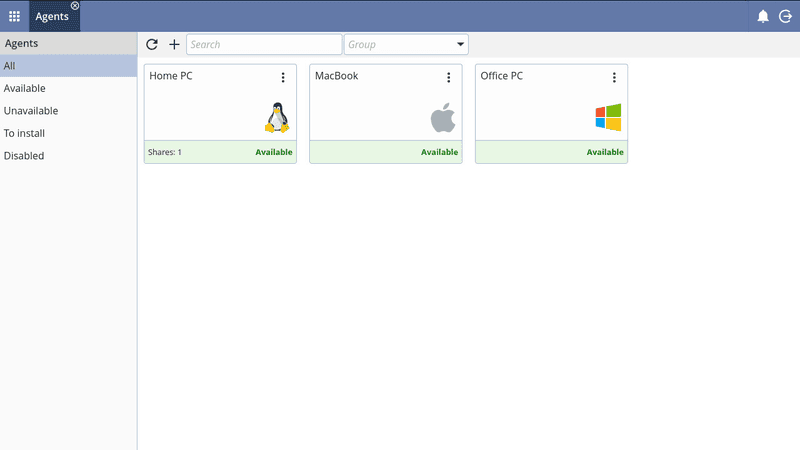
DWService offers a browser-based approach to remote access with no heavy installation, making it convenient for quick connections in restricted environments. It supports both desktop access and file management across major platforms.
However, performance often feels sluggish, especially on demanding tasks, and features remain basic; lacking session recording, smooth multi-monitor support, or advanced security controls. While suitable for occasional personal use, it falls short for professional or high-performance scenarios.
Free and easy to use
Browser-based setup
Cross-platform compatibility
Very limited features
No advanced management or collaboration tools
Best for: Casual users needing basic remote access
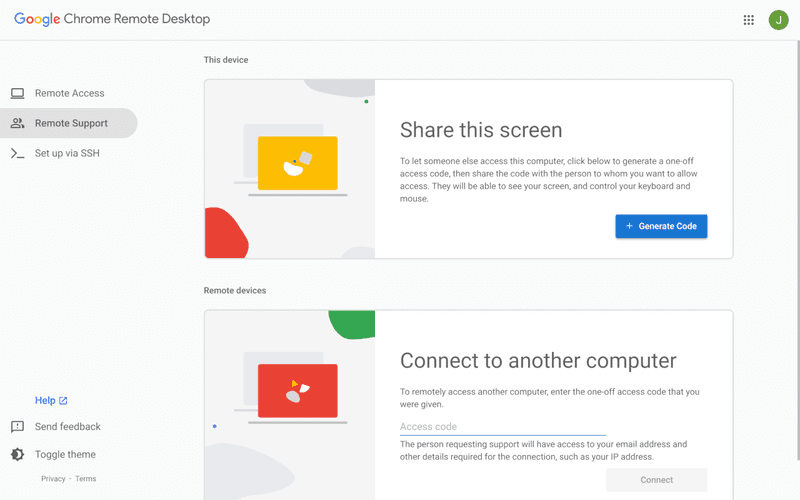
Chrome Remote Desktop is one of the simplest remote access tools available. It’s easy to set up and works across devices, making it a convenient choice for occasional use.
However, it lacks many essential features such as file transfer, session management, and advanced security controls. For users with more demanding needs, it quickly becomes insufficient. Compared to Chrome Remote Desktop, DeskIn provides a much more complete experience without sacrificing ease of use, making it a better long-term solution.
👀 You may also be interested in: |
|---|
RustDesk is powerful but can be difficult to set up and manage, especially with self-hosting. Many users prefer tools that offer similar performance without technical complexity. DeskIn simplifies remote access while maintaining strong performance and security.
Several tools qualify as a free RustDesk alternative, including DWService and Chrome Remote Desktop. However, DeskIn stands out by offering better performance and usability even in its free version.
Yes, tools like MeshCentral and DWService are considered RustDesk alternative open source options. They provide flexibility and control but often require technical expertise to set up and maintain.
Beginners should choose tools with a simple setup and intuitive interfaces. DeskIn is an excellent option because it removes the need for manual configuration while still delivering advanced features.
RustDesk is a powerful starting point, but it’s not always the easiest or most efficient tool for everyday use. From setup complexity to performance limitations, many users eventually look for a better RustDesk alternative.
Among all the options, DeskIn stands out as the most balanced solution. It combines speed, simplicity, and cross-platform support into one seamless experience. If you’re ready to move beyond technical friction and enjoy truly smooth remote access, DeskIn is a choice that simply works.

Top 7 RDP Alternative Tools for Faster, Safer Remote Access
Remote desktop access used to feel like a solid bridge. Now, for many users, traditional RDP feels more like a creaky rope ladder. With performance issues, security concerns, and limited cross-platform support, it's no surprise that more people are actively searching for a better RDP alternative that actually keeps up with modern workflows.
If you're managing multiple servers, working across devices, or just tired of unstable connections, this guide will walk you through the best tools worth switching to.
RDP (Remote Desktop Protocol) is a proprietary protocol developed by Microsoft that allows users to connect to another computer over a network. It's widely used for accessing Windows servers, virtual machines, and remote workstations.
While powerful in controlled environments, RDP is often tied to Windows systems and requires configuration like port forwarding or VPNs. Compared to newer tools, it can feel rigid and outdated.
You may also be interested in: |
|---|
RDP still works, but it comes with trade-offs that many users find frustrating:
Security risks if not properly configured
Complex setup for remote or external access
Limited cross-platform compatibility
Performance issues over unstable networks
Many IT teams are now actively replacing it, especially when looking for a Windows RDP client alternative or something that works seamlessly across macOS, Linux, and mobile devices. That's where modern Remote Desktop alternatives shine.
Choosing the right tool is like picking the right vehicle. Some are built for speed, others for heavy-duty enterprise work. Here's a quick snapshot:
DeskIn – Best all-in-one RDP alternative for performance and cross-platform use
TeamViewer – Best for enterprise remote support
AnyDesk – Best lightweight option for fast connections
RustDesk – Best Windows RDP alternative open-source solution
Remmina – Best RDP alternative for Linux users
Chrome Remote Desktop – Best simple browser-based tool
Splashtop – Best for high-performance business environments
Ultra-low latency with smooth high-frame-rate streaming
Works across Windows, macOS, Linux, iOS, and Android
Strong encryption and secure access controls
Built-in file transfer and multi-session support
Newer compared to legacy brands
Best for: Users who want a powerful, flexible RDP alternative
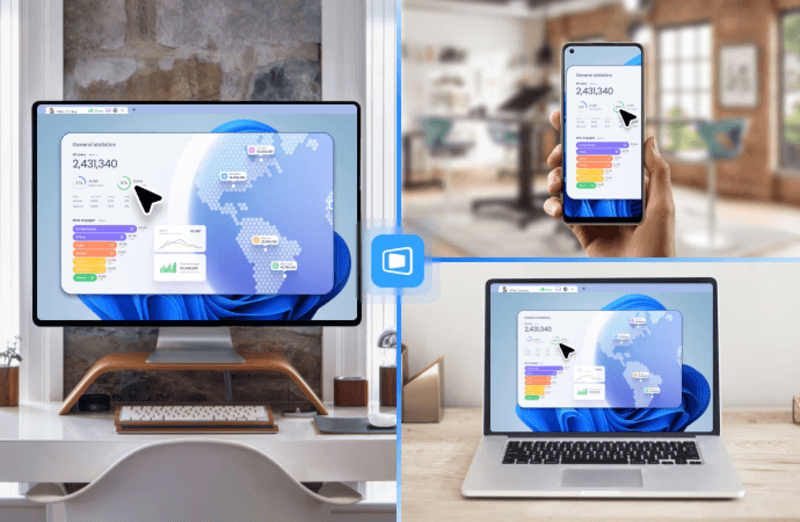
DeskIn feels less like remote access and more like teleportation for your desktop. Whether you're managing servers, supporting clients, or working remotely, it delivers consistently smooth performance without the usual lag spikes seen in traditional RDP setups.
Unlike many tools, DeskIn eliminates the need for complex configurations. You don't need to wrestle with firewalls or VPNs just to connect. It also works seamlessly across platforms, making it a strong alternative to Microsoft Remote Desktop for Mac and mobile users alike.
For teams juggling multiple systems, DeskIn provides a unified experience that replaces fragmented workflows. It's also a strong free RDP alternative option with premium-level capabilities, making it ideal for both individuals and businesses.
Enterprise-grade security and compliance
Extensive feature set including collaboration tools
Cross-platform compatibility
Reliable global performance
Expensive licensing
Can be overkill for individuals
Best for: Enterprises needing secure and scalable remote access
TeamViewer is a comprehensive remote desktop platform widely adopted by IT teams, support professionals, and enterprises. Its feature set extends far beyond simple screen sharing—it includes robust device management, remote printing, file transfer, session recording, and even augmented reality support for field service. TeamViewer's security architecture relies on AES‑256 encryption, two‑factor authentication, and whitelisting, making it suitable for organizations with strict compliance requirements. It runs on virtually every operating system and mobile platform.
The main trade‑off is its pricing: licenses are subscription‑based and can become expensive for small teams or individual users, especially as TeamViewer aggressively flags personal use as commercial, leading to session restrictions.
Fast and responsive
Lightweight installation
Works well on low bandwidth
Easy to use
File transfer can be inconsistent
Lag during longer sessions
Best for: Users needing quick, simple remote access
AnyDesk is a lightweight remote desktop application prized for its speed and efficiency, often recommended as a fast alternative to Microsoft's native Remote Desktop on Windows 10 and Android. It uses a proprietary video codec, DeskRT, to achieve low latency even on limited bandwidth, making it ideal for quick support sessions and accessing devices over mobile networks. The interface is clean and minimalist, with features like address book management, file transfer, and session recording available.
However, users frequently report instability during extended sessions; performance can degrade over time, and file transfers may slow considerably compared to competitors. While its free version is generous for personal use, professional users often find the performance ceiling limits its suitability for continuous, demanding workloads. DeskIn, by contrast, maintains consistent performance even during extended use, making it better suited for professional workloads.
You may also be interested in: |
|---|
Free and open-source
Self-hosting for full control
Strong privacy protection
Active community
Technical setup required
Limited user-friendly features
Best for: Developers and privacy-focused users
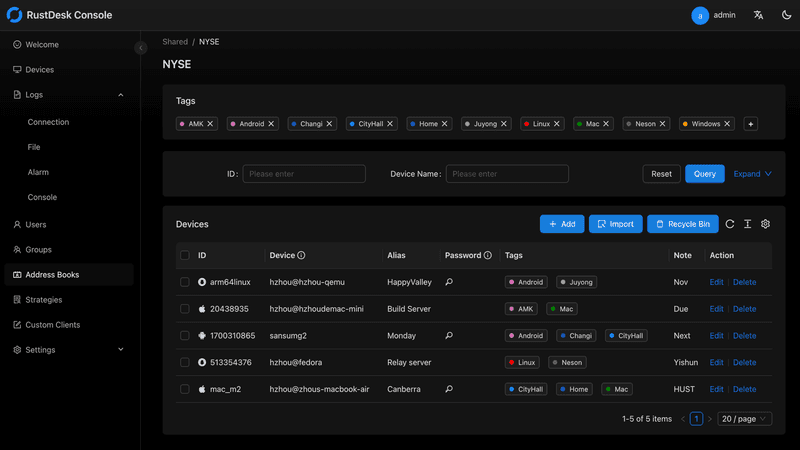
RustDesk has emerged as a leading open‑source remote desktop alternative, appealing to developers and organizations that require full control over their data. It allows users to self‑host the relay and rendezvous servers, meaning no third‑party infrastructure handles connection metadata. Built with Rust, it offers a modern codebase with cross‑platform clients (Windows, macOS, Linux, Android, iOS) and supports essential features such as file transfer, TCP tunneling, and customizable address books.
The major barrier is its complexity: deploying a self‑hosted environment requires technical expertise to configure firewalls, SSL certificates, and ongoing server maintenance. For those using the public relay, performance can be inconsistent depending on server load and geographic proximity.
You may also be interested in: Top RustDesk Alternatives for Better Performance, Security & Ease of Use |
|---|
Open-source and free
Supports multiple protocols including RDP and VNC
Lightweight and flexible
Native to Linux environments
Limited features compared to modern tools
UI can feel outdated
Best for: Linux users looking for a traditional RDP alternative Linux
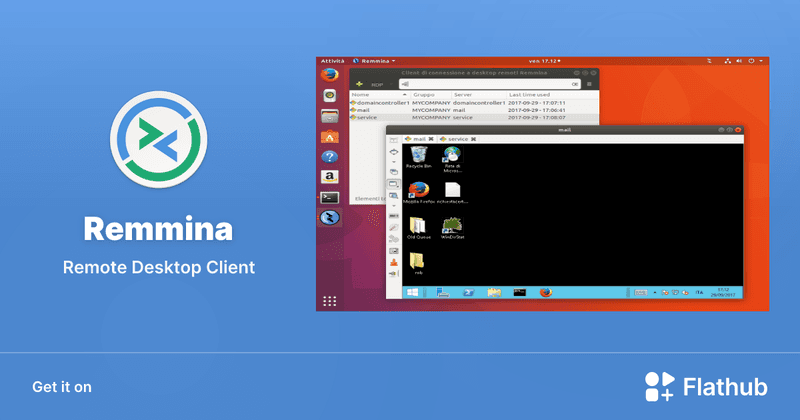
Remmina is a beloved open‑source remote desktop client for Linux, supporting multiple protocols (RDP, VNC, SSH, SPICE, and others) in a single unified interface. It is frequently chosen by system administrators and Linux enthusiasts who need a flexible, lightweight tool to manage diverse environments. Remmina offers tabbed sessions, quick‑connect profiles, and a plugin system that extends its capabilities.
However, its strength - protocol flexibility, also highlights its limitations. As a frontend client rather than a full remote access solution, it lacks features like unattended access, centralized account management, or robust session recording out of the box. Performance can vary by protocol, and the user experience lags behind more polished commercial tools, particularly for users seeking a plug‑and‑play setup.
Free and easy to use
Browser-based setup
Cross-platform access
Very limited features
No advanced management tools
Best for: Casual users needing basic remote access
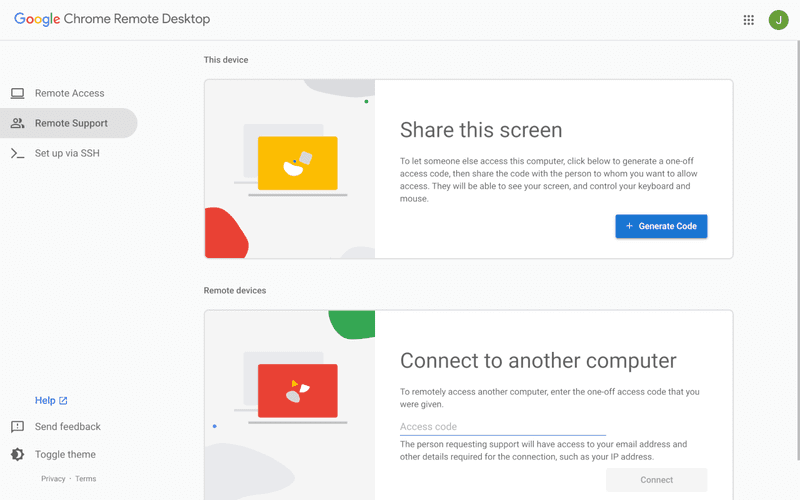
Chrome Remote Desktop is a free, browser‑based remote access tool from Google that requires nothing more than a Chrome browser and a Google account. It excels in simplicity: installation takes seconds, and connections are mediated through Google's infrastructure, eliminating complex firewall configurations. For occasional use—such as helping a family member or quickly accessing a home computer—it works reliably across Windows, macOS, Linux, and even ChromeOS.
The trade‑off is its minimal feature set. There is no native file transfer, multi‑session management, remote printing, or granular permission controls. Collaboration tools are absent, and the reliance on a Google account for authentication can be a limitation in professional environments. It remains a convenient entry‑level tool but struggles to meet the needs of power users or IT teams.
You may also be interested in: |
|---|
High-quality streaming performance
Strong security features
Good for business environments
Reliable connections
Subscription-based pricing
Limited free version
Best for: Businesses needing performance-focused remote access
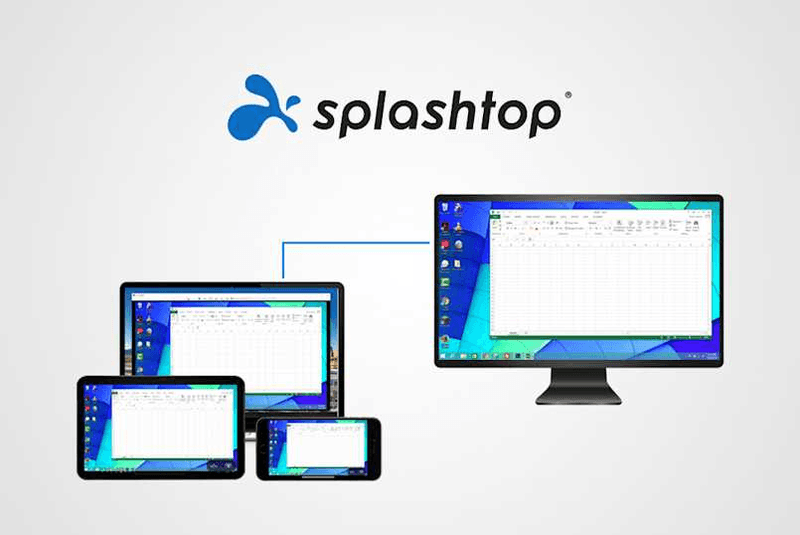
Splashtop is a high‑performance remote desktop solution frequently adopted by creative professionals, educational institutions, and enterprises that prioritize fluid interaction. It delivers low‑latency streaming with support for high‑frame‑rate displays, making it suitable for video editing, CAD work, and other graphics‑intensive tasks. Splashtop offers a range of editions—from Business Access to SOS for on‑demand support—all of which include robust security (AES‑256, device authentication) and features like file transfer, remote printing, and multi‑monitor navigation. Its performance over local networks and the internet is consistently praised.
The primary drawback is cost: while competitive, the subscription model can accumulate quickly for users needing access to multiple devices or advanced features, especially when compared to similarly capable tools with more flexible pricing structures. DeskIn offers similar performance benefits with a more flexible pricing structure, making it a compelling alternative.
You may also be interested in: |
|---|
RDP can be difficult to configure, less secure if exposed, and limited outside Windows environments. Modern tools like DeskIn provide better performance, security, and ease of use.
The best RDP alternative depends on your needs, but DeskIn stands out for its balance of speed, security, and cross-platform compatibility.
Yes, several tools qualify as an RDP alternative free, including RustDesk and Chrome Remote Desktop. DeskIn also offers a free tier with advanced capabilities.
Microsoft is evolving its remote desktop ecosystem, but traditional RDP isn't disappearing overnight. However, many users are already transitioning to more modern solutions like DeskIn for better reliability and flexibility.
RDP has served its purpose, but the digital world has outgrown its limitations. Whether you need better performance, stronger security, or true cross-platform access, switching to a modern RDP alternative is no longer optional, it's inevitable.
Among all the options, DeskIn stands out as a future-ready solution. It combines speed, simplicity, and power into one seamless experience, helping you leave behind the friction of traditional remote desktop tools and step into something far more efficient.
Ubah iPad Menjadi Monitor Kedua Untuk Komputer Windows Dan Mac
A second monitor can make everyday work feel much easier, especially when you are switching between research, documents, meetings, design files, or dashboards. If you already own an iPad, you may be able to use it as an extra display instead of buying another monitor.
This guide explains how to use an iPad as a second monitor for Mac with Apple Sidecar, and how Windows or cross-platform users can use DeskIn screen extension on supported paid plans.
Increase screen space so you can view more content at the same time. This helps reduce constant window switching during multitasking.
Keep each screen focused on a different task. For example, you can edit a video on one screen and keep source materials on the other, or write a paper while browsing references side by side.
Use the iPad display you already have. For students, remote workers, and light creative work, an iPad can be a convenient and cost-effective second-screen option.
Save desk space and avoid carrying another external monitor when you work from home, travel, or move between rooms.
Apple Sidecar lets compatible iPads work as an external display for compatible MacBook and iMac devices. It is a good native option if both devices support Sidecar and are signed in with the same Apple ID.
Note: To use Apple Sidecar, your Mac and iPad should use the same Apple ID, have Bluetooth and Wi-Fi turned on, and stay within close wireless range. Sidecar availability depends on Apple device and operating system compatibility.
Open the Mac System Settings >> Click "Display" in the sidebar >> Click the "+" pop up menu on the right and choose your iPad.
Select the iPad, change the Use as settings to "Extended Display". Check the Airplay settings on the top toolbar of the mac and set iPad as "Use As Separate Display".
After completing the settings, your iPad will become the second display for your Mac. You can drag windows from your Mac to your iPad smoothly. You can also use the sidebar on the iPad or change the position of the sidebar on the system display settings.
MacBook Screen (Left) and iPad Screen (Right)
Apple Sidecar only supports mac released after 2016 and iPadOS13 or newer. If you are using an old Apple device or a Windows device, you can still use DeskIn remote software to do the screen extension. It supports using iPad as a second display for Mac and Windows, and the smoothness is no worse than sidecar.
Install DeskIn on both your computer and iPad. Sign in to your DeskIn account on each device. When you log in on a new device for the first time, you may need to complete email verification to help protect your account.
To use Screen Extension, you'll need to subscribe to any Premium plan. Click here to view DeskIn plans.
Open DeskIn on your Windows or Mac computer, go to the screen management area, and choose the screen extension option. Select your iPad as the target display and start extending.
Once connected, your iPad can work as an additional display, letting you move windows between your computer and iPad for a wider workspace.
Computer Screen (Left) and iPad Screen (Right)
After extension, if you find that your iPad is only mirroring the content on your computer screen, please go to Windows System Settings >> Display Settings and change the screen option to "Extend these displays". You can also modify the screen position by dragging the 2 screens.
Need | Best Option | Why |
Use iPad as a second monitor for a compatible Mac | Apple Sidecar | Built into Apple devices and easy to set up when both devices are compatible. |
Use iPad as a second monitor for Windows | DeskIn | Sidecar does not support Windows, while DeskIn supports cross-platform screen extension on eligible plans. |
Work across Windows, macOS, iPad, Android tablets, and mobile devices | DeskIn | Better suited for users who need cross-platform remote access and flexible device combinations. |
Yes. Windows does not support Apple Sidecar, but you can use DeskIn screen extension on a paid plan that includes this feature to turn your iPad into an additional display for a Windows computer.
DeskIn Screen Extension is included in all paid plans. After subscribing, you can use it across all supported systems with no restrictions.
Yes. DeskIn supports using an iPad as an additional screen with Windows and Mac computers when your plan includes screen mirroring or screen extension.
Using an iPad as a second monitor is a practical way to expand your workspace without buying another display. Mac users with compatible devices can use Apple Sidecar, while Windows and cross-platform users can use DeskIn screen extension on eligible paid plans.
If you want to work across Windows, macOS, iPad, and other devices, DeskIn gives you a flexible way to build a portable multi-screen workspace. Download DeskIn and choose the plan that fits your screen extension and remote access needs.
Top 6 RustDesk Alternative Tools for Faster, Easier Remote Access
Remote access should feel like flipping a light switch, not decoding a control panel. Yet many users exploring RustDesk eventually run into friction: connection IDs, server setup, or occasional lag. While RustDesk is powerful, it’s not always the easiest or smoothest option, especially for non-technical users.
That’s why more people are actively searching for a reliable RustDesk alternative that combines performance, simplicity, and flexibility. Whether you want a plug-and-play solution or something more advanced, this guide will help you find the best fit.
RustDesk stands out as a privacy-friendly, self-hosted remote desktop tool. However, real-world usage reveals a few common challenges:
Complicated setup for the RustDesk self-hosted environments
Manual connection steps requiring IDs and passwords
Occasional latency or unstable connections
Limited user-friendly features out of the box
For many users, especially those helping family or managing multiple devices, simplicity matters just as much as control.
When evaluating a RustDesk alternative, focus on these key factors:
Ease of use: Quick setup without technical overhead
Performance: Smooth, low-latency remote sessions
Compatibility: Support for Windows, macOS, Linux, and mobile
Security: Strong encryption and access controls
Flexibility: Options ranging from cloud-based to open source
The ideal tool strikes a balance between power and convenience, something many modern solutions now deliver better than traditional setups.
Here’s a quick breakdown of the top tools and where they shine:
DeskIn – Best all-in-one RustDesk alternative for performance and ease of use
AnyDesk – Best lightweight tool for fast connections
TeamViewer – Best for enterprise-grade remote support
MeshCentral – Best open-source and self-hosted solution
DWService – Best free browser-based tool
Chrome Remote Desktop – Best simple, no-frills option
Ultra-low latency with smooth high-frame-rate streaming
No complex setup or server deployment required
Cross-platform including Rustdesk alternative for Android
Secure with encryption and device control features
Built-in file transfer and multi-device management
Smaller awareness than legacy competitors
Best for: Users who want a powerful yet simple remote desktop solution
DeskIn removes the friction that often comes with remote access tools. Instead of relying on IDs or manual configurations, it offers a streamlined connection experience that works right out of the box. This makes it especially valuable for users supporting non-technical family members or managing multiple remote devices.
Performance is where DeskIn truly distinguishes itself. Compared to RustDesk, which can sometimes struggle with latency, DeskIn delivers consistently smooth sessions with minimal lag. It also eliminates the need for self-hosting, making it a strong free RustDesk alternative option for users who want powerful features without the complexity.
For those exploring options beyond the RustDesk alternative GitHub projects, DeskIn provides a polished, ready-to-use experience that balances simplicity with professional-grade performance.
Lightweight and fast installation
Good performance on low bandwidth
Cross-platform support
Easy-to-use interface
Performance may drop during long sessions
File transfer can be inconsistent
Best for: Users needing quick and simple remote access
AnyDesk is often considered a natural step up from RustDesk for users who want something easier to deploy. It offers a lightweight application that connects quickly and performs well under normal conditions. This makes it suitable for quick troubleshooting or occasional remote access.
However, performance consistency can be an issue. Users frequently report lag or instability during extended sessions or when handling more demanding tasks. While AnyDesk is a solid option for basic needs, it may not fully satisfy users looking for a more robust, all-in-one solution.
👀 You may also be interested in: |
|---|
Enterprise-grade security with encryption and 2FA
Stable performance across global networks
Rich features like file transfer and session recording
Broad device compatibility
Expensive for commercial use
Free version has limitations
Heavier resource usage on some systems
Best for: Businesses and IT teams managing multiple endpoints
TeamViewer has long been a dominant player in the remote desktop space, offering a comprehensive suite of features designed for enterprise environments. It excels in reliability and global connectivity, making it a popular choice for IT support teams.
That said, its pricing model is a major drawback for many users. Frequent users may quickly encounter licensing restrictions, and costs can escalate for businesses. Additionally, its heavier footprint can impact performance on lower-end devices. DeskIn offers a more modern alternative by delivering similar performance and essential features without the same cost barriers. For users who want enterprise-level capabilities with better efficiency, it presents a compelling option.
👀 You may also be interested in: |
|---|
Fully RustDesk alternative open source solution
Web-based management dashboard
Supports multi-device environments
Strong customization and control
Complex setup and maintenance
Requires technical expertise
Best for: Advanced users needing a Rustdesk alternative self-hosted
MeshCentral is a powerful open-source platform designed for users who want full control over their remote access infrastructure. It supports multiple devices and provides a centralized dashboard for management, making it attractive for IT professionals.
However, this flexibility comes with complexity. Setting up and maintaining a MeshCentral server requires technical knowledge, which can be a barrier for many users. Compared to this, DeskIn offers a much simpler deployment process while still delivering strong performance and security. For users who prioritize ease of use over full control, modern solutions like DeskIn provide a more accessible alternative.
Completely free
Browser-based access
Open-source foundation
Simple setup
Limited performance
Basic feature set
Best for: Users looking for a simple, free RustDesk alternative
DWService offers a browser-based approach to remote access with no heavy installation, making it convenient for quick connections in restricted environments. It supports both desktop access and file management across major platforms.
However, performance often feels sluggish, especially on demanding tasks, and features remain basic; lacking session recording, smooth multi-monitor support, or advanced security controls. While suitable for occasional personal use, it falls short for professional or high-performance scenarios.
Free and easy to use
Browser-based setup
Cross-platform compatibility
Very limited features
No advanced management or collaboration tools
Best for: Casual users needing basic remote access
Chrome Remote Desktop is one of the simplest remote access tools available. It’s easy to set up and works across devices, making it a convenient choice for occasional use.
However, it lacks many essential features such as file transfer, session management, and advanced security controls. For users with more demanding needs, it quickly becomes insufficient. Compared to Chrome Remote Desktop, DeskIn provides a much more complete experience without sacrificing ease of use, making it a better long-term solution.
👀 You may also be interested in: |
|---|
RustDesk is powerful but can be difficult to set up and manage, especially with self-hosting. Many users prefer tools that offer similar performance without technical complexity. DeskIn simplifies remote access while maintaining strong performance and security.
Several tools qualify as a free RustDesk alternative, including DWService and Chrome Remote Desktop. However, DeskIn stands out by offering better performance and usability even in its free version.
Yes, tools like MeshCentral and DWService are considered RustDesk alternative open source options. They provide flexibility and control but often require technical expertise to set up and maintain.
Beginners should choose tools with a simple setup and intuitive interfaces. DeskIn is an excellent option because it removes the need for manual configuration while still delivering advanced features.
RustDesk is a powerful starting point, but it’s not always the easiest or most efficient tool for everyday use. From setup complexity to performance limitations, many users eventually look for a better RustDesk alternative.
Among all the options, DeskIn stands out as the most balanced solution. It combines speed, simplicity, and cross-platform support into one seamless experience. If you’re ready to move beyond technical friction and enjoy truly smooth remote access, DeskIn is a choice that simply works.
Lebih Lanjut
Informasi
Hubungi Kami
Email: support@deskin.io
Office: 991D Alexandra Road #02-17, Singapore 119972
Copyright © 2026 Zuler Technology PTE. LTD. All rights reserved.
Hubungi Kami
Email: support@deskin.io
Office: 991D Alexandra Road #02-17, Singapore 119972
Lebih Lanjut
Informasi
Copyright © 2026 Zuler Technology PTE. LTD. All rights reserved.
Lebih Lanjut
Informasi
Hubungi Kami
support@deskin.io
991D Alexandra Road #02-17
Singapore 119972
Copyright © 2026 Zuler Technology PTE. LTD. All rights reserved.
【New User Special Offer】
Save
Extra 20%
on your first order|4K60FPS
Extra
20% Off
|For
New Users
【New User Special Offer】
Save
Extra 20%
on first order


