iPhone 傳檔到 Windows 不求人!4 招將檔案傳到電腦的終極指南

DeskIn

/

10分鐘

/

已更新

2025年5月1日

將 iPhone 中的照片、文件傳到 Windows 電腦,確實不像 Mac 能使用 AirDrop 那樣無縫。要將資料在 iPhone 與Windows 之間傳送,通常可以使用 USB 有線傳輸,雲端或是通訊軟體。但是有線方式速度慢容易傳輸失敗,雲端有免費容量限制,通訊軟體比如 Line 不僅會壓縮畫質,還有傳輸大小限制,限制很多。

好消息是,其實存在更簡單、能無損畫質的檔案傳輸方式,比如使用 Windows 系統內建的共享功能,或者透過像 DeskIn 這類高效的遠端桌面軟體,都能輕鬆實現 iPhone 與 Windows 電腦互傳檔案。不論您最適合哪一種方法,本文都將為您提供最詳細的步驟圖文教學。

1. 使用 DeskIn 遠端在 iPhone 與 Windows 間傳輸檔案

DeskIn 是一款強大的跨平台遠端控制軟體,完美支援 iPhone (iOS 13.0 以上) 與 Windows (Windows 7 或更新版本) 之間的連線與檔案傳輸。 無論是辦公常用的 PPT 簡報、PDF 合同、Excel 報表,還是個人的照片、影片、音樂等各種檔案類型,皆可透過 DeskIn 進行。它完全不限制檔案大小、類別、與傳輸數量,讓您無論是在辦公室需要快速交換大型設計稿,還是外出時臨時需要從手機傳送重要文件到電腦,都能輕鬆實現高速、無損的iPhone 與 Windows 互傳檔案。

不僅如此,DeskIn 更讓您能直接使用 iPhone 遠端操作 Windows 電腦。當您需要遠距辦公,或想將電腦中的檔案直接分享給客戶時,您甚至無需先將檔案傳到 iPhone,就能直接從遠端電腦發送,大幅提升工作效率與機動性。

立即下載DeskIn,用最快捷、簡單的方式完成iPhone和Windows之間的檔案傳輸!

免費下載DeskIn

爲什麽更推薦用DeskIn在iPhone和Windows電腦傳檔

👍優點

  • 可遠端傳輸,iPhone和Windows無需在同一網絡下,不管多遠都可以任意方向傳輸

  • 無需複雜設定,操作直覺,只用手機就能隨時傳輸,將檔案傳到指定的位置。

  • 安全,端到端加密,裝置之間一對一傳輸,需要密碼驗證。

  • 快速無損,高達12MB/s高速,傳輸品質高,不壓縮。

  • 無限制,不限制檔案類型、數量和大小。

❗局限性

  • 需要在手機和電腦提前下載好DeskIn軟體。

如何使用DeskIn在iPhone和Windows電腦之間傳檔

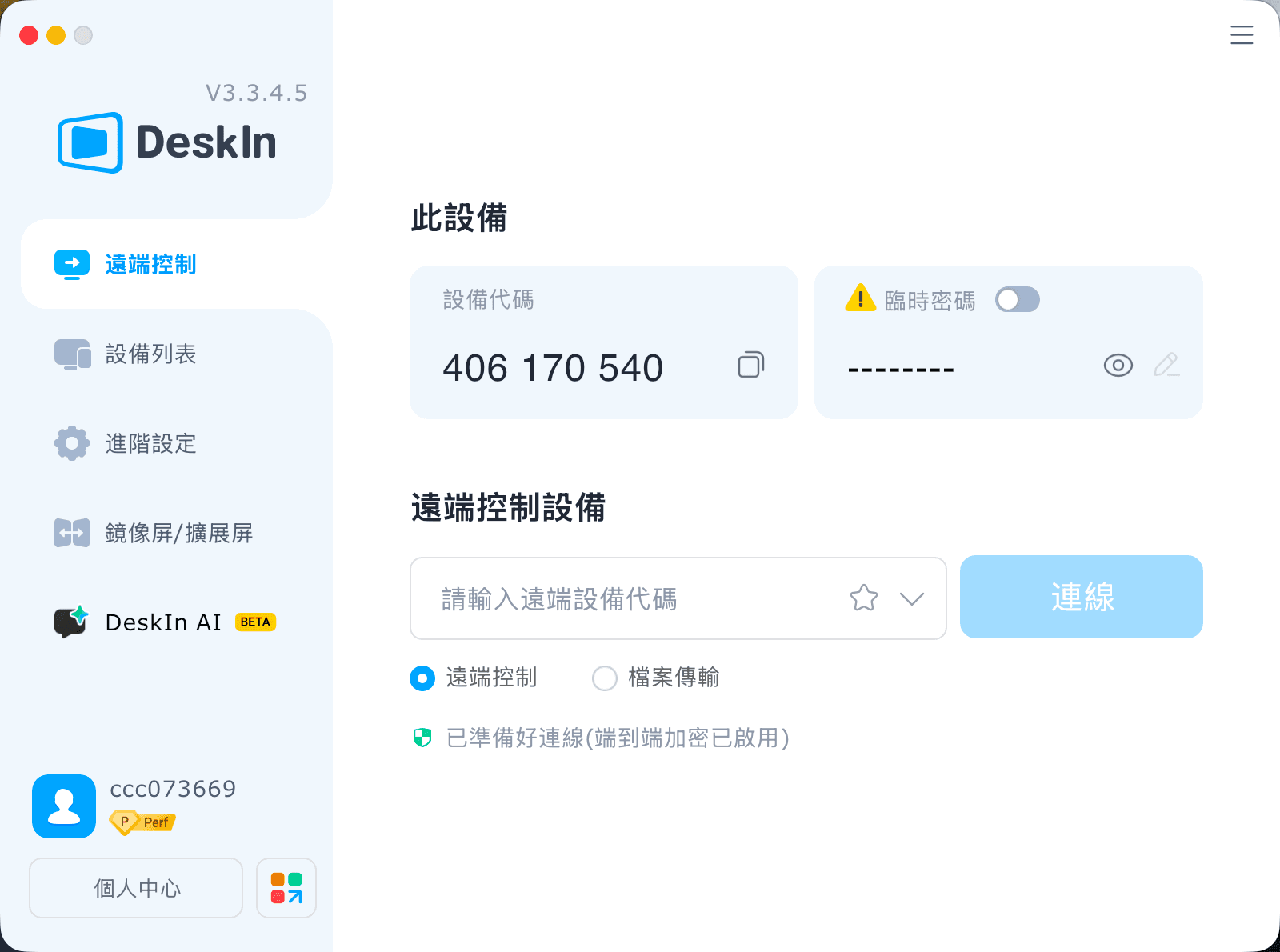
  • 步驟一:在iPhone和Windows上下載安裝DeskIn軟體,注冊一個免費賬戶並登入。

💡注意:如果你是首次在新裝置上登入,需要到注冊信箱完成驗證,更好的保障帳戶安全。

  • 步驟二:打開iPhone的DeskIn,到「遠端控制」模塊,輸入Windows DeskIn主界面上的設備代碼,或從設備列表找到你的Windows電腦,點擊「檔案傳輸」。您可以使用Windows主界面上的臨時密碼或自訂的安全密碼進行連缐,也可以在Windows上進行手動驗證。

  • 步驟三:進入檔案傳輸頁面>>「傳送檔案」>>選取檔案>>「更改位置」(選擇傳輸的目標位置)>>「傳送」,就能將iPhone檔案傳到Windows電腦

  • 進入檔案傳輸頁面>>點擊「下載檔案」>>選中要下載的檔案>>「下載」,就能將Windows電腦檔案傳到iPhone手機:
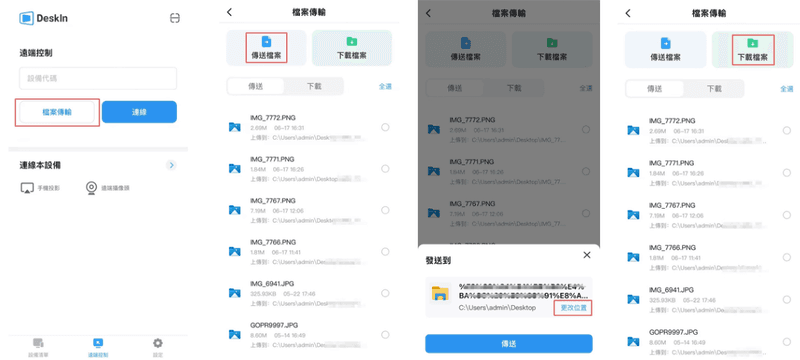
用 DeskIn 在 iPhone 和 Windows 電腦傳檔

2. 透過 Google 雲端硬碟共享 iPhone 小型檔案給電腦

在需要將 iPhone 中的工作檔案例如 PDF、Word 或 Excel 合同與數據報傳輸到電腦時,或者電腦傳資料到iPhone時,使用 Google Drive 也是一個相當便捷的跨平台解決方案。您只需在設備上將文件上傳,即可在任何一台電腦的瀏覽器中或者 iPhone 上下載資料。

這個方法特別適合用於小型檔案的即時共享,因為 Google 雲端硬碟為每個帳戶提供了 15GB 的免費儲存空間,足以應付多數工作文件。根據實測,在穩定的 Wi-Fi 環境下,從雲端硬碟下載檔案的速度是相當順暢,讓你能夠快速取得所需檔案,不會耽誤工作進度。不過,如果您需要一次性傳輸大量或大型檔案,建議可以改用 DeskIn 進行傳輸,不僅沒有容量限制,還能享受更穩定高速的傳輸體驗。

👍優點

  • 跨平台或者遠端存取方便,透過瀏覽器即可隨時下載檔案。

  • 提供 15GB 免費儲存空間,足以應付日常文件、簡報等小型工作檔案的傳輸需求。

  • 操作介面直覺簡單,多數使用者已熟悉基本的上傳與下載流程。

❗局限性

  • 上傳與下載操作較為繁瑣且預覽會壓縮畫質。

  • 傳輸大型影片或大量檔案時容易不足。

  • 傳輸速度受網路環境影響,在訊號不穩時可能出現中斷或延遲。

  • 檔案散落於郵件中,不利於後續的集中管理與查找。

如何透過 Google 雲端硬碟共享 iPhone 小型檔案給電腦

步驟一:於 iPhone 開啟 Google 雲端硬碟 App,點擊「開啟方式」>「儲存到檔案」,然後選擇您要傳送的 PDF、Word 或 Excel 等文件。
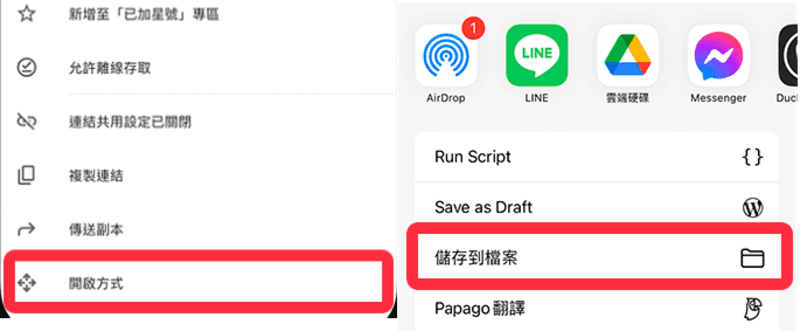
 用 Google Drive 在 iPhone 和 Windows 電腦傳檔

小貼士:使用此方法時,請留意手機和電腦都需要連接穩定的網路,以確保順暢的上傳與下載。

步驟二:在電腦上下載檔案:在電腦瀏覽器上前往 Google 雲端硬碟網站,登入同一個帳戶,找到檔案後點擊右鍵,選擇「下載」即可。
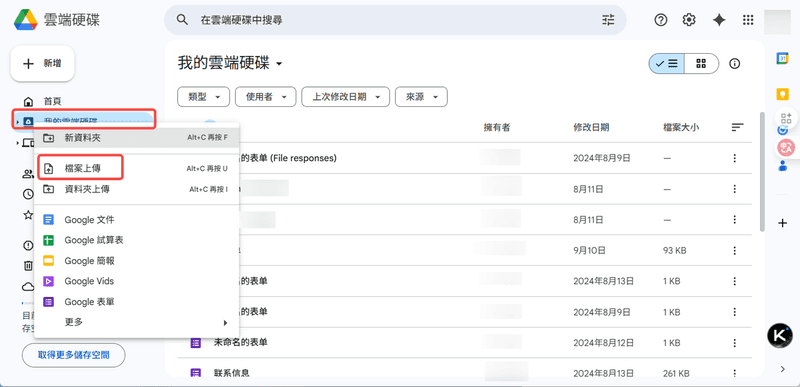
使用雲端硬碟傳輸檔案

3. 用 USB 線傳輸 iPhone 照片到電腦

當您需要傳輸大型或多媒體檔案如影片、音樂專輯、大量照片,或進行完整的裝置備份時,使用 USB 線與 iTunes 是最穩定可靠的傳統方法。該方法傳輸過程穩定、無需網路,且能完整同步多媒體資料庫。然而,操作流程較為繁瑣,且 iTunes 介面對新手而言較不直觀,靈活度也不如無線傳輸方式。

使用此方法前,您要準備好 iPhone 原廠 USB 傳輸線,並在 Windows 電腦上預先下載並安裝最新版 iTunes 軟體。它適用於大多數 iPhone 型號與 Windows 7 或更新版本的作業系統。如果已經準備好了,請緊跟下方教學執行動作喔。

👍優點

  • 傳輸過程不依賴網路連線,能確保資料安全與傳輸效率。

  • 穩定可靠的有線連接與完整資料管理功能。

  • 適合傳輸大型影音檔案與進行完整裝置備份。

❗局限性

  • 程式出錯崩潰、可能會刪掉同步過的資料。

  • 作業效率偏低,尤其是批量傳輸多個檔案時,經常是輸送到一半進度條就卡住。

  • 需攜帶傳輸線。


如何用 USB 線傳輸 iPhone 照片到電腦

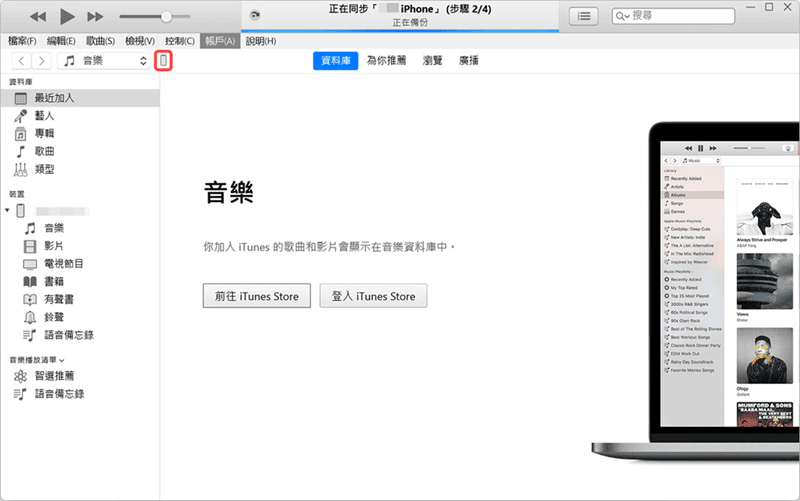
步驟1:在電腦上安裝最新版的 iTunes,啟動後用 USB 或 USB-C 線連接 iPhone 與電腦,在iPhone 上點選「信任此電腦」

步驟2:點擊視窗左上方「裝置」按鈕,接著你會看到左側會出現資料庫及本機檔案的分類選單。
共享資料夾設定

步驟3:點選「檔案共享」,然後選擇用於接收電腦檔案的 APP。

步驟4:點擊「加入」按鈕,選擇想要傳輸的資料後再次點擊「加入」,程式就會將電腦檔案傳到 iPhone 對應的 APP 當中。

iTunes傳輸失敗,需要支援度更廣、連線更穩健、傳輸效率更高的方式?

推薦您試試 DeskIn 遠端桌面軟體,下載安裝後即可直接拖拽傳輸,輕鬆又便捷!其連線穩定不易失敗,並提供平均 12MB/s 的高速傳輸,讓您輕鬆交換各類檔案,無需擔心格式與大小限制。

免費下載DeskIn

4. 透過共享資料夾實現 iPhone 與 Windows 檔案傳送

當您與 Windows 電腦處於同一個區域網路例如家中或辦公室的同一台 Wi-Fi 路由器下,且希望無需安裝任何額外 App,就能在 iPhone 與電腦間無線、無損地傳輸檔案時,極度推薦使用「透過共享資料夾」這個內建方法。

此方法需先在 Windows 電腦上設定好共享資料夾並查詢 IP 位址,並確保 iPhone 的「檔案」App 能透過 SMB 協定連線。它適合傳輸各類檔案,且沒有大小與數量限制,是追求原生功能的理想選擇。

👍優點

  • 能夠實現iPhone與Windows之間的無線傳輸,傳輸品質高,不壓縮。

  • 不限制檔案類型、數量和大小。

  • 不需要再額外安裝多一個應用程式在電腦或是手機上。

❗局限性

  • 設定配置複雜,如果電腦不在身邊,無法配置和將所需檔案放到共享文件夾。

  • 無法遠端傳輸,只限同一區域網路下用。

  • 存在安全風險,透過IP位置即可存取檔案,「共享資料夾」可能同時暴露給同一網路下的其他裝置。

  • 兼容性与稳定性一般,若 Windows 使用的舊版協議可能導致連接失敗,網路質量較差時,傳輸可能中斷或速度下降。

如何透過共享資料夾實現 iPhone 與 Windows 檔案傳送

  • 步驟1:在電腦上新建一個資料夾作爲「共享資料夾」,並將你希望傳送到iPhone的檔案資料拖到「共享資料夾」中。

  • 步驟2:右鍵「共享資料夾」,選擇「内容」,點擊「共用」,找到並選擇「Everyone」,點擊右邊的「新增」,權限層級選「讀取/寫入」,最後點擊「共用」。
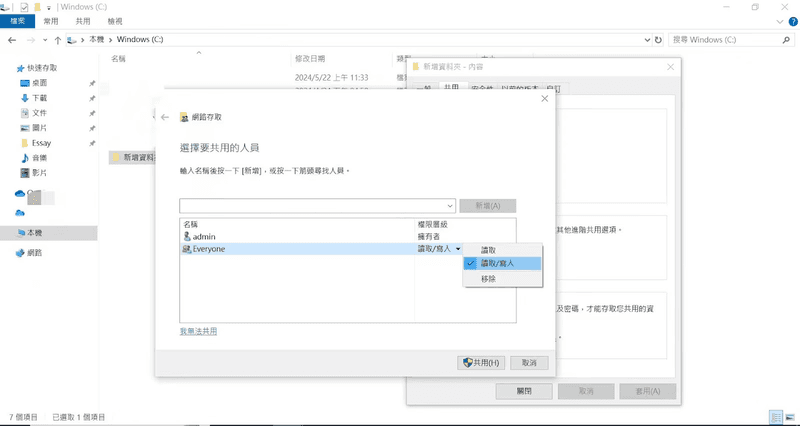
共享資料夾設定
  • 步驟3:打開「控制台」>> 點擊「網路和網際網路」>>「網路和共用中心」,點擊左方的「變更進階共用設定」。 開啓「網路探索」、「檔案及印表機共用」、「公用資料夾共用」,關閉「以密碼保護的共用」,最後記得要儲存變更!

  • 步驟4:找到電腦IP地址。回到「網路和共用中心」,點擊「網際網路」,進入「WLAN狀態」後,點擊「詳細資料」,在IPv4位址查看電腦的IP位置。
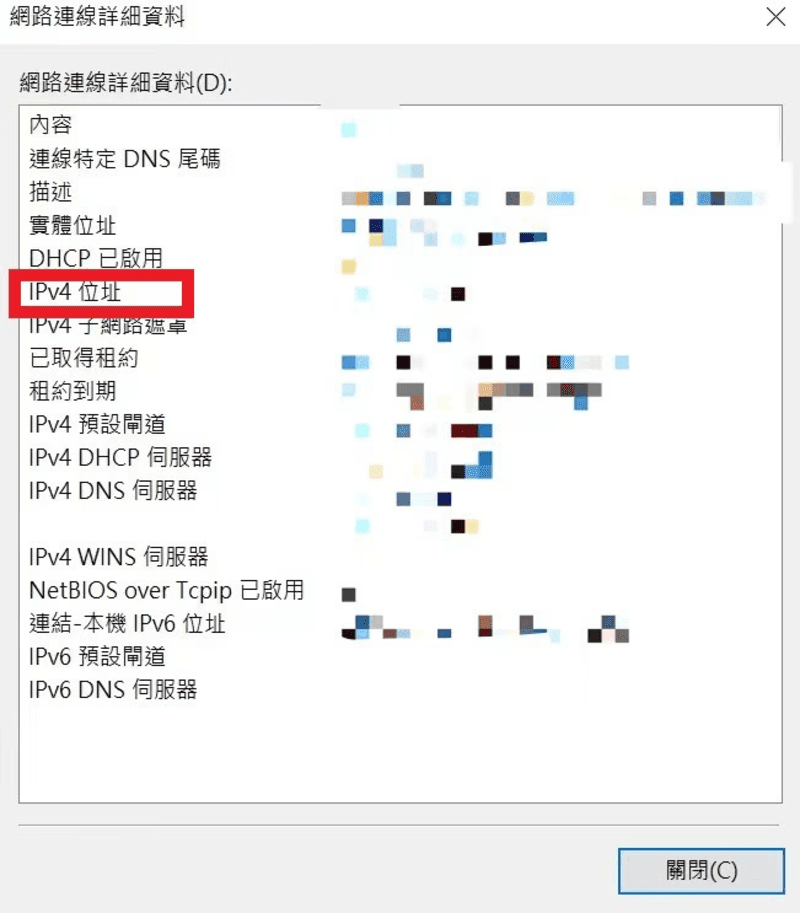
獲取Windows電腦IP地址
  • 步驟5:在iPhone打開「檔案」,點擊右上角,選「連接伺服器」,輸入Windows電腦IP位置,點擊「連缐」,連上之後就能看到Windows「共享資料夾」的檔案,並將檔案保存到手機。你也可以手機上的相片、影片、檔案上傳到「共享資料夾」,或是選取iPhone上要傳輸的照片、影片或檔案「分享」、「儲存到檔案」,就可以從Windows上獲取檔案了。
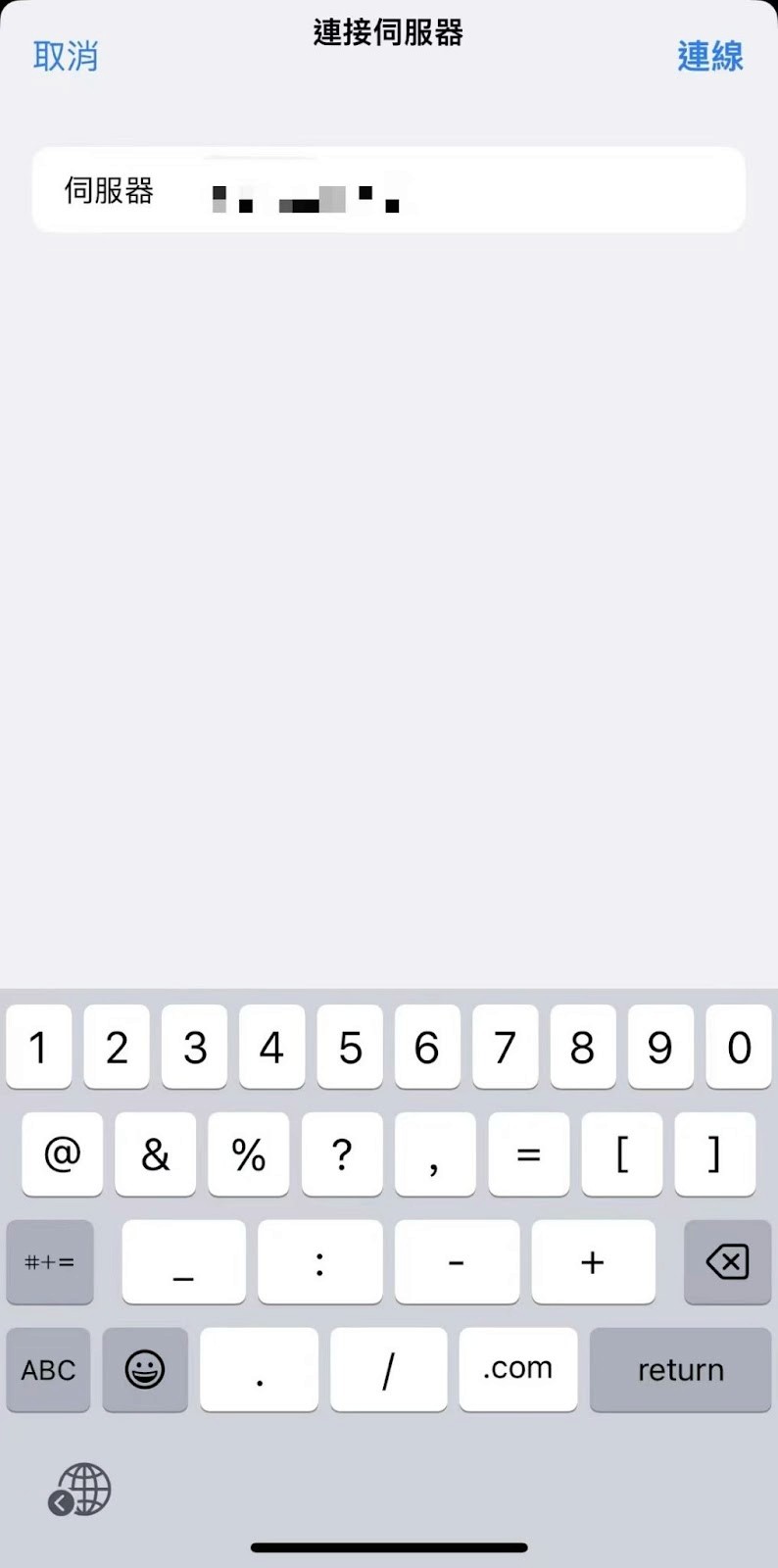
iphone連接電腦伺服器

iPhone 檔案傳輸常見問題

1. 沒有 USB 傳輸線,有哪些方法可以無線傳輸檔案?

最直接的方法是運用雲端硬碟,您可先將照片、文件等檔案上傳至 Google Drive、iCloud Drive 或 Dropbox 等服務,接著再從電腦端的網頁或應用程式下載,完美實現跨平台傳輸。

追求更直覺的體驗,則能透過「區域網路共享」達成,在同一 Wi-Fi 環境下,於 Windows 電腦設定共享資料夾,再使用支援 SMB 連線的 iOS App(如「檔案」App),即可直接將檔案存入電腦的指定位置。

此外,對於尋求極致效率與便利性的用戶,更可選擇 DeskIn 這類遠端桌面軟體,它不僅能讓您直接從 iPhone 遠端存取並拖曳電腦中的所有檔案,還同時兼具高速與無縫的操作體驗,徹底擺脫實體線材與傳統步驟的束縛。

2. iPhone 和電腦不在同一個地方,還能傳輸檔案嗎?

當然可以!即使 iPhone 和電腦身處不同地點,您依然能透過 DeskIn 這款遠端桌面軟體輕鬆傳輸檔案。只要在 iPhone 和遠端電腦上安裝 DeskIn 並使用同一帳戶登入,建立連線後,即可使用內建的「檔案傳輸」功能。

您可以直接拖曳檔案進行傳輸,完全不受檔案格式、大小或數量的限制。無論是急需從家中電腦取出簡報,還是想將手機照片備份到辦公室電腦,都能輕鬆實現。DeskIn 提供平均 12 MB/s 的高速傳輸,並透過端對端加密技術確保資料安全,是跨地點傳檔既高效又安全的完美方案。

免費下載DeskIn

3. 如何不壓縮畫質,將 iPhone 照片和影片傳到電腦?

若要無壓縮地將 iPhone 中的照片與影片傳至電腦,最可靠的方式是使用 USB 連接線進行原檔輸出。連接後,在電腦的「檔案總管」中直接選取並拖曳資料夾內的原始檔案,即可完整保留畫質。

此外,透過 iTunes 的同步照片功能時,請務必選擇「原始檔」或「保留原檔」選項,避免任何自動轉檔。若偏好無線方式,則可藉由 DeskIn 遠端桌面的「檔案傳輸」功能,實現無損畫質的高速傳輸,完美滿足專業需求。

方法對比:選擇最適合你的 iPhone 傳送檔案方法

比較項目

👑DeskIn遠端桌面

其他遠端軟體

Google 雲端硬碟

iTunes

共享資料夾

設定難度

✅低,只需要手機

❌一般

✅低,只需要手機

❌高,操作過程複雜

❌高,手機電腦都需要設定

安全性

✅高,端到端加密,一對一傳輸

✅高,端到端加密,一對一傳輸

✅高,采用高強度加密標

✅高,采用加密傳輸

❌一般,暴露給同一IP其他裝置

易用性

✅高,不限網路、距離

✅高,不限網路、距離

✅高,不限網路、距離

❌低,操作複雜,傳輸時間久

❌低,只能近距離

穩定性

✅高

❌一般

❌一般

❌低,易失敗或中斷

❌一般

傳輸速度

✅高

❌一般

❌一般

❌一般

✅高

遠程傳輸

✅可以

✅可以

❌不可以

❌不可以

❌不可以

直接操控電腦

✅可以

✅可以

❌不可以

❌不可以

❌不可以

大小、類型、數量限制

✅無

❌有

❌有,最高15GB

✅無

✅無

DeskIn是最好遠端檔案傳輸工具,让你實現iPhone和Windows電腦之間任意方向的快速、穩定的無缐傳送資料,立即下載DeskIn試用看看!

結論

本文介紹了四種實用的 iPhone 與 Windows 傳檔方法,從傳統的 USB 線到共享資料夾、雲端影碟,每種方式都有其適用場景。若您經常需要跨地點傳輸檔案,推薦使用 DeskIn 遠端桌面軟體,它能讓您隨時隨地高速、安全地完成檔案交換,操作簡單又有效率,是現代人必備的傳檔利器。


免費下載DeskIn

將 iPhone 中的照片、文件傳到 Windows 電腦,確實不像 Mac 能使用 AirDrop 那樣無縫。要將資料在 iPhone 與Windows 之間傳送,通常可以使用 USB 有線傳輸,雲端或是通訊軟體。但是有線方式速度慢容易傳輸失敗,雲端有免費容量限制,通訊軟體比如 Line 不僅會壓縮畫質,還有傳輸大小限制,限制很多。

好消息是,其實存在更簡單、能無損畫質的檔案傳輸方式,比如使用 Windows 系統內建的共享功能,或者透過像 DeskIn 這類高效的遠端桌面軟體,都能輕鬆實現 iPhone 與 Windows 電腦互傳檔案。不論您最適合哪一種方法,本文都將為您提供最詳細的步驟圖文教學。

1. 使用 DeskIn 遠端在 iPhone 與 Windows 間傳輸檔案

DeskIn 是一款強大的跨平台遠端控制軟體,完美支援 iPhone (iOS 13.0 以上) 與 Windows (Windows 7 或更新版本) 之間的連線與檔案傳輸。 無論是辦公常用的 PPT 簡報、PDF 合同、Excel 報表,還是個人的照片、影片、音樂等各種檔案類型,皆可透過 DeskIn 進行。它完全不限制檔案大小、類別、與傳輸數量,讓您無論是在辦公室需要快速交換大型設計稿,還是外出時臨時需要從手機傳送重要文件到電腦,都能輕鬆實現高速、無損的iPhone 與 Windows 互傳檔案。

不僅如此,DeskIn 更讓您能直接使用 iPhone 遠端操作 Windows 電腦。當您需要遠距辦公,或想將電腦中的檔案直接分享給客戶時,您甚至無需先將檔案傳到 iPhone,就能直接從遠端電腦發送,大幅提升工作效率與機動性。

立即下載DeskIn,用最快捷、簡單的方式完成iPhone和Windows之間的檔案傳輸!

免費下載DeskIn

爲什麽更推薦用DeskIn在iPhone和Windows電腦傳檔

👍優點

  • 可遠端傳輸,iPhone和Windows無需在同一網絡下,不管多遠都可以任意方向傳輸

  • 無需複雜設定,操作直覺,只用手機就能隨時傳輸,將檔案傳到指定的位置。

  • 安全,端到端加密,裝置之間一對一傳輸,需要密碼驗證。

  • 快速無損,高達12MB/s高速,傳輸品質高,不壓縮。

  • 無限制,不限制檔案類型、數量和大小。

❗局限性

  • 需要在手機和電腦提前下載好DeskIn軟體。

如何使用DeskIn在iPhone和Windows電腦之間傳檔

  • 步驟一:在iPhone和Windows上下載安裝DeskIn軟體,注冊一個免費賬戶並登入。

💡注意:如果你是首次在新裝置上登入,需要到注冊信箱完成驗證,更好的保障帳戶安全。

  • 步驟二:打開iPhone的DeskIn,到「遠端控制」模塊,輸入Windows DeskIn主界面上的設備代碼,或從設備列表找到你的Windows電腦,點擊「檔案傳輸」。您可以使用Windows主界面上的臨時密碼或自訂的安全密碼進行連缐,也可以在Windows上進行手動驗證。

  • 步驟三:進入檔案傳輸頁面>>「傳送檔案」>>選取檔案>>「更改位置」(選擇傳輸的目標位置)>>「傳送」,就能將iPhone檔案傳到Windows電腦

  • 進入檔案傳輸頁面>>點擊「下載檔案」>>選中要下載的檔案>>「下載」,就能將Windows電腦檔案傳到iPhone手機:

用 DeskIn 在 iPhone 和 Windows 電腦傳檔

2. 透過 Google 雲端硬碟共享 iPhone 小型檔案給電腦

在需要將 iPhone 中的工作檔案例如 PDF、Word 或 Excel 合同與數據報傳輸到電腦時,或者電腦傳資料到iPhone時,使用 Google Drive 也是一個相當便捷的跨平台解決方案。您只需在設備上將文件上傳,即可在任何一台電腦的瀏覽器中或者 iPhone 上下載資料。

這個方法特別適合用於小型檔案的即時共享,因為 Google 雲端硬碟為每個帳戶提供了 15GB 的免費儲存空間,足以應付多數工作文件。根據實測,在穩定的 Wi-Fi 環境下,從雲端硬碟下載檔案的速度是相當順暢,讓你能夠快速取得所需檔案,不會耽誤工作進度。不過,如果您需要一次性傳輸大量或大型檔案,建議可以改用 DeskIn 進行傳輸,不僅沒有容量限制,還能享受更穩定高速的傳輸體驗。

👍優點

  • 跨平台或者遠端存取方便,透過瀏覽器即可隨時下載檔案。

  • 提供 15GB 免費儲存空間,足以應付日常文件、簡報等小型工作檔案的傳輸需求。

  • 操作介面直覺簡單,多數使用者已熟悉基本的上傳與下載流程。

❗局限性

  • 上傳與下載操作較為繁瑣且預覽會壓縮畫質。

  • 傳輸大型影片或大量檔案時容易不足。

  • 傳輸速度受網路環境影響,在訊號不穩時可能出現中斷或延遲。

  • 檔案散落於郵件中,不利於後續的集中管理與查找。

如何透過 Google 雲端硬碟共享 iPhone 小型檔案給電腦

步驟一:於 iPhone 開啟 Google 雲端硬碟 App,點擊「開啟方式」>「儲存到檔案」,然後選擇您要傳送的 PDF、Word 或 Excel 等文件。

 用 Google Drive 在 iPhone 和 Windows 電腦傳檔

小貼士:使用此方法時,請留意手機和電腦都需要連接穩定的網路,以確保順暢的上傳與下載。

步驟二:在電腦上下載檔案:在電腦瀏覽器上前往 Google 雲端硬碟網站,登入同一個帳戶,找到檔案後點擊右鍵,選擇「下載」即可。

使用雲端硬碟傳輸檔案

3. 用 USB 線傳輸 iPhone 照片到電腦

當您需要傳輸大型或多媒體檔案如影片、音樂專輯、大量照片,或進行完整的裝置備份時,使用 USB 線與 iTunes 是最穩定可靠的傳統方法。該方法傳輸過程穩定、無需網路,且能完整同步多媒體資料庫。然而,操作流程較為繁瑣,且 iTunes 介面對新手而言較不直觀,靈活度也不如無線傳輸方式。

使用此方法前,您要準備好 iPhone 原廠 USB 傳輸線,並在 Windows 電腦上預先下載並安裝最新版 iTunes 軟體。它適用於大多數 iPhone 型號與 Windows 7 或更新版本的作業系統。如果已經準備好了,請緊跟下方教學執行動作喔。

👍優點

  • 傳輸過程不依賴網路連線,能確保資料安全與傳輸效率。

  • 穩定可靠的有線連接與完整資料管理功能。

  • 適合傳輸大型影音檔案與進行完整裝置備份。

❗局限性

  • 程式出錯崩潰、可能會刪掉同步過的資料。

  • 作業效率偏低,尤其是批量傳輸多個檔案時,經常是輸送到一半進度條就卡住。

  • 需攜帶傳輸線。


如何用 USB 線傳輸 iPhone 照片到電腦

步驟1:在電腦上安裝最新版的 iTunes,啟動後用 USB 或 USB-C 線連接 iPhone 與電腦,在iPhone 上點選「信任此電腦」

步驟2:點擊視窗左上方「裝置」按鈕,接著你會看到左側會出現資料庫及本機檔案的分類選單。

共享資料夾設定

步驟3:點選「檔案共享」,然後選擇用於接收電腦檔案的 APP。

步驟4:點擊「加入」按鈕,選擇想要傳輸的資料後再次點擊「加入」,程式就會將電腦檔案傳到 iPhone 對應的 APP 當中。

iTunes傳輸失敗,需要支援度更廣、連線更穩健、傳輸效率更高的方式?

推薦您試試 DeskIn 遠端桌面軟體,下載安裝後即可直接拖拽傳輸,輕鬆又便捷!其連線穩定不易失敗,並提供平均 12MB/s 的高速傳輸,讓您輕鬆交換各類檔案,無需擔心格式與大小限制。

免費下載DeskIn

4. 透過共享資料夾實現 iPhone 與 Windows 檔案傳送

當您與 Windows 電腦處於同一個區域網路例如家中或辦公室的同一台 Wi-Fi 路由器下,且希望無需安裝任何額外 App,就能在 iPhone 與電腦間無線、無損地傳輸檔案時,極度推薦使用「透過共享資料夾」這個內建方法。

此方法需先在 Windows 電腦上設定好共享資料夾並查詢 IP 位址,並確保 iPhone 的「檔案」App 能透過 SMB 協定連線。它適合傳輸各類檔案,且沒有大小與數量限制,是追求原生功能的理想選擇。

👍優點

  • 能夠實現iPhone與Windows之間的無線傳輸,傳輸品質高,不壓縮。

  • 不限制檔案類型、數量和大小。

  • 不需要再額外安裝多一個應用程式在電腦或是手機上。

❗局限性

  • 設定配置複雜,如果電腦不在身邊,無法配置和將所需檔案放到共享文件夾。

  • 無法遠端傳輸,只限同一區域網路下用。

  • 存在安全風險,透過IP位置即可存取檔案,「共享資料夾」可能同時暴露給同一網路下的其他裝置。

  • 兼容性与稳定性一般,若 Windows 使用的舊版協議可能導致連接失敗,網路質量較差時,傳輸可能中斷或速度下降。

如何透過共享資料夾實現 iPhone 與 Windows 檔案傳送

  • 步驟1:在電腦上新建一個資料夾作爲「共享資料夾」,並將你希望傳送到iPhone的檔案資料拖到「共享資料夾」中。

  • 步驟2:右鍵「共享資料夾」,選擇「内容」,點擊「共用」,找到並選擇「Everyone」,點擊右邊的「新增」,權限層級選「讀取/寫入」,最後點擊「共用」。

共享資料夾設定
  • 步驟3:打開「控制台」>> 點擊「網路和網際網路」>>「網路和共用中心」,點擊左方的「變更進階共用設定」。 開啓「網路探索」、「檔案及印表機共用」、「公用資料夾共用」,關閉「以密碼保護的共用」,最後記得要儲存變更!

  • 步驟4:找到電腦IP地址。回到「網路和共用中心」,點擊「網際網路」,進入「WLAN狀態」後,點擊「詳細資料」,在IPv4位址查看電腦的IP位置。

獲取Windows電腦IP地址
  • 步驟5:在iPhone打開「檔案」,點擊右上角,選「連接伺服器」,輸入Windows電腦IP位置,點擊「連缐」,連上之後就能看到Windows「共享資料夾」的檔案,並將檔案保存到手機。你也可以手機上的相片、影片、檔案上傳到「共享資料夾」,或是選取iPhone上要傳輸的照片、影片或檔案「分享」、「儲存到檔案」,就可以從Windows上獲取檔案了。

iphone連接電腦伺服器

iPhone 檔案傳輸常見問題

1. 沒有 USB 傳輸線,有哪些方法可以無線傳輸檔案?

最直接的方法是運用雲端硬碟,您可先將照片、文件等檔案上傳至 Google Drive、iCloud Drive 或 Dropbox 等服務,接著再從電腦端的網頁或應用程式下載,完美實現跨平台傳輸。

追求更直覺的體驗,則能透過「區域網路共享」達成,在同一 Wi-Fi 環境下,於 Windows 電腦設定共享資料夾,再使用支援 SMB 連線的 iOS App(如「檔案」App),即可直接將檔案存入電腦的指定位置。

此外,對於尋求極致效率與便利性的用戶,更可選擇 DeskIn 這類遠端桌面軟體,它不僅能讓您直接從 iPhone 遠端存取並拖曳電腦中的所有檔案,還同時兼具高速與無縫的操作體驗,徹底擺脫實體線材與傳統步驟的束縛。

2. iPhone 和電腦不在同一個地方,還能傳輸檔案嗎?

當然可以!即使 iPhone 和電腦身處不同地點,您依然能透過 DeskIn 這款遠端桌面軟體輕鬆傳輸檔案。只要在 iPhone 和遠端電腦上安裝 DeskIn 並使用同一帳戶登入,建立連線後,即可使用內建的「檔案傳輸」功能。

您可以直接拖曳檔案進行傳輸,完全不受檔案格式、大小或數量的限制。無論是急需從家中電腦取出簡報,還是想將手機照片備份到辦公室電腦,都能輕鬆實現。DeskIn 提供平均 12 MB/s 的高速傳輸,並透過端對端加密技術確保資料安全,是跨地點傳檔既高效又安全的完美方案。

免費下載DeskIn

3. 如何不壓縮畫質,將 iPhone 照片和影片傳到電腦?

若要無壓縮地將 iPhone 中的照片與影片傳至電腦,最可靠的方式是使用 USB 連接線進行原檔輸出。連接後,在電腦的「檔案總管」中直接選取並拖曳資料夾內的原始檔案,即可完整保留畫質。

此外,透過 iTunes 的同步照片功能時,請務必選擇「原始檔」或「保留原檔」選項,避免任何自動轉檔。若偏好無線方式,則可藉由 DeskIn 遠端桌面的「檔案傳輸」功能,實現無損畫質的高速傳輸,完美滿足專業需求。

方法對比:選擇最適合你的 iPhone 傳送檔案方法

比較項目

👑DeskIn遠端桌面

其他遠端軟體

Google 雲端硬碟

iTunes

共享資料夾

設定難度

✅低,只需要手機

❌一般

✅低,只需要手機

❌高,操作過程複雜

❌高,手機電腦都需要設定

安全性

✅高,端到端加密,一對一傳輸

✅高,端到端加密,一對一傳輸

✅高,采用高強度加密標

✅高,采用加密傳輸

❌一般,暴露給同一IP其他裝置

易用性

✅高,不限網路、距離

✅高,不限網路、距離

✅高,不限網路、距離

❌低,操作複雜,傳輸時間久

❌低,只能近距離

穩定性

✅高

❌一般

❌一般

❌低,易失敗或中斷

❌一般

傳輸速度

✅高

❌一般

❌一般

❌一般

✅高

遠程傳輸

✅可以

✅可以

❌不可以

❌不可以

❌不可以

直接操控電腦

✅可以

✅可以

❌不可以

❌不可以

❌不可以

大小、類型、數量限制

✅無

❌有

❌有,最高15GB

✅無

✅無

DeskIn是最好遠端檔案傳輸工具,让你實現iPhone和Windows電腦之間任意方向的快速、穩定的無缐傳送資料,立即下載DeskIn試用看看!

結論

本文介紹了四種實用的 iPhone 與 Windows 傳檔方法,從傳統的 USB 線到共享資料夾、雲端影碟,每種方式都有其適用場景。若您經常需要跨地點傳輸檔案,推薦使用 DeskIn 遠端桌面軟體,它能讓您隨時隨地高速、安全地完成檔案交換,操作簡單又有效率,是現代人必備的傳檔利器。

免費下載DeskIn
iPhone 傳檔到 Windows 不求人!4 招將檔案傳到電腦的終極指南

章節目錄

1212 big sale
 Best Screen Sharing for Game Testing

Best Screen Sharing for Game Testing: Why DeskIn Beats AnyDesk, TeamViewer & Parsec

Remote work didn’t just change how teams collaborate: it transformed how game testing gets done.

Today’s QA teams are global, developers work across time zones, and playtests happen far beyond a single studio. That makes screen sharing no longer optional, but essential. The challenge is that most remote tools weren’t built for real gameplay. They lag, drop frames, and blur the details QA teams rely on.

DeskIn is different. It’s engineered for high-FPS visuals, ultra-low latency, and accurate gameplay feedback, making it a modern screen-sharing solution built specifically for remote game testing and remote gameplay.

Let’s break down why DeskIn is quickly becoming the best screen-sharing tool for game developers, and why tools like AnyDesk, TeamViewer, and even Parsec fall short for serious QA work.

 Best Screen Sharing for Game Testing

Real Use Cases in Game QA & Development, Why Need a Screen Sharing Tool?

Remote screen sharing has moved from a "nice-to-have" to a critical, indispensable tool in modern game Quality Assurance (QA). Its adoption is driven by fundamental shifts in how games are developed, tested, and collaborated on.

Here’s a breakdown of why it's now essential:

  • Real-time bug reproduction
    QA shares live gameplay while developers observe inputs and system behavior, allowing issues to be reproduced and fixed immediately: no back-and-forth recordings required.

  • VFX and visual review
    Teams review lighting, shaders, and effects with crisp color accuracy during screen sharing for game testing, without compression hiding defects. 

  • Remote prototype playtesting
    Testers play early builds remotely, enabling fast feedback without large downloads or complex setup using remote game testing software.

  • Cross-play testing (mobile & PC)
    Teams can test mobile and PC gameplay side by side, mirroring mobile screens to desktop while validating controls, UI behavior, and performance across platforms, an essential use case for remote QA tools.

  • Animation timing review
    Animation teams benefit from high-FPS streaming to review movement and timing frame by frame. Subtle issues in transitions, hit reactions, or camera motion are easier to spot when playback is smooth and accurate.

  • Multiplayer latency testing
    QA can conduct latency and synchronization tests while developers watch live sessions. This helps teams identify network-related issues faster using effective remote dev tools.

  • Secure external QA access
    External QA partners can securely access builds and testing environments through DeskIn, making collaboration smoother while keeping pre-release content protected.

    Free download DeskIn

Modern Tools Elevating the Practice

Today’s game testing workflows rely on tools that go far beyond simple screen viewing solutions like Zoom. Modern remote platforms such as DeskIn, AnyDesk, TeamViewer, and Parsec introduce capabilities specifically designed to support game QA. 

Choosing the right tool comes down to which features best support real-time testing and collaboration, including:

  • High frame rate and low latency — critical for spotting fast-paced visual bugs and timing-sensitive issues.

  • Remote input control — allows developers to take over instantly and test hypotheses without lengthy explanations.

  • Built-in file transfer — enables quick delivery of new builds, patches, or configuration files.

  • Real-time screen mirroring — makes it easy to share bug reproduction steps for immediate analysis.

  • Audio calls and whiteboard tools — support clear communication and visual guidance without relying on third-party apps.

Together, these features transform remote sessions into efficient, collaborative QA environments, bringing teams closer to the feel of in-studio testing.

Which Screen Sharing Tool is Best for Game QA

Choosing the right screen sharing tool can make the difference between a lengthy, ambiguous bug report and a swift, precise fix.

For Game QA, the ideal solution must go beyond basic screen viewing; it needs to deliver high visual fidelity, ultra-low latency, cross-platform compatibility, and interactive control to keep up with the real-time, detail-sensitive nature of game testing. 

Below, we break down what to look for and compare top contenders shaping how modern game teams test.

DeskIn

DeskIn is designed around real game testing workflows, not just office tasks. Its features focus on what QA teams and developers actually need: low latency, high FPS, visual accuracy, and smooth collaboration.

Ultra-Low Latency for Accurate Gameplay

High-FPS Streaming: Up to 2K240FPS & 4K60FPS

Screen Mirroring, Sharing, and Extension for Flexible Testing

DeskIn screen extension between desktop and laptop supports multiple operating systems

Color Accuracy & Crisp Visuals 

DeskIn supports 4:4:4 true color mode, preserves visual clarity and color accuracy, which is critical for inspecting textures, lighting, shaders, and VFX. Multi-Device, Cross-System Testing

Modern studios work across platforms. 

DeskIn supports Windows, macOS, Chromebook, iOS, and Android, enabling seamless cross-system testing. 

Remote Mobile Game Testing (Unique Advantage)

Mobile screens can be mirrored and accessed remotely for iOS and Android testing. 

Remote File Transfer for Builds + Logs

Built-in file transfer speeds of up to 12MB/s, allowing teams to quickly share builds, crash logs, and save files during QA sessions. 

External Controller & Peripheral Support (Xbox and More)

DeskIn supports external device adaptation, including Xbox controllers and other common game peripherals, allowing QA teams to test real input behavior and control mapping during game testing.

Remote Terminal Access for Faster Debugging

Developers and QA can use command-line tools remotely without interrupting gameplay, making it easier to pull logs, run scripts, and validate fixes in real time during game testing.

Stable Performance Under Heavy Load

Powered by 200+ global nodes and smart network navigation, DeskIn maintains smooth, reliable performance even during GPU-intensive scenes, multiplayer testing, or large-scale playtests.

Whether you’re reproducing a graphical glitch, debugging a physics bug, or collaborating across continents, DeskIn is the best tool for turning remote QA into a seamless extension of the development floor. Try DeskIn today and experience high-FPS streaming, low latency, and crystal-clear visuals.

Free download DeskIn

AnyDesk

AnyDesk is primarily designed for IT support and remote troubleshooting, which limits its effectiveness for screen sharing for game testing.

  • Cross-platform compatibility: Supports Windows, macOS, Linux (Ubuntu, Debian, RHEL, SUSE, Mint), Android, iOS/iPadOS, plus specialized platforms like Raspberry Pi and ChromeOS.

  • Image quality & FPS: Supports up to 60 FPS, which is often insufficient for reviewing fast animations, camera motion, or combat flow.

  • Latency: Acceptable for support tasks (typically around 80–120ms), but inconsistent for timing-sensitive gameplay such as combat, physics interactions, or input validation.

  • Network stability: Generally stable for light workloads, but performance degrades under GPU-heavy scenes.

  • External device adaptation: Does not support game controllers, limiting accurate input and control testing.

  • Interactive features: Basic remote control; lacks advanced collaboration features tailored for QA.

  • File transfer speed: Supported, but slower and less integrated into rapid QA iteration cycles.

Recommended Read:
Why Should You Choose DeskIn Remote Desktop Instead Of Anydesk? 

TeamViewer

TeamViewer is a strong enterprise remote access tool, but its business-first design creates friction for real-time game QA.

  • Cross-platform compatibility: Supports Windows, macOS, Linux (including Ubuntu, Debian, Raspberry Pi), Android, iOS, and iPadOS.

  • Image quality & FPS: Resolution is auto-adjusted based on network conditions, which can reduce clarity during fast gameplay or visual reviews. 

  • Latency: Higher baseline latency, which becomes obvious during fast-paced or competitive gameplay testing.

  • Network stability: Stable for meetings and management tasks, but less reliable during long playtests or open-world stress testing.

  • External device adaptation: Does not support game controllers, limiting realism for gameplay input testing.

  • Interactive features: Strong for meetings and presentations, but lacks QA-focused interaction like seamless gameplay takeover.

  • File transfer speed: Supported at low speed, with a single file size limited to under 4GB, which can be restrictive for large builds.

Recommended Read:
TeamViewer Alternatives for People Who Just Want Something Simple 

Parsec

Parsec comes closer to gaming needs, but still has gaps for structured QA and dev pipelines.

  • Cross-platform compatibility: Strong on Windows and macOS; mobile and broader cross-system workflows are more limited.

  • Image quality & FPS: Capable of high FPS (Max at 4K60FPS) streaming, but visual quality and color fidelity depend heavily on manual configuration.

  • Latency: Low latency (50-80 ms) when well-tuned, but performance varies based on network setup and user expertise.

  • Network stability: Performs well in controlled environments, but requires tuning for consistent results across teams.

  • External device adaptation: Supports controllers, but setup can vary and may require additional configuration.

  • Interactive features: Focused on gameplay streaming rather than full QA collaboration (logs, builds, multi-device testing).

  • File transfer speed: Does not support built-in file transfer, requiring third-party tools for builds and logs.

Recommended Read:
Why DeskIn is the Best Parsec Alternative for Gamers 

Individually, these tools work. But for teams that need reliable, accurate, and efficient screen sharing for game testing, these gaps add friction fast.

If your QA team needs accuracy, speed, and stability, not just remote access, DeskIn is the upgrade that makes the difference.

Free download DeskIn

How to Set Up DeskIn for Game Testing

Getting started with DeskIn for game testing takes just a few minutes: no complex setup or technical configuration required.

Download DeskIn for Windows, macOS, iOS, Android
  1. Install DeskIn on both devices
    Download and install DeskIn on the test machine and the device used by QA or developers.

  2. Log in on both devices
    Sign in to your DeskIn account on both devices 

  3. Start a secure remote session
    Select the test device, click connect, and enter the password to begin a secure, low-latency session.

  4. Use screen sharing during testing
    Click the screen mgt in the left toolbar, select 'Mirror My Screen' feature.


    Free download DeskIn

FAQ

  1. Can I test fast-paced or competitive games remotely?
    Yes. DeskIn’s ultra-low latency and high-FPS streaming allow accurate testing of FPS, fighting games, and other timing-sensitive gameplay.

  2. Is screen sharing reliable for VFX, rendering, or art QA?
    Yes. DeskIn supports 4:4:4 true color mode, ensures color accuracy and sharp visuals, making it suitable for reviewing textures, lighting, shaders, and effects without compression blur.

  3. Can I use DeskIn to test mobile games remotely?
    Yes. DeskIn supports wireless screen mirroring for iOS and Android, enabling mobile game testing without cables or complex setup.

  4. Does DeskIn support file transfers for build sharing?
    Yes. DeskIn includes built-in file transfer up to 12MB/s for sharing builds, logs, and save files during QA sessions.

  5. Is DeskIn secure enough for pre-release testing?
    Yes, DeskIn uses AES-256 encryption (bank-level security) to protect remote sessions and file transfers for confidential, pre-release workflows.

Better Game Testing Starts With DeskIn

Traditional remote desktop tools were built for meetings, support, and office workflows: not for real game testing. When QA teams rely on tools that lag, drop frames, or blur visuals, critical gameplay issues slip through, and feedback loses accuracy.

DeskIn changes that. With gaming-grade performance, ultra-low latency, high-FPS screen sharing, and flexible cross-device testing, it gives QA and development teams a clear, responsive view of gameplay—no matter where they’re working from. From PC and mobile testing to art review and multiplayer validation, DeskIn supports modern remote game testing without compromise.

Start free with DeskIn today and see how smooth, accurate, and effortless remote game testing can be.

Free download DeskIn
 Best Screen Sharing for Game Testing

Best Screen Sharing for Game Testing: Why DeskIn Beats AnyDesk, TeamViewer & Parsec

Remote work didn’t just change how teams collaborate: it transformed how game testing gets done.

Today’s QA teams are global, developers work across time zones, and playtests happen far beyond a single studio. That makes screen sharing no longer optional, but essential. The challenge is that most remote tools weren’t built for real gameplay. They lag, drop frames, and blur the details QA teams rely on.

DeskIn is different. It’s engineered for high-FPS visuals, ultra-low latency, and accurate gameplay feedback, making it a modern screen-sharing solution built specifically for remote game testing and remote gameplay.

Let’s break down why DeskIn is quickly becoming the best screen-sharing tool for game developers, and why tools like AnyDesk, TeamViewer, and even Parsec fall short for serious QA work.

 Best Screen Sharing for Game Testing

Real Use Cases in Game QA & Development, Why Need a Screen Sharing Tool?

Remote screen sharing has moved from a "nice-to-have" to a critical, indispensable tool in modern game Quality Assurance (QA). Its adoption is driven by fundamental shifts in how games are developed, tested, and collaborated on.

Here’s a breakdown of why it's now essential:

  • Real-time bug reproduction
    QA shares live gameplay while developers observe inputs and system behavior, allowing issues to be reproduced and fixed immediately: no back-and-forth recordings required.

  • VFX and visual review
    Teams review lighting, shaders, and effects with crisp color accuracy during screen sharing for game testing, without compression hiding defects. 

  • Remote prototype playtesting
    Testers play early builds remotely, enabling fast feedback without large downloads or complex setup using remote game testing software.

  • Cross-play testing (mobile & PC)
    Teams can test mobile and PC gameplay side by side, mirroring mobile screens to desktop while validating controls, UI behavior, and performance across platforms, an essential use case for remote QA tools.

  • Animation timing review
    Animation teams benefit from high-FPS streaming to review movement and timing frame by frame. Subtle issues in transitions, hit reactions, or camera motion are easier to spot when playback is smooth and accurate.

  • Multiplayer latency testing
    QA can conduct latency and synchronization tests while developers watch live sessions. This helps teams identify network-related issues faster using effective remote dev tools.

  • Secure external QA access
    External QA partners can securely access builds and testing environments through DeskIn, making collaboration smoother while keeping pre-release content protected.

    Free download DeskIn

Modern Tools Elevating the Practice

Today’s game testing workflows rely on tools that go far beyond simple screen viewing solutions like Zoom. Modern remote platforms such as DeskIn, AnyDesk, TeamViewer, and Parsec introduce capabilities specifically designed to support game QA. 

Choosing the right tool comes down to which features best support real-time testing and collaboration, including:

  • High frame rate and low latency — critical for spotting fast-paced visual bugs and timing-sensitive issues.

  • Remote input control — allows developers to take over instantly and test hypotheses without lengthy explanations.

  • Built-in file transfer — enables quick delivery of new builds, patches, or configuration files.

  • Real-time screen mirroring — makes it easy to share bug reproduction steps for immediate analysis.

  • Audio calls and whiteboard tools — support clear communication and visual guidance without relying on third-party apps.

Together, these features transform remote sessions into efficient, collaborative QA environments, bringing teams closer to the feel of in-studio testing.

Which Screen Sharing Tool is Best for Game QA

Choosing the right screen sharing tool can make the difference between a lengthy, ambiguous bug report and a swift, precise fix.

For Game QA, the ideal solution must go beyond basic screen viewing; it needs to deliver high visual fidelity, ultra-low latency, cross-platform compatibility, and interactive control to keep up with the real-time, detail-sensitive nature of game testing. 

Below, we break down what to look for and compare top contenders shaping how modern game teams test.

DeskIn

DeskIn is designed around real game testing workflows, not just office tasks. Its features focus on what QA teams and developers actually need: low latency, high FPS, visual accuracy, and smooth collaboration.

Ultra-Low Latency for Accurate Gameplay

High-FPS Streaming: Up to 2K240FPS & 4K60FPS

Screen Mirroring, Sharing, and Extension for Flexible Testing

DeskIn screen extension between desktop and laptop supports multiple operating systems

Color Accuracy & Crisp Visuals 

DeskIn supports 4:4:4 true color mode, preserves visual clarity and color accuracy, which is critical for inspecting textures, lighting, shaders, and VFX. Multi-Device, Cross-System Testing

Modern studios work across platforms. 

DeskIn supports Windows, macOS, Chromebook, iOS, and Android, enabling seamless cross-system testing. 

Remote Mobile Game Testing (Unique Advantage)

Mobile screens can be mirrored and accessed remotely for iOS and Android testing. 

Remote File Transfer for Builds + Logs

Built-in file transfer speeds of up to 12MB/s, allowing teams to quickly share builds, crash logs, and save files during QA sessions. 

External Controller & Peripheral Support (Xbox and More)

DeskIn supports external device adaptation, including Xbox controllers and other common game peripherals, allowing QA teams to test real input behavior and control mapping during game testing.

Remote Terminal Access for Faster Debugging

Developers and QA can use command-line tools remotely without interrupting gameplay, making it easier to pull logs, run scripts, and validate fixes in real time during game testing.

Stable Performance Under Heavy Load

Powered by 200+ global nodes and smart network navigation, DeskIn maintains smooth, reliable performance even during GPU-intensive scenes, multiplayer testing, or large-scale playtests.

Whether you’re reproducing a graphical glitch, debugging a physics bug, or collaborating across continents, DeskIn is the best tool for turning remote QA into a seamless extension of the development floor. Try DeskIn today and experience high-FPS streaming, low latency, and crystal-clear visuals.

Free download DeskIn

AnyDesk

AnyDesk is primarily designed for IT support and remote troubleshooting, which limits its effectiveness for screen sharing for game testing.

  • Cross-platform compatibility: Supports Windows, macOS, Linux (Ubuntu, Debian, RHEL, SUSE, Mint), Android, iOS/iPadOS, plus specialized platforms like Raspberry Pi and ChromeOS.

  • Image quality & FPS: Supports up to 60 FPS, which is often insufficient for reviewing fast animations, camera motion, or combat flow.

  • Latency: Acceptable for support tasks (typically around 80–120ms), but inconsistent for timing-sensitive gameplay such as combat, physics interactions, or input validation.

  • Network stability: Generally stable for light workloads, but performance degrades under GPU-heavy scenes.

  • External device adaptation: Does not support game controllers, limiting accurate input and control testing.

  • Interactive features: Basic remote control; lacks advanced collaboration features tailored for QA.

  • File transfer speed: Supported, but slower and less integrated into rapid QA iteration cycles.

Recommended Read:
Why Should You Choose DeskIn Remote Desktop Instead Of Anydesk? 

TeamViewer

TeamViewer is a strong enterprise remote access tool, but its business-first design creates friction for real-time game QA.

  • Cross-platform compatibility: Supports Windows, macOS, Linux (including Ubuntu, Debian, Raspberry Pi), Android, iOS, and iPadOS.

  • Image quality & FPS: Resolution is auto-adjusted based on network conditions, which can reduce clarity during fast gameplay or visual reviews. 

  • Latency: Higher baseline latency, which becomes obvious during fast-paced or competitive gameplay testing.

  • Network stability: Stable for meetings and management tasks, but less reliable during long playtests or open-world stress testing.

  • External device adaptation: Does not support game controllers, limiting realism for gameplay input testing.

  • Interactive features: Strong for meetings and presentations, but lacks QA-focused interaction like seamless gameplay takeover.

  • File transfer speed: Supported at low speed, with a single file size limited to under 4GB, which can be restrictive for large builds.

Recommended Read:
TeamViewer Alternatives for People Who Just Want Something Simple 

Parsec

Parsec comes closer to gaming needs, but still has gaps for structured QA and dev pipelines.

  • Cross-platform compatibility: Strong on Windows and macOS; mobile and broader cross-system workflows are more limited.

  • Image quality & FPS: Capable of high FPS (Max at 4K60FPS) streaming, but visual quality and color fidelity depend heavily on manual configuration.

  • Latency: Low latency (50-80 ms) when well-tuned, but performance varies based on network setup and user expertise.

  • Network stability: Performs well in controlled environments, but requires tuning for consistent results across teams.

  • External device adaptation: Supports controllers, but setup can vary and may require additional configuration.

  • Interactive features: Focused on gameplay streaming rather than full QA collaboration (logs, builds, multi-device testing).

  • File transfer speed: Does not support built-in file transfer, requiring third-party tools for builds and logs.

Recommended Read:
Why DeskIn is the Best Parsec Alternative for Gamers 

Individually, these tools work. But for teams that need reliable, accurate, and efficient screen sharing for game testing, these gaps add friction fast.

If your QA team needs accuracy, speed, and stability, not just remote access, DeskIn is the upgrade that makes the difference.

Free download DeskIn

How to Set Up DeskIn for Game Testing

Getting started with DeskIn for game testing takes just a few minutes: no complex setup or technical configuration required.

Download DeskIn for Windows, macOS, iOS, Android
  1. Install DeskIn on both devices
    Download and install DeskIn on the test machine and the device used by QA or developers.

  2. Log in on both devices
    Sign in to your DeskIn account on both devices 

  3. Start a secure remote session
    Select the test device, click connect, and enter the password to begin a secure, low-latency session.

  4. Use screen sharing during testing
    Click the screen mgt in the left toolbar, select 'Mirror My Screen' feature.


    Free download DeskIn

FAQ

  1. Can I test fast-paced or competitive games remotely?
    Yes. DeskIn’s ultra-low latency and high-FPS streaming allow accurate testing of FPS, fighting games, and other timing-sensitive gameplay.

  2. Is screen sharing reliable for VFX, rendering, or art QA?
    Yes. DeskIn supports 4:4:4 true color mode, ensures color accuracy and sharp visuals, making it suitable for reviewing textures, lighting, shaders, and effects without compression blur.

  3. Can I use DeskIn to test mobile games remotely?
    Yes. DeskIn supports wireless screen mirroring for iOS and Android, enabling mobile game testing without cables or complex setup.

  4. Does DeskIn support file transfers for build sharing?
    Yes. DeskIn includes built-in file transfer up to 12MB/s for sharing builds, logs, and save files during QA sessions.

  5. Is DeskIn secure enough for pre-release testing?
    Yes, DeskIn uses AES-256 encryption (bank-level security) to protect remote sessions and file transfers for confidential, pre-release workflows.

Better Game Testing Starts With DeskIn

Traditional remote desktop tools were built for meetings, support, and office workflows: not for real game testing. When QA teams rely on tools that lag, drop frames, or blur visuals, critical gameplay issues slip through, and feedback loses accuracy.

DeskIn changes that. With gaming-grade performance, ultra-low latency, high-FPS screen sharing, and flexible cross-device testing, it gives QA and development teams a clear, responsive view of gameplay—no matter where they’re working from. From PC and mobile testing to art review and multiplayer validation, DeskIn supports modern remote game testing without compromise.

Start free with DeskIn today and see how smooth, accurate, and effortless remote game testing can be.

Free download DeskIn
emote Desktop Software for Gaming

How Remote Desktop Software for Gaming Improves Productivity & Play

Remote gaming isn’t just a niche tool anymore; it’s becoming the new normal lifestyle. Gamers today want to play wherever they are: on a low-spec laptop, a tablet, or even a phone. But here’s the catch: high-end gaming rigs are expensive, heavy, and definitely not travel-friendly. That’s where remote desktop software for gaming steps in, letting you tap into the power of your home gaming PC from literally anywhere.

But here’s the truth no one says out loud: Not every remote desktop software can handle gaming, especially fast, competitive titles. Some introduce lag, input delay, or washed-out graphics that absolutely ruin the experience.

That’s why new-gen solutions like DeskIn have emerged, tools built specifically to deliver low-latency remote desktop, high FPS, crisp color, and real gaming control, not just “screen access”.

emote Desktop Software for Gaming

Why Gamers Use Remote Desktop Software

Gamers don’t switch to remote desktop software for gaming just because it sounds cool: they use it because it solves real, everyday problems in ways traditional setups simply can’t. Here are the most common (and honestly, most relatable) reasons players are embracing remote access:

  • Play high-end games on a low-end device
    As it turns out, a MacBook, Chromebook, or iPad can’t run AAA games by itself, but if you use remote desktop software to stream the game from a PC you own with good hardware, these devices turn into portable high-end gaming screens. It offloads the computation-intensive rendering work to your main PC and then just streams over the action to your secondary device.

  • Game while traveling
    Business trips, holidays, vacations; none need to interrupt gaming when you have a stable remote gaming setup going. You can complete some work at a hotel desk and then dive right into your Steam library without having to lug around a heavy gaming laptop or desktop tower through the airport. Remote access keeps your gaming routine alive, no matter the time zone.

  • Maximize mobility
    Modern remote desktop software for gamers makes it incredibly easy to play from a phone or tablet. Just pair a controller or use touch input, and the device becomes a portable gaming machine. Perfect for casual sessions on the couch, during commutes, or while relaxing between flights.

  • Access your full Steam/Battle.net/EPIC library remotely
    Unlike cloud gaming, which often limits you to curated catalogs, remote desktop software streams your entire PC exactly as it is. Mods, custom settings, experimental builds, add-ons, indie games, everything stays intact. Your entire library travels with you without any platform restrictions.

  • No need to buy multiple gaming PCs
    Instead of investing in multiple PCs for different locations or devices, gamers rely on remote desktop software for gaming to stretch the value of a single high-spec rig. From tablets to old laptops, anything becomes a viable gaming screen. This approach saves money, simplifies setups, and makes remote play feel seamless and efficient.

  • Game developers testing builds remotely
    Developers can run heavy builds on a workstation and test gameplay, performance, or UI remotely from a laptop or tablet. This is especially useful for quick QA checks, debugging, or testing across different environments without constantly switching machines.

  • Project mobile games onto a bigger screen
    Remote access also makes it easy to project mobile games onto a larger display. Developers, streamers, and testers can mirror mobile gameplay to a PC or monitor for better visibility, recording, or live demonstrations. Using remote desktop software, mobile games become easier to analyze, present, and refine on a full-sized screen.

Key Features of Remote Desktop Software for Gaming

The best remote desktop software for gaming doesn’t just give you access to your PC on another system: it gives you access to both the strength of your host device and a finely tuned gaming experience, all in one package. These are the core elements that contribute to the polished, playable feel of remote gaming.

Ultra-Low Latency

Latency determines whether a game feels responsive or frustrating. In shooting and MOBA games, or skill-based competitive ones too, the delay of over 40ms could disrupt aim and timing. Modern low-latency remote desktop tools, including optimized platforms like DeskIn, use advanced protocols to reduce input delays and keep gameplay tight and reactive.

High FPS Support (144–240FPS)

Many standard remote access apps cap FPS at 30–60, which isn’t enough for fast-paced games. High FPS means smoother camera movement, cleaner motion, and better precision. Today’s gaming-focused platforms support 120FPS+, with some solutions streaming up to 2K144FPS for near-native fluidity.

High Resolution 

Remote gaming benefits massively from crisp detail, especially in 4K titles or visually heavy worlds. Older tools often compress visuals into blurry text and washed-out colors. Newer remote desktop software for gaming maintains sharper resolution and better color fidelity, offering clearer textures and more accurate UI readability.

Accurate Keyboard, Controller & Mouse Input

Fast input recognition is essential. This consistency is essential for any game that demands timing and precision. A well-optimized remote desktop software for gamers should ensure that every input is transmitted cleanly, avoiding ghost touches or lag spikes that disrupt the flow of gameplay.

Stable Network Optimization

Network stability plays a massive role in remote gaming performance. Many people assume remote play always means lag, but modern platforms prove otherwise.

These systems help maintain smooth gameplay even when Wi-Fi conditions fluctuate. Instead of sudden freezes or pixelation, the software dynamically adjusts to keep the experience stable.

DeskIn: The Best Remote Desktop Software for Gaming Right Now

DeskIn stands out as one of the most performance-focused options in the remote desktop software for the gaming space. It’s engineered for speed, clarity, and responsiveness: the things that actually matter when you’re playing fast, demanding games instead of just accessing a desktop.

Free download DeskIn
  • Ultra-low latency with ZeroSync® Engine
    ZeroSync® keeps total delay under 40ms, delivering fast, precise input that feels close to native PC gameplay.

  • High FPS support up to 2K240FPS / 4K60FPS
    DeskIn streams smooth, high-frame-rate gameplay, reducing motion blur and helping with precise aiming and fast camera movement.

  • 4:4:4 true color for clean visuals
    Text stays sharp, shadows stay detailed, and in-game elements remain easy to spot: no muddy compression like older tools.

  • Cross-device compatibility ( iOS, iPadOS, Android,Windows, macOS)
    Play on virtually any screen you own, turning everyday devices into a portable gaming setup.

  • Full support for gaming shortcuts, hotkeys, and controllers
    Inputs register instantly, making DeskIn ideal for games that rely on timing, combos, or precise movement.

  • Extended Screen Mode for bigger setups
    Use additional devices as extra displays, perfect for strategy, multitasking, or expanded immersion.

  • Immersive Auto 3D Game View
    DeskIn automatically enhances supported games with a 3D-style depth effect, making remote visuals feel richer and more immersive without extra setup.

  • Bank-level AES-256 encryption for strong security (local + remote modes)
    DeskIn protects every session with AES-256 encryption, the same standard used by banks, ensuring secure gameplay whether you’re on home Wi-Fi, public networks, or mobile hotspots.

  • Fast setup with a clean, intuitive UI
    Simple onboarding means you’re gaming in minutes, not wrestling with settings.

With ultra-low latency, high frame-rate streaming, intelligent visual enhancements, and secure remote sessions, DeskIn pushes remote desktop software for gaming far beyond traditional remote access tools.

Recommended Read:

DeskIn vs Other Remote Desktop Tools

When comparing remote desktop software for gaming, the differences become obvious fast. Some tools work well on a local network, some are meant for office tasks, and some lock you into limited game catalogs. DeskIn stands apart because it’s built specifically for high-performance remote gaming, not generic screen sharing.

Here’s how it compares to the usual options:

  • DeskIn – Designed for high-performance remote gaming
    Built for low latency, high FPS streaming, crisp visuals, and accurate input. It supports any game in your library with no platform restrictions and works smoothly across PC, Mac, Android, iPad, and more.

  • Steam Link – Great for Steam-only games, but limited beyond LAN
    Steam Link works nicely on the same network, but quickly struggles with latency over long distances. It also supports only Steam titles, leaving out Epic, Battle.net, standalone launchers, and modded games.

  • TeamViewer – Too slow for real gaming
    TeamViewer is excellent for remote support and business use, but not for gaming. High latency, low FPS, and aggressive compression make fast gameplay nearly impossible.

  • Chrome Remote Desktop – Not optimized for games
    CRD is great for quick access to files or simple tasks, but lacks the frame rate, input precision, and color quality that remote desktop software for gaming demands. Even casual games feel sluggish.

  • Cloud gaming platforms – Limited game libraries + ongoing subscription costs
    Services like GeForce NOW, Xbox Cloud Gaming, or Boosteroid depend on supported titles. Mods, custom files, and personal libraries often won’t work. Plus, you pay a monthly fee and compete with server availability.

Across all these comparisons, the difference is clear: DeskIn gives you full freedom, zero restrictions, and higher performance. Your entire PC becomes your remote gaming rig: no locked library, no extra fees, and no hardware limits.

DeskIn fits anyone who wants high-quality remote desktop software for gaming without limits. Try DeskIn for free today, turn any device into a gaming powerhouse.

Free download DeskIn

How to Set Up Remote Gaming with DeskIn (Step-by-Step)

Getting started with DeskIn is quick and beginner-friendly. Here’s how to set up your remote desktop software for gaming in minutes:

1. Install DeskIn on your gaming PC 

Download and install DeskIn on the computer that will run your games. This PC will handle all the processing, graphics, and performance during your remote session.

2. Install DeskIn on your receiving device

Next, install DeskIn on the device you want to play from, whether it’s a phone, tablet, laptop, iPad, Android device, or MacBook.

3. Sign up and log in to a free account

Sign in on both devices using the same account. If you’re new, creating a free account takes less than a minute.

4. Connect your devices

remote control gaming pc

Once both devices are online, your gaming PC will appear in the DeskIn app. Tap or click to connect, enter the password, and your remote session will start instantly.

5. Enable game mouse, 3D mode or controller

For the best remote gaming performance, turn on controller mode or adjust keyboard/mouse mapping. DeskIn supports gamepads, hotkeys, and precise input options for smooth gameplay.

6. Start playing

Launch your favorite game from your remote device and enjoy full access to your library. You can play PC games remotely with high FPS, low latency, and crisp visuals — whether you’re at home or halfway across the world.

Free download DeskIn

FAQ

  1. Is remote desktop software good for gaming?
    Yes, especially with modern remote desktop software for gaming that supports low latency, high FPS, and optimized streaming. Tools built for performance can deliver smooth, responsive gameplay that feels close to playing directly on your PC.

  2. Can I play FPS games remotely?
    Definitely. FPS games demand quick reactions, and DeskIn’s ≤40ms latency keeps aiming, movement, and shooting responsive. With high-FPS streaming and accurate input handling, even competitive shooters perform well through DeskIn’s remote gaming engine.

  3. Does DeskIn support controllers and keyboard mapping?
    Yes. DeskIn provides full controller support (Xbox, PlayStation, third-party), precise mouse input, and customizable keyboard mapping. This ensures your remote gaming setup feels just as natural as playing directly on your PC, no matter the device.

  4. Is the connection secure?
    Absolutely. DeskIn uses AES-256 bank-level encryption to safeguard every session, whether you’re gaming from home, a café, or a hotel Wi-Fi network. Your data, inputs, and streaming feed stay protected end to end.

  5. Can I play games on mobile devices with DeskIn?
    Yes. DeskIn makes it easy to play PC games remotely on iOS and Android phones or tablets. High-quality streaming and responsive controls turn everyday mobile devices into portable gaming screens with minimal setup required.

Why DeskIn Is the Future of Remote Gaming

Remote gaming is no longer a compromise. With modern remote desktop software for gaming, players can now enjoy high FPS, low latency, and sharp visuals that feel close to native PC play.

DeskIn delivers exactly that: combining ≤40ms responsiveness, crisp color, smooth streaming, and effortless setup across PCs, laptops, tablets, and phones. It gives gamers true cross-device freedom without sacrificing performance.

Game anywhere. Try DeskIn, the best remote desktop software for gaming. Free to start.

Free download DeskIn


emote Desktop Software for Gaming

How Remote Desktop Software for Gaming Improves Productivity & Play

Remote gaming isn’t just a niche tool anymore; it’s becoming the new normal lifestyle. Gamers today want to play wherever they are: on a low-spec laptop, a tablet, or even a phone. But here’s the catch: high-end gaming rigs are expensive, heavy, and definitely not travel-friendly. That’s where remote desktop software for gaming steps in, letting you tap into the power of your home gaming PC from literally anywhere.

But here’s the truth no one says out loud: Not every remote desktop software can handle gaming, especially fast, competitive titles. Some introduce lag, input delay, or washed-out graphics that absolutely ruin the experience.

That’s why new-gen solutions like DeskIn have emerged, tools built specifically to deliver low-latency remote desktop, high FPS, crisp color, and real gaming control, not just “screen access”.

emote Desktop Software for Gaming

Why Gamers Use Remote Desktop Software

Gamers don’t switch to remote desktop software for gaming just because it sounds cool: they use it because it solves real, everyday problems in ways traditional setups simply can’t. Here are the most common (and honestly, most relatable) reasons players are embracing remote access:

  • Play high-end games on a low-end device
    As it turns out, a MacBook, Chromebook, or iPad can’t run AAA games by itself, but if you use remote desktop software to stream the game from a PC you own with good hardware, these devices turn into portable high-end gaming screens. It offloads the computation-intensive rendering work to your main PC and then just streams over the action to your secondary device.

  • Game while traveling
    Business trips, holidays, vacations; none need to interrupt gaming when you have a stable remote gaming setup going. You can complete some work at a hotel desk and then dive right into your Steam library without having to lug around a heavy gaming laptop or desktop tower through the airport. Remote access keeps your gaming routine alive, no matter the time zone.

  • Maximize mobility
    Modern remote desktop software for gamers makes it incredibly easy to play from a phone or tablet. Just pair a controller or use touch input, and the device becomes a portable gaming machine. Perfect for casual sessions on the couch, during commutes, or while relaxing between flights.

  • Access your full Steam/Battle.net/EPIC library remotely
    Unlike cloud gaming, which often limits you to curated catalogs, remote desktop software streams your entire PC exactly as it is. Mods, custom settings, experimental builds, add-ons, indie games, everything stays intact. Your entire library travels with you without any platform restrictions.

  • No need to buy multiple gaming PCs
    Instead of investing in multiple PCs for different locations or devices, gamers rely on remote desktop software for gaming to stretch the value of a single high-spec rig. From tablets to old laptops, anything becomes a viable gaming screen. This approach saves money, simplifies setups, and makes remote play feel seamless and efficient.

  • Game developers testing builds remotely
    Developers can run heavy builds on a workstation and test gameplay, performance, or UI remotely from a laptop or tablet. This is especially useful for quick QA checks, debugging, or testing across different environments without constantly switching machines.

  • Project mobile games onto a bigger screen
    Remote access also makes it easy to project mobile games onto a larger display. Developers, streamers, and testers can mirror mobile gameplay to a PC or monitor for better visibility, recording, or live demonstrations. Using remote desktop software, mobile games become easier to analyze, present, and refine on a full-sized screen.

Key Features of Remote Desktop Software for Gaming

The best remote desktop software for gaming doesn’t just give you access to your PC on another system: it gives you access to both the strength of your host device and a finely tuned gaming experience, all in one package. These are the core elements that contribute to the polished, playable feel of remote gaming.

Ultra-Low Latency

Latency determines whether a game feels responsive or frustrating. In shooting and MOBA games, or skill-based competitive ones too, the delay of over 40ms could disrupt aim and timing. Modern low-latency remote desktop tools, including optimized platforms like DeskIn, use advanced protocols to reduce input delays and keep gameplay tight and reactive.

High FPS Support (144–240FPS)

Many standard remote access apps cap FPS at 30–60, which isn’t enough for fast-paced games. High FPS means smoother camera movement, cleaner motion, and better precision. Today’s gaming-focused platforms support 120FPS+, with some solutions streaming up to 2K144FPS for near-native fluidity.

High Resolution 

Remote gaming benefits massively from crisp detail, especially in 4K titles or visually heavy worlds. Older tools often compress visuals into blurry text and washed-out colors. Newer remote desktop software for gaming maintains sharper resolution and better color fidelity, offering clearer textures and more accurate UI readability.

Accurate Keyboard, Controller & Mouse Input

Fast input recognition is essential. This consistency is essential for any game that demands timing and precision. A well-optimized remote desktop software for gamers should ensure that every input is transmitted cleanly, avoiding ghost touches or lag spikes that disrupt the flow of gameplay.

Stable Network Optimization

Network stability plays a massive role in remote gaming performance. Many people assume remote play always means lag, but modern platforms prove otherwise.

These systems help maintain smooth gameplay even when Wi-Fi conditions fluctuate. Instead of sudden freezes or pixelation, the software dynamically adjusts to keep the experience stable.

DeskIn: The Best Remote Desktop Software for Gaming Right Now

DeskIn stands out as one of the most performance-focused options in the remote desktop software for the gaming space. It’s engineered for speed, clarity, and responsiveness: the things that actually matter when you’re playing fast, demanding games instead of just accessing a desktop.

Free download DeskIn
  • Ultra-low latency with ZeroSync® Engine
    ZeroSync® keeps total delay under 40ms, delivering fast, precise input that feels close to native PC gameplay.

  • High FPS support up to 2K240FPS / 4K60FPS
    DeskIn streams smooth, high-frame-rate gameplay, reducing motion blur and helping with precise aiming and fast camera movement.

  • 4:4:4 true color for clean visuals
    Text stays sharp, shadows stay detailed, and in-game elements remain easy to spot: no muddy compression like older tools.

  • Cross-device compatibility ( iOS, iPadOS, Android,Windows, macOS)
    Play on virtually any screen you own, turning everyday devices into a portable gaming setup.

  • Full support for gaming shortcuts, hotkeys, and controllers
    Inputs register instantly, making DeskIn ideal for games that rely on timing, combos, or precise movement.

  • Extended Screen Mode for bigger setups
    Use additional devices as extra displays, perfect for strategy, multitasking, or expanded immersion.

  • Immersive Auto 3D Game View
    DeskIn automatically enhances supported games with a 3D-style depth effect, making remote visuals feel richer and more immersive without extra setup.

  • Bank-level AES-256 encryption for strong security (local + remote modes)
    DeskIn protects every session with AES-256 encryption, the same standard used by banks, ensuring secure gameplay whether you’re on home Wi-Fi, public networks, or mobile hotspots.

  • Fast setup with a clean, intuitive UI
    Simple onboarding means you’re gaming in minutes, not wrestling with settings.

With ultra-low latency, high frame-rate streaming, intelligent visual enhancements, and secure remote sessions, DeskIn pushes remote desktop software for gaming far beyond traditional remote access tools.

Recommended Read:

DeskIn vs Other Remote Desktop Tools

When comparing remote desktop software for gaming, the differences become obvious fast. Some tools work well on a local network, some are meant for office tasks, and some lock you into limited game catalogs. DeskIn stands apart because it’s built specifically for high-performance remote gaming, not generic screen sharing.

Here’s how it compares to the usual options:

  • DeskIn – Designed for high-performance remote gaming
    Built for low latency, high FPS streaming, crisp visuals, and accurate input. It supports any game in your library with no platform restrictions and works smoothly across PC, Mac, Android, iPad, and more.

  • Steam Link – Great for Steam-only games, but limited beyond LAN
    Steam Link works nicely on the same network, but quickly struggles with latency over long distances. It also supports only Steam titles, leaving out Epic, Battle.net, standalone launchers, and modded games.

  • TeamViewer – Too slow for real gaming
    TeamViewer is excellent for remote support and business use, but not for gaming. High latency, low FPS, and aggressive compression make fast gameplay nearly impossible.

  • Chrome Remote Desktop – Not optimized for games
    CRD is great for quick access to files or simple tasks, but lacks the frame rate, input precision, and color quality that remote desktop software for gaming demands. Even casual games feel sluggish.

  • Cloud gaming platforms – Limited game libraries + ongoing subscription costs
    Services like GeForce NOW, Xbox Cloud Gaming, or Boosteroid depend on supported titles. Mods, custom files, and personal libraries often won’t work. Plus, you pay a monthly fee and compete with server availability.

Across all these comparisons, the difference is clear: DeskIn gives you full freedom, zero restrictions, and higher performance. Your entire PC becomes your remote gaming rig: no locked library, no extra fees, and no hardware limits.

DeskIn fits anyone who wants high-quality remote desktop software for gaming without limits. Try DeskIn for free today, turn any device into a gaming powerhouse.

Free download DeskIn

How to Set Up Remote Gaming with DeskIn (Step-by-Step)

Getting started with DeskIn is quick and beginner-friendly. Here’s how to set up your remote desktop software for gaming in minutes:

1. Install DeskIn on your gaming PC 

Download and install DeskIn on the computer that will run your games. This PC will handle all the processing, graphics, and performance during your remote session.

2. Install DeskIn on your receiving device

Next, install DeskIn on the device you want to play from, whether it’s a phone, tablet, laptop, iPad, Android device, or MacBook.

3. Sign up and log in to a free account

Sign in on both devices using the same account. If you’re new, creating a free account takes less than a minute.

4. Connect your devices

remote control gaming pc

Once both devices are online, your gaming PC will appear in the DeskIn app. Tap or click to connect, enter the password, and your remote session will start instantly.

5. Enable game mouse, 3D mode or controller

For the best remote gaming performance, turn on controller mode or adjust keyboard/mouse mapping. DeskIn supports gamepads, hotkeys, and precise input options for smooth gameplay.

6. Start playing

Launch your favorite game from your remote device and enjoy full access to your library. You can play PC games remotely with high FPS, low latency, and crisp visuals — whether you’re at home or halfway across the world.

Free download DeskIn

FAQ

  1. Is remote desktop software good for gaming?
    Yes, especially with modern remote desktop software for gaming that supports low latency, high FPS, and optimized streaming. Tools built for performance can deliver smooth, responsive gameplay that feels close to playing directly on your PC.

  2. Can I play FPS games remotely?
    Definitely. FPS games demand quick reactions, and DeskIn’s ≤40ms latency keeps aiming, movement, and shooting responsive. With high-FPS streaming and accurate input handling, even competitive shooters perform well through DeskIn’s remote gaming engine.

  3. Does DeskIn support controllers and keyboard mapping?
    Yes. DeskIn provides full controller support (Xbox, PlayStation, third-party), precise mouse input, and customizable keyboard mapping. This ensures your remote gaming setup feels just as natural as playing directly on your PC, no matter the device.

  4. Is the connection secure?
    Absolutely. DeskIn uses AES-256 bank-level encryption to safeguard every session, whether you’re gaming from home, a café, or a hotel Wi-Fi network. Your data, inputs, and streaming feed stay protected end to end.

  5. Can I play games on mobile devices with DeskIn?
    Yes. DeskIn makes it easy to play PC games remotely on iOS and Android phones or tablets. High-quality streaming and responsive controls turn everyday mobile devices into portable gaming screens with minimal setup required.

Why DeskIn Is the Future of Remote Gaming

Remote gaming is no longer a compromise. With modern remote desktop software for gaming, players can now enjoy high FPS, low latency, and sharp visuals that feel close to native PC play.

DeskIn delivers exactly that: combining ≤40ms responsiveness, crisp color, smooth streaming, and effortless setup across PCs, laptops, tablets, and phones. It gives gamers true cross-device freedom without sacrificing performance.

Game anywhere. Try DeskIn, the best remote desktop software for gaming. Free to start.

Free download DeskIn


Transfer photos from Android to iPhone

How to Transfer Photos from Android to iPhone Fast with DeskIn

Switching phones is exciting, until you need to move your photos. Suddenly, nothing feels simple. The cables don’t match, sharing apps compress your images into blurry blobs, and cloud uploads take ages (especially with 4K videos).

If you’ve been Googling how to transfer photos from Android to iPhone without losing your photo quality, this guide has your answer.

We’ll walk through all the common methods people use, highlight their pros and cons, and show you the fastest, most reliable option: DeskIn, a cross-device remote access and file transfer tool that moves your pictures in seconds with zero compression.

Transfer Photos from Android to iPhone Fast with DeskIn

Why Transferring Photos Between Android and iPhone is Usually a Hassle

Here are the biggest pain points:

  • Different Cables That Never Match
    Android uses USB-C while many iPhones use Lightning. Most people don’t have a cable that connects both devices directly, and even when you do, not all transfer methods support cross-platform use.

  • Bluetooth is Technically There, but Practically Useless
    Pairing might work, but transferring photos is painfully slow and unreliable. Even one high-resolution picture can take forever, making Bluetooth impossible for albums or videos.

  • AirDrop Doesn’t Work Across Ecosystems
    AirDrop is fast, smooth, and magical if you only use Apple devices. Android is completely locked out, so you can’t AirDrop your photos at all.

  • Messaging Apps Destroy Photo Quality
    LINE, WhatsApp, Facebook Messenger, and Instagram heavily compress images. Your crisp, 12MP travel photo turns into a pixelated, blurry version of itself.

  • Cloud Uploads Take Too Long
    Google Photos, Drive, and Dropbox require uploading first (slow) and then downloading again (also slow). Uploading 300 vacation photos over Wi-Fi can take hours, and sometimes cloud services reduce image quality unless you manually choose “original.”

  • Sending Large Albums is a Nightmare
    Most apps aren’t designed for bulk movement. Sending 300–500 photos one by one is tedious, and many apps fail if the connection drops.

  • Phone Switching Tools Aren’t Flexible
    Tools like Move to iOS only work during initial setup, often fail midway, and can’t selectively transfer certain albums or custom folders.

These pains just lead most users to spend the whole day trying to send photos from Android to iPhone, or giving up entirely.

There has to be something faster, right? There is.

The Fastest Method: Transfer Photos from Android to iPhone with DeskIn

DeskIn fast file transfer between Android and iPhone at 12MB per second

If you want speed, no compression, and a method that just works, DeskIn is the top choice. It’s designed for seamless cross-device file transfer: not just phones within the same ecosystem.

DeskIn is not just an Android-to-iPhone photo transfer app; it’s a full cross-platform remote access tool that lets you transfer files instantly between any devices, whether they’re beside you or miles apart.

Why DeskIn is the Best Option

Here’s what makes DeskIn the best way to transfer photos without a cable:

  • Remote file transfer built-in — No third-party apps needed, no cable needed.

  • Works over Wi-Fi or mobile data — Perfect when another device is not near a router

  • Bulk transfer support — Move hundreds or thousands of photos in one go

  • Zero compression — Your files stay original quality, including RAW and 4K

  • Cross-platform compatibility — Move from PC to PC, mobile to PC, PC to mobile, and mobile to mobile effortlessly

  • Ultra-fast transfer speed (up to 12MB/s) — moving large photo libraries in seconds

  • Remote file access — Even use your Android storage when the device is not with you

  • Secure connection with AES-256 encryption — keep every transfer fully protected

  • Privacy screen support — protect content during transfers and remote sessions

Think of DeskIn as a supercharged pipeline that moves data in seconds, not minutes. Compared to Bluetooth or cloud uploads, DeskIn transfers files at lightning speed.

Experience ultra-fast, zero-compression transfers. Download DeskIn now.

Free download DeskIn

Step-by-Step: How to Transfer Photos from Android to iPhone Using DeskIn

Ready to move your pictures? Here’s the simplest workflow.

DeskIn download page showing platform options for Windows, macOS, iOS, and Android devices.

Step 1: Download & Install DeskIn

Install DeskIn on your iPhone (App Store) and Android (Google Play), then sign up and verify your account.

Step 2: Connect Your Devices

Open DeskIn on your iPhone, go to the Device List, and select the Android you want to connect, or enter its device code under Remote Control and choose File Transfer.

DeskIn Remote Control interface showing File Transfer connection option

Step 3: Establish a Secure Connection

When prompted, enter the device security password or temporary access code. This authentication step ensures your devices connect securely before any files are transferred.

Step 4: Transfer Your Photos

Once connected, tap Send File, select the photos or videos you want to move, choose the destination folder on your iPhone, and hit Send. DeskIn instantly transfers everything in full resolution with no compression.

DeskIn File Transfer screen highlighting the Send button during upload

Step 5: View Files on Your iPhone

After the transfer completes, your photos will appear in your chosen folder or under Me → Downloaded Files inside the DeskIn app.

Free download DeskIn

You can also send files from your iPhone back to your Android using the same steps anytime, and the same workflow works seamlessly with Windows PCs and Mac computers for cross-device transfers.

Recommend Read:

Other Ways to Transfer Photos from Android to iPhone 

DeskIn is the fastest solution, but let’s go through other commonly used methods so you understand the differences.

Method 1 — Move to iOS App

Apple’s official migration tool is often the first method people try when Googling how to transfer photos from Android to iPhone. It can get the job done, but only under very specific conditions.

Pros:

  • Works during initial iPhone setup

  • Moves photos along with contacts and messages

Cons:

  • Can’t be used after iPhone setup

  • Slow with large albums

  • Frequently fails or stalls

  • Requires both devices to stay on the same Wi-Fi network

  • No selective transfer, you must move everything

Moving to iOS is fine for a brand-new iPhone, but not ideal if you just want to transfer photos from Android to iPhone later.

Method 2 — Google Photos Backup

Google Photos is a reliable cloud method for people comfortable with cloud storage. It works across ecosystems, but speed and quality depend heavily on your internet connection.

Pros:

  • Easy access across devices

  • Backups stay in the cloud for long-term storage

Cons:

  • Slow upload and download times

  • May compress photos unless set to “Original Quality”

  • Requires strong Wi-Fi or large data usage

  • Not ideal for large 4K videos or bulk transfers

Google Photos is a good fallback, but not a fast one.

Method 3 — WhatsApp, Messenger, or LINE

Messaging apps are convenient for sending a photo or two, especially when you’re chatting with someone already. But they’re not built for quality-preserving transfers.

Pros:

  • Simple for quick sharing

  • Good for casual, low-priority images

Cons:

  • Heavy compression destroys clarity

  • Not suitable for albums or high-resolution photos

  • Video quality drops significantly

These apps should only be used when quality doesn’t matter.

Quick Comparison Table

Here’s a quick side-by-side look at how common transfer methods stack up when moving photos between Android and iPhone:

Method

Speed

Quality

Bulk Transfer

Compression

Cable Needed

Ease of Use

DeskIn

Ultra-fast

Original quality

Yes

None

No

Very Easy

Move to iOS

Slow

Good

Yes

None

No

Moderate

Google Photos

Moderate

Varies

Yes

Possible

No

Easy

Messaging Apps (LINE/WhatsApp)

Fast for single photos

Low

No

Heavy

No

Easy

Bottom line: DeskIn still leads with ultra-fast transfer speed, no compression, and seamless bulk transfers.

Choose the smarter way. Try DeskIn for free today and move your photos the fast, frustration-free way.

Free download DeskIn

How DeskIn Makes Cross-Device File Management Easier

Connecting an Android phone to a computer using DeskIn remote access

With DeskIn remote PC access, your entire workstation is available anywhere. Here is how DeskIn fits naturally into every part of your digital life:

  • Remote work: Access office files, collaborate faster, and avoid cloud upload delays.

  • Remote gaming: Manage game assets and settings across devices with smooth remote control.

  • Remote design: Open your design workstation from anywhere, move large PSD/AI files, and transfer assets between Android, iPhone, Windows, and Mac with ease.

  • Remote mobile access: Open your Android files from anywhere, even when the phone isn’t with you.

  • Remote support: Help friends, family, or clients troubleshoot devices securely through remote control and file access.

  • Cross-device file transfer: Seamlessly transfer files from Android to iPhone, iPhone to PC, Android to Mac, and everything in between.

Whether you’re trying to send photos from Android to iPhone, move a large video to your laptop, or keep your workflow synced across devices, DeskIn isn’t just a tool: it’s your complete, all-in-one remote access and file management solution.

Free download DeskIn

FAQ

  1. Can I transfer photos from Android to iPhone without losing quality?
    Yes. Using DeskIn keeps your photos in their original resolution with zero compression, ensuring every image stays crisp and unaltered.

  2. Can I transfer videos, too?
    Absolutely. DeskIn supports high-quality video transfers, including large 1080p, 2K, and 4K files, without slowing down or reducing quality.

  3. Does DeskIn work without cables?
    Yes. DeskIn uses wireless file transfer, allowing you to send photos, videos, and documents without any USB-C or Lightning cables.

  4. Is DeskIn free?
    DeskIn offers a free version with powerful transfer and remote access features, with optional upgrades for advanced users.

  5. Do both devices need to be together?
    No. DeskIn supports remote file access, so you can transfer files even when your Android and iPhone aren’t in the same location.

Transfer Photos from Android to iPhone the Fast, Easy Way with DeskIn

Old-school methods make it unnecessarily hard to transfer photos from Android to iPhone, a slow process, compressed messaging apps, long cloud uploads, and tools that only work during setup. None of them delivers speed and full-quality results.

DeskIn fixes all of that. It’s the fastest, simplest way to send photos from Android to iPhone with zero compression, no cables, and no ecosystem limits. Whether you’re moving a few shots or entire albums, DeskIn keeps everything instant, secure, and effortless.

Ready for a smoother workflow? Download DeskIn now and transfer your photos in seconds: no cables, no compression, no hassle.

Free download DeskIn
Transfer photos from Android to iPhone

How to Transfer Photos from Android to iPhone Fast with DeskIn

Switching phones is exciting, until you need to move your photos. Suddenly, nothing feels simple. The cables don’t match, sharing apps compress your images into blurry blobs, and cloud uploads take ages (especially with 4K videos).

If you’ve been Googling how to transfer photos from Android to iPhone without losing your photo quality, this guide has your answer.

We’ll walk through all the common methods people use, highlight their pros and cons, and show you the fastest, most reliable option: DeskIn, a cross-device remote access and file transfer tool that moves your pictures in seconds with zero compression.

Transfer Photos from Android to iPhone Fast with DeskIn

Why Transferring Photos Between Android and iPhone is Usually a Hassle

Here are the biggest pain points:

  • Different Cables That Never Match
    Android uses USB-C while many iPhones use Lightning. Most people don’t have a cable that connects both devices directly, and even when you do, not all transfer methods support cross-platform use.

  • Bluetooth is Technically There, but Practically Useless
    Pairing might work, but transferring photos is painfully slow and unreliable. Even one high-resolution picture can take forever, making Bluetooth impossible for albums or videos.

  • AirDrop Doesn’t Work Across Ecosystems
    AirDrop is fast, smooth, and magical if you only use Apple devices. Android is completely locked out, so you can’t AirDrop your photos at all.

  • Messaging Apps Destroy Photo Quality
    LINE, WhatsApp, Facebook Messenger, and Instagram heavily compress images. Your crisp, 12MP travel photo turns into a pixelated, blurry version of itself.

  • Cloud Uploads Take Too Long
    Google Photos, Drive, and Dropbox require uploading first (slow) and then downloading again (also slow). Uploading 300 vacation photos over Wi-Fi can take hours, and sometimes cloud services reduce image quality unless you manually choose “original.”

  • Sending Large Albums is a Nightmare
    Most apps aren’t designed for bulk movement. Sending 300–500 photos one by one is tedious, and many apps fail if the connection drops.

  • Phone Switching Tools Aren’t Flexible
    Tools like Move to iOS only work during initial setup, often fail midway, and can’t selectively transfer certain albums or custom folders.

These pains just lead most users to spend the whole day trying to send photos from Android to iPhone, or giving up entirely.

There has to be something faster, right? There is.

The Fastest Method: Transfer Photos from Android to iPhone with DeskIn

DeskIn fast file transfer between Android and iPhone at 12MB per second

If you want speed, no compression, and a method that just works, DeskIn is the top choice. It’s designed for seamless cross-device file transfer: not just phones within the same ecosystem.

DeskIn is not just an Android-to-iPhone photo transfer app; it’s a full cross-platform remote access tool that lets you transfer files instantly between any devices, whether they’re beside you or miles apart.

Why DeskIn is the Best Option

Here’s what makes DeskIn the best way to transfer photos without a cable:

  • Remote file transfer built-in — No third-party apps needed, no cable needed.

  • Works over Wi-Fi or mobile data — Perfect when another device is not near a router

  • Bulk transfer support — Move hundreds or thousands of photos in one go

  • Zero compression — Your files stay original quality, including RAW and 4K

  • Cross-platform compatibility — Move from PC to PC, mobile to PC, PC to mobile, and mobile to mobile effortlessly

  • Ultra-fast transfer speed (up to 12MB/s) — moving large photo libraries in seconds

  • Remote file access — Even use your Android storage when the device is not with you

  • Secure connection with AES-256 encryption — keep every transfer fully protected

  • Privacy screen support — protect content during transfers and remote sessions

Think of DeskIn as a supercharged pipeline that moves data in seconds, not minutes. Compared to Bluetooth or cloud uploads, DeskIn transfers files at lightning speed.

Experience ultra-fast, zero-compression transfers. Download DeskIn now.

Free download DeskIn

Step-by-Step: How to Transfer Photos from Android to iPhone Using DeskIn

Ready to move your pictures? Here’s the simplest workflow.

DeskIn download page showing platform options for Windows, macOS, iOS, and Android devices.

Step 1: Download & Install DeskIn

Install DeskIn on your iPhone (App Store) and Android (Google Play), then sign up and verify your account.

Step 2: Connect Your Devices

Open DeskIn on your iPhone, go to the Device List, and select the Android you want to connect, or enter its device code under Remote Control and choose File Transfer.

DeskIn Remote Control interface showing File Transfer connection option

Step 3: Establish a Secure Connection

When prompted, enter the device security password or temporary access code. This authentication step ensures your devices connect securely before any files are transferred.

Step 4: Transfer Your Photos

Once connected, tap Send File, select the photos or videos you want to move, choose the destination folder on your iPhone, and hit Send. DeskIn instantly transfers everything in full resolution with no compression.

DeskIn File Transfer screen highlighting the Send button during upload

Step 5: View Files on Your iPhone

After the transfer completes, your photos will appear in your chosen folder or under Me → Downloaded Files inside the DeskIn app.

Free download DeskIn

You can also send files from your iPhone back to your Android using the same steps anytime, and the same workflow works seamlessly with Windows PCs and Mac computers for cross-device transfers.

Recommend Read:

Other Ways to Transfer Photos from Android to iPhone 

DeskIn is the fastest solution, but let’s go through other commonly used methods so you understand the differences.

Method 1 — Move to iOS App

Apple’s official migration tool is often the first method people try when Googling how to transfer photos from Android to iPhone. It can get the job done, but only under very specific conditions.

Pros:

  • Works during initial iPhone setup

  • Moves photos along with contacts and messages

Cons:

  • Can’t be used after iPhone setup

  • Slow with large albums

  • Frequently fails or stalls

  • Requires both devices to stay on the same Wi-Fi network

  • No selective transfer, you must move everything

Moving to iOS is fine for a brand-new iPhone, but not ideal if you just want to transfer photos from Android to iPhone later.

Method 2 — Google Photos Backup

Google Photos is a reliable cloud method for people comfortable with cloud storage. It works across ecosystems, but speed and quality depend heavily on your internet connection.

Pros:

  • Easy access across devices

  • Backups stay in the cloud for long-term storage

Cons:

  • Slow upload and download times

  • May compress photos unless set to “Original Quality”

  • Requires strong Wi-Fi or large data usage

  • Not ideal for large 4K videos or bulk transfers

Google Photos is a good fallback, but not a fast one.

Method 3 — WhatsApp, Messenger, or LINE

Messaging apps are convenient for sending a photo or two, especially when you’re chatting with someone already. But they’re not built for quality-preserving transfers.

Pros:

  • Simple for quick sharing

  • Good for casual, low-priority images

Cons:

  • Heavy compression destroys clarity

  • Not suitable for albums or high-resolution photos

  • Video quality drops significantly

These apps should only be used when quality doesn’t matter.

Quick Comparison Table

Here’s a quick side-by-side look at how common transfer methods stack up when moving photos between Android and iPhone:

Method

Speed

Quality

Bulk Transfer

Compression

Cable Needed

Ease of Use

DeskIn

Ultra-fast

Original quality

Yes

None

No

Very Easy

Move to iOS

Slow

Good

Yes

None

No

Moderate

Google Photos

Moderate

Varies

Yes

Possible

No

Easy

Messaging Apps (LINE/WhatsApp)

Fast for single photos

Low

No

Heavy

No

Easy

Bottom line: DeskIn still leads with ultra-fast transfer speed, no compression, and seamless bulk transfers.

Choose the smarter way. Try DeskIn for free today and move your photos the fast, frustration-free way.

Free download DeskIn

How DeskIn Makes Cross-Device File Management Easier

Connecting an Android phone to a computer using DeskIn remote access

With DeskIn remote PC access, your entire workstation is available anywhere. Here is how DeskIn fits naturally into every part of your digital life:

  • Remote work: Access office files, collaborate faster, and avoid cloud upload delays.

  • Remote gaming: Manage game assets and settings across devices with smooth remote control.

  • Remote design: Open your design workstation from anywhere, move large PSD/AI files, and transfer assets between Android, iPhone, Windows, and Mac with ease.

  • Remote mobile access: Open your Android files from anywhere, even when the phone isn’t with you.

  • Remote support: Help friends, family, or clients troubleshoot devices securely through remote control and file access.

  • Cross-device file transfer: Seamlessly transfer files from Android to iPhone, iPhone to PC, Android to Mac, and everything in between.

Whether you’re trying to send photos from Android to iPhone, move a large video to your laptop, or keep your workflow synced across devices, DeskIn isn’t just a tool: it’s your complete, all-in-one remote access and file management solution.

Free download DeskIn

FAQ

  1. Can I transfer photos from Android to iPhone without losing quality?
    Yes. Using DeskIn keeps your photos in their original resolution with zero compression, ensuring every image stays crisp and unaltered.

  2. Can I transfer videos, too?
    Absolutely. DeskIn supports high-quality video transfers, including large 1080p, 2K, and 4K files, without slowing down or reducing quality.

  3. Does DeskIn work without cables?
    Yes. DeskIn uses wireless file transfer, allowing you to send photos, videos, and documents without any USB-C or Lightning cables.

  4. Is DeskIn free?
    DeskIn offers a free version with powerful transfer and remote access features, with optional upgrades for advanced users.

  5. Do both devices need to be together?
    No. DeskIn supports remote file access, so you can transfer files even when your Android and iPhone aren’t in the same location.

Transfer Photos from Android to iPhone the Fast, Easy Way with DeskIn

Old-school methods make it unnecessarily hard to transfer photos from Android to iPhone, a slow process, compressed messaging apps, long cloud uploads, and tools that only work during setup. None of them delivers speed and full-quality results.

DeskIn fixes all of that. It’s the fastest, simplest way to send photos from Android to iPhone with zero compression, no cables, and no ecosystem limits. Whether you’re moving a few shots or entire albums, DeskIn keeps everything instant, secure, and effortless.

Ready for a smoother workflow? Download DeskIn now and transfer your photos in seconds: no cables, no compression, no hassle.

Free download DeskIn
 Best Screen Sharing for Game Testing

Best Screen Sharing for Game Testing: Why DeskIn Beats AnyDesk, TeamViewer & Parsec

Remote work didn’t just change how teams collaborate: it transformed how game testing gets done.

Today’s QA teams are global, developers work across time zones, and playtests happen far beyond a single studio. That makes screen sharing no longer optional, but essential. The challenge is that most remote tools weren’t built for real gameplay. They lag, drop frames, and blur the details QA teams rely on.

DeskIn is different. It’s engineered for high-FPS visuals, ultra-low latency, and accurate gameplay feedback, making it a modern screen-sharing solution built specifically for remote game testing and remote gameplay.

Let’s break down why DeskIn is quickly becoming the best screen-sharing tool for game developers, and why tools like AnyDesk, TeamViewer, and even Parsec fall short for serious QA work.

 Best Screen Sharing for Game Testing

Real Use Cases in Game QA & Development, Why Need a Screen Sharing Tool?

Remote screen sharing has moved from a "nice-to-have" to a critical, indispensable tool in modern game Quality Assurance (QA). Its adoption is driven by fundamental shifts in how games are developed, tested, and collaborated on.

Here’s a breakdown of why it's now essential:

  • Real-time bug reproduction
    QA shares live gameplay while developers observe inputs and system behavior, allowing issues to be reproduced and fixed immediately: no back-and-forth recordings required.

  • VFX and visual review
    Teams review lighting, shaders, and effects with crisp color accuracy during screen sharing for game testing, without compression hiding defects. 

  • Remote prototype playtesting
    Testers play early builds remotely, enabling fast feedback without large downloads or complex setup using remote game testing software.

  • Cross-play testing (mobile & PC)
    Teams can test mobile and PC gameplay side by side, mirroring mobile screens to desktop while validating controls, UI behavior, and performance across platforms, an essential use case for remote QA tools.

  • Animation timing review
    Animation teams benefit from high-FPS streaming to review movement and timing frame by frame. Subtle issues in transitions, hit reactions, or camera motion are easier to spot when playback is smooth and accurate.

  • Multiplayer latency testing
    QA can conduct latency and synchronization tests while developers watch live sessions. This helps teams identify network-related issues faster using effective remote dev tools.

  • Secure external QA access
    External QA partners can securely access builds and testing environments through DeskIn, making collaboration smoother while keeping pre-release content protected.

    Free download DeskIn

Modern Tools Elevating the Practice

Today’s game testing workflows rely on tools that go far beyond simple screen viewing solutions like Zoom. Modern remote platforms such as DeskIn, AnyDesk, TeamViewer, and Parsec introduce capabilities specifically designed to support game QA. 

Choosing the right tool comes down to which features best support real-time testing and collaboration, including:

  • High frame rate and low latency — critical for spotting fast-paced visual bugs and timing-sensitive issues.

  • Remote input control — allows developers to take over instantly and test hypotheses without lengthy explanations.

  • Built-in file transfer — enables quick delivery of new builds, patches, or configuration files.

  • Real-time screen mirroring — makes it easy to share bug reproduction steps for immediate analysis.

  • Audio calls and whiteboard tools — support clear communication and visual guidance without relying on third-party apps.

Together, these features transform remote sessions into efficient, collaborative QA environments, bringing teams closer to the feel of in-studio testing.

Which Screen Sharing Tool is Best for Game QA

Choosing the right screen sharing tool can make the difference between a lengthy, ambiguous bug report and a swift, precise fix.

For Game QA, the ideal solution must go beyond basic screen viewing; it needs to deliver high visual fidelity, ultra-low latency, cross-platform compatibility, and interactive control to keep up with the real-time, detail-sensitive nature of game testing. 

Below, we break down what to look for and compare top contenders shaping how modern game teams test.

DeskIn

DeskIn is designed around real game testing workflows, not just office tasks. Its features focus on what QA teams and developers actually need: low latency, high FPS, visual accuracy, and smooth collaboration.

Ultra-Low Latency for Accurate Gameplay

High-FPS Streaming: Up to 2K240FPS & 4K60FPS

Screen Mirroring, Sharing, and Extension for Flexible Testing

DeskIn screen extension between desktop and laptop supports multiple operating systems

Color Accuracy & Crisp Visuals 

DeskIn supports 4:4:4 true color mode, preserves visual clarity and color accuracy, which is critical for inspecting textures, lighting, shaders, and VFX. Multi-Device, Cross-System Testing

Modern studios work across platforms. 

DeskIn supports Windows, macOS, Chromebook, iOS, and Android, enabling seamless cross-system testing. 

Remote Mobile Game Testing (Unique Advantage)

Mobile screens can be mirrored and accessed remotely for iOS and Android testing. 

Remote File Transfer for Builds + Logs

Built-in file transfer speeds of up to 12MB/s, allowing teams to quickly share builds, crash logs, and save files during QA sessions. 

External Controller & Peripheral Support (Xbox and More)

DeskIn supports external device adaptation, including Xbox controllers and other common game peripherals, allowing QA teams to test real input behavior and control mapping during game testing.

Remote Terminal Access for Faster Debugging

Developers and QA can use command-line tools remotely without interrupting gameplay, making it easier to pull logs, run scripts, and validate fixes in real time during game testing.

Stable Performance Under Heavy Load

Powered by 200+ global nodes and smart network navigation, DeskIn maintains smooth, reliable performance even during GPU-intensive scenes, multiplayer testing, or large-scale playtests.

Whether you’re reproducing a graphical glitch, debugging a physics bug, or collaborating across continents, DeskIn is the best tool for turning remote QA into a seamless extension of the development floor. Try DeskIn today and experience high-FPS streaming, low latency, and crystal-clear visuals.

Free download DeskIn

AnyDesk

AnyDesk is primarily designed for IT support and remote troubleshooting, which limits its effectiveness for screen sharing for game testing.

  • Cross-platform compatibility: Supports Windows, macOS, Linux (Ubuntu, Debian, RHEL, SUSE, Mint), Android, iOS/iPadOS, plus specialized platforms like Raspberry Pi and ChromeOS.

  • Image quality & FPS: Supports up to 60 FPS, which is often insufficient for reviewing fast animations, camera motion, or combat flow.

  • Latency: Acceptable for support tasks (typically around 80–120ms), but inconsistent for timing-sensitive gameplay such as combat, physics interactions, or input validation.

  • Network stability: Generally stable for light workloads, but performance degrades under GPU-heavy scenes.

  • External device adaptation: Does not support game controllers, limiting accurate input and control testing.

  • Interactive features: Basic remote control; lacks advanced collaboration features tailored for QA.

  • File transfer speed: Supported, but slower and less integrated into rapid QA iteration cycles.

Recommended Read:
Why Should You Choose DeskIn Remote Desktop Instead Of Anydesk? 

TeamViewer

TeamViewer is a strong enterprise remote access tool, but its business-first design creates friction for real-time game QA.

  • Cross-platform compatibility: Supports Windows, macOS, Linux (including Ubuntu, Debian, Raspberry Pi), Android, iOS, and iPadOS.

  • Image quality & FPS: Resolution is auto-adjusted based on network conditions, which can reduce clarity during fast gameplay or visual reviews. 

  • Latency: Higher baseline latency, which becomes obvious during fast-paced or competitive gameplay testing.

  • Network stability: Stable for meetings and management tasks, but less reliable during long playtests or open-world stress testing.

  • External device adaptation: Does not support game controllers, limiting realism for gameplay input testing.

  • Interactive features: Strong for meetings and presentations, but lacks QA-focused interaction like seamless gameplay takeover.

  • File transfer speed: Supported at low speed, with a single file size limited to under 4GB, which can be restrictive for large builds.

Recommended Read:
TeamViewer Alternatives for People Who Just Want Something Simple 

Parsec

Parsec comes closer to gaming needs, but still has gaps for structured QA and dev pipelines.

  • Cross-platform compatibility: Strong on Windows and macOS; mobile and broader cross-system workflows are more limited.

  • Image quality & FPS: Capable of high FPS (Max at 4K60FPS) streaming, but visual quality and color fidelity depend heavily on manual configuration.

  • Latency: Low latency (50-80 ms) when well-tuned, but performance varies based on network setup and user expertise.

  • Network stability: Performs well in controlled environments, but requires tuning for consistent results across teams.

  • External device adaptation: Supports controllers, but setup can vary and may require additional configuration.

  • Interactive features: Focused on gameplay streaming rather than full QA collaboration (logs, builds, multi-device testing).

  • File transfer speed: Does not support built-in file transfer, requiring third-party tools for builds and logs.

Recommended Read:
Why DeskIn is the Best Parsec Alternative for Gamers 

Individually, these tools work. But for teams that need reliable, accurate, and efficient screen sharing for game testing, these gaps add friction fast.

If your QA team needs accuracy, speed, and stability, not just remote access, DeskIn is the upgrade that makes the difference.

Free download DeskIn

How to Set Up DeskIn for Game Testing

Getting started with DeskIn for game testing takes just a few minutes: no complex setup or technical configuration required.

Download DeskIn for Windows, macOS, iOS, Android
  1. Install DeskIn on both devices
    Download and install DeskIn on the test machine and the device used by QA or developers.

  2. Log in on both devices
    Sign in to your DeskIn account on both devices 

  3. Start a secure remote session
    Select the test device, click connect, and enter the password to begin a secure, low-latency session.

  4. Use screen sharing during testing
    Click the screen mgt in the left toolbar, select 'Mirror My Screen' feature.


    Free download DeskIn

FAQ

  1. Can I test fast-paced or competitive games remotely?
    Yes. DeskIn’s ultra-low latency and high-FPS streaming allow accurate testing of FPS, fighting games, and other timing-sensitive gameplay.

  2. Is screen sharing reliable for VFX, rendering, or art QA?
    Yes. DeskIn supports 4:4:4 true color mode, ensures color accuracy and sharp visuals, making it suitable for reviewing textures, lighting, shaders, and effects without compression blur.

  3. Can I use DeskIn to test mobile games remotely?
    Yes. DeskIn supports wireless screen mirroring for iOS and Android, enabling mobile game testing without cables or complex setup.

  4. Does DeskIn support file transfers for build sharing?
    Yes. DeskIn includes built-in file transfer up to 12MB/s for sharing builds, logs, and save files during QA sessions.

  5. Is DeskIn secure enough for pre-release testing?
    Yes, DeskIn uses AES-256 encryption (bank-level security) to protect remote sessions and file transfers for confidential, pre-release workflows.

Better Game Testing Starts With DeskIn

Traditional remote desktop tools were built for meetings, support, and office workflows: not for real game testing. When QA teams rely on tools that lag, drop frames, or blur visuals, critical gameplay issues slip through, and feedback loses accuracy.

DeskIn changes that. With gaming-grade performance, ultra-low latency, high-FPS screen sharing, and flexible cross-device testing, it gives QA and development teams a clear, responsive view of gameplay—no matter where they’re working from. From PC and mobile testing to art review and multiplayer validation, DeskIn supports modern remote game testing without compromise.

Start free with DeskIn today and see how smooth, accurate, and effortless remote game testing can be.

Free download DeskIn
emote Desktop Software for Gaming

How Remote Desktop Software for Gaming Improves Productivity & Play

Remote gaming isn’t just a niche tool anymore; it’s becoming the new normal lifestyle. Gamers today want to play wherever they are: on a low-spec laptop, a tablet, or even a phone. But here’s the catch: high-end gaming rigs are expensive, heavy, and definitely not travel-friendly. That’s where remote desktop software for gaming steps in, letting you tap into the power of your home gaming PC from literally anywhere.

But here’s the truth no one says out loud: Not every remote desktop software can handle gaming, especially fast, competitive titles. Some introduce lag, input delay, or washed-out graphics that absolutely ruin the experience.

That’s why new-gen solutions like DeskIn have emerged, tools built specifically to deliver low-latency remote desktop, high FPS, crisp color, and real gaming control, not just “screen access”.

emote Desktop Software for Gaming

Why Gamers Use Remote Desktop Software

Gamers don’t switch to remote desktop software for gaming just because it sounds cool: they use it because it solves real, everyday problems in ways traditional setups simply can’t. Here are the most common (and honestly, most relatable) reasons players are embracing remote access:

  • Play high-end games on a low-end device
    As it turns out, a MacBook, Chromebook, or iPad can’t run AAA games by itself, but if you use remote desktop software to stream the game from a PC you own with good hardware, these devices turn into portable high-end gaming screens. It offloads the computation-intensive rendering work to your main PC and then just streams over the action to your secondary device.

  • Game while traveling
    Business trips, holidays, vacations; none need to interrupt gaming when you have a stable remote gaming setup going. You can complete some work at a hotel desk and then dive right into your Steam library without having to lug around a heavy gaming laptop or desktop tower through the airport. Remote access keeps your gaming routine alive, no matter the time zone.

  • Maximize mobility
    Modern remote desktop software for gamers makes it incredibly easy to play from a phone or tablet. Just pair a controller or use touch input, and the device becomes a portable gaming machine. Perfect for casual sessions on the couch, during commutes, or while relaxing between flights.

  • Access your full Steam/Battle.net/EPIC library remotely
    Unlike cloud gaming, which often limits you to curated catalogs, remote desktop software streams your entire PC exactly as it is. Mods, custom settings, experimental builds, add-ons, indie games, everything stays intact. Your entire library travels with you without any platform restrictions.

  • No need to buy multiple gaming PCs
    Instead of investing in multiple PCs for different locations or devices, gamers rely on remote desktop software for gaming to stretch the value of a single high-spec rig. From tablets to old laptops, anything becomes a viable gaming screen. This approach saves money, simplifies setups, and makes remote play feel seamless and efficient.

  • Game developers testing builds remotely
    Developers can run heavy builds on a workstation and test gameplay, performance, or UI remotely from a laptop or tablet. This is especially useful for quick QA checks, debugging, or testing across different environments without constantly switching machines.

  • Project mobile games onto a bigger screen
    Remote access also makes it easy to project mobile games onto a larger display. Developers, streamers, and testers can mirror mobile gameplay to a PC or monitor for better visibility, recording, or live demonstrations. Using remote desktop software, mobile games become easier to analyze, present, and refine on a full-sized screen.

Key Features of Remote Desktop Software for Gaming

The best remote desktop software for gaming doesn’t just give you access to your PC on another system: it gives you access to both the strength of your host device and a finely tuned gaming experience, all in one package. These are the core elements that contribute to the polished, playable feel of remote gaming.

Ultra-Low Latency

Latency determines whether a game feels responsive or frustrating. In shooting and MOBA games, or skill-based competitive ones too, the delay of over 40ms could disrupt aim and timing. Modern low-latency remote desktop tools, including optimized platforms like DeskIn, use advanced protocols to reduce input delays and keep gameplay tight and reactive.

High FPS Support (144–240FPS)

Many standard remote access apps cap FPS at 30–60, which isn’t enough for fast-paced games. High FPS means smoother camera movement, cleaner motion, and better precision. Today’s gaming-focused platforms support 120FPS+, with some solutions streaming up to 2K144FPS for near-native fluidity.

High Resolution 

Remote gaming benefits massively from crisp detail, especially in 4K titles or visually heavy worlds. Older tools often compress visuals into blurry text and washed-out colors. Newer remote desktop software for gaming maintains sharper resolution and better color fidelity, offering clearer textures and more accurate UI readability.

Accurate Keyboard, Controller & Mouse Input

Fast input recognition is essential. This consistency is essential for any game that demands timing and precision. A well-optimized remote desktop software for gamers should ensure that every input is transmitted cleanly, avoiding ghost touches or lag spikes that disrupt the flow of gameplay.

Stable Network Optimization

Network stability plays a massive role in remote gaming performance. Many people assume remote play always means lag, but modern platforms prove otherwise.

These systems help maintain smooth gameplay even when Wi-Fi conditions fluctuate. Instead of sudden freezes or pixelation, the software dynamically adjusts to keep the experience stable.

DeskIn: The Best Remote Desktop Software for Gaming Right Now

DeskIn stands out as one of the most performance-focused options in the remote desktop software for the gaming space. It’s engineered for speed, clarity, and responsiveness: the things that actually matter when you’re playing fast, demanding games instead of just accessing a desktop.

Free download DeskIn
  • Ultra-low latency with ZeroSync® Engine
    ZeroSync® keeps total delay under 40ms, delivering fast, precise input that feels close to native PC gameplay.

  • High FPS support up to 2K240FPS / 4K60FPS
    DeskIn streams smooth, high-frame-rate gameplay, reducing motion blur and helping with precise aiming and fast camera movement.

  • 4:4:4 true color for clean visuals
    Text stays sharp, shadows stay detailed, and in-game elements remain easy to spot: no muddy compression like older tools.

  • Cross-device compatibility ( iOS, iPadOS, Android,Windows, macOS)
    Play on virtually any screen you own, turning everyday devices into a portable gaming setup.

  • Full support for gaming shortcuts, hotkeys, and controllers
    Inputs register instantly, making DeskIn ideal for games that rely on timing, combos, or precise movement.

  • Extended Screen Mode for bigger setups
    Use additional devices as extra displays, perfect for strategy, multitasking, or expanded immersion.

  • Immersive Auto 3D Game View
    DeskIn automatically enhances supported games with a 3D-style depth effect, making remote visuals feel richer and more immersive without extra setup.

  • Bank-level AES-256 encryption for strong security (local + remote modes)
    DeskIn protects every session with AES-256 encryption, the same standard used by banks, ensuring secure gameplay whether you’re on home Wi-Fi, public networks, or mobile hotspots.

  • Fast setup with a clean, intuitive UI
    Simple onboarding means you’re gaming in minutes, not wrestling with settings.

With ultra-low latency, high frame-rate streaming, intelligent visual enhancements, and secure remote sessions, DeskIn pushes remote desktop software for gaming far beyond traditional remote access tools.

Recommended Read:

DeskIn vs Other Remote Desktop Tools

When comparing remote desktop software for gaming, the differences become obvious fast. Some tools work well on a local network, some are meant for office tasks, and some lock you into limited game catalogs. DeskIn stands apart because it’s built specifically for high-performance remote gaming, not generic screen sharing.

Here’s how it compares to the usual options:

  • DeskIn – Designed for high-performance remote gaming
    Built for low latency, high FPS streaming, crisp visuals, and accurate input. It supports any game in your library with no platform restrictions and works smoothly across PC, Mac, Android, iPad, and more.

  • Steam Link – Great for Steam-only games, but limited beyond LAN
    Steam Link works nicely on the same network, but quickly struggles with latency over long distances. It also supports only Steam titles, leaving out Epic, Battle.net, standalone launchers, and modded games.

  • TeamViewer – Too slow for real gaming
    TeamViewer is excellent for remote support and business use, but not for gaming. High latency, low FPS, and aggressive compression make fast gameplay nearly impossible.

  • Chrome Remote Desktop – Not optimized for games
    CRD is great for quick access to files or simple tasks, but lacks the frame rate, input precision, and color quality that remote desktop software for gaming demands. Even casual games feel sluggish.

  • Cloud gaming platforms – Limited game libraries + ongoing subscription costs
    Services like GeForce NOW, Xbox Cloud Gaming, or Boosteroid depend on supported titles. Mods, custom files, and personal libraries often won’t work. Plus, you pay a monthly fee and compete with server availability.

Across all these comparisons, the difference is clear: DeskIn gives you full freedom, zero restrictions, and higher performance. Your entire PC becomes your remote gaming rig: no locked library, no extra fees, and no hardware limits.

DeskIn fits anyone who wants high-quality remote desktop software for gaming without limits. Try DeskIn for free today, turn any device into a gaming powerhouse.

Free download DeskIn

How to Set Up Remote Gaming with DeskIn (Step-by-Step)

Getting started with DeskIn is quick and beginner-friendly. Here’s how to set up your remote desktop software for gaming in minutes:

1. Install DeskIn on your gaming PC 

Download and install DeskIn on the computer that will run your games. This PC will handle all the processing, graphics, and performance during your remote session.

2. Install DeskIn on your receiving device

Next, install DeskIn on the device you want to play from, whether it’s a phone, tablet, laptop, iPad, Android device, or MacBook.

3. Sign up and log in to a free account

Sign in on both devices using the same account. If you’re new, creating a free account takes less than a minute.

4. Connect your devices

remote control gaming pc

Once both devices are online, your gaming PC will appear in the DeskIn app. Tap or click to connect, enter the password, and your remote session will start instantly.

5. Enable game mouse, 3D mode or controller

For the best remote gaming performance, turn on controller mode or adjust keyboard/mouse mapping. DeskIn supports gamepads, hotkeys, and precise input options for smooth gameplay.

6. Start playing

Launch your favorite game from your remote device and enjoy full access to your library. You can play PC games remotely with high FPS, low latency, and crisp visuals — whether you’re at home or halfway across the world.

Free download DeskIn

FAQ

  1. Is remote desktop software good for gaming?
    Yes, especially with modern remote desktop software for gaming that supports low latency, high FPS, and optimized streaming. Tools built for performance can deliver smooth, responsive gameplay that feels close to playing directly on your PC.

  2. Can I play FPS games remotely?
    Definitely. FPS games demand quick reactions, and DeskIn’s ≤40ms latency keeps aiming, movement, and shooting responsive. With high-FPS streaming and accurate input handling, even competitive shooters perform well through DeskIn’s remote gaming engine.

  3. Does DeskIn support controllers and keyboard mapping?
    Yes. DeskIn provides full controller support (Xbox, PlayStation, third-party), precise mouse input, and customizable keyboard mapping. This ensures your remote gaming setup feels just as natural as playing directly on your PC, no matter the device.

  4. Is the connection secure?
    Absolutely. DeskIn uses AES-256 bank-level encryption to safeguard every session, whether you’re gaming from home, a café, or a hotel Wi-Fi network. Your data, inputs, and streaming feed stay protected end to end.

  5. Can I play games on mobile devices with DeskIn?
    Yes. DeskIn makes it easy to play PC games remotely on iOS and Android phones or tablets. High-quality streaming and responsive controls turn everyday mobile devices into portable gaming screens with minimal setup required.

Why DeskIn Is the Future of Remote Gaming

Remote gaming is no longer a compromise. With modern remote desktop software for gaming, players can now enjoy high FPS, low latency, and sharp visuals that feel close to native PC play.

DeskIn delivers exactly that: combining ≤40ms responsiveness, crisp color, smooth streaming, and effortless setup across PCs, laptops, tablets, and phones. It gives gamers true cross-device freedom without sacrificing performance.

Game anywhere. Try DeskIn, the best remote desktop software for gaming. Free to start.

Free download DeskIn


專業、穩定、安全。

專業、穩定、安全。

專業、穩定、安全。

聯絡我們

電子郵件: support@deskin.io

總部: 991D Alexandra Road #02-17, Singapore 119972

版權所有 © 2025 Zuler Technology PTE. LTD. 保留所有權利。

版權所有 © 2025 Zuler Technology PTE. LTD. 保留所有權利。

聯絡我們

電子郵件: support@deskin.io

總部: 991D Alexandra Road #02-17, Singapore 119972

版權所有 © 2025 Zuler Technology PTE. LTD. 保留所有權利。

68% OFF

雙旦特價 每月只要 $8.13 USD 🎮 辦公 x 打遊戲 一次搞定

👉 請使用折扣碼 [deskin2026]

68% OFF

雙旦特價 🎮 遊戲版 每月只要 $8.13 USD

👉 請使用折扣碼 [deskin2026]

68% OFF

雙旦特價 每月只要 $8.13 USD 🎮 辦公 x 打遊戲 一次搞定

👉 請使用折扣碼 [deskin2026]