2個方法讓你隨時隨地遠端暢玩 Steam 游戲

W.Ting

/

10分鐘

/

已更新

2025年10月14日

你是否曾經興奮地想要透過Steam遠端暢玩功能,在外出時繼續享受心愛的遊戲,卻發現連線總是失敗?或者想和朋友一起體驗Steam遠端同樂,結果卻被各種技術問題搞得一頭霧水?Steam Link 是 Steam 官方提供的免費遊戲串流服務,允許玩家將自己電腦上的 Steam 遊戲串流到手機、平板、電腦或 VR 頭顯等設備上遊玩。雖然這功能方便,但在實際使用過程中,許多玩家仍可能遇到連線不穩定、畫質模糊或操作延遲等問題,其中 Steam 遠端同樂失敗更是常見的挫折來源。

別擔心!本文將為你提供完整的解決方案,不僅會詳細介紹Steam遠端暢玩的正確設定步驟,更會分享其他遊戲串流方法。無論你是想要隨時隨地享受遊戲,還是希望與朋友共享遊戲樂趣,這篇文章都能幫助你實現願望。讓我們一起探索這些實用技巧吧!

更多延伸閲讀

Steam 遠端暢玩:2個最佳方法

想要隨時隨地享受 Steam 遊戲體驗,目前有兩個方案可以選擇。

  1. 使用 Steam 遠端暢玩

Steam 官方的遠端暢玩功能是最直接的選擇,設定相對簡單,只需要在同一網路環境下就能快速連線。這個功能完全免費,且與 Steam 平台深度整合,支援大部分遊戲。只要利用 Steam link 功能,加上簡單的配對步驟,就能遠端暢玩游戲

不過,它的主要缺點是受限於網路環境,跨網路連線時容易出現延遲和畫質下降的問題。

  1. 使用 DeskIn 專業遠端游戲軟體

DeskIn 作為專業的遠端軟體,在遊戲串流方面表現更加出色。首先,它提供更穩定的跨網路連線能力,依靠全球 200 多個節點保障快速連線,而 ZeroSync®引擎支持的 RTC 技術則確保操作流暢、畫面同步,無需同一網路,就可快速連線到任何遠端電腦,並保持流暢的遊戲體驗。其次,DeskIn 具備更優秀的畫質優化,能在較低頻寬下維持高清畫面(最高支援4K60FPS或2K144FPS)。最重要的是,它不僅限於 Steam 平台,還能支援所有 PC 遊戲和應用程式,讓你的遊戲選擇更加豐富多元。

現在下載 DeskIn

1. 使用 Steam 遠端暢玩

Steam 遠端桌面是官方開發的遊戲串流功能,作為Steam生態系統的一部分,它擁有天然的兼容優勢。對於已經擁有大量 Steam 遊戲庫的玩家來說,這是最直接且免費的遠端遊戲解決方案。

Steam 遠端暢玩完全免費,且與你的 Steam 帳戶無縫整合,所有遊戲進度和成就都能正常同步。其次,它支援多平台使用,包括 Windows、Mac、Linux 以及手機平板等移動設備,讓你可以在任何裝置上享受 PC 遊戲。設定過程相當簡單,只需要幾個步驟就能開始遠端遊戲體驗。

使用前提條件

  1. 連接同一網路,WiFi環境下至少需要5Mbps以上的穩定網速。

  2. 兩台設備都必須安裝 Steam 並登入同一個帳戶,主機端需要保持開機並運行 Steam。

  3. 防火牆和路由器設定也需要允許Steam的網路連接,確保各個設備間能正常通訊。

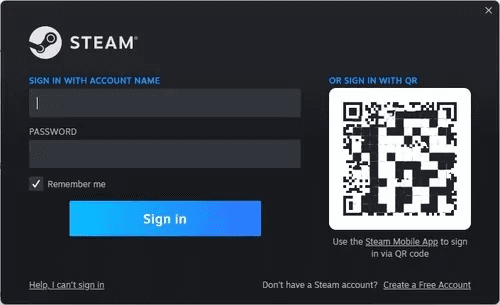
  1. 安裝 Steam,登錄同一賬號

確保主機(遊戲電腦)和客戶端設備都已安裝 Steam,兩台設備使用同一個 Steam 帳戶登入,主機電腦需要保持開機狀態並運行 Steam。
  1. 勾選「在此電腦上啟用遠端暢玩」

開啟 Steam 客戶端,點選左上角「Steam」,找到「設置」。在設定視窗中選擇「遠端暢玩」還填勾選「啟用Steam速玩」。點選「確定」储存設定。
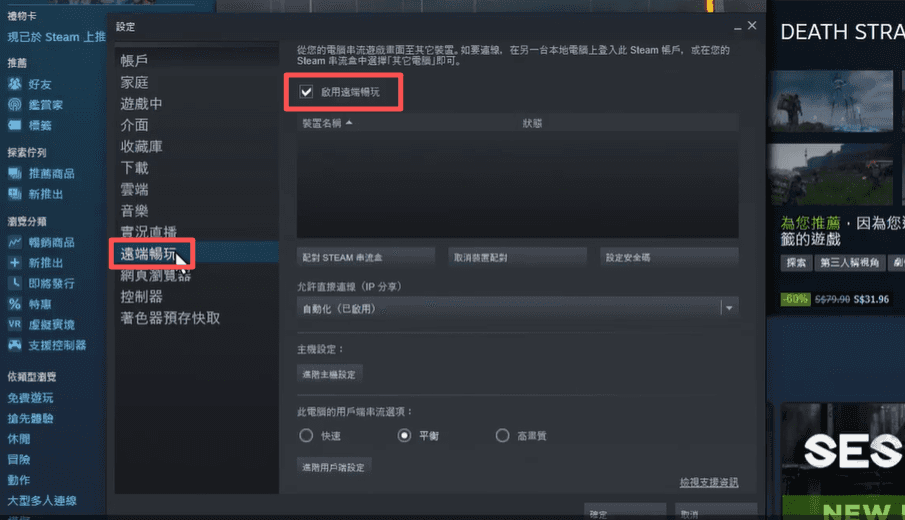
啓用遠端暢玩
  1. 設備配對

在你的客戶端設備(手機、平板或其他電腦)上安裝好Steam Link,連接好同一個WIFI網路,點擊「開啓執行」,然後會提供給你安全碼。此時,在主機(遊戲電腦)輸入安全碼,就配對完成了。

接下來,點選想要遊玩的遊戲,Steam 會自動搜尋並連接到你的主機電腦,然後像平常一樣玩游戲了。

儘管Steam遠端暢玩功能強大,但在實際使用中仍存在一些限制。

  • 高度依賴網路品質:在 2.4G WiFi 或不穩定網路下,容易出現畫質模糊、指令延遲,操作反應需等待數秒。

  • 連線穩定性不足:長時間遊戲可能出現斷線、音訊不同步或卡頓現象,影響整體體驗。

  • 受限於同網段使用:Steam Link 需連接同一區域網路,外出時無法遠端連線至家中電腦。

  • 行動端體驗有限:對手機或平板的支援度較低,操作不夠靈活,也缺乏自訂按鍵功能。

2. 使用 DeskIn 遠端暢玩:簡單流暢

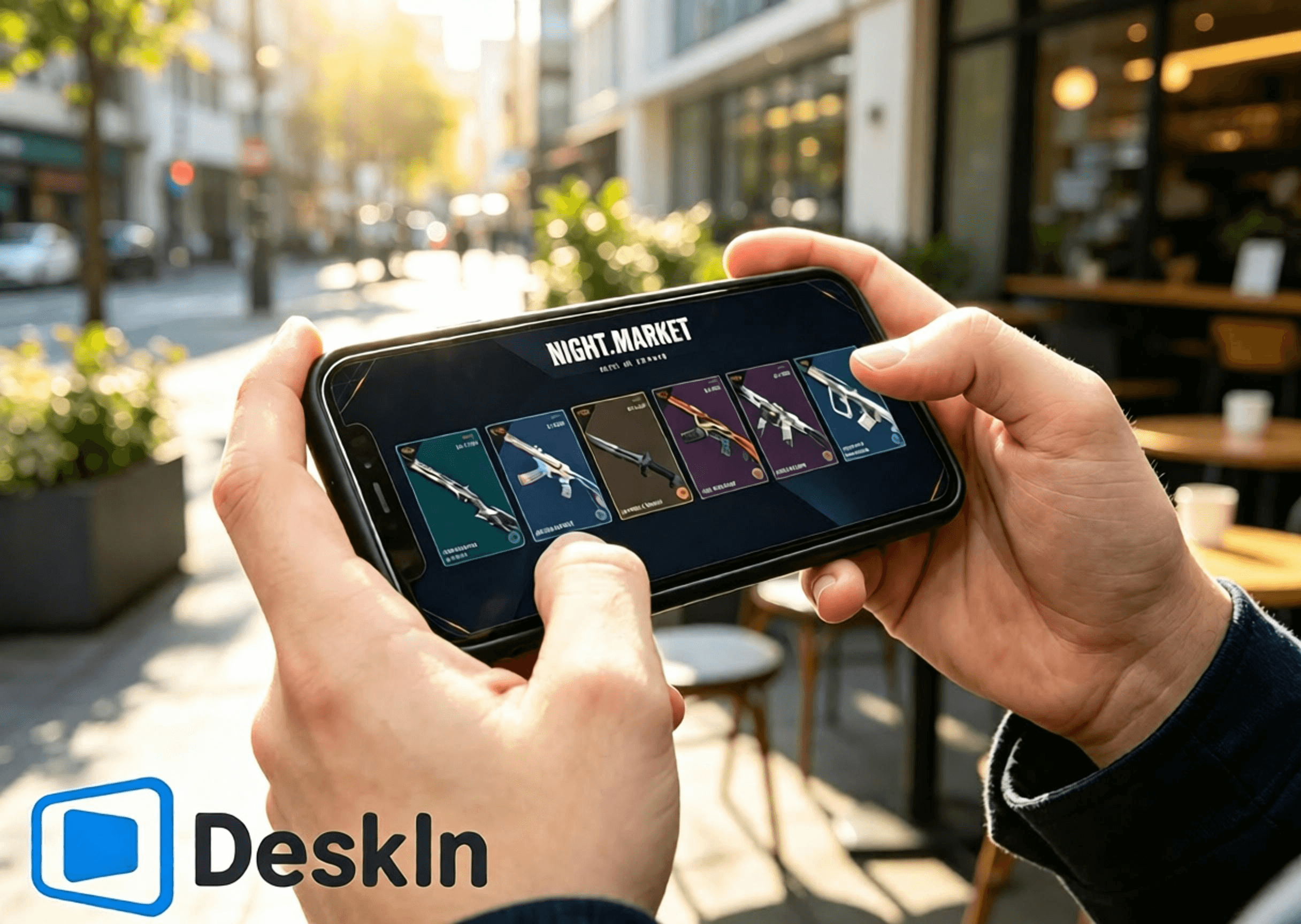
如果你在使用 Steam 的時候也遇到了同樣問題,我們推薦你使用 DeskIn。DeskIn 是一款專業的遠端桌面軟體,專門針對遊戲串流和高性能應用。相比 Steam 遠端暢玩,DeskIn 提供更穩定連接、更清晰畫質和更絲滑的操作體驗。無論是在外出通勤時,還是在咖啡廳或旅行途中,你都可以用手機遠端暢玩喜愛的 PC 遊戲,如《楓之谷》、《GTA5》、《天堂》、《三國志系列》或《魔物獵人》,享受完整的遊戲體驗,不受距離限制。

DeskIn:遠程暢玩 Steam 游戲的最佳選擇

  • 卓越的網路適應性 – DeskIn 具備智能網路優化功能,全球200+節點覆蓋,實時探測網絡質量,即使在較差的網路環境下也能維持穩定連線,跨地區使用時表現遠優於 Steam 遠端暢玩。

  • 專業畫質優化 – 在保證低延遲的同時提供高清畫質,特別適合對視覺效果要求較高的遊戲類型。

  • 超低延遲體驗 – 採用自主研發的低延遲技術,結合 RTC 即時通信技術,延遲可低於 40 毫秒,遠低於一般遠端軟體,特別適合需要快速反應的競技類遊戲,讓你在遠端環境下也能享受近乎本地的操作體驗。

  • 智能自訂組合按鈕 – 提供靈活的組合按鍵映射功能,可將複雜的鍵盤滑鼠操作轉換為簡單觸控按鈕。

  • 外接手把 – 完美兼容市面上大部分遊戲手把,提升操控靈活性。

  • 3D 視角模式 – 遊戲模式自動啟動 3D 視角,打造沉浸式遠端遊玩體驗。

  • 遠端開機功能 – 即使遠端電腦關機,也能透過 DeskIn 遠端重啟,避免待機耗電或資料外洩問題。

  • 跨平台兼容性 – 全面支援 Windows、macOS、iOS 和 Android,隨時隨地暢玩你的遊戲庫。

  • 其他免費功能 – 支援手機遊戲投影到電腦、延伸螢幕、螢幕鏡像以及語音通話功能,提升遠端使用的多樣性與便利性。

如何使用 DeskIn 遠端暢玩 [快速簡單]

  1. 下载 DeskIn

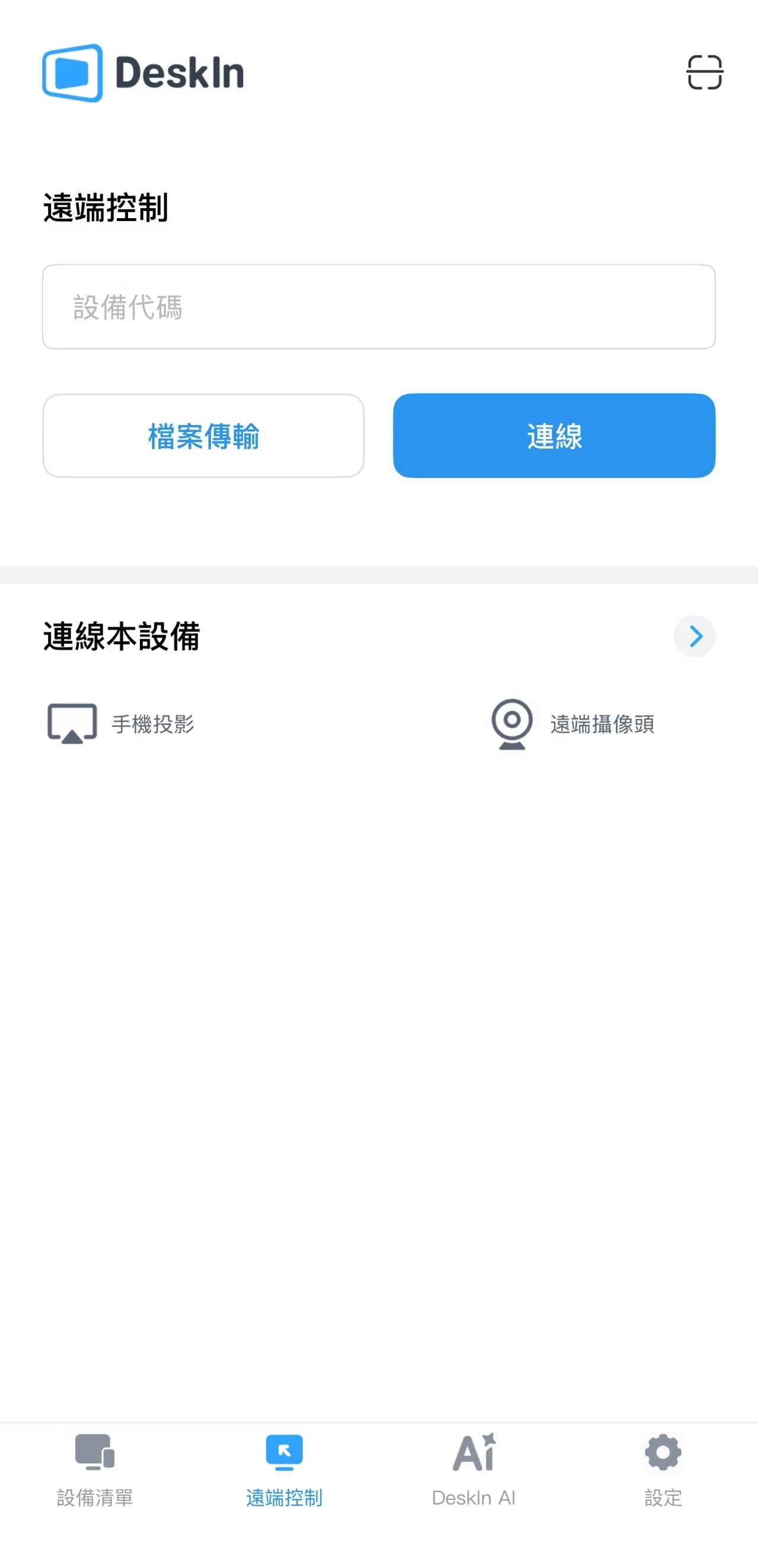
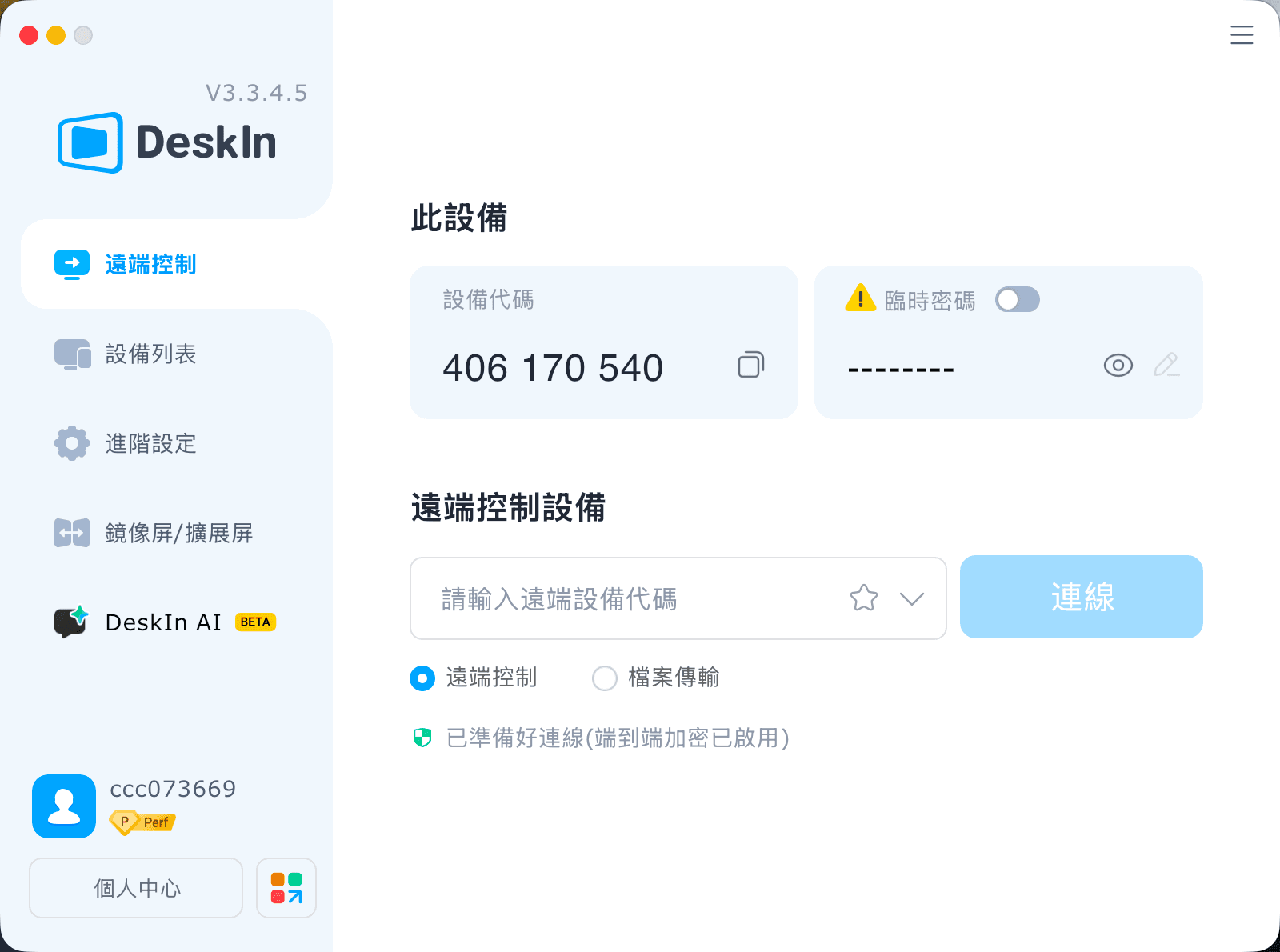
在您的本地設備和遠端設備上都下载 DeskIn,如果是首次使用軟體,需要到注冊信箱完成驗證,然後在本地設備的DeskIn 上輸入要連線的 PC 的設備代碼以及密碼,就可以成功連線了。
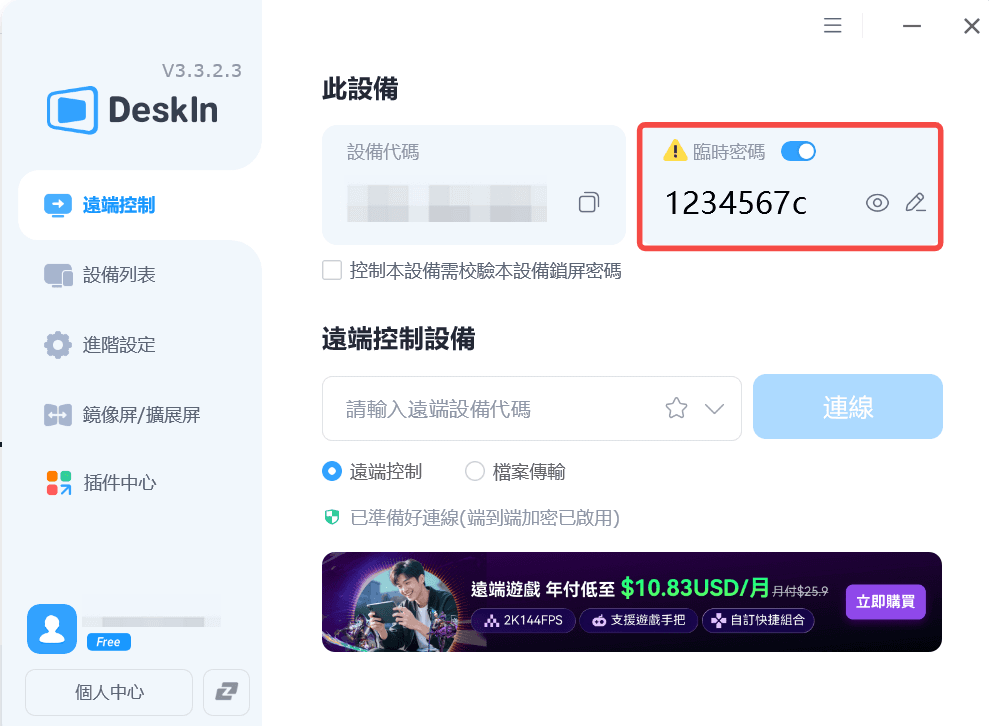
現在下載 DeskIn

連缐兩臺設備
  1. 在手機上暢玩 Steam 游戲

成功接入設備之後,你可以使用系統的虛擬滑鼠對遊戲進行一些簡單的控制。DeskIn 支援指針模式和觸控模式,觸屏類似於在手機上觸屏操作,指針模式提供了一個虛擬鼠標,有左右兩鍵。DeskIn 的連缐非常流暢,滑鼠反應也很快。
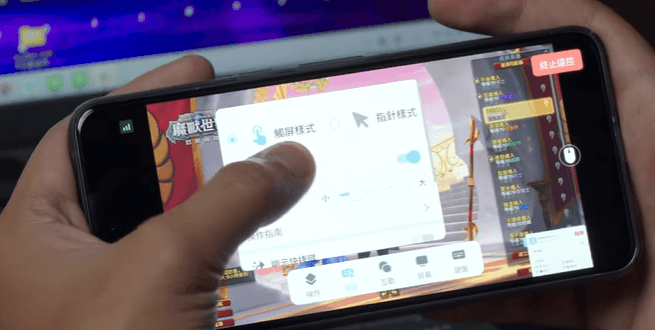
遠端遊玩 steam

Steam 遠端常見問題

Steam 如何遠端連線?

可透過 Steam Link 功能,將主機電腦的遊戲串流到另一台裝置上。若想在跨網路環境下更穩定地連線,建議使用 DeskIn,支援全球節點與低延遲串流。

Steam 可以一個帳號兩台電腦嗎?

Steam 一個帳號可以登入多台電腦,但同一時間只能在其中一台啟動遊戲。若想在另一台電腦玩同樣遊戲,可以透過 DeskIn 遠端桌面操作第一台電腦進行遊玩。

怎麼用手機玩Steam?

可下載 Steam Link App 串流遊戲到手機。若追求更流暢畫質與自訂操作體驗,推薦使用 DeskIn,在 iOS、Android 上都能遠端暢玩 PC 遊戲。

結論

有了本文介紹的兩種方法,遠端暢玩Steam遊戲已經變得簡單可行。Steam 遠端暢玩完全免費,設定簡單,適合預算有限且主要在同一網路環境使用的玩家。DeskIn 則提供更穩定的跨網路連線和專業級遊戲體驗,特別適合追求高品質或經常需要遠端遊戲的用戶。

選擇哪種方案主要取決於你的具體需求:偶爾在家中不同房間遊戲,Steam遠端暢玩已足夠;希望隨時隨地享受流暢遊戲體驗,DeskIn 是更好的選擇。現在就開始你的遠端遊戲之旅,讓Steam遊戲庫隨身攜帶,不再受時間和地點限制!


現在下載 DeskIn

你是否曾經興奮地想要透過Steam遠端暢玩功能,在外出時繼續享受心愛的遊戲,卻發現連線總是失敗?或者想和朋友一起體驗Steam遠端同樂,結果卻被各種技術問題搞得一頭霧水?Steam Link 是 Steam 官方提供的免費遊戲串流服務,允許玩家將自己電腦上的 Steam 遊戲串流到手機、平板、電腦或 VR 頭顯等設備上遊玩。雖然這功能方便,但在實際使用過程中,許多玩家仍可能遇到連線不穩定、畫質模糊或操作延遲等問題,其中 Steam 遠端同樂失敗更是常見的挫折來源。

別擔心!本文將為你提供完整的解決方案,不僅會詳細介紹Steam遠端暢玩的正確設定步驟,更會分享其他遊戲串流方法。無論你是想要隨時隨地享受遊戲,還是希望與朋友共享遊戲樂趣,這篇文章都能幫助你實現願望。讓我們一起探索這些實用技巧吧!

更多延伸閲讀

Steam 遠端暢玩:2個最佳方法

想要隨時隨地享受 Steam 遊戲體驗,目前有兩個方案可以選擇。

  1. 使用 Steam 遠端暢玩

Steam 官方的遠端暢玩功能是最直接的選擇,設定相對簡單,只需要在同一網路環境下就能快速連線。這個功能完全免費,且與 Steam 平台深度整合,支援大部分遊戲。只要利用 Steam link 功能,加上簡單的配對步驟,就能遠端暢玩游戲

不過,它的主要缺點是受限於網路環境,跨網路連線時容易出現延遲和畫質下降的問題。

  1. 使用 DeskIn 專業遠端游戲軟體

DeskIn 作為專業的遠端軟體,在遊戲串流方面表現更加出色。首先,它提供更穩定的跨網路連線能力,依靠全球 200 多個節點保障快速連線,而 ZeroSync®引擎支持的 RTC 技術則確保操作流暢、畫面同步,無需同一網路,就可快速連線到任何遠端電腦,並保持流暢的遊戲體驗。其次,DeskIn 具備更優秀的畫質優化,能在較低頻寬下維持高清畫面(最高支援4K60FPS或2K144FPS)。最重要的是,它不僅限於 Steam 平台,還能支援所有 PC 遊戲和應用程式,讓你的遊戲選擇更加豐富多元。

現在下載 DeskIn

1. 使用 Steam 遠端暢玩

Steam 遠端桌面是官方開發的遊戲串流功能,作為Steam生態系統的一部分,它擁有天然的兼容優勢。對於已經擁有大量 Steam 遊戲庫的玩家來說,這是最直接且免費的遠端遊戲解決方案。

Steam 遠端暢玩完全免費,且與你的 Steam 帳戶無縫整合,所有遊戲進度和成就都能正常同步。其次,它支援多平台使用,包括 Windows、Mac、Linux 以及手機平板等移動設備,讓你可以在任何裝置上享受 PC 遊戲。設定過程相當簡單,只需要幾個步驟就能開始遠端遊戲體驗。

使用前提條件

  1. 連接同一網路,WiFi環境下至少需要5Mbps以上的穩定網速。

  2. 兩台設備都必須安裝 Steam 並登入同一個帳戶,主機端需要保持開機並運行 Steam。

  3. 防火牆和路由器設定也需要允許Steam的網路連接,確保各個設備間能正常通訊。

  1. 安裝 Steam,登錄同一賬號

確保主機(遊戲電腦)和客戶端設備都已安裝 Steam,兩台設備使用同一個 Steam 帳戶登入,主機電腦需要保持開機狀態並運行 Steam。

  1. 勾選「在此電腦上啟用遠端暢玩」

開啟 Steam 客戶端,點選左上角「Steam」,找到「設置」。在設定視窗中選擇「遠端暢玩」還填勾選「啟用Steam速玩」。點選「確定」储存設定。

啓用遠端暢玩
  1. 設備配對

在你的客戶端設備(手機、平板或其他電腦)上安裝好Steam Link,連接好同一個WIFI網路,點擊「開啓執行」,然後會提供給你安全碼。此時,在主機(遊戲電腦)輸入安全碼,就配對完成了。

接下來,點選想要遊玩的遊戲,Steam 會自動搜尋並連接到你的主機電腦,然後像平常一樣玩游戲了。

儘管Steam遠端暢玩功能強大,但在實際使用中仍存在一些限制。

  • 高度依賴網路品質:在 2.4G WiFi 或不穩定網路下,容易出現畫質模糊、指令延遲,操作反應需等待數秒。

  • 連線穩定性不足:長時間遊戲可能出現斷線、音訊不同步或卡頓現象,影響整體體驗。

  • 受限於同網段使用:Steam Link 需連接同一區域網路,外出時無法遠端連線至家中電腦。

  • 行動端體驗有限:對手機或平板的支援度較低,操作不夠靈活,也缺乏自訂按鍵功能。

2. 使用 DeskIn 遠端暢玩:簡單流暢

如果你在使用 Steam 的時候也遇到了同樣問題,我們推薦你使用 DeskIn。DeskIn 是一款專業的遠端桌面軟體,專門針對遊戲串流和高性能應用。相比 Steam 遠端暢玩,DeskIn 提供更穩定連接、更清晰畫質和更絲滑的操作體驗。無論是在外出通勤時,還是在咖啡廳或旅行途中,你都可以用手機遠端暢玩喜愛的 PC 遊戲,如《楓之谷》、《GTA5》、《天堂》、《三國志系列》或《魔物獵人》,享受完整的遊戲體驗,不受距離限制。

DeskIn:遠程暢玩 Steam 游戲的最佳選擇

  • 卓越的網路適應性 – DeskIn 具備智能網路優化功能,全球200+節點覆蓋,實時探測網絡質量,即使在較差的網路環境下也能維持穩定連線,跨地區使用時表現遠優於 Steam 遠端暢玩。

  • 專業畫質優化 – 在保證低延遲的同時提供高清畫質,特別適合對視覺效果要求較高的遊戲類型。

  • 超低延遲體驗 – 採用自主研發的低延遲技術,結合 RTC 即時通信技術,延遲可低於 40 毫秒,遠低於一般遠端軟體,特別適合需要快速反應的競技類遊戲,讓你在遠端環境下也能享受近乎本地的操作體驗。

  • 智能自訂組合按鈕 – 提供靈活的組合按鍵映射功能,可將複雜的鍵盤滑鼠操作轉換為簡單觸控按鈕。

  • 外接手把 – 完美兼容市面上大部分遊戲手把,提升操控靈活性。

  • 3D 視角模式 – 遊戲模式自動啟動 3D 視角,打造沉浸式遠端遊玩體驗。

  • 遠端開機功能 – 即使遠端電腦關機,也能透過 DeskIn 遠端重啟,避免待機耗電或資料外洩問題。

  • 跨平台兼容性 – 全面支援 Windows、macOS、iOS 和 Android,隨時隨地暢玩你的遊戲庫。

  • 其他免費功能 – 支援手機遊戲投影到電腦、延伸螢幕、螢幕鏡像以及語音通話功能,提升遠端使用的多樣性與便利性。

如何使用 DeskIn 遠端暢玩 [快速簡單]

  1. 下载 DeskIn

在您的本地設備和遠端設備上都下载 DeskIn,如果是首次使用軟體,需要到注冊信箱完成驗證,然後在本地設備的DeskIn 上輸入要連線的 PC 的設備代碼以及密碼,就可以成功連線了。

現在下載 DeskIn

連缐兩臺設備
  1. 在手機上暢玩 Steam 游戲

成功接入設備之後,你可以使用系統的虛擬滑鼠對遊戲進行一些簡單的控制。DeskIn 支援指針模式和觸控模式,觸屏類似於在手機上觸屏操作,指針模式提供了一個虛擬鼠標,有左右兩鍵。DeskIn 的連缐非常流暢,滑鼠反應也很快。

遠端遊玩 steam

Steam 遠端常見問題

Steam 如何遠端連線?

可透過 Steam Link 功能,將主機電腦的遊戲串流到另一台裝置上。若想在跨網路環境下更穩定地連線,建議使用 DeskIn,支援全球節點與低延遲串流。

Steam 可以一個帳號兩台電腦嗎?

Steam 一個帳號可以登入多台電腦,但同一時間只能在其中一台啟動遊戲。若想在另一台電腦玩同樣遊戲,可以透過 DeskIn 遠端桌面操作第一台電腦進行遊玩。

怎麼用手機玩Steam?

可下載 Steam Link App 串流遊戲到手機。若追求更流暢畫質與自訂操作體驗,推薦使用 DeskIn,在 iOS、Android 上都能遠端暢玩 PC 遊戲。

結論

有了本文介紹的兩種方法,遠端暢玩Steam遊戲已經變得簡單可行。Steam 遠端暢玩完全免費,設定簡單,適合預算有限且主要在同一網路環境使用的玩家。DeskIn 則提供更穩定的跨網路連線和專業級遊戲體驗,特別適合追求高品質或經常需要遠端遊戲的用戶。

選擇哪種方案主要取決於你的具體需求:偶爾在家中不同房間遊戲,Steam遠端暢玩已足夠;希望隨時隨地享受流暢遊戲體驗,DeskIn 是更好的選擇。現在就開始你的遠端遊戲之旅,讓Steam遊戲庫隨身攜帶,不再受時間和地點限制!

現在下載 DeskIn

Play x Work
All at Once

DeskIn Remote Game

only $14.32 USD 🎉 Limited on July 16-31

Add promo code: deskinsummer1

隨時隨地遠端暢玩 Steam 游戲
隨時隨地遠端暢玩 Steam 游戲
隨時隨地遠端暢玩 Steam 游戲

章節目錄

1212 big sale
DeskIn Secure

Credential Management: Protecting Remote Sessions with DeskIn

Remote work is amazing until it isn’t. 

You’ve got people designing in Figma from a beach, closing deals over Zoom in coffee shops, or spinning up code while waiting at the airport. It’s fast, flexible, and kind of magical. But here’s the catch: behind every click, every shared file, every remote login, there’s one thing quietly holding it all together — credentials.

And if the wrong person gets hold of those credentials, things can go downhill fast.

DeskIn Secure

That is why credential management is extremely significant, now more than ever. Not just about recording passwords in a safe vault, but about power over who gains access to what and when. From protecting company credentials to rotating security credentials and setting up MFA, it’s how you make sure your digital front door stays locked, and only the right people have the keys.

Luckily, tools like DeskIn make remote access security a whole lot easier (and smarter). In this blog, we’ll break down what credential management is, how it works, and how you can use it to lock down your setup without locking out your team.

Let’s get into it.

What Is Credential Management?

Every password, API token, SSH key, certificate, or fingerprint scan is basically a key to something important in your company’s digital world. And let’s be honest, keeping track of a few keys is easy, but hundreds or thousands, that’s a recipe for lost logins, accidental oversharing, or worse, a security breach.

This is where credential management comes into play. The system that is holding all those keys keeps them safely locked away until they are only given to the right person at the correct time. 

A better way to consider credential management is not as a dusty password list but as a virtual bouncer that knows who should and shouldn't have access, makes sure the right people are let in, and the wrong people are kept out. 

Properly implemented credential management allows your team to operate unblocked while preventing hackers and other unwanted guests from getting inside.

Four Jobs Every Strong Credential Management System Handles

A proper credential management setup works like a full-time security team for your logins. Here’s what it does:

  • Store securely – Encrypts credentials and keeps them in a secure vault, far away from sticky notes or unprotected files.

  • Retrieve safely – Delivers credentials only to authorized users, without showing them in plain text or risking a copy-paste leak.

  • Update automatically – Rotate passwords, refresh tokens, and update certificates to prevent expiration/exploitation.

  • Revoke instantly – Cuts off access the moment someone leaves the team or changes roles, leaving no back doors open.

Why Credential Management Is the Backbone of Security

Credential management is the foundation of secure authentication and identity management; without it, every other security measure becomes weaker.

  • Secure authentication – Confirms each user's identity, adds layers of protection like MFA, and stops risky habits like credential reuse.

  • Identity management – Connects every credential to a specific role or permission so users only get access to what they truly need, while keeping a clear, auditable trail of every action.

In short, credential management doesn’t just protect passwords; it helps safeguard the core digital operations of your business.

Understanding Credential Types & Their Security Functions

DeskIn secure credential

There are different levels of credentials for a reason. They each serve a different purpose, and it is important to understand how to work with them in order to keep remote work secure. A strong credential management system doesn't just store these credentials; it knows what combination to use, when, and where. So, here are the main types and why they matter.

Passwords

  • The classic credential, simple, familiar, and unfortunately, still a favorite target for attackers. Weak or reused passwords are an open invitation for trouble.

  • Used for: Email accounts, internal tools, VPNs, web apps.

SSH Keys

  • These cryptographic keys let you log into servers or developer environments without a password. They’re much harder to crack, but only if stored properly.

  • Used for: Remote server access, infrastructure management, cloud platforms.

API Tokens

  • Think of these as digital ID cards for software. They give systems permission to talk to each other securely, no human intervention required.

  • Used for: Integrations, automation, CI/CD pipelines, webhooks.

Biometrics

  • Your fingerprint, your face, your voice as the password. Fast, convenient, and tough to fake.

  • Used for: Mobile device logins, secure work apps, SSO tools.

Multi-Factor Authentication (MFA)

  • One lock is good, two or more are better. MFA adds extra layers of verification, like pairing a password with an app-generated code, biometric scan, or hardware key. Even if one factor is stolen, the attacker still can’t get in without the others.

  • Used for: Secure logins to remote work tools, SaaS apps, admin dashboards.

Certificates

  • Digital files that prove identity and encrypt communication between users, devices, and websites.

  • Used for: HTTPS, VPNs, S/MIME email, software signing.

Common Threats to Remote Credential Security

Remote work has transformed your team logins into digital keys that grant access to your most valuable data systems and customer trust. Without strong credential management, those keys can slip into the wrong hands faster than you think.

Here are some of the biggest threats going after secure credentials in remote work environments:

  • Phishing: Scammers use deceptive emails and chats and fake login pages to trick users into revealing their account information.

  • Keylogging: Malware secretly records everything typed, including usernames, passwords, and session tokens.

  • Brute-Force Attacks: Hackers use bots to rapidly guess username-password combos, targeting accounts that use weak or reused passwords.

  • Session Hijacking: Attackers intercept an active login session, also this action takes over access without needing the original credentials.

Many session-related breaches stem from misconfigured or outdated RDP settings. Learn more about RDP security risks and protections to keep your remote environments safe.

DeskIn Credential

The Real-World Consequences

When credentials are compromised, it’s not just an inconvenience; it’s a business risk. Your organization would encounter:

  • Data theft: Confidential files, financial records, or customer information exposed.

  • Remote access abuse: Attackers moving freely through systems while posing as legitimate employees.

  • Downtime and disruption: IT teams racing to contain the breach while work grinds to a halt.

  • Compliance violations: Costly fines, penalties, and lasting damage to your reputation.

In short, one stolen login can lead to a chain reaction of security failures. That’s why proactive credential management, not reactive cleanup, is the smarter strategy.

Best Practices for Managing Credentials in Remote Work

Here are key remote access security best practices to keep your team’s credential access safe, streamlined, and secure:

  • Use Encrypted Storage: Store all security credentials — passwords, SSH keys, API tokens — in encrypted vaults like Bitwarden or 1Password. For high-risk systems, use hardware-based options like YubiKeys or HSMs to prevent unauthorized access.

  • Enforce Two-Factor or Multi-Factor Authentication (2FA/MFA): Always require at least two forms of verification (e.g., password + app code). MFA blocks most unauthorized access attempts, even when passwords are compromised.

  • Rotate Passwords & Audit Access Regularly: Set password expiration policies and rotate credentials regularly. Review who has access and remove inactive users to minimize risks and meet compliance requirements.

  • Stop Sharing Credentials Across Team Members: Shared logins create security gaps and accountability issues. Instead, assign individual accounts with role-based access. Use SSO or identity providers to manage permissions easily.

  • Set Session Timeouts and Auto-Logoff: Auto-logoff inactive sessions to prevent misuse of unattended devices. Especially in remote work environments, this is a simple but powerful layer of protection.

Want to go deeper on securing your remote desktop itself? Here’s a full guide on how to set up a secure remote desktop setup the right way.

Key Benefits of Strong Credential Management

A strong credential management system doesn’t just protect your business; it improves how your teams work, how you meet compliance, and how you scale securely in a remote work environment.

Here’s what your organization stands to gain:

1. Enhanced Security

Strong credential management helps prevent weak password reuse, phishing attacks, and unauthorized access. With features like MFA and encrypted vaults, your security credentials stay protected even across remote networks and devices.

2. Streamlined Operations

Centralized company credentials control cuts admin work. Automated rotation and clear role-based permissions make onboarding and offboarding quick and secure.

3. Regulatory Compliance

From GDPR to HIPAA, proper credential access controls help meet global compliance standards. Audit logs, encryption, and least privilege enforcement ensure you’re prepared for any security review or data protection audit, without extra overhead.

4. Reduced Insider Threats

Granular access controls limit over-permissioned users, while session monitoring helps flag suspicious activity. Temporary credentials and timeout features reduce the long-term risk of credential misuse, intentional or not.

5. Improved Remote Productivity

Tools like single sign-on (SSO) and secure vaults eliminate login friction. Users authenticate once and access what they need, no password juggling or downtime. It’s secure, smooth, and perfect for a growing remote work team.

How DeskIn Helps Secure Remote Sessions

DeskIn is a fast, secure remote access platform designed for modern teams. From IT to creative work, it helps users connect and collaborate safely from anywhere.

Even the strongest passwords can’t protect your business if your remote access platform isn’t built for security. That’s where DeskIn steps up, combining performance with enterprise-grade credential management to keep every remote session locked down and in your control.

Free download DeskIn

Secure Login Flows

DeskIn doesn’t just let anyone in. It uses secure login methods like device code pairing and session approval, ensuring only verified users can access a remote device. Whether you’re working from home or halfway around the world, DeskIn enforces strong identity verification before any session begins.

Session Encryption

Every session on DeskIn is protected with full encryption, ensuring that your data remains secure during transmission. This end-to-end protection keeps sensitive information safe from interception, even over public or unsecured networks.

Credential Protection for Unattended Access

Need to access a remote system while you’re away from your desk? DeskIn supports unattended access, but with safeguards in place. Your secure credentials are still protected by layered authentication, and access can be logged and monitored for full visibility.

Trusted Device Management

With DeskIn, you’re in full control of who gets in and from where. Using device whitelisting, you can ensure that only pre-approved devices connect to your systems. Whether it’s a single laptop or an entire fleet of team smartphones, you get centralized control without losing the flexibility remote work demands.

DeskIn isn’t just another remote access tool; it’s a security-first platform built with strong credential management, remote access security, and real-time oversight at its core. From remote design teams to IT support to distributed dev squads, DeskIn keeps every session locked down, every connection accountable, and every workflow running smoothly.

If you’re looking to lock down your system end-to-end, don’t miss this guide on how to secure your remote desktop.

Credential Management with DeskIn: Simple, Secure, and Remote-Ready

Remote security starts with strong credential management, not after the login, but before it even begins. Managing credentials properly is the foundation of safe, seamless remote access security.

DeskIn supports this at every level, from secure login flows to encrypted sessions and device-level access control. It helps your team stay productive while keeping company credentials and systems protected.

Now’s the time to review your setup. Audit your credential policies, eliminate weak spots, and use tools like DeskIn to lock down remote sessions, the right way.

Ready to take control of your remote access security? Download DeskIn now and secure every login.

Still comparing your options? Check out our breakdown of the 10 best secure remote desktop software, and see why DeskIn leads the pack for both security and performance.

Free download DeskIn


DeskIn Secure

Credential Management: Protecting Remote Sessions with DeskIn

Remote work is amazing until it isn’t. 

You’ve got people designing in Figma from a beach, closing deals over Zoom in coffee shops, or spinning up code while waiting at the airport. It’s fast, flexible, and kind of magical. But here’s the catch: behind every click, every shared file, every remote login, there’s one thing quietly holding it all together — credentials.

And if the wrong person gets hold of those credentials, things can go downhill fast.

DeskIn Secure

That is why credential management is extremely significant, now more than ever. Not just about recording passwords in a safe vault, but about power over who gains access to what and when. From protecting company credentials to rotating security credentials and setting up MFA, it’s how you make sure your digital front door stays locked, and only the right people have the keys.

Luckily, tools like DeskIn make remote access security a whole lot easier (and smarter). In this blog, we’ll break down what credential management is, how it works, and how you can use it to lock down your setup without locking out your team.

Let’s get into it.

What Is Credential Management?

Every password, API token, SSH key, certificate, or fingerprint scan is basically a key to something important in your company’s digital world. And let’s be honest, keeping track of a few keys is easy, but hundreds or thousands, that’s a recipe for lost logins, accidental oversharing, or worse, a security breach.

This is where credential management comes into play. The system that is holding all those keys keeps them safely locked away until they are only given to the right person at the correct time. 

A better way to consider credential management is not as a dusty password list but as a virtual bouncer that knows who should and shouldn't have access, makes sure the right people are let in, and the wrong people are kept out. 

Properly implemented credential management allows your team to operate unblocked while preventing hackers and other unwanted guests from getting inside.

Four Jobs Every Strong Credential Management System Handles

A proper credential management setup works like a full-time security team for your logins. Here’s what it does:

  • Store securely – Encrypts credentials and keeps them in a secure vault, far away from sticky notes or unprotected files.

  • Retrieve safely – Delivers credentials only to authorized users, without showing them in plain text or risking a copy-paste leak.

  • Update automatically – Rotate passwords, refresh tokens, and update certificates to prevent expiration/exploitation.

  • Revoke instantly – Cuts off access the moment someone leaves the team or changes roles, leaving no back doors open.

Why Credential Management Is the Backbone of Security

Credential management is the foundation of secure authentication and identity management; without it, every other security measure becomes weaker.

  • Secure authentication – Confirms each user's identity, adds layers of protection like MFA, and stops risky habits like credential reuse.

  • Identity management – Connects every credential to a specific role or permission so users only get access to what they truly need, while keeping a clear, auditable trail of every action.

In short, credential management doesn’t just protect passwords; it helps safeguard the core digital operations of your business.

Understanding Credential Types & Their Security Functions

DeskIn secure credential

There are different levels of credentials for a reason. They each serve a different purpose, and it is important to understand how to work with them in order to keep remote work secure. A strong credential management system doesn't just store these credentials; it knows what combination to use, when, and where. So, here are the main types and why they matter.

Passwords

  • The classic credential, simple, familiar, and unfortunately, still a favorite target for attackers. Weak or reused passwords are an open invitation for trouble.

  • Used for: Email accounts, internal tools, VPNs, web apps.

SSH Keys

  • These cryptographic keys let you log into servers or developer environments without a password. They’re much harder to crack, but only if stored properly.

  • Used for: Remote server access, infrastructure management, cloud platforms.

API Tokens

  • Think of these as digital ID cards for software. They give systems permission to talk to each other securely, no human intervention required.

  • Used for: Integrations, automation, CI/CD pipelines, webhooks.

Biometrics

  • Your fingerprint, your face, your voice as the password. Fast, convenient, and tough to fake.

  • Used for: Mobile device logins, secure work apps, SSO tools.

Multi-Factor Authentication (MFA)

  • One lock is good, two or more are better. MFA adds extra layers of verification, like pairing a password with an app-generated code, biometric scan, or hardware key. Even if one factor is stolen, the attacker still can’t get in without the others.

  • Used for: Secure logins to remote work tools, SaaS apps, admin dashboards.

Certificates

  • Digital files that prove identity and encrypt communication between users, devices, and websites.

  • Used for: HTTPS, VPNs, S/MIME email, software signing.

Common Threats to Remote Credential Security

Remote work has transformed your team logins into digital keys that grant access to your most valuable data systems and customer trust. Without strong credential management, those keys can slip into the wrong hands faster than you think.

Here are some of the biggest threats going after secure credentials in remote work environments:

  • Phishing: Scammers use deceptive emails and chats and fake login pages to trick users into revealing their account information.

  • Keylogging: Malware secretly records everything typed, including usernames, passwords, and session tokens.

  • Brute-Force Attacks: Hackers use bots to rapidly guess username-password combos, targeting accounts that use weak or reused passwords.

  • Session Hijacking: Attackers intercept an active login session, also this action takes over access without needing the original credentials.

Many session-related breaches stem from misconfigured or outdated RDP settings. Learn more about RDP security risks and protections to keep your remote environments safe.

DeskIn Credential

The Real-World Consequences

When credentials are compromised, it’s not just an inconvenience; it’s a business risk. Your organization would encounter:

  • Data theft: Confidential files, financial records, or customer information exposed.

  • Remote access abuse: Attackers moving freely through systems while posing as legitimate employees.

  • Downtime and disruption: IT teams racing to contain the breach while work grinds to a halt.

  • Compliance violations: Costly fines, penalties, and lasting damage to your reputation.

In short, one stolen login can lead to a chain reaction of security failures. That’s why proactive credential management, not reactive cleanup, is the smarter strategy.

Best Practices for Managing Credentials in Remote Work

Here are key remote access security best practices to keep your team’s credential access safe, streamlined, and secure:

  • Use Encrypted Storage: Store all security credentials — passwords, SSH keys, API tokens — in encrypted vaults like Bitwarden or 1Password. For high-risk systems, use hardware-based options like YubiKeys or HSMs to prevent unauthorized access.

  • Enforce Two-Factor or Multi-Factor Authentication (2FA/MFA): Always require at least two forms of verification (e.g., password + app code). MFA blocks most unauthorized access attempts, even when passwords are compromised.

  • Rotate Passwords & Audit Access Regularly: Set password expiration policies and rotate credentials regularly. Review who has access and remove inactive users to minimize risks and meet compliance requirements.

  • Stop Sharing Credentials Across Team Members: Shared logins create security gaps and accountability issues. Instead, assign individual accounts with role-based access. Use SSO or identity providers to manage permissions easily.

  • Set Session Timeouts and Auto-Logoff: Auto-logoff inactive sessions to prevent misuse of unattended devices. Especially in remote work environments, this is a simple but powerful layer of protection.

Want to go deeper on securing your remote desktop itself? Here’s a full guide on how to set up a secure remote desktop setup the right way.

Key Benefits of Strong Credential Management

A strong credential management system doesn’t just protect your business; it improves how your teams work, how you meet compliance, and how you scale securely in a remote work environment.

Here’s what your organization stands to gain:

1. Enhanced Security

Strong credential management helps prevent weak password reuse, phishing attacks, and unauthorized access. With features like MFA and encrypted vaults, your security credentials stay protected even across remote networks and devices.

2. Streamlined Operations

Centralized company credentials control cuts admin work. Automated rotation and clear role-based permissions make onboarding and offboarding quick and secure.

3. Regulatory Compliance

From GDPR to HIPAA, proper credential access controls help meet global compliance standards. Audit logs, encryption, and least privilege enforcement ensure you’re prepared for any security review or data protection audit, without extra overhead.

4. Reduced Insider Threats

Granular access controls limit over-permissioned users, while session monitoring helps flag suspicious activity. Temporary credentials and timeout features reduce the long-term risk of credential misuse, intentional or not.

5. Improved Remote Productivity

Tools like single sign-on (SSO) and secure vaults eliminate login friction. Users authenticate once and access what they need, no password juggling or downtime. It’s secure, smooth, and perfect for a growing remote work team.

How DeskIn Helps Secure Remote Sessions

DeskIn is a fast, secure remote access platform designed for modern teams. From IT to creative work, it helps users connect and collaborate safely from anywhere.

Even the strongest passwords can’t protect your business if your remote access platform isn’t built for security. That’s where DeskIn steps up, combining performance with enterprise-grade credential management to keep every remote session locked down and in your control.

Free download DeskIn

Secure Login Flows

DeskIn doesn’t just let anyone in. It uses secure login methods like device code pairing and session approval, ensuring only verified users can access a remote device. Whether you’re working from home or halfway around the world, DeskIn enforces strong identity verification before any session begins.

Session Encryption

Every session on DeskIn is protected with full encryption, ensuring that your data remains secure during transmission. This end-to-end protection keeps sensitive information safe from interception, even over public or unsecured networks.

Credential Protection for Unattended Access

Need to access a remote system while you’re away from your desk? DeskIn supports unattended access, but with safeguards in place. Your secure credentials are still protected by layered authentication, and access can be logged and monitored for full visibility.

Trusted Device Management

With DeskIn, you’re in full control of who gets in and from where. Using device whitelisting, you can ensure that only pre-approved devices connect to your systems. Whether it’s a single laptop or an entire fleet of team smartphones, you get centralized control without losing the flexibility remote work demands.

DeskIn isn’t just another remote access tool; it’s a security-first platform built with strong credential management, remote access security, and real-time oversight at its core. From remote design teams to IT support to distributed dev squads, DeskIn keeps every session locked down, every connection accountable, and every workflow running smoothly.

If you’re looking to lock down your system end-to-end, don’t miss this guide on how to secure your remote desktop.

Credential Management with DeskIn: Simple, Secure, and Remote-Ready

Remote security starts with strong credential management, not after the login, but before it even begins. Managing credentials properly is the foundation of safe, seamless remote access security.

DeskIn supports this at every level, from secure login flows to encrypted sessions and device-level access control. It helps your team stay productive while keeping company credentials and systems protected.

Now’s the time to review your setup. Audit your credential policies, eliminate weak spots, and use tools like DeskIn to lock down remote sessions, the right way.

Ready to take control of your remote access security? Download DeskIn now and secure every login.

Still comparing your options? Check out our breakdown of the 10 best secure remote desktop software, and see why DeskIn leads the pack for both security and performance.

Free download DeskIn


Remote access iPhone from another iPhone

How to Remotely Access iPhone from Another iPhone

Imagine this: your mom calls, panicked because “the Wi-Fi is gone.” Or your best friend can’t figure out how to turn off that mysterious setting that’s draining their battery. You try explaining over the phone, but it’s like describing a color to someone who’s never seen it, frustrating for both sides.

Remote access iPhone from another iPhone

Wouldn’t it be easier if you could just screen share iPhone to iPhone and see exactly what they see? Better yet, guide them through the fix in real time without leaving your couch?

That’s exactly what remotely accessing an iPhone from another iPhone makes possible. And in this guide, we’re going to break down what it is, why you might want it, and the best way to do it using DeskIn, a powerful, secure, and easy-to-use remote access app.

Recommend reading:
The Complete 2025 Guide to Sharing Your iPhone Screen with an iPad

What is Remote Access for iPhones?

Remote access, simply enough, lets you view and control the screen of another iPhone using your own device; something akin to having someone else's phone in your hand without actually holding it.

While some platforms make remote iPhone control a cinch, the iOS world isn't one of them. Apple restricts what it lets you do remotely quite tightly. Fortunately, you can still screen share iPhone to iPhone, talk them through as many fixes, and work together in real time.

Think of it as screen sharing meets a personal guide; you see what’s happening, they see where to tap, and problems get solved faster.

Why Would You Want to Access Another iPhone Remotely?

Remote iPhone access isn’t just for IT nerds in server rooms. Here are some everyday scenarios where knowing how to control iPhone remotely becomes your superpower:

Helping parents or friends troubleshoot

Ever tried explaining “go to Settings > Wi-Fi” to someone who swears they are in Settings but are actually in Notes? With screen share iPhone to iPhone, you can see exactly what they see and point them in the right direction.

Remote tech support or teaching

If you run a small business, offer app training, or support clients on mobile tools, remote access means you can walk them through features without sending a novel-length email.

Real-time collaboration or screen viewing

Testing an app? Reviewing a design mockup? You can now watch the change live, instantly provide feedback, and avoid the back-and-forth screenshots.

Monitoring or guiding kids (within ethical boundaries)

Sometimes, you just want to make sure your child’s not accidentally changing important settings, or you want to walk them through their homework app. Remote access lets you help without hovering over their shoulder.

Is It Possible to Fully Control an iPhone Remotely?

Apple doesn’t allow full remote control of iOS devices unless they’re jailbroken. While few are prepared to do so, yet, it's a big 'NO' for most people. Jailbreaking will void your warranty and can open up several security holes, causing your iPhone to become unstable.

That said, you can absolutely:

  • View the other iPhone’s screen in real time

  • Chat via voice while sharing the screen

  • Provide touch guidance without risky hacks

This is where DeskIn comes in. While you can’t “drive” someone’s iPhone directly like a remote desktop, you can guide them in a way that feels just as effective for support, teaching, and collaboration.

Sounds like exactly what you need? Download DeskIn and try how to access iPhone remotely in the safest, easiest way possible, all from your pocket.

Free download DeskIn

How DeskIn Lets You Remotely Access an iPhone from Another iPhone

iPhone to iPhone Screen Share

DeskIn makes iPhone remote support simple, secure, and fast with no tech headaches, no risky workarounds. Whether you’re helping a family member, training a client, or testing an app, it’s designed to work seamlessly between iOS devices.

Here’s what you get:

  • Screen sharing in real time (iOS ↔ iOS): View another iPhone’s screen instantly, so you can guide them step-by-step without second-guessing what’s happening on their end.

  • Ultra-low latency (≤40ms): With almost no delay, screen sharing iPhone to iPhone feels natural and responsive, whether you’re pointing out a menu option or reviewing an app together.

  • Mobile-first design, optimized for touch: DeskIn is easy to use. No awkward desktop controls, it is built for finger taps, swipes, and gestures, making remote iPhone control intuitive for both sides. 

  • No jailbreak or risky setup: You can remotely access an iPhone from another iPhone without compromising security or voiding warranties. Each session requires a password or manual verification of the connection request, giving you full control over who can view your screen.

  • Built-in voice chat and session controls: Talk in real time, give instructions verbally, and manage the session with a simple tap, everything you need for smooth iPhone remote support in one app.

With DeskIn, accessing an iPhone remotely becomes a safe, practical reality, perfect for tech help, collaboration, or quick troubleshooting anywhere.

Free download DeskIn

Step-by-Step: Setting Up DeskIn for iPhone-to-iPhone Remote Access

Getting started with remotely accessing an iPhone from another iPhone using DeskIn takes just a few minutes. Follow these simple steps:

  1. Install DeskIn on both iPhones: Download DeskIn from the App Store and install it on both the “helper” and “receiver” devices.

    install DeskIn for your mobile device
  2. Create or join a secure session: On the receiver’s iPhone, enable “Allow Remote Connect to This Device” to generate a device ID and password. The helper can then start a session by entering those details to connect.

  3. Accept access permissions: The receiving iPhone will be prompted to allow screen share from iPhone to iPhone. Grant permission for screen viewing and voice chat if needed.

  1. Start screen sharing with optional voice chat: Once connected, you can view the other iPhone’s screen in real time and use built-in voice chat for clear iPhone remote support.

In just four steps, you’ll have a secure, responsive connection, making how you control iPhone remotely for help, training, or collaboration simple and stress-free.

Free download DeskIn

Use Cases Where DeskIn Shines

Once you know how to remotely access an iPhone from another iPhone with DeskIn, you’ll start spotting situations where it saves time and makes life easier. Here are a few examples where its features really stand out:

  • Parental or elder tech help, with less stress: Instead of long explanations over the phone, DeskIn’s chat tool and live screen sharing let you guide them directly — no confusion, just quick results.

  • Professional iOS remote support: For app developers, IT staff, or mobile trainers, DeskIn’s low-latency screen sharing and voice chat turn iPhone remote support into a smooth, client-friendly experience.

  • Hands-on teaching from anywhere: DeskIn’s mobile-first design makes it ideal for walking learners through apps, design tools, or even game settings, like being right there next to them.

  • Efficient app testing and feedback loops: Watch testers interact with your app in real time, spot usability issues instantly, and adjust on the fly, all powered by DeskIn’s seamless connection.

Security and Privacy for iPhone-to-iPhone Remote Access

An iPhone is more than just a phone; it's a personal photo and message log, a wallet full of payment information, and even your job in some cases. This is one reason why it is important to use a secure method of remotely accessing your iPhone from another iPhone. DeskIn is an enclosed medium with encrypted connections and session controls in place, thereby ensuring your data merely passes between you and whoever you grant access to.

Best Practices for Safe iPhone-to-iPhone Access:

  • Only connect with trusted people, never accept random session requests.

  • Use temporary access codes that expire after each connection.

  • Review permissions before accepting screen sharing or voice chat requests.

  • End the session immediately when the task is done.

  • Keep DeskIn updated to benefit from the latest security patches.

With these habits, iPhone remote support stays safe, private, and fully under your control, giving you peace of mind every time you share your screen.

Want to learn more about protecting your device? Check out how to tell if someone is accessing your iPhone remotely, for signs to watch for, and extra safety tips.

Free download DeskIn

FAQ – iPhone-to-iPhone Remote Access

Q: Can I control the screen or just view?

A: Because of the iOS safety rules, you cannot have full command over an iPhone screen. With DeskIn, you can view in real time and talk via voice chat for effective iPhone remote support.

Q: Does it work over cellular?

A: Yes. As long as both devices have a stable internet connection, Wi-Fi, or mobile data, you can screen share iPhone to iPhone without issues.

Q: Can I use DeskIn on iPad or Mac too?

A: Absolutely. Since DeskIn is on iOS, iPadOS, and macOS, you can pair your iPhone to an iPad or Mac as well, with no difference at all. You can also turn your iPad into a real second monitor for your MacBook, or follow our guide to remote control your Mac if you want to be able to move completely freely across all Apple devices.

Q: Can I use DeskIn on other platforms like Windows or Android?

A: Yes. DeskIn supports Windows, macOS, iOS, iPadOS, and Android, so you can connect almost any combination of devices, whether you need to remotely access an iPhone from another iPhone or work cross-platform.

Remotely Access iPhone from Another iPhone with Ease

From speedy tech help for mom to professional iPhone remote support for clients, the ability to screen share iPhone to iPhone greatly enhances problem-solving and collaboration, so what is a tedious and frustrating process becomes streamlined, visual, and easier to address. DeskIn moves the whole process to real-time and interactive.

Ready to see it in action? Install DeskIn from the App Store today and try mobile-to-mobile sharing yourself. You can directly access an iPhone from another iPhone in a matter of taps, and even make it secure with ease without any type of pain, like complex setups.

Want to expand beyond mobile-to-mobile? Check out our guide on screen mirroring your iPhone or iPad to a MacBook for a seamless multi-device workflow.

Free download DeskIn
Remote access iPhone from another iPhone

How to Remotely Access iPhone from Another iPhone

Imagine this: your mom calls, panicked because “the Wi-Fi is gone.” Or your best friend can’t figure out how to turn off that mysterious setting that’s draining their battery. You try explaining over the phone, but it’s like describing a color to someone who’s never seen it, frustrating for both sides.

Remote access iPhone from another iPhone

Wouldn’t it be easier if you could just screen share iPhone to iPhone and see exactly what they see? Better yet, guide them through the fix in real time without leaving your couch?

That’s exactly what remotely accessing an iPhone from another iPhone makes possible. And in this guide, we’re going to break down what it is, why you might want it, and the best way to do it using DeskIn, a powerful, secure, and easy-to-use remote access app.

Recommend reading:
The Complete 2025 Guide to Sharing Your iPhone Screen with an iPad

What is Remote Access for iPhones?

Remote access, simply enough, lets you view and control the screen of another iPhone using your own device; something akin to having someone else's phone in your hand without actually holding it.

While some platforms make remote iPhone control a cinch, the iOS world isn't one of them. Apple restricts what it lets you do remotely quite tightly. Fortunately, you can still screen share iPhone to iPhone, talk them through as many fixes, and work together in real time.

Think of it as screen sharing meets a personal guide; you see what’s happening, they see where to tap, and problems get solved faster.

Why Would You Want to Access Another iPhone Remotely?

Remote iPhone access isn’t just for IT nerds in server rooms. Here are some everyday scenarios where knowing how to control iPhone remotely becomes your superpower:

Helping parents or friends troubleshoot

Ever tried explaining “go to Settings > Wi-Fi” to someone who swears they are in Settings but are actually in Notes? With screen share iPhone to iPhone, you can see exactly what they see and point them in the right direction.

Remote tech support or teaching

If you run a small business, offer app training, or support clients on mobile tools, remote access means you can walk them through features without sending a novel-length email.

Real-time collaboration or screen viewing

Testing an app? Reviewing a design mockup? You can now watch the change live, instantly provide feedback, and avoid the back-and-forth screenshots.

Monitoring or guiding kids (within ethical boundaries)

Sometimes, you just want to make sure your child’s not accidentally changing important settings, or you want to walk them through their homework app. Remote access lets you help without hovering over their shoulder.

Is It Possible to Fully Control an iPhone Remotely?

Apple doesn’t allow full remote control of iOS devices unless they’re jailbroken. While few are prepared to do so, yet, it's a big 'NO' for most people. Jailbreaking will void your warranty and can open up several security holes, causing your iPhone to become unstable.

That said, you can absolutely:

  • View the other iPhone’s screen in real time

  • Chat via voice while sharing the screen

  • Provide touch guidance without risky hacks

This is where DeskIn comes in. While you can’t “drive” someone’s iPhone directly like a remote desktop, you can guide them in a way that feels just as effective for support, teaching, and collaboration.

Sounds like exactly what you need? Download DeskIn and try how to access iPhone remotely in the safest, easiest way possible, all from your pocket.

Free download DeskIn

How DeskIn Lets You Remotely Access an iPhone from Another iPhone

iPhone to iPhone Screen Share

DeskIn makes iPhone remote support simple, secure, and fast with no tech headaches, no risky workarounds. Whether you’re helping a family member, training a client, or testing an app, it’s designed to work seamlessly between iOS devices.

Here’s what you get:

  • Screen sharing in real time (iOS ↔ iOS): View another iPhone’s screen instantly, so you can guide them step-by-step without second-guessing what’s happening on their end.

  • Ultra-low latency (≤40ms): With almost no delay, screen sharing iPhone to iPhone feels natural and responsive, whether you’re pointing out a menu option or reviewing an app together.

  • Mobile-first design, optimized for touch: DeskIn is easy to use. No awkward desktop controls, it is built for finger taps, swipes, and gestures, making remote iPhone control intuitive for both sides. 

  • No jailbreak or risky setup: You can remotely access an iPhone from another iPhone without compromising security or voiding warranties. Each session requires a password or manual verification of the connection request, giving you full control over who can view your screen.

  • Built-in voice chat and session controls: Talk in real time, give instructions verbally, and manage the session with a simple tap, everything you need for smooth iPhone remote support in one app.

With DeskIn, accessing an iPhone remotely becomes a safe, practical reality, perfect for tech help, collaboration, or quick troubleshooting anywhere.

Free download DeskIn

Step-by-Step: Setting Up DeskIn for iPhone-to-iPhone Remote Access

Getting started with remotely accessing an iPhone from another iPhone using DeskIn takes just a few minutes. Follow these simple steps:

  1. Install DeskIn on both iPhones: Download DeskIn from the App Store and install it on both the “helper” and “receiver” devices.

    install DeskIn for your mobile device
  2. Create or join a secure session: On the receiver’s iPhone, enable “Allow Remote Connect to This Device” to generate a device ID and password. The helper can then start a session by entering those details to connect.

  3. Accept access permissions: The receiving iPhone will be prompted to allow screen share from iPhone to iPhone. Grant permission for screen viewing and voice chat if needed.

  1. Start screen sharing with optional voice chat: Once connected, you can view the other iPhone’s screen in real time and use built-in voice chat for clear iPhone remote support.

In just four steps, you’ll have a secure, responsive connection, making how you control iPhone remotely for help, training, or collaboration simple and stress-free.

Free download DeskIn

Use Cases Where DeskIn Shines

Once you know how to remotely access an iPhone from another iPhone with DeskIn, you’ll start spotting situations where it saves time and makes life easier. Here are a few examples where its features really stand out:

  • Parental or elder tech help, with less stress: Instead of long explanations over the phone, DeskIn’s chat tool and live screen sharing let you guide them directly — no confusion, just quick results.

  • Professional iOS remote support: For app developers, IT staff, or mobile trainers, DeskIn’s low-latency screen sharing and voice chat turn iPhone remote support into a smooth, client-friendly experience.

  • Hands-on teaching from anywhere: DeskIn’s mobile-first design makes it ideal for walking learners through apps, design tools, or even game settings, like being right there next to them.

  • Efficient app testing and feedback loops: Watch testers interact with your app in real time, spot usability issues instantly, and adjust on the fly, all powered by DeskIn’s seamless connection.

Security and Privacy for iPhone-to-iPhone Remote Access

An iPhone is more than just a phone; it's a personal photo and message log, a wallet full of payment information, and even your job in some cases. This is one reason why it is important to use a secure method of remotely accessing your iPhone from another iPhone. DeskIn is an enclosed medium with encrypted connections and session controls in place, thereby ensuring your data merely passes between you and whoever you grant access to.

Best Practices for Safe iPhone-to-iPhone Access:

  • Only connect with trusted people, never accept random session requests.

  • Use temporary access codes that expire after each connection.

  • Review permissions before accepting screen sharing or voice chat requests.

  • End the session immediately when the task is done.

  • Keep DeskIn updated to benefit from the latest security patches.

With these habits, iPhone remote support stays safe, private, and fully under your control, giving you peace of mind every time you share your screen.

Want to learn more about protecting your device? Check out how to tell if someone is accessing your iPhone remotely, for signs to watch for, and extra safety tips.

Free download DeskIn

FAQ – iPhone-to-iPhone Remote Access

Q: Can I control the screen or just view?

A: Because of the iOS safety rules, you cannot have full command over an iPhone screen. With DeskIn, you can view in real time and talk via voice chat for effective iPhone remote support.

Q: Does it work over cellular?

A: Yes. As long as both devices have a stable internet connection, Wi-Fi, or mobile data, you can screen share iPhone to iPhone without issues.

Q: Can I use DeskIn on iPad or Mac too?

A: Absolutely. Since DeskIn is on iOS, iPadOS, and macOS, you can pair your iPhone to an iPad or Mac as well, with no difference at all. You can also turn your iPad into a real second monitor for your MacBook, or follow our guide to remote control your Mac if you want to be able to move completely freely across all Apple devices.

Q: Can I use DeskIn on other platforms like Windows or Android?

A: Yes. DeskIn supports Windows, macOS, iOS, iPadOS, and Android, so you can connect almost any combination of devices, whether you need to remotely access an iPhone from another iPhone or work cross-platform.

Remotely Access iPhone from Another iPhone with Ease

From speedy tech help for mom to professional iPhone remote support for clients, the ability to screen share iPhone to iPhone greatly enhances problem-solving and collaboration, so what is a tedious and frustrating process becomes streamlined, visual, and easier to address. DeskIn moves the whole process to real-time and interactive.

Ready to see it in action? Install DeskIn from the App Store today and try mobile-to-mobile sharing yourself. You can directly access an iPhone from another iPhone in a matter of taps, and even make it secure with ease without any type of pain, like complex setups.

Want to expand beyond mobile-to-mobile? Check out our guide on screen mirroring your iPhone or iPad to a MacBook for a seamless multi-device workflow.

Free download DeskIn
Remote fast support for family

Fast Support for Family Tech Fails With DeskIn Remote Desktop Software

Ever had your mom call in a panic because the Wi-Fi disappeared? Or your uncle swears he didn’t change anything, but now his computer won’t play sound? Every family has a tech troublemaker, or five. And if you’re the go-to tech person in your family, you know how stressful it can be trying to help someone over a fuzzy phone call, interpreting their version of "the thingy is gone."

Enter fast support. Not in two days. Not after they drive across town. We’re talking about real-time remote support that lets you fix family tech failures from your desk, your couch, or even a beachside hammock (if you’re lucky).

Fast remote support for family

With DeskIn, a powerful yet user-friendly remote desktop software, you can remotely access your family member’s devices, from your PC, Mac, or even your phone, and provide quick assistance on everything from Windows laptops to Android tablets. Whether they need help navigating their settings, recovering a lost file, or resolving audio issues during a video call, DeskIn lets you connect securely, view their screen, and guide them or take action in real-time. No more endless phone calls, no more guessing games. Just smooth, secure control.

What Does Fast Remote Support Really Mean for Families?

Fast remote support is about cutting out the wait, the confusion, and the extra driving. Here's what it really delivers:

  • Time Saving: No more waiting for appointments or explaining things over confusing phone calls. With DeskIn, you can jump in immediately, take control of their screen, and resolve issues in real time. What once took hours now takes minutes.

  • Cost Savings: Say goodbye to driving across town or paying for tech visits. DeskIn is a free remote desktop solution that helps you fix problems without travel, service charges, or hardware risks, just secure, remote control from anywhere.

  • Better Family Satisfaction: Helping becomes less frustrating and more empowering. Instead of back-and-forth instructions, you solve the issue smoothly while keeping things calm and clear.

  • Increased Productivity: When tech breaks, everything pauses. DeskIn helps you resolve problems fast so your family can get back to work, study, or play, without unnecessary downtime.

  • Increased Flexibility: Whether you’re on a lunch break, traveling, or lounging on the couch, DeskIn gives you the freedom to help anytime, from anywhere. Support your family across cities (or even continents), without rearranging your day or being glued to a specific device.

6 Common Family Tech Fails You Can Fix Remotely

Let’s break down the chaos you can handle like a pro with DeskIn, because we all know these moments come with a side of panic, confusion, and a lot of "Can you fix it right now?!"

Free download DeskIn

1. “Wi-Fi isn’t working” (but they’re connected)

This one’s a classic. They’ll insist the Wifi is broken while still sending you texts over the internet. Maybe it’s a stubborn browser, airplane mode accidentally turned on, or a router hiccup. With remote support, you can hop on their screen, diagnose the problem, and have them browsing again faster than you can say “restart the router.”

2. Accidentally deleted apps

"I swear it was right here!" Sound familiar? Whether they dragged it into oblivion or uninstalled it by accident, you can remotely access their device, reinstall the app, and even pin it front and center so it doesn’t disappear again.

3. Can’t find downloaded files

It was downloaded... somewhere. Probably. They’ve searched every folder except the one it's actually in. Skip the scavenger hunt. With a remote desktop tool, you can dive into their file system, find that elusive PDF, and pop it right onto the desktop like magic.

4. Audio not working in video calls

Video works, but audio is MIA? It could be a muted mic, the wrong output, or a flaky Bluetooth connection. Instead of guessing, just log in with DeskIn’s remote management tool, access sound settings directly, run a quick test, and save the call from becoming a pantomime.

5. Forgot how to access settings or update devices

Updating a device should be simple, but sometimes they click the wrong button and everything’s suddenly in another language or the screen resolution explodes. With DeskIn, you can do the navigating, updating, and fixing for them—calmly, confidently, and without the chaos.

6. Managing kids’ devices

Tired of surprise app installs, suspicious web history, or screen time stretching into the AM? DeskIn doubles as a parental remote mobile management tool, helping you monitor screen activity, guide safer browsing, and keep things age-appropriate—no awkward arguments or confiscated tablets required.

Why Traditional Help (Calls, Texts) Doesn’t Work

  • Miscommunication over the phone: "Click the icon next to the thing" isn’t helpful when they don’t know what a browser is. You’ll spend 15 minutes deciphering what "the blue E" means and still end up with them opening Excel instead of Edge.

  • Wasted time: Something that takes you three seconds with a mouse becomes a half-hour phone marathon. You say "settings"—they click on "set wallpaper." Lather, rinse, repeat.

  • High frustration on both sides: You’re trying to stay patient, but your tone says otherwise. They feel like a failure for not knowing how to find the control panel: cue guilt, eye-rolls, and passive-aggressive comments.

  • Risk of making it worse: A little trial-and-error can turn into a full-blown disaster. One wrong click and the screen goes upside down, keyboard stops working, or worse—they’ve “accidentally” enabled airplane mode and now you’re completely cut off.

Helping over the phone feels like performing surgery with oven mitts on. That’s why fast support with real-time screen access isn’t just helpful—it’s necessary

What Features of DeskIn Ensure Fast Home Support.

  • Cross-system compatibility: Support Windows, macOS, Android, and iOS. DeskIn works across platforms, so you can assist no matter what devices your family uses.

  • Fast and Stable Connection: Connections are optimized for speed and reliability. 

  • Low Latency: Click, scroll, or type in real time. DeskIn’s ultra-low latency ensures your actions feel instant, making remote control as smooth as being there in person.

  • Original Visual Quality: See everything clearly without pixelation or blur. DeskIn preserves screen resolution, so you can troubleshoot with full detail.

  • Voice Call: Talk them through what you’re doing, or calm them down if panic sets in.

  • Text Chat: Great for sharing links, step-by-step instructions, or quick replies.

  • Whiteboard: Point, draw, or highlight sections of the screen

  • Remote Terminal: For advanced users, this lets you tweak system settings or run commands remotely.

  • Remote Print: Print documents from their device to a connected printer, perfect for urgent tasks like tickets or forms.

  • File Transfer: Send or receive files between devices securely in seconds, no email or cloud links required.

Every session is encrypted end-to-end and optimized for low-latency performance, even on less-than-perfect Wi-Fi. DeskIn delivers not just remote access, but reliable, real-time, and fast support designed for families.

Free download DeskIn

How to Set Up DeskIn for Family Support

Getting your family connected with DeskIn takes just a few steps and a few minutes.

  1. Quick Install & Login: Go to deskin.io and download the app on both your device and your family member’s. Both devices sign into the same registered account.

install DeskIn for your mobile device
  1. Connect: Open the app and put in their device ID and password. Click connect.

    Connect remote device
  2. Control: Once entered, you’ll instantly see the remote screen, and control the device.


    Control remote device

Tips for Supporting Family Tech Remotely Without Burnout

You’re the tech guru, but you’re also human. Here’s how to avoid going full IT zombie:

  • Schedule short “tech check-ins”: Set 15-minute blocks, for example, on Sunday evenings to solve tech issues. It helps prevent last-minute panics.

  • Create shortcuts or folders on their desktop: Label everything clearly. “Click Here for Zoom,” not “Untitled 13.”

  • Record mini tutorials: Use screen recorders to make 1-minute videos they can rewatch instead of calling again.

  • Use remote tools with audio + screen combo: Use DeskIn’s voice call and screen sharing together so you can explain while showing exactly what to do.

  • Have a tech FAQ doc ready: Save time by giving them a cheat sheet for the most common issues, like “How to join a video call” or “Where to find downloads,” and save it on their desktop.

Bring Peace to Family Tech Chaos with Fast Support

Being the family’s IT support shouldn’t feel like a full-time job. With fast support from tools like DeskIn, you can solve tech hiccups in real time, with less stress, fewer calls, and zero car rides.

DeskIn combines powerful features like low-latency control, cross-platform access, file transfer, remote printing, and built-in voice chat into one easy-to-use platform. Everything is designed for quick response, secure access, and a smoother support experience for both you and your family.

With DeskIn, you’re not just fixing problems; you’re making tech support simpler and faster

Ready to rescue your family’s tech life? Try DeskIn now and give the quick assist, whenever they call… or panic.

Free download DeskIn
Remote fast support for family

Fast Support for Family Tech Fails With DeskIn Remote Desktop Software

Ever had your mom call in a panic because the Wi-Fi disappeared? Or your uncle swears he didn’t change anything, but now his computer won’t play sound? Every family has a tech troublemaker, or five. And if you’re the go-to tech person in your family, you know how stressful it can be trying to help someone over a fuzzy phone call, interpreting their version of "the thingy is gone."

Enter fast support. Not in two days. Not after they drive across town. We’re talking about real-time remote support that lets you fix family tech failures from your desk, your couch, or even a beachside hammock (if you’re lucky).

Fast remote support for family

With DeskIn, a powerful yet user-friendly remote desktop software, you can remotely access your family member’s devices, from your PC, Mac, or even your phone, and provide quick assistance on everything from Windows laptops to Android tablets. Whether they need help navigating their settings, recovering a lost file, or resolving audio issues during a video call, DeskIn lets you connect securely, view their screen, and guide them or take action in real-time. No more endless phone calls, no more guessing games. Just smooth, secure control.

What Does Fast Remote Support Really Mean for Families?

Fast remote support is about cutting out the wait, the confusion, and the extra driving. Here's what it really delivers:

  • Time Saving: No more waiting for appointments or explaining things over confusing phone calls. With DeskIn, you can jump in immediately, take control of their screen, and resolve issues in real time. What once took hours now takes minutes.

  • Cost Savings: Say goodbye to driving across town or paying for tech visits. DeskIn is a free remote desktop solution that helps you fix problems without travel, service charges, or hardware risks, just secure, remote control from anywhere.

  • Better Family Satisfaction: Helping becomes less frustrating and more empowering. Instead of back-and-forth instructions, you solve the issue smoothly while keeping things calm and clear.

  • Increased Productivity: When tech breaks, everything pauses. DeskIn helps you resolve problems fast so your family can get back to work, study, or play, without unnecessary downtime.

  • Increased Flexibility: Whether you’re on a lunch break, traveling, or lounging on the couch, DeskIn gives you the freedom to help anytime, from anywhere. Support your family across cities (or even continents), without rearranging your day or being glued to a specific device.

6 Common Family Tech Fails You Can Fix Remotely

Let’s break down the chaos you can handle like a pro with DeskIn, because we all know these moments come with a side of panic, confusion, and a lot of "Can you fix it right now?!"

Free download DeskIn

1. “Wi-Fi isn’t working” (but they’re connected)

This one’s a classic. They’ll insist the Wifi is broken while still sending you texts over the internet. Maybe it’s a stubborn browser, airplane mode accidentally turned on, or a router hiccup. With remote support, you can hop on their screen, diagnose the problem, and have them browsing again faster than you can say “restart the router.”

2. Accidentally deleted apps

"I swear it was right here!" Sound familiar? Whether they dragged it into oblivion or uninstalled it by accident, you can remotely access their device, reinstall the app, and even pin it front and center so it doesn’t disappear again.

3. Can’t find downloaded files

It was downloaded... somewhere. Probably. They’ve searched every folder except the one it's actually in. Skip the scavenger hunt. With a remote desktop tool, you can dive into their file system, find that elusive PDF, and pop it right onto the desktop like magic.

4. Audio not working in video calls

Video works, but audio is MIA? It could be a muted mic, the wrong output, or a flaky Bluetooth connection. Instead of guessing, just log in with DeskIn’s remote management tool, access sound settings directly, run a quick test, and save the call from becoming a pantomime.

5. Forgot how to access settings or update devices

Updating a device should be simple, but sometimes they click the wrong button and everything’s suddenly in another language or the screen resolution explodes. With DeskIn, you can do the navigating, updating, and fixing for them—calmly, confidently, and without the chaos.

6. Managing kids’ devices

Tired of surprise app installs, suspicious web history, or screen time stretching into the AM? DeskIn doubles as a parental remote mobile management tool, helping you monitor screen activity, guide safer browsing, and keep things age-appropriate—no awkward arguments or confiscated tablets required.

Why Traditional Help (Calls, Texts) Doesn’t Work

  • Miscommunication over the phone: "Click the icon next to the thing" isn’t helpful when they don’t know what a browser is. You’ll spend 15 minutes deciphering what "the blue E" means and still end up with them opening Excel instead of Edge.

  • Wasted time: Something that takes you three seconds with a mouse becomes a half-hour phone marathon. You say "settings"—they click on "set wallpaper." Lather, rinse, repeat.

  • High frustration on both sides: You’re trying to stay patient, but your tone says otherwise. They feel like a failure for not knowing how to find the control panel: cue guilt, eye-rolls, and passive-aggressive comments.

  • Risk of making it worse: A little trial-and-error can turn into a full-blown disaster. One wrong click and the screen goes upside down, keyboard stops working, or worse—they’ve “accidentally” enabled airplane mode and now you’re completely cut off.

Helping over the phone feels like performing surgery with oven mitts on. That’s why fast support with real-time screen access isn’t just helpful—it’s necessary

What Features of DeskIn Ensure Fast Home Support.

  • Cross-system compatibility: Support Windows, macOS, Android, and iOS. DeskIn works across platforms, so you can assist no matter what devices your family uses.

  • Fast and Stable Connection: Connections are optimized for speed and reliability. 

  • Low Latency: Click, scroll, or type in real time. DeskIn’s ultra-low latency ensures your actions feel instant, making remote control as smooth as being there in person.

  • Original Visual Quality: See everything clearly without pixelation or blur. DeskIn preserves screen resolution, so you can troubleshoot with full detail.

  • Voice Call: Talk them through what you’re doing, or calm them down if panic sets in.

  • Text Chat: Great for sharing links, step-by-step instructions, or quick replies.

  • Whiteboard: Point, draw, or highlight sections of the screen

  • Remote Terminal: For advanced users, this lets you tweak system settings or run commands remotely.

  • Remote Print: Print documents from their device to a connected printer, perfect for urgent tasks like tickets or forms.

  • File Transfer: Send or receive files between devices securely in seconds, no email or cloud links required.

Every session is encrypted end-to-end and optimized for low-latency performance, even on less-than-perfect Wi-Fi. DeskIn delivers not just remote access, but reliable, real-time, and fast support designed for families.

Free download DeskIn

How to Set Up DeskIn for Family Support

Getting your family connected with DeskIn takes just a few steps and a few minutes.

  1. Quick Install & Login: Go to deskin.io and download the app on both your device and your family member’s. Both devices sign into the same registered account.

install DeskIn for your mobile device
  1. Connect: Open the app and put in their device ID and password. Click connect.

    Connect remote device
  2. Control: Once entered, you’ll instantly see the remote screen, and control the device.


    Control remote device

Tips for Supporting Family Tech Remotely Without Burnout

You’re the tech guru, but you’re also human. Here’s how to avoid going full IT zombie:

  • Schedule short “tech check-ins”: Set 15-minute blocks, for example, on Sunday evenings to solve tech issues. It helps prevent last-minute panics.

  • Create shortcuts or folders on their desktop: Label everything clearly. “Click Here for Zoom,” not “Untitled 13.”

  • Record mini tutorials: Use screen recorders to make 1-minute videos they can rewatch instead of calling again.

  • Use remote tools with audio + screen combo: Use DeskIn’s voice call and screen sharing together so you can explain while showing exactly what to do.

  • Have a tech FAQ doc ready: Save time by giving them a cheat sheet for the most common issues, like “How to join a video call” or “Where to find downloads,” and save it on their desktop.

Bring Peace to Family Tech Chaos with Fast Support

Being the family’s IT support shouldn’t feel like a full-time job. With fast support from tools like DeskIn, you can solve tech hiccups in real time, with less stress, fewer calls, and zero car rides.

DeskIn combines powerful features like low-latency control, cross-platform access, file transfer, remote printing, and built-in voice chat into one easy-to-use platform. Everything is designed for quick response, secure access, and a smoother support experience for both you and your family.

With DeskIn, you’re not just fixing problems; you’re making tech support simpler and faster

Ready to rescue your family’s tech life? Try DeskIn now and give the quick assist, whenever they call… or panic.

Free download DeskIn
DeskIn Secure

Credential Management: Protecting Remote Sessions with DeskIn

Remote work is amazing until it isn’t. 

You’ve got people designing in Figma from a beach, closing deals over Zoom in coffee shops, or spinning up code while waiting at the airport. It’s fast, flexible, and kind of magical. But here’s the catch: behind every click, every shared file, every remote login, there’s one thing quietly holding it all together — credentials.

And if the wrong person gets hold of those credentials, things can go downhill fast.

DeskIn Secure

That is why credential management is extremely significant, now more than ever. Not just about recording passwords in a safe vault, but about power over who gains access to what and when. From protecting company credentials to rotating security credentials and setting up MFA, it’s how you make sure your digital front door stays locked, and only the right people have the keys.

Luckily, tools like DeskIn make remote access security a whole lot easier (and smarter). In this blog, we’ll break down what credential management is, how it works, and how you can use it to lock down your setup without locking out your team.

Let’s get into it.

What Is Credential Management?

Every password, API token, SSH key, certificate, or fingerprint scan is basically a key to something important in your company’s digital world. And let’s be honest, keeping track of a few keys is easy, but hundreds or thousands, that’s a recipe for lost logins, accidental oversharing, or worse, a security breach.

This is where credential management comes into play. The system that is holding all those keys keeps them safely locked away until they are only given to the right person at the correct time. 

A better way to consider credential management is not as a dusty password list but as a virtual bouncer that knows who should and shouldn't have access, makes sure the right people are let in, and the wrong people are kept out. 

Properly implemented credential management allows your team to operate unblocked while preventing hackers and other unwanted guests from getting inside.

Four Jobs Every Strong Credential Management System Handles

A proper credential management setup works like a full-time security team for your logins. Here’s what it does:

  • Store securely – Encrypts credentials and keeps them in a secure vault, far away from sticky notes or unprotected files.

  • Retrieve safely – Delivers credentials only to authorized users, without showing them in plain text or risking a copy-paste leak.

  • Update automatically – Rotate passwords, refresh tokens, and update certificates to prevent expiration/exploitation.

  • Revoke instantly – Cuts off access the moment someone leaves the team or changes roles, leaving no back doors open.

Why Credential Management Is the Backbone of Security

Credential management is the foundation of secure authentication and identity management; without it, every other security measure becomes weaker.

  • Secure authentication – Confirms each user's identity, adds layers of protection like MFA, and stops risky habits like credential reuse.

  • Identity management – Connects every credential to a specific role or permission so users only get access to what they truly need, while keeping a clear, auditable trail of every action.

In short, credential management doesn’t just protect passwords; it helps safeguard the core digital operations of your business.

Understanding Credential Types & Their Security Functions

DeskIn secure credential

There are different levels of credentials for a reason. They each serve a different purpose, and it is important to understand how to work with them in order to keep remote work secure. A strong credential management system doesn't just store these credentials; it knows what combination to use, when, and where. So, here are the main types and why they matter.

Passwords

  • The classic credential, simple, familiar, and unfortunately, still a favorite target for attackers. Weak or reused passwords are an open invitation for trouble.

  • Used for: Email accounts, internal tools, VPNs, web apps.

SSH Keys

  • These cryptographic keys let you log into servers or developer environments without a password. They’re much harder to crack, but only if stored properly.

  • Used for: Remote server access, infrastructure management, cloud platforms.

API Tokens

  • Think of these as digital ID cards for software. They give systems permission to talk to each other securely, no human intervention required.

  • Used for: Integrations, automation, CI/CD pipelines, webhooks.

Biometrics

  • Your fingerprint, your face, your voice as the password. Fast, convenient, and tough to fake.

  • Used for: Mobile device logins, secure work apps, SSO tools.

Multi-Factor Authentication (MFA)

  • One lock is good, two or more are better. MFA adds extra layers of verification, like pairing a password with an app-generated code, biometric scan, or hardware key. Even if one factor is stolen, the attacker still can’t get in without the others.

  • Used for: Secure logins to remote work tools, SaaS apps, admin dashboards.

Certificates

  • Digital files that prove identity and encrypt communication between users, devices, and websites.

  • Used for: HTTPS, VPNs, S/MIME email, software signing.

Common Threats to Remote Credential Security

Remote work has transformed your team logins into digital keys that grant access to your most valuable data systems and customer trust. Without strong credential management, those keys can slip into the wrong hands faster than you think.

Here are some of the biggest threats going after secure credentials in remote work environments:

  • Phishing: Scammers use deceptive emails and chats and fake login pages to trick users into revealing their account information.

  • Keylogging: Malware secretly records everything typed, including usernames, passwords, and session tokens.

  • Brute-Force Attacks: Hackers use bots to rapidly guess username-password combos, targeting accounts that use weak or reused passwords.

  • Session Hijacking: Attackers intercept an active login session, also this action takes over access without needing the original credentials.

Many session-related breaches stem from misconfigured or outdated RDP settings. Learn more about RDP security risks and protections to keep your remote environments safe.

DeskIn Credential

The Real-World Consequences

When credentials are compromised, it’s not just an inconvenience; it’s a business risk. Your organization would encounter:

  • Data theft: Confidential files, financial records, or customer information exposed.

  • Remote access abuse: Attackers moving freely through systems while posing as legitimate employees.

  • Downtime and disruption: IT teams racing to contain the breach while work grinds to a halt.

  • Compliance violations: Costly fines, penalties, and lasting damage to your reputation.

In short, one stolen login can lead to a chain reaction of security failures. That’s why proactive credential management, not reactive cleanup, is the smarter strategy.

Best Practices for Managing Credentials in Remote Work

Here are key remote access security best practices to keep your team’s credential access safe, streamlined, and secure:

  • Use Encrypted Storage: Store all security credentials — passwords, SSH keys, API tokens — in encrypted vaults like Bitwarden or 1Password. For high-risk systems, use hardware-based options like YubiKeys or HSMs to prevent unauthorized access.

  • Enforce Two-Factor or Multi-Factor Authentication (2FA/MFA): Always require at least two forms of verification (e.g., password + app code). MFA blocks most unauthorized access attempts, even when passwords are compromised.

  • Rotate Passwords & Audit Access Regularly: Set password expiration policies and rotate credentials regularly. Review who has access and remove inactive users to minimize risks and meet compliance requirements.

  • Stop Sharing Credentials Across Team Members: Shared logins create security gaps and accountability issues. Instead, assign individual accounts with role-based access. Use SSO or identity providers to manage permissions easily.

  • Set Session Timeouts and Auto-Logoff: Auto-logoff inactive sessions to prevent misuse of unattended devices. Especially in remote work environments, this is a simple but powerful layer of protection.

Want to go deeper on securing your remote desktop itself? Here’s a full guide on how to set up a secure remote desktop setup the right way.

Key Benefits of Strong Credential Management

A strong credential management system doesn’t just protect your business; it improves how your teams work, how you meet compliance, and how you scale securely in a remote work environment.

Here’s what your organization stands to gain:

1. Enhanced Security

Strong credential management helps prevent weak password reuse, phishing attacks, and unauthorized access. With features like MFA and encrypted vaults, your security credentials stay protected even across remote networks and devices.

2. Streamlined Operations

Centralized company credentials control cuts admin work. Automated rotation and clear role-based permissions make onboarding and offboarding quick and secure.

3. Regulatory Compliance

From GDPR to HIPAA, proper credential access controls help meet global compliance standards. Audit logs, encryption, and least privilege enforcement ensure you’re prepared for any security review or data protection audit, without extra overhead.

4. Reduced Insider Threats

Granular access controls limit over-permissioned users, while session monitoring helps flag suspicious activity. Temporary credentials and timeout features reduce the long-term risk of credential misuse, intentional or not.

5. Improved Remote Productivity

Tools like single sign-on (SSO) and secure vaults eliminate login friction. Users authenticate once and access what they need, no password juggling or downtime. It’s secure, smooth, and perfect for a growing remote work team.

How DeskIn Helps Secure Remote Sessions

DeskIn is a fast, secure remote access platform designed for modern teams. From IT to creative work, it helps users connect and collaborate safely from anywhere.

Even the strongest passwords can’t protect your business if your remote access platform isn’t built for security. That’s where DeskIn steps up, combining performance with enterprise-grade credential management to keep every remote session locked down and in your control.

Free download DeskIn

Secure Login Flows

DeskIn doesn’t just let anyone in. It uses secure login methods like device code pairing and session approval, ensuring only verified users can access a remote device. Whether you’re working from home or halfway around the world, DeskIn enforces strong identity verification before any session begins.

Session Encryption

Every session on DeskIn is protected with full encryption, ensuring that your data remains secure during transmission. This end-to-end protection keeps sensitive information safe from interception, even over public or unsecured networks.

Credential Protection for Unattended Access

Need to access a remote system while you’re away from your desk? DeskIn supports unattended access, but with safeguards in place. Your secure credentials are still protected by layered authentication, and access can be logged and monitored for full visibility.

Trusted Device Management

With DeskIn, you’re in full control of who gets in and from where. Using device whitelisting, you can ensure that only pre-approved devices connect to your systems. Whether it’s a single laptop or an entire fleet of team smartphones, you get centralized control without losing the flexibility remote work demands.

DeskIn isn’t just another remote access tool; it’s a security-first platform built with strong credential management, remote access security, and real-time oversight at its core. From remote design teams to IT support to distributed dev squads, DeskIn keeps every session locked down, every connection accountable, and every workflow running smoothly.

If you’re looking to lock down your system end-to-end, don’t miss this guide on how to secure your remote desktop.

Credential Management with DeskIn: Simple, Secure, and Remote-Ready

Remote security starts with strong credential management, not after the login, but before it even begins. Managing credentials properly is the foundation of safe, seamless remote access security.

DeskIn supports this at every level, from secure login flows to encrypted sessions and device-level access control. It helps your team stay productive while keeping company credentials and systems protected.

Now’s the time to review your setup. Audit your credential policies, eliminate weak spots, and use tools like DeskIn to lock down remote sessions, the right way.

Ready to take control of your remote access security? Download DeskIn now and secure every login.

Still comparing your options? Check out our breakdown of the 10 best secure remote desktop software, and see why DeskIn leads the pack for both security and performance.

Free download DeskIn


Remote access iPhone from another iPhone

How to Remotely Access iPhone from Another iPhone

Imagine this: your mom calls, panicked because “the Wi-Fi is gone.” Or your best friend can’t figure out how to turn off that mysterious setting that’s draining their battery. You try explaining over the phone, but it’s like describing a color to someone who’s never seen it, frustrating for both sides.

Remote access iPhone from another iPhone

Wouldn’t it be easier if you could just screen share iPhone to iPhone and see exactly what they see? Better yet, guide them through the fix in real time without leaving your couch?

That’s exactly what remotely accessing an iPhone from another iPhone makes possible. And in this guide, we’re going to break down what it is, why you might want it, and the best way to do it using DeskIn, a powerful, secure, and easy-to-use remote access app.

Recommend reading:
The Complete 2025 Guide to Sharing Your iPhone Screen with an iPad

What is Remote Access for iPhones?

Remote access, simply enough, lets you view and control the screen of another iPhone using your own device; something akin to having someone else's phone in your hand without actually holding it.

While some platforms make remote iPhone control a cinch, the iOS world isn't one of them. Apple restricts what it lets you do remotely quite tightly. Fortunately, you can still screen share iPhone to iPhone, talk them through as many fixes, and work together in real time.

Think of it as screen sharing meets a personal guide; you see what’s happening, they see where to tap, and problems get solved faster.

Why Would You Want to Access Another iPhone Remotely?

Remote iPhone access isn’t just for IT nerds in server rooms. Here are some everyday scenarios where knowing how to control iPhone remotely becomes your superpower:

Helping parents or friends troubleshoot

Ever tried explaining “go to Settings > Wi-Fi” to someone who swears they are in Settings but are actually in Notes? With screen share iPhone to iPhone, you can see exactly what they see and point them in the right direction.

Remote tech support or teaching

If you run a small business, offer app training, or support clients on mobile tools, remote access means you can walk them through features without sending a novel-length email.

Real-time collaboration or screen viewing

Testing an app? Reviewing a design mockup? You can now watch the change live, instantly provide feedback, and avoid the back-and-forth screenshots.

Monitoring or guiding kids (within ethical boundaries)

Sometimes, you just want to make sure your child’s not accidentally changing important settings, or you want to walk them through their homework app. Remote access lets you help without hovering over their shoulder.

Is It Possible to Fully Control an iPhone Remotely?

Apple doesn’t allow full remote control of iOS devices unless they’re jailbroken. While few are prepared to do so, yet, it's a big 'NO' for most people. Jailbreaking will void your warranty and can open up several security holes, causing your iPhone to become unstable.

That said, you can absolutely:

  • View the other iPhone’s screen in real time

  • Chat via voice while sharing the screen

  • Provide touch guidance without risky hacks

This is where DeskIn comes in. While you can’t “drive” someone’s iPhone directly like a remote desktop, you can guide them in a way that feels just as effective for support, teaching, and collaboration.

Sounds like exactly what you need? Download DeskIn and try how to access iPhone remotely in the safest, easiest way possible, all from your pocket.

Free download DeskIn

How DeskIn Lets You Remotely Access an iPhone from Another iPhone

iPhone to iPhone Screen Share

DeskIn makes iPhone remote support simple, secure, and fast with no tech headaches, no risky workarounds. Whether you’re helping a family member, training a client, or testing an app, it’s designed to work seamlessly between iOS devices.

Here’s what you get:

  • Screen sharing in real time (iOS ↔ iOS): View another iPhone’s screen instantly, so you can guide them step-by-step without second-guessing what’s happening on their end.

  • Ultra-low latency (≤40ms): With almost no delay, screen sharing iPhone to iPhone feels natural and responsive, whether you’re pointing out a menu option or reviewing an app together.

  • Mobile-first design, optimized for touch: DeskIn is easy to use. No awkward desktop controls, it is built for finger taps, swipes, and gestures, making remote iPhone control intuitive for both sides. 

  • No jailbreak or risky setup: You can remotely access an iPhone from another iPhone without compromising security or voiding warranties. Each session requires a password or manual verification of the connection request, giving you full control over who can view your screen.

  • Built-in voice chat and session controls: Talk in real time, give instructions verbally, and manage the session with a simple tap, everything you need for smooth iPhone remote support in one app.

With DeskIn, accessing an iPhone remotely becomes a safe, practical reality, perfect for tech help, collaboration, or quick troubleshooting anywhere.

Free download DeskIn

Step-by-Step: Setting Up DeskIn for iPhone-to-iPhone Remote Access

Getting started with remotely accessing an iPhone from another iPhone using DeskIn takes just a few minutes. Follow these simple steps:

  1. Install DeskIn on both iPhones: Download DeskIn from the App Store and install it on both the “helper” and “receiver” devices.

    install DeskIn for your mobile device
  2. Create or join a secure session: On the receiver’s iPhone, enable “Allow Remote Connect to This Device” to generate a device ID and password. The helper can then start a session by entering those details to connect.

  3. Accept access permissions: The receiving iPhone will be prompted to allow screen share from iPhone to iPhone. Grant permission for screen viewing and voice chat if needed.

  1. Start screen sharing with optional voice chat: Once connected, you can view the other iPhone’s screen in real time and use built-in voice chat for clear iPhone remote support.

In just four steps, you’ll have a secure, responsive connection, making how you control iPhone remotely for help, training, or collaboration simple and stress-free.

Free download DeskIn

Use Cases Where DeskIn Shines

Once you know how to remotely access an iPhone from another iPhone with DeskIn, you’ll start spotting situations where it saves time and makes life easier. Here are a few examples where its features really stand out:

  • Parental or elder tech help, with less stress: Instead of long explanations over the phone, DeskIn’s chat tool and live screen sharing let you guide them directly — no confusion, just quick results.

  • Professional iOS remote support: For app developers, IT staff, or mobile trainers, DeskIn’s low-latency screen sharing and voice chat turn iPhone remote support into a smooth, client-friendly experience.

  • Hands-on teaching from anywhere: DeskIn’s mobile-first design makes it ideal for walking learners through apps, design tools, or even game settings, like being right there next to them.

  • Efficient app testing and feedback loops: Watch testers interact with your app in real time, spot usability issues instantly, and adjust on the fly, all powered by DeskIn’s seamless connection.

Security and Privacy for iPhone-to-iPhone Remote Access

An iPhone is more than just a phone; it's a personal photo and message log, a wallet full of payment information, and even your job in some cases. This is one reason why it is important to use a secure method of remotely accessing your iPhone from another iPhone. DeskIn is an enclosed medium with encrypted connections and session controls in place, thereby ensuring your data merely passes between you and whoever you grant access to.

Best Practices for Safe iPhone-to-iPhone Access:

  • Only connect with trusted people, never accept random session requests.

  • Use temporary access codes that expire after each connection.

  • Review permissions before accepting screen sharing or voice chat requests.

  • End the session immediately when the task is done.

  • Keep DeskIn updated to benefit from the latest security patches.

With these habits, iPhone remote support stays safe, private, and fully under your control, giving you peace of mind every time you share your screen.

Want to learn more about protecting your device? Check out how to tell if someone is accessing your iPhone remotely, for signs to watch for, and extra safety tips.

Free download DeskIn

FAQ – iPhone-to-iPhone Remote Access

Q: Can I control the screen or just view?

A: Because of the iOS safety rules, you cannot have full command over an iPhone screen. With DeskIn, you can view in real time and talk via voice chat for effective iPhone remote support.

Q: Does it work over cellular?

A: Yes. As long as both devices have a stable internet connection, Wi-Fi, or mobile data, you can screen share iPhone to iPhone without issues.

Q: Can I use DeskIn on iPad or Mac too?

A: Absolutely. Since DeskIn is on iOS, iPadOS, and macOS, you can pair your iPhone to an iPad or Mac as well, with no difference at all. You can also turn your iPad into a real second monitor for your MacBook, or follow our guide to remote control your Mac if you want to be able to move completely freely across all Apple devices.

Q: Can I use DeskIn on other platforms like Windows or Android?

A: Yes. DeskIn supports Windows, macOS, iOS, iPadOS, and Android, so you can connect almost any combination of devices, whether you need to remotely access an iPhone from another iPhone or work cross-platform.

Remotely Access iPhone from Another iPhone with Ease

From speedy tech help for mom to professional iPhone remote support for clients, the ability to screen share iPhone to iPhone greatly enhances problem-solving and collaboration, so what is a tedious and frustrating process becomes streamlined, visual, and easier to address. DeskIn moves the whole process to real-time and interactive.

Ready to see it in action? Install DeskIn from the App Store today and try mobile-to-mobile sharing yourself. You can directly access an iPhone from another iPhone in a matter of taps, and even make it secure with ease without any type of pain, like complex setups.

Want to expand beyond mobile-to-mobile? Check out our guide on screen mirroring your iPhone or iPad to a MacBook for a seamless multi-device workflow.

Free download DeskIn

專業、穩定、安全。

專業、穩定、安全。

專業、穩定、安全。

聯絡我們

電子郵件: support@deskin.io

總部: 991D Alexandra Road #02-17, Singapore 119972

版權所有 © 2025 Zuler Technology PTE. LTD. 保留所有權利。

版權所有 © 2025 Zuler Technology PTE. LTD. 保留所有權利。

聯絡我們

電子郵件: support@deskin.io

總部: 991D Alexandra Road #02-17, Singapore 119972

版權所有 © 2025 Zuler Technology PTE. LTD. 保留所有權利。

1212 雙重折扣

年付折扣 62% + 促銷再減 20% 🚀 每月只要 $3.33USD 起

👉 請使用折扣碼 [DESKIN1212]

62% + 20% OFF

🚀 每月只要 $3.33USD 起

👉 請使用折扣碼 [DESKIN1212]

1212 雙重折扣

62% + 20% OFF 🚀 每月只要 $3.33USD 起

👉 請使用折扣碼 [DESKIN1212]