【終極指南】如何用 iPad 遠端控制 Windows?DeskIn 讓你 3 步輕鬆搞定!

W. Ting

/

10分鐘

/

已更新

您是否曾渴望能隨時隨地,僅憑手中的 iPad 就能無縫操控家中或辦公室的 Windows 電腦?無論是緊急存取檔案、處理未完成的工作,還是進行遠端協助,最大的痛點莫過於「受限於網路環境」,導致跨網路連線經常出現困難。

本文將為您徹底解決這個難題!我們不僅要介紹一款能突破網路限制、實現跨網遠控的強大工具 DeskIn,更將透過清晰的圖文教學,從軟體安裝、設備選擇到實際操作,一步步帶領您輕鬆建立連線,讓您無論身在何處,都能高效、流暢地從 iPad 遠端控制您的 Windows 電腦。

iPad 遠端桌面軟體: DeskIn 【强烈推薦】

在從 iPad 遠端存取 Windows 時,選擇一款多平台兼容且功能完善的遠控軟體至關重要。DeskIn 正是這樣一款值得推薦的遠端連線軟體,它完美支援大部分 iPad 系列 與 Windows 設備,確保使用者隨時隨地都能建立穩定連線。

其操作流暢度令人印象深刻,操作回應速度幾乎與本機相同,大大提升了使用體驗。更突破性地支援跨網路連接,不需要兩台裝置在同一個區域網路中,配合遠端喚醒和無人值守功能,可直接開啟電腦螢幕,達成真正無縫的遠端控制體驗。這些特性讓 DeskIn 成為移動辦公和遠端存取的最佳選擇,充分滿足您的多樣化需求。


免費下載 DeskInDeskIn 從 iPad 遠控 Windows

快速流暢多功能遠控 Windows

DeskIn 多功能遠控

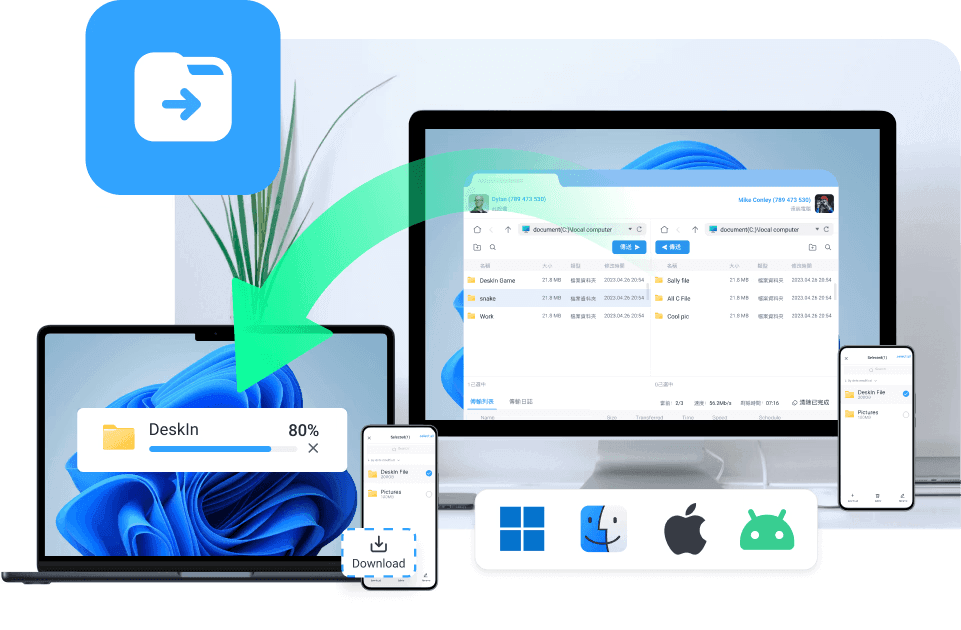
DeskIn 不僅提供流暢的遠端畫面,更整合多項實用功能,讓遠端操控事半功倍。透過高效的檔案傳輸功能,您能直接在 iPad 與 Windows 電腦間快速傳輸檔案,無需依賴其他雲端服務.而遠端列印功能,更能讓您直接從 iPad 將文件傳送至連接在 Windows 電腦上的印表機進行輸出。

共享螢幕與即時語音通話的結合,則讓遠端協作、會議與技術支援變得輕而易舉,您能一邊清晰講解,一邊直接操作對方桌面。這些多功能設計,徹底滿足了現代遠距工作、線上教學、行動娛樂與即時技術支援等多元場景的需求,將 iPad 真正轉化為一個功能完備的移動工作站。

此外,DeskIn 也充分發揮了 iPad 的移動優勢。您可以透過自訂遊戲按鍵與手把支援,在 iPad 上流暢遊玩 Windows PC 上的遊戲。或將 iPad 用作第二螢幕延伸,有效擴展您的工作區域。

連缐穩定品質高

DeskIn 憑藉遍佈全球的 200 多個高速節點,提供穩定流暢的遠端控制體驗。無論身處何地,都能自動匹配最佳伺服器,實現高連線成功率與超低延遲。遠端操控 Windows 電腦過程如本地般流暢,徹底告別卡頓與延遲困擾。

更令人安心的是,DeskIn 提供無時長限制的遠控服務,並通過智能網路優化技術確保連線穩定不掉線,讓您能夠長時間進行重要操作,無需擔心連線中斷,真正實現高效不間斷的遠端工作體驗。

支援 Windows 10 / 11 及 iPad 系列

DeskIn 具備極高的裝置相容性,全面支援 Windows 10、Windows 11 等主流系統,並完美適配 iPad Pro、iPad Air 及全系列 iPad 型號。這意味著無論您使用何種裝置組合,都能無縫搭建遠端連線,輕鬆從 iPad 操控 Windows 電腦。相較於許多僅支援單一平台(如僅限 Windows 對 Windows,或完全不支援 iPadOS 的遠端軟體),DeskIn 真正實現了跨平台存取的便利性,讓您不受設備限制。

3 步驟輕鬆連線,無需複雜知識

DeskIn 的核心設計理念就是極簡操作,僅需下載應用、選擇設備、點擊連接三個步驟,即可完成遠端控制。相較於 TeamViewer 繁瑣的帳號登入與設備配對,或是 Windows 遠端桌面必須進行複雜的網路埠轉發設定,DeskIn 讓任何初學者都能在五分鐘內輕鬆上手,立即從 iPad 遠控 Windows。

其突破性在於無需讓設備處於同一區域網路下,也完全不用記憶複雜的 IP 位址。系統提供的遠端喚醒功能,讓您能遠端啟動離線的電腦;而隱私螢幕保護則確保主機端的操作畫面不被旁人窺視,為您打造了一個既安全又極度便利的跨平台遠控體驗。

更多延伸閱讀:


如何從 iPad 遠端控制 Windows 電腦

了解 DeskIn 的強大功能後,現在讓我們一步步完成設定。整個流程非常直觀,您只需在兩台設備上安裝軟體,即可開始連線

免費下載 DeskIn

安裝 DeskIn 在 iPad 和 Windows

訪問 DeskIn 官方網站,分別下載 Windows 與 iPad 版本的 DeskIn 用戶端。在兩台裝置上完成安裝後,請使用同一個帳戶登入。

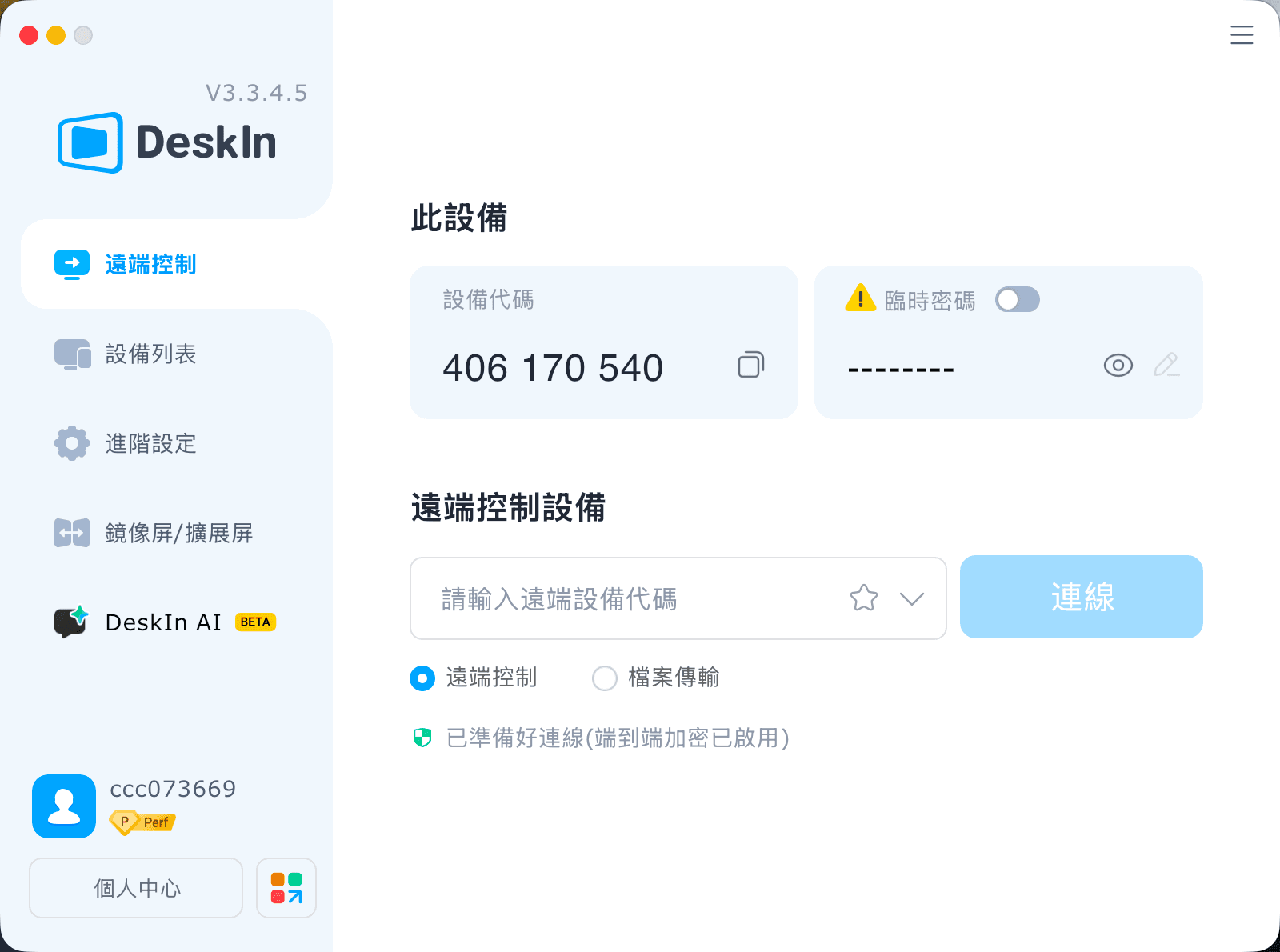
按照提示完成安裝程序。首次啟動軟體時,建議先設定一組「安全密碼」,後續遠端連接這台電腦時,即可直接輸入這組密碼,使連接過程更加方便快捷。也可以選擇臨時密碼,臨時密碼可自訂或隨機生成。

修改 DeskIn 臨時密碼

選擇需被控的 Windows 設備

啟動應用程式後,系統會自動載入您的設備列表。在「我的設備」區域中,您會看到您已安裝了 DeskIn 客戶端的 Windows 電腦名稱,該設備會顯示在列表中。點擊該 Windows 設備。

小技巧:為了方便識別,建議您在 Windows 客戶端中為電腦設定一個易辨識的名稱,例如「辦公室主機」、「家用遊戲電腦」。

點擊 Windows 設備

輸入密碼連接

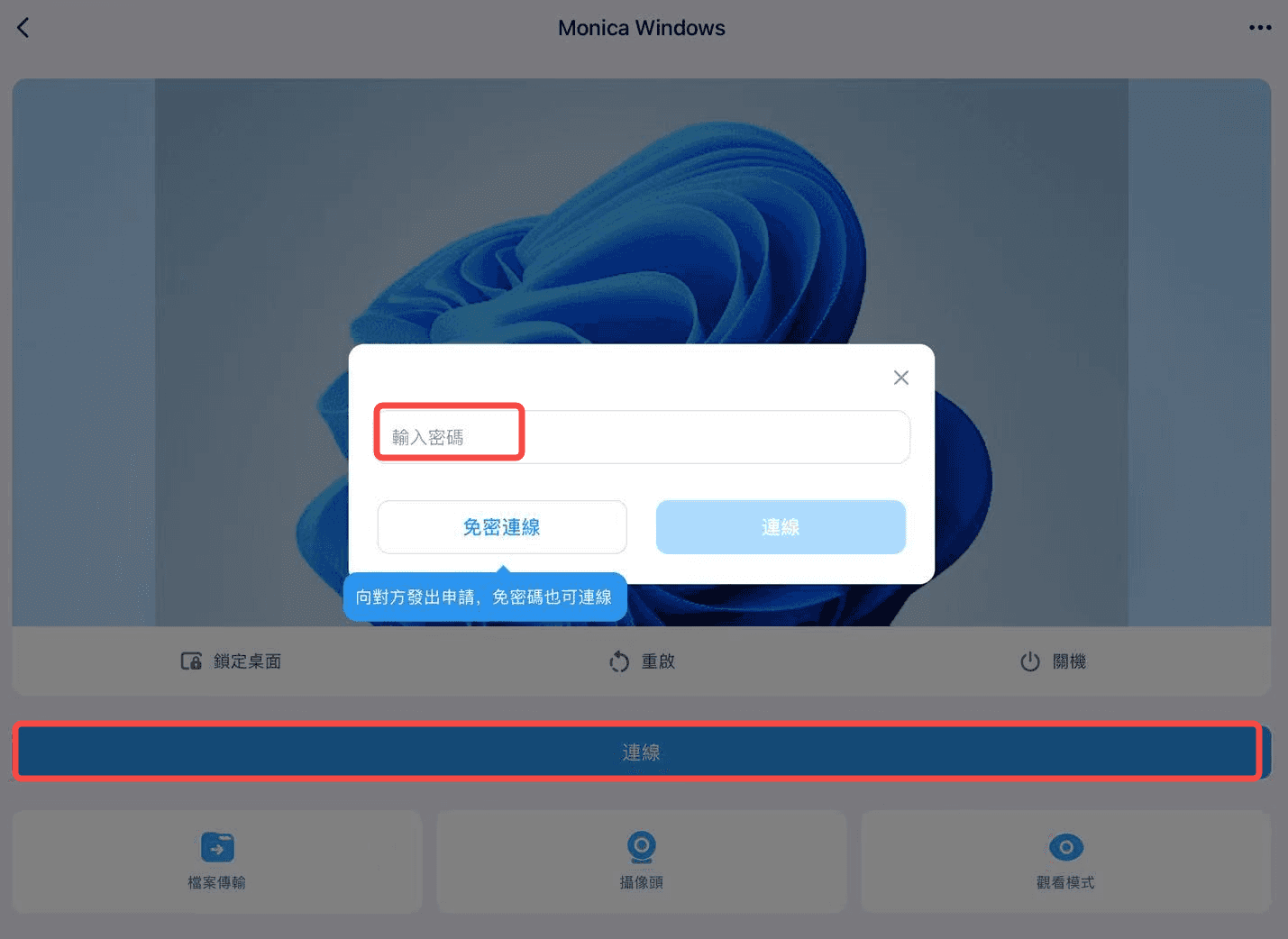
點擊「連線」按鈕,按指示輸入 Windows 的臨時密碼。

在 iPad 上輸入 Windows 臨時密碼

使用 DeskIn 遠控功能

連線成功後,您的 Windows 桌面將會完整地顯示在您的 iPad 螢幕上。現在,您就可以直接使用觸控手勢來操作遠端的 Windows 系統,進行文檔處理、瀏覽網頁或運行程式等所有操作。

使用 DeskIn 從 iPad 遠控 Windows

使用 DeskIn,立刻從 iPad 遠控 Windows

現在,您已經完成了所有準備工作。從下載安裝到成功連線,DeskIn 以其直觀的設計,真正實現了「3 步輕鬆遠控」的承諾。無論您身處何地,只要隨身攜帶 iPad,就能隨時存取並流暢操作您的 Windows 電腦,徹底打破空間與設備的限制。

這不僅是技術上的突破,更是您工作與生活方式的革新。立即體驗 DeskIn,將您的 iPad 變身為功能完整的移動工作站,享受前所未有的自由與效率。

免費下載 DeskIn

您是否曾渴望能隨時隨地,僅憑手中的 iPad 就能無縫操控家中或辦公室的 Windows 電腦?無論是緊急存取檔案、處理未完成的工作,還是進行遠端協助,最大的痛點莫過於「受限於網路環境」,導致跨網路連線經常出現困難。

本文將為您徹底解決這個難題!我們不僅要介紹一款能突破網路限制、實現跨網遠控的強大工具 DeskIn,更將透過清晰的圖文教學,從軟體安裝、設備選擇到實際操作,一步步帶領您輕鬆建立連線,讓您無論身在何處,都能高效、流暢地從 iPad 遠端控制您的 Windows 電腦。

iPad 遠端桌面軟體: DeskIn 【强烈推薦】

在從 iPad 遠端存取 Windows 時,選擇一款多平台兼容且功能完善的遠控軟體至關重要。DeskIn 正是這樣一款值得推薦的遠端連線軟體,它完美支援大部分 iPad 系列 與 Windows 設備,確保使用者隨時隨地都能建立穩定連線。

其操作流暢度令人印象深刻,操作回應速度幾乎與本機相同,大大提升了使用體驗。更突破性地支援跨網路連接,不需要兩台裝置在同一個區域網路中,配合遠端喚醒和無人值守功能,可直接開啟電腦螢幕,達成真正無縫的遠端控制體驗。這些特性讓 DeskIn 成為移動辦公和遠端存取的最佳選擇,充分滿足您的多樣化需求。
免費下載 DeskInDeskIn 從 iPad 遠控 Windows

快速流暢多功能遠控 Windows

DeskIn 多功能遠控

DeskIn 不僅提供流暢的遠端畫面,更整合多項實用功能,讓遠端操控事半功倍。透過高效的檔案傳輸功能,您能直接在 iPad 與 Windows 電腦間快速傳輸檔案,無需依賴其他雲端服務.而遠端列印功能,更能讓您直接從 iPad 將文件傳送至連接在 Windows 電腦上的印表機進行輸出。

共享螢幕與即時語音通話的結合,則讓遠端協作、會議與技術支援變得輕而易舉,您能一邊清晰講解,一邊直接操作對方桌面。這些多功能設計,徹底滿足了現代遠距工作、線上教學、行動娛樂與即時技術支援等多元場景的需求,將 iPad 真正轉化為一個功能完備的移動工作站。

此外,DeskIn 也充分發揮了 iPad 的移動優勢。您可以透過自訂遊戲按鍵與手把支援,在 iPad 上流暢遊玩 Windows PC 上的遊戲。或將 iPad 用作第二螢幕延伸,有效擴展您的工作區域。

連缐穩定品質高

DeskIn 憑藉遍佈全球的 200 多個高速節點,提供穩定流暢的遠端控制體驗。無論身處何地,都能自動匹配最佳伺服器,實現高連線成功率與超低延遲。遠端操控 Windows 電腦過程如本地般流暢,徹底告別卡頓與延遲困擾。

更令人安心的是,DeskIn 提供無時長限制的遠控服務,並通過智能網路優化技術確保連線穩定不掉線,讓您能夠長時間進行重要操作,無需擔心連線中斷,真正實現高效不間斷的遠端工作體驗。

支援 Windows 10 / 11 及 iPad 系列

DeskIn 具備極高的裝置相容性,全面支援 Windows 10、Windows 11 等主流系統,並完美適配 iPad Pro、iPad Air 及全系列 iPad 型號。這意味著無論您使用何種裝置組合,都能無縫搭建遠端連線,輕鬆從 iPad 操控 Windows 電腦。相較於許多僅支援單一平台(如僅限 Windows 對 Windows,或完全不支援 iPadOS 的遠端軟體),DeskIn 真正實現了跨平台存取的便利性,讓您不受設備限制。

3 步驟輕鬆連線,無需複雜知識

DeskIn 的核心設計理念就是極簡操作,僅需下載應用、選擇設備、點擊連接三個步驟,即可完成遠端控制。相較於 TeamViewer 繁瑣的帳號登入與設備配對,或是 Windows 遠端桌面必須進行複雜的網路埠轉發設定,DeskIn 讓任何初學者都能在五分鐘內輕鬆上手,立即從 iPad 遠控 Windows。

其突破性在於無需讓設備處於同一區域網路下,也完全不用記憶複雜的 IP 位址。系統提供的遠端喚醒功能,讓您能遠端啟動離線的電腦;而隱私螢幕保護則確保主機端的操作畫面不被旁人窺視,為您打造了一個既安全又極度便利的跨平台遠控體驗。

更多延伸閱讀:


如何從 iPad 遠端控制 Windows 電腦

了解 DeskIn 的強大功能後,現在讓我們一步步完成設定。整個流程非常直觀,您只需在兩台設備上安裝軟體,即可開始連線

免費下載 DeskIn

安裝 DeskIn 在 iPad 和 Windows

訪問 DeskIn 官方網站,分別下載 Windows 與 iPad 版本的 DeskIn 用戶端。在兩台裝置上完成安裝後,請使用同一個帳戶登入。

按照提示完成安裝程序。首次啟動軟體時,建議先設定一組「安全密碼」,後續遠端連接這台電腦時,即可直接輸入這組密碼,使連接過程更加方便快捷。也可以選擇臨時密碼,臨時密碼可自訂或隨機生成。

修改 DeskIn 臨時密碼

選擇需被控的 Windows 設備

啟動應用程式後,系統會自動載入您的設備列表。在「我的設備」區域中,您會看到您已安裝了 DeskIn 客戶端的 Windows 電腦名稱,該設備會顯示在列表中。點擊該 Windows 設備。

小技巧:為了方便識別,建議您在 Windows 客戶端中為電腦設定一個易辨識的名稱,例如「辦公室主機」、「家用遊戲電腦」。

點擊 Windows 設備

輸入密碼連接

點擊「連線」按鈕,按指示輸入 Windows 的臨時密碼。

在 iPad 上輸入 Windows 臨時密碼

使用 DeskIn 遠控功能

連線成功後,您的 Windows 桌面將會完整地顯示在您的 iPad 螢幕上。現在,您就可以直接使用觸控手勢來操作遠端的 Windows 系統,進行文檔處理、瀏覽網頁或運行程式等所有操作。
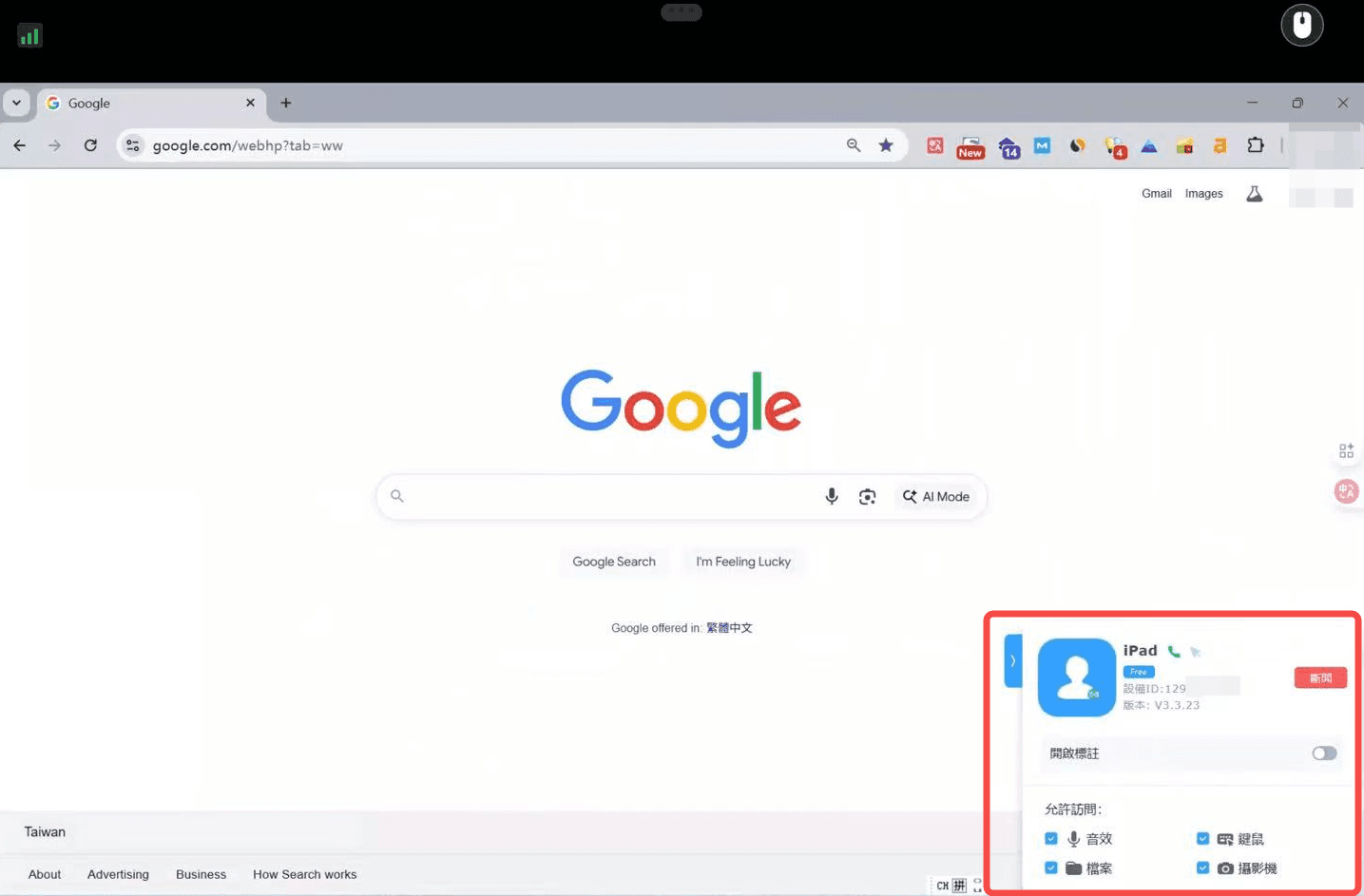
使用 DeskIn 從 iPad 遠控 Windows

使用 DeskIn,立刻從 iPad 遠控 Windows

現在,您已經完成了所有準備工作。從下載安裝到成功連線,DeskIn 以其直觀的設計,真正實現了「3 步輕鬆遠控」的承諾。無論您身處何地,只要隨身攜帶 iPad,就能隨時存取並流暢操作您的 Windows 電腦,徹底打破空間與設備的限制。

這不僅是技術上的突破,更是您工作與生活方式的革新。立即體驗 DeskIn,將您的 iPad 變身為功能完整的移動工作站,享受前所未有的自由與效率。

免費下載 DeskIn
new year promo
deskin promo
deskin promo
deskin promo
如何用 iPad 遠端控制 Windows

章節目錄

deskin promo

What’s next?

6 Best Free Unattended Remote Access Software in 2026

You shouldn't need a phone call to fix a computer. Whether you're helping your father troubleshoot Windows, managing distributed office PCs, or supporting clients after hours, you need free unattended remote access software that lets you log in anytime a machine is powered on — without someone clicking "Accept" on the other side.

But not all remote desktop tools are built for real unattended use. Some require session passwords every time. Others lock you out when versions don't match. A few are powerful but overly complex for small teams. In this guide, we compare the most practical options in 2026 and help you choose the right unattended remote access software for your situation.

Top 6 Free Unattended Remote Access Software Compared

Here are the strongest contenders today:

  • DeskIn – Best all-around solution for stable, modern unattended access

  • TeamViewer – Best for well-connected small businesses

  • AnyDesk – Best for IT teams and structured support workflows

  • Chrome Remote Desktop – Best for individuals who want an ultra-simple setup

  • Microsoft Remote Desktop – Best built-in option for Windows users

  • AnyViewer – Best lightweight mobile-friendly option

Let's have a closer look.

Most Practical Free Unattended Remote Access Software: DeskIn

Pros

  • True permanent unattended access configuration

  • Works across Windows, macOS, iOS, Android

  • Smooth performance for daily work and troubleshooting

  • Clean interface, beginner-friendly

  • Supports cross-device access, including mobile

Cons

  • Advanced features may require upgrading

Best for: Families supporting parents, freelancers, remote workers, and small teams that want reliability without technical setup.

DeskIn is designed for one thing: logging in when nobody is there. Once installed and configured, you can securely access a device anytime it is running. No temporary passwords. No reading codes over the phone. No panic updates blocking access. That's what real free unattended remote access software should feel like.

Unlike tools that focus heavily on session-based support, DeskIn is optimized for ongoing remote access. It works well whether you are managing a parent's PC, maintaining home lab systems, or supporting distributed workstations.

For users searching for the best free remote desktop software for unattended access, DeskIn strikes a balance between simplicity and performance. It avoids complex router configuration, and setup is straightforward even for beginners. If your priority is consistent access without friction, DeskIn is one of the most practical choices available.

Free download DeskIn

You may also like:

Best for Well-Connected Small Businesses: TeamViewer

Pros

  • Free for personal use

  • Highly secure with a mature feature set

  • Wide OS support

  • Strong brand recognition

Cons

  • Free version limited to personal use

  • Can feel bloated

  • Version mismatches may block connections

Best for: Small businesses with structured remote workflows.

Image alt: Free Unattended Remote Access Software TeamViewer

TeamViewer has been one of the most recognizable names in remote access for nearly two decades, and for good reason. It offers a mature ecosystem that supports Windows, macOS, Linux, Android, and iOS, making it highly versatile across devices. For small businesses, especially those with distributed teams, it provides structured device management, session logging, and secure, encrypted connections.

In terms of unattended remote access, TeamViewer allows users to configure permanent access credentials so machines can be accessed anytime they are online. However, users relying on the free version often report limitations related to "personal use" detection, as well as occasional version-mismatch issues that can temporarily block access. While it remains a powerful option in the free unattended remote access software landscape, it may feel feature-heavy for individuals who simply need stable, always-on remote access without licensing concerns.

Best for IT Teams: AnyDesk

Pros

  • Free for personal use

  • Fast performance

  • Built-in file manager

  • Collaboration tools

  • Address book for device management

Cons

  • Limited features for larger enterprises

  • UI can feel structured for support workflows

Best for: IT professionals managing multiple machines

Unattended Remote Access Software AnyDesk

AnyDesk is widely respected for its speed and responsiveness, particularly in environments where low latency is critical. Built with a proprietary codec optimized for remote sessions, it performs well even under limited bandwidth conditions. For IT teams managing multiple endpoints, its address book system and permission controls make device organization straightforward.

As unattended remote access software, AnyDesk supports permanent passwords and background installation, allowing administrators to connect without user interaction. It also includes built-in file transfer and collaboration tools such as chat, which are useful in support workflows. That said, the interface and feature set lean toward professional IT use cases rather than casual personal users. For those specifically searching for the best free remote desktop software for unattended access in structured IT environments, AnyDesk remains a strong and reliable contender.

Best Remote Access for Individuals: Chrome Remote Desktop

Pros

  • Completely free

  • Extremely easy setup

  • Works inside the Google ecosystem

  • Cross-platform

Cons

  • Limited features

  • Requires a Google account

  • No built-in file transfer

Best for: Individuals who want simple Chrome remote desktop unattended access.

 Free Unattended Remote Access Software Chrome RDP

Chrome Remote Desktop stands out for one primary reason: simplicity. Setup typically takes only a few minutes. Users install the browser extension, link their Google account, set a PIN, and can immediately enable Chrome Remote Desktop unattended access for ongoing connections. There is no complicated network configuration or advanced setup process involved.

However, while Chrome Remote Desktop works well for light, individual use, it offers minimal management tools. There is no built-in file transfer feature, and functionality remains intentionally basic. For users who travel frequently or need occasional access to a home PC, it serves as an accessible entry point into free unattended remote access software. But for managing multiple systems or performing advanced troubleshooting tasks, its limited feature set may become restrictive over time.

Best Remote Built-In Windows: Microsoft Remote Desktop

Pros

  • Integrated into Windows

  • Full control of the remote device

  • File transfer supported

  • No third-party installation needed

Cons

  • Complex setup outside the local network

  • May require VPN or port forwarding

  • No cloud relay

Best for: Advanced Windows users.

Free Unattended Remote Access Software Microsoft RDP

Microsoft Remote Desktop is integrated directly into Windows, making it a natural choice for users seeking free remote desktop Windows 11 or free remote desktop Windows 10 functionality without installing third-party tools. Within a local network, setup is straightforward, and performance is stable, offering full desktop control, file access, and administrative capabilities.

For unattended remote access scenarios, it can be configured to allow remote login without user approval. However, accessing a machine over the public internet often requires additional setup, such as VPN configuration or port forwarding, which may be challenging for non-technical users. While extremely powerful in professional Windows environments, it is generally better suited for users comfortable with networking concepts rather than beginners looking for plug-and-play remote access.

Note

Microsoft has retired its separate Remote Desktop app (from the Microsoft Store) and is ending support for the standalone Remote Desktop client (MSI) in March 2026, replacing both with the new Windows App for cloud services like Azure Virtual Desktop and Windows 365. However, the built-in Remote Desktop Connection (mstsc.exe) that ships with Windows 10 and 11, which is what we're recommending here, remains fully supported and unaffected by these changes. (as of the published date of the article)

Best for Mobile-Friendly Access: AnyViewer

Pros

  • Easy to use

  • Secure encryption

  • Available for iOS and Android

  • Stable free version

Cons

  • Windows-focused desktop support

  • Limited advanced features

Best for: Personal users prioritizing mobile control.

Free Unattended Remote Access Software AnyViewer

AnyViewer is designed with ease of use in mind and provides a streamlined interface that works well for personal users. It supports Windows PCs along with mobile apps for iOS and Android, making it convenient for accessing desktops on the go. Encryption based on ECC helps protect session data, which is important when connecting over public networks.

For unattended remote access software use, AnyViewer allows secure remote login after initial setup, enabling users to access their machines without repeated approval prompts.

The free version covers most essential functions, including file transfer and remote support. However, compared to more established platforms, it offers fewer advanced management tools and a smaller ecosystem. For individual users prioritizing mobile access and simplicity, it remains a practical and lightweight option.

FAQs About Free Unattended Remote Access Software

What is the best free unattended remote access software?

It depends on your use case.

  • For structured business environments, TeamViewer or AnyDesk may fit.

  • For ultra-simple individual access, Chrome Remote Desktop works.

  • For balanced usability and consistent unattended performance, DeskIn is a strong modern choice.

How do I ensure true unattended remote access?

To configure reliable unattended remote access software, you should:

  • Install it as a background service

  • Set a strong permanent password

  • Prevent the computer from sleeping

  • Enable encryption and authentication safeguards

Cloud-based solutions simplify this process by avoiding router configuration.

Is free remote desktop Windows 11 enough for remote access?

Microsoft Remote Desktop works well within local networks. For internet-based access without VPN setup, many users prefer cloud-based, free, unattended remote access software.

Why does remote software block connections sometimes?

Common reasons include: version mismatches, free license detection limits, expired sessions, and network configuration changes. Choosing stable unattended remote access software reduces these interruptions.

Conclusion

Remote access should feel invisible, not a scheduled appointment. The best free unattended remote access software allows you to log in quietly, securely, and consistently whenever the remote device is powered on. No codes, no wake-up calls, no update chaos. TeamViewer and AnyDesk remain strong for structured business use. Chrome Remote Desktop is excellent for simplicity. Microsoft Remote Desktop is powerful for experienced Windows users.

But if your priority is smooth, practical, unattended access that simply works across devices, DeskIn offers one of the most balanced solutions in 2026. Because the best remote support session is the one that doesn't require anyone to be there at all.

Free download DeskIn
a man at coffeeshop using his mobile to wake-on-lan on his windows 11 desktop at home

How to Enable Wake on LAN in Windows 11: 2026 Ultimate Guide

Imagine sitting in a coffee shop, suddenly realizing you need a critical file from your home computer, but you deliberately shut it down before leaving to save energy. Or picture yourself as an IT administrator needing to perform maintenance on dozens of remote workstations after hours. In both scenarios, Wake on LAN with Windows 11 transforms an impossibility into a simple click: the ability to power on your computer remotely, even when it's completely shut down.

Wake on LAN (WOL) is an Ethernet networking standard that allows a computer to be turned on remotely by sending a special signal called a "magic packet." When your network card detects this packet - even while the system is off - it triggers the motherboard to start the boot process. For Windows 10/11 users, this capability is built right in, but it requires careful configuration across your BIOS, operating system, and network hardware.

In this comprehensive guide, we'll walk you through every step to enable Wake on LAN Windows 10/11 with the best Wake on LAN software DeskIn, troubleshoot common issues, and show you how to verify your setup works; all while avoiding the frustration that leads countless users to Reddit threads asking why their Wake on LAN not working.

Prerequisites: What You Need Before Starting

Before diving into configuration, ensure your hardware meets these requirements :

  1. To use Wake on LAN, there needs to be a device running DeskIn in the same LAN as the computer about to be woken up. For example, other computers, iPhone, iPad, Android devices (mobile phones, tablets), etc. Using to assist in running DeskIn.

  2. Linux devices do not support sending WOL packets, and Mac and Linux devices do not support remote boot.

  3. Devices that are in an abnormal shutdown state, such as a blue screen or crash, do not support remote boot.

Free download DeskIn

Step-by-Step Guide to Enable Wake on LAN in Windows 11

Enabling Wake on LAN in Windows 11 requires configuration in three places: your computer's BIOS/UEFI, Windows network adapter settings, and power management options. Follow these steps carefully.

Step 1. Network Card Settings

Right-click the Windows Logo (or press Win + X) and select "Device Manager." Find and expand the "Network adapters" section. Locate your wired Ethernet card (e.g., Realtek PCIe GbE Family Controller), right-click it, and select "Properties."

  • Navigate to the Power Management tab and check "Allow this device to wake the computer."

  • Switch to the Advanced tab. In the Property list, find "Wake on Magic Packet" and set it to Enabled. If you see other Wake on LAN related options, enable them as well. Click "OK" to save the settings.

Configure Network Card Settings

Step 2. Motherboard BIOS Settings

Restart your computer. During boot, repeatedly press Delete or F2 (depending on your motherboard brand) to enter the BIOS setup.

  • Navigate to the Advanced or Power Management section.

  • Look for and enable options with names similar to these (you may only find one or two):

    • Power On By PCI-E

    • Wake on LAN

    • Resume on LAN

    • Power on PME

  • Press F10 to save changes and restart your computer.

Note: The exact menu names vary by motherboard manufacturer.

Adjust Motherboard BIOS Settings

Step 3. Enable and Test Remote Wake-Up in DeskIn

First, ensure your auxiliary device (like a phone or tablet) is on the same local network as your target computer, with DeskIn installed and logged into the same account.

  • On the auxiliary device, open DeskIn, go to Settings > General Settings, and enable "Remote Boot Support Wake On LAN."

  • Return to the DeskIn device list. Your powered-off computer will show as "Offline." Click the "Remote startup" button next to that device.

  • Wait a few seconds, the target computer will wake up, its status will change to "Online," and you can click to connect for remote desktop access.

With DeskIn's integrated approach, you can not only verify your Wake on LAN setup with one click but also seamlessly transition to remote control, eliminating the hassle of separate testing tools.

Enable and Test Remote Wake-Up in DeskIn

You may also be interested in:

Troubleshooting: Why Wake on LAN Not Working?

Even after following every step, you might encounter issues. Here are the most common culprits and solutions

1. BIOS Settings Not Saved

Double-check that you properly saved and exited BIOS after enabling WOL options. Some systems require you to press F10 specifically to save.

2. Network Adapter Power Management

Ensure both "Allow this device to wake the computer" and "Only allow a magic packet to wake the computer" are checked. The second option is particularly important—without it, your PC might wake up for any network activity.

3. Fast Startup Conflicts

As mentioned earlier, try toggling Fast Startup. If it's disabled, enable it and test again. If it's enabled, disable it.

4. Router ARP Cache Expired

If your computer wakes successfully after a short shutdown but fails after several hours, ARP binding is likely the solution.

5. Using Wi-Fi Instead of Ethernet

Wake-on-Wireless LAN is unreliable in Windows 11. Microsoft has acknowledged compatibility issues with WoWLAN drivers, and Dell support documentation confirms that Windows 11 driver architecture differs significantly from Windows 10, leading to wake failures over Wi-Fi. Always use a wired Ethernet connection for reliable WOL.

6. Windows Updates Changing Settings

Occasionally, Windows updates may reset your network adapter settings. If Wake on LAN is not working after an update, revisit Step 2 and verify your configurations.

7. Firewall Blocking Magic Packets

Windows Firewall might block incoming magic packets. Consider creating an inbound rule to allow UDP port 9 (the default WOL port) .

Why Windows 11 Users Love Wake on LAN

The benefits of enabling Wake on LAN in Windows 11 extend far beyond occasional file access:

  • Energy Savings: Keep your PC off 90% of the time, powering it only when needed

  • Extended Hardware Lifespan: Less runtime means less heat and wear on components

  • Remote IT Support: Family members or IT staff can access your computer without you being present

  • Scheduled Maintenance: Run updates or backups during off-hours

  • Home Server Functionality: Turn any old PC into an on-demand media or file server

FAQs about Wake on LAN in Windows 11

1. Does Windows 11 support Wake-on-LAN over Wi-Fi?

Officially, WoWLAN (Wake-on-Wireless LAN) support in Windows 11 is limited. Microsoft documentation and hardware manufacturers report compatibility issues with Wi-Fi wake, especially with newer CX driver architectures. For reliable operation, use Ethernet.

2. Why is my Wake on LAN not working on Windows 11?

Common causes include: BIOS settings not enabled, Fast Startup interfering, missing "Only allow magic packet" checkbox, router ARP cache expiration, or using Wi-Fi instead of Ethernet.

3. Can I wake Windows 11 over the internet?

Yes, but you'll need either router port forwarding configured or a cloud-based service like the best Wake on LAN software, DeskIn, that handles remote wake through an assistant device on your local network.

4. Do I need special Wake on LAN software for Windows 11?

You need some tool to send the magic packet. Options range from free utilities like NirSoft WakeMeOnLan to integrated solutions like DeskIn that combine WOL with remote desktop access.

Conclusion: Never Leave Your PC Running 24/7 Again

Wake on LAN Windows 11 is one of those features that, once configured, becomes indispensable. Whether you're accessing files remotely, running a home server, or managing multiple computers, WOL gives you on-demand access without the energy waste of always-on operation.

The setup process requires attention to detail across BIOS, Windows settings, and your network hardware. But with this guide, you can navigate each step confidently. And when you're ready to test your configuration, tools like DeskIn make verification simple while providing the remote desktop access you wanted in the first place.

Ready to experience the freedom of remote power-on? Start with the BIOS configuration above, and when you're finished, try DeskIn to verify your setup works and enjoy seamless remote access afterward.

Free download DeskIn
4 Best Wake on LAN Software for 2026

The 4 Best Wake on LAN Software for 2026: Remote Power-On Made Easy

Imagine needing to access your office computer from home, only to realize it's shut down. Or perhaps you're an IT administrator responsible for maintaining dozens of machines across multiple locations. In both scenarios, Wake on LAN software transforms impossibility into simplicity—letting you power on remote systems with a single click.

Wake on LAN (WOL) technology has been around for decades, but the tools to trigger it have evolved dramatically. Today's Wake on LAN software ranges from bare-bones utilities that simply send magic packets to sophisticated platforms that combine remote wake-up with full remote desktop control.

In this guide, we'll explore the four best Wake on LAN software solutions available, helping you find the perfect fit whether you need Wake on LAN software for Windows, a Wake on LAN Android app, or an integrated solution that does it all. And if you're tired of juggling multiple tools, we'll show you why DeskIn might be the only one you'll ever need.

Free download DeskIn

Top 4 Wake on LAN Software Tools Compared

After evaluating dozens of options based on features, ease of use, platform compatibility, and user reviews, here are the four best Wake on LAN software solutions available today:

  • NetCrunch Wake On LAN Tool - Best lightweight utility for IT admins who need a portable, no-installation tool for occasional local network use.

  • WOL-Manager - Best Wake on LAN Android app for mobile users who need to wake computers remotely from their phone or tablet.

  • Depicus Wake on LAN - Best cross-platform versatility with tools for Windows, Mac, Linux, and even web-based interfaces.

  • NirSoft WakeOnLAN - Best free utility for Windows power users who want network scanning capabilities alongside WOL functionality.

Note

If you want the best integrated solution combining reliable WOL with full remote desktop control in one seamless interface, DeskIn may be your first choice.

1. NetCrunch Wake On LAN Tool: Best Lightweight Utility for IT Admins

Pros

  • Portable executable—no installation required

  • Ultra-simple interface: just enter the MAC address and send

  • Completely free with no feature limitations

  • Works on Windows 10/11 x64

Cons

  • Local network only (no built-in remote wake capabilities)

  • No mobile app or cross-platform support

  • Bare-bones functionality only

Best for: IT administrators who need a quick, no-fuss utility for occasional use without installing heavyweight software.

Best Wake on LAN Software NetCrunch

The NetCrunch Wake On LAN Tool is exactly what you'd expect from a dedicated Wake on LAN software download—it does one thing and does it exceptionally well. Part of the NetCrunch admin toolset, this portable utility requires no installation or configuration. Simply launch the executable, enter the MAC address of your target device, and click send. The tool broadcasts a magic packet to your local network, and if the remote system supports WOL and is properly configured, it powers on.

What makes this tool particularly appealing for IT professionals is its reliability and simplicity. When you're troubleshooting Wake on LAN not working issues, having a clean, focused tool eliminates variables. It's ideal for turning on systems after hours, recovering offline endpoints, or managing distributed workstations. However, because it operates only on the local network, you'll need additional solutions—like VPN access or a cloud relay—for true remote wake capabilities.

2. WOL-Manager: Best Wake on LAN Android App

Pros

  • Remote wake over the internet (WAN) support

  • Group wake functionality—power on multiple devices simultaneously

  • Instant-wake feature for frequently accessed devices

  • Works with IP addresses, broadcast addresses, and dynamic domain names


Cons

  • Android only (no iOS version mentioned)

  • Requires router configuration for external access

  • Focuses solely on wake-up, not remote control

Best for: Mobile users who need to wake computers from anywhere using their Android device.

Wake on LAN Software WOL-Manager

For those seeking a dedicated Wake on LAN Android app, WOL-Manager stands out as a comprehensive solution. This app transforms your smartphone into a powerful remote wake tool, capable of powering on PCs, NAS devices, servers, or any WOL-compatible equipment from anywhere in the world. Unlike basic tools that only work locally, WOL-Manager supports wake-over-internet functionality, provided your router is configured correctly with port forwarding or dynamic DNS services like DynDns.

The app's group management feature is particularly valuable for users with multiple devices. You can organize computers by location or function and wake entire groups with a single tap. The "Instant-Wake" feature automatically powers on specified devices immediately after app launch—perfect for users who regularly need the same machines. WOL-Manager works well with DD-WRT router firmware and gives you flexibility in how you target devices: by IP address, broadcast address, or domain name. Once the computer wakes, you'll need separate remote desktop Wake on LAN software to actually control it - a limitation that integrated solutions like DeskIn elegantly solve.

3. Depicus Wake on LAN: Best Cross-Platform Versatility

Pros:

  • Multiple tool variants for different scenarios (GUI, command line, web-based)

  • Supports Windows, macOS, and Linux

  • Includes specialized tools like WOL for Cisco and remote subnet wake-up

  • Long-standing reputation in the WOL community

Cons:

  • Interface feels dated compared to modern apps

  • Some tools require technical knowledge to use effectively

  • Free versions may have limitations

Best for: Technical users who need flexibility across different platforms and network configurations.

Wake on LAN Software Depicus

Depicus has been a trusted name in the Wake on LAN software space for years, offering a suite of tools that cater to virtually every use case. Their collection includes a simple GUI tool for Windows, command-line utilities for scripting and automation, and even web-based tools that can run from a browser. This makes Depicus one of the most versatile options when you need Wake on LAN software Mac compatibility, alongside Windows support.

What sets Depicus apart is its attention to complex networking scenarios. Their tools can handle waking computers across different subnets—a challenge that often causes wake on lan not working errors in enterprise environments. The "Wake On Lan Command Line" tool is particularly useful for system administrators who need to integrate wake-up commands into scripts or scheduled tasks. While the interfaces may not win beauty contests, the reliability and depth of functionality make Depicus a go-to resource for professionals who need precise control over their WOL implementation.

You may also be interested in:

4. NirSoft WakeOnLAN: Best Free Utility for Windows Power Users

Pros

  •  Completely free for personal and commercial use

  • Scans the network and displays all active devices

  • Allows saving device lists for future reference

  • Supports command-line options for automation

  • Tiny footprint (under 100 KB)

 Cons

  • Windows only

  • Basic interface with limited hand-holding

  • Requires understanding of networking concepts

Best for: Windows users who want a powerful, no-cost utility with network scanning capabilities.

Wake on LAN Software NirSoft

NirSoft has built areputation for creating small, powerful utilities that do exactly what they promise—and Wake on LAN is no exception. This Wake on LAN software for Windows goes beyond simple magic packet sending by including a network scanner that discovers all devices on your local network, displaying their IP addresses, MAC addresses, and device names. This feature alone saves tremendous time when you're setting up WOL for multiple computers and need to collect MAC addresses.

Once you've scanned and saved your device list, waking computers becomes a matter of selecting them from a list and clicking a button. The tool supports sending magic packets to individual devices or entire groups, and its command-line options make it ideal for scripting. For IT professionals managing Windows environments, NirSoft WakeOnLAN represents the perfect balance of power, simplicity, and cost - it's free, portable, and packed with features that simplify WOL management. The only caveat? It's strictly for local network use, so you'll need additional infrastructure for remote waking.

Why DeskIn Is the Smarter Wake on LAN Solution

Best Wake on LAN Software DeskIn

Most Wake on LAN software tools focus on a single task: sending a magic packet. Once the computer powers on, the job is technically done. But in real-world use, waking a device is only the beginning.

DeskIn takes a more practical approach by integrating Wake on LAN directly into a full remote desktop platform. When a device appears offline, you can trigger a wake request through DeskIn's cloud relay system without configuring port forwarding or manually managing network settings. Once the system boots, the platform transitions seamlessly into a remote desktop session, allowing you to access and control the computer immediately.

Unlike basic WOL utilities that provide no confirmation, DeskIn also displays real-time device status, so you know exactly when the machine is online and ready. Instead of combining multiple tools, users get a unified wake-and-connect workflow designed for consistent remote access across Windows, macOS, iOS, and Android.

Wake-on-LAN Software FAQs

1. What is the best free Wake on LAN software?

The best free option depends on your needs. For a simple, portable Wake on LAN software free utility, NirSoft Wake-On-LAN is excellent. It's under 100KB, requires no installation, and includes network scanning. For IT professionals, NetCrunch's Wake On LAN Tool is completely free and dead-simple. If you want an integrated solution that combines WOL with remote desktop, DeskIn offers robust free functionality that goes beyond basic packet sending.

2. Can I wake my computer over the internet with free software?

Yes, but it requires additional configuration. With basic Wake on LAN software download options like NirSoft or NetCrunch, you'll need to set up port forwarding on your router and potentially use dynamic DNS. Alternatively, cloud-based solutions like DeskIn handle remote wake automatically through their infrastructure; no port forwarding required, making it the simplest option for remote waking.

  1. Why is my Wake-on-LAN not working?

Wake on LAN not working issues typically stem from one of several causes:

  1. BIOS settings: WOL must be enabled in the system firmware

  2. Network card configuration: Power management settings in Windows need adjustment

  3. Fast Startup: Windows Fast Startup prevents a proper shutdown for WOL

  4. Router ARP cache: After a prolonged shutdown, routers may forget the device's MAC address

4. How do I choose Wake on LAN software for Windows 10/11?

When selecting Wake-on-LAN software for Windows 10 or Windows 11 compatible tools, consider whether you need local-only or remote wake capabilities. For local network use, NirSoft or NetCrunch work perfectly. If you need to wake computers over the internet, look for solutions with cloud relay (like DeskIn) or those that support port forwarding. Also consider whether you need a remote desktop after wake; if so, an integrated platform saves significant hassle.

Beyond Simple Packet Sending

The landscape of Wake on LAN software has evolved far beyond simple magic packet utilities. Today's best tools recognize that waking a computer is rarely the end goal—it's the first step toward actually using that machine. Whether you choose a dedicated utility like NetCrunch or Depicus depends on whether you're comfortable assembling a toolkit of separate applications.

For most users, however, the integrated approach of DeskIn represents the future of remote access. By combining reliable Wake on LAN Windows 11 support with full remote desktop capabilities, DeskIn delivers a unified experience that saves time, reduces complexity, and just works. No more wondering if the packet arrived. No more switching between apps. Just one click from sleep to full control.

Ready to experience remote access the way it should be? Try DeskIn today and discover the difference an integrated WOL solution makes.

Free download DeskIn


6 Best Free Unattended Remote Access Software in 2026

You shouldn't need a phone call to fix a computer. Whether you're helping your father troubleshoot Windows, managing distributed office PCs, or supporting clients after hours, you need free unattended remote access software that lets you log in anytime a machine is powered on — without someone clicking "Accept" on the other side.

But not all remote desktop tools are built for real unattended use. Some require session passwords every time. Others lock you out when versions don't match. A few are powerful but overly complex for small teams. In this guide, we compare the most practical options in 2026 and help you choose the right unattended remote access software for your situation.

Top 6 Free Unattended Remote Access Software Compared

Here are the strongest contenders today:

  • DeskIn – Best all-around solution for stable, modern unattended access

  • TeamViewer – Best for well-connected small businesses

  • AnyDesk – Best for IT teams and structured support workflows

  • Chrome Remote Desktop – Best for individuals who want an ultra-simple setup

  • Microsoft Remote Desktop – Best built-in option for Windows users

  • AnyViewer – Best lightweight mobile-friendly option

Let's have a closer look.

Most Practical Free Unattended Remote Access Software: DeskIn

Pros

  • True permanent unattended access configuration

  • Works across Windows, macOS, iOS, Android

  • Smooth performance for daily work and troubleshooting

  • Clean interface, beginner-friendly

  • Supports cross-device access, including mobile

Cons

  • Advanced features may require upgrading

Best for: Families supporting parents, freelancers, remote workers, and small teams that want reliability without technical setup.

DeskIn is designed for one thing: logging in when nobody is there. Once installed and configured, you can securely access a device anytime it is running. No temporary passwords. No reading codes over the phone. No panic updates blocking access. That's what real free unattended remote access software should feel like.

Unlike tools that focus heavily on session-based support, DeskIn is optimized for ongoing remote access. It works well whether you are managing a parent's PC, maintaining home lab systems, or supporting distributed workstations.

For users searching for the best free remote desktop software for unattended access, DeskIn strikes a balance between simplicity and performance. It avoids complex router configuration, and setup is straightforward even for beginners. If your priority is consistent access without friction, DeskIn is one of the most practical choices available.

Free download DeskIn

You may also like:

Best for Well-Connected Small Businesses: TeamViewer

Pros

  • Free for personal use

  • Highly secure with a mature feature set

  • Wide OS support

  • Strong brand recognition

Cons

  • Free version limited to personal use

  • Can feel bloated

  • Version mismatches may block connections

Best for: Small businesses with structured remote workflows.

Image alt: Free Unattended Remote Access Software TeamViewer

TeamViewer has been one of the most recognizable names in remote access for nearly two decades, and for good reason. It offers a mature ecosystem that supports Windows, macOS, Linux, Android, and iOS, making it highly versatile across devices. For small businesses, especially those with distributed teams, it provides structured device management, session logging, and secure, encrypted connections.

In terms of unattended remote access, TeamViewer allows users to configure permanent access credentials so machines can be accessed anytime they are online. However, users relying on the free version often report limitations related to "personal use" detection, as well as occasional version-mismatch issues that can temporarily block access. While it remains a powerful option in the free unattended remote access software landscape, it may feel feature-heavy for individuals who simply need stable, always-on remote access without licensing concerns.

Best for IT Teams: AnyDesk

Pros

  • Free for personal use

  • Fast performance

  • Built-in file manager

  • Collaboration tools

  • Address book for device management

Cons

  • Limited features for larger enterprises

  • UI can feel structured for support workflows

Best for: IT professionals managing multiple machines

Unattended Remote Access Software AnyDesk

AnyDesk is widely respected for its speed and responsiveness, particularly in environments where low latency is critical. Built with a proprietary codec optimized for remote sessions, it performs well even under limited bandwidth conditions. For IT teams managing multiple endpoints, its address book system and permission controls make device organization straightforward.

As unattended remote access software, AnyDesk supports permanent passwords and background installation, allowing administrators to connect without user interaction. It also includes built-in file transfer and collaboration tools such as chat, which are useful in support workflows. That said, the interface and feature set lean toward professional IT use cases rather than casual personal users. For those specifically searching for the best free remote desktop software for unattended access in structured IT environments, AnyDesk remains a strong and reliable contender.

Best Remote Access for Individuals: Chrome Remote Desktop

Pros

  • Completely free

  • Extremely easy setup

  • Works inside the Google ecosystem

  • Cross-platform

Cons

  • Limited features

  • Requires a Google account

  • No built-in file transfer

Best for: Individuals who want simple Chrome remote desktop unattended access.

 Free Unattended Remote Access Software Chrome RDP

Chrome Remote Desktop stands out for one primary reason: simplicity. Setup typically takes only a few minutes. Users install the browser extension, link their Google account, set a PIN, and can immediately enable Chrome Remote Desktop unattended access for ongoing connections. There is no complicated network configuration or advanced setup process involved.

However, while Chrome Remote Desktop works well for light, individual use, it offers minimal management tools. There is no built-in file transfer feature, and functionality remains intentionally basic. For users who travel frequently or need occasional access to a home PC, it serves as an accessible entry point into free unattended remote access software. But for managing multiple systems or performing advanced troubleshooting tasks, its limited feature set may become restrictive over time.

Best Remote Built-In Windows: Microsoft Remote Desktop

Pros

  • Integrated into Windows

  • Full control of the remote device

  • File transfer supported

  • No third-party installation needed

Cons

  • Complex setup outside the local network

  • May require VPN or port forwarding

  • No cloud relay

Best for: Advanced Windows users.

Free Unattended Remote Access Software Microsoft RDP

Microsoft Remote Desktop is integrated directly into Windows, making it a natural choice for users seeking free remote desktop Windows 11 or free remote desktop Windows 10 functionality without installing third-party tools. Within a local network, setup is straightforward, and performance is stable, offering full desktop control, file access, and administrative capabilities.

For unattended remote access scenarios, it can be configured to allow remote login without user approval. However, accessing a machine over the public internet often requires additional setup, such as VPN configuration or port forwarding, which may be challenging for non-technical users. While extremely powerful in professional Windows environments, it is generally better suited for users comfortable with networking concepts rather than beginners looking for plug-and-play remote access.

Note

Microsoft has retired its separate Remote Desktop app (from the Microsoft Store) and is ending support for the standalone Remote Desktop client (MSI) in March 2026, replacing both with the new Windows App for cloud services like Azure Virtual Desktop and Windows 365. However, the built-in Remote Desktop Connection (mstsc.exe) that ships with Windows 10 and 11, which is what we're recommending here, remains fully supported and unaffected by these changes. (as of the published date of the article)

Best for Mobile-Friendly Access: AnyViewer

Pros

  • Easy to use

  • Secure encryption

  • Available for iOS and Android

  • Stable free version

Cons

  • Windows-focused desktop support

  • Limited advanced features

Best for: Personal users prioritizing mobile control.

Free Unattended Remote Access Software AnyViewer

AnyViewer is designed with ease of use in mind and provides a streamlined interface that works well for personal users. It supports Windows PCs along with mobile apps for iOS and Android, making it convenient for accessing desktops on the go. Encryption based on ECC helps protect session data, which is important when connecting over public networks.

For unattended remote access software use, AnyViewer allows secure remote login after initial setup, enabling users to access their machines without repeated approval prompts.

The free version covers most essential functions, including file transfer and remote support. However, compared to more established platforms, it offers fewer advanced management tools and a smaller ecosystem. For individual users prioritizing mobile access and simplicity, it remains a practical and lightweight option.

FAQs About Free Unattended Remote Access Software

What is the best free unattended remote access software?

It depends on your use case.

  • For structured business environments, TeamViewer or AnyDesk may fit.

  • For ultra-simple individual access, Chrome Remote Desktop works.

  • For balanced usability and consistent unattended performance, DeskIn is a strong modern choice.

How do I ensure true unattended remote access?

To configure reliable unattended remote access software, you should:

  • Install it as a background service

  • Set a strong permanent password

  • Prevent the computer from sleeping

  • Enable encryption and authentication safeguards

Cloud-based solutions simplify this process by avoiding router configuration.

Is free remote desktop Windows 11 enough for remote access?

Microsoft Remote Desktop works well within local networks. For internet-based access without VPN setup, many users prefer cloud-based, free, unattended remote access software.

Why does remote software block connections sometimes?

Common reasons include: version mismatches, free license detection limits, expired sessions, and network configuration changes. Choosing stable unattended remote access software reduces these interruptions.

Conclusion

Remote access should feel invisible, not a scheduled appointment. The best free unattended remote access software allows you to log in quietly, securely, and consistently whenever the remote device is powered on. No codes, no wake-up calls, no update chaos. TeamViewer and AnyDesk remain strong for structured business use. Chrome Remote Desktop is excellent for simplicity. Microsoft Remote Desktop is powerful for experienced Windows users.

But if your priority is smooth, practical, unattended access that simply works across devices, DeskIn offers one of the most balanced solutions in 2026. Because the best remote support session is the one that doesn't require anyone to be there at all.

Free download DeskIn
a man at coffeeshop using his mobile to wake-on-lan on his windows 11 desktop at home

How to Enable Wake on LAN in Windows 11: 2026 Ultimate Guide

Imagine sitting in a coffee shop, suddenly realizing you need a critical file from your home computer, but you deliberately shut it down before leaving to save energy. Or picture yourself as an IT administrator needing to perform maintenance on dozens of remote workstations after hours. In both scenarios, Wake on LAN with Windows 11 transforms an impossibility into a simple click: the ability to power on your computer remotely, even when it's completely shut down.

Wake on LAN (WOL) is an Ethernet networking standard that allows a computer to be turned on remotely by sending a special signal called a "magic packet." When your network card detects this packet - even while the system is off - it triggers the motherboard to start the boot process. For Windows 10/11 users, this capability is built right in, but it requires careful configuration across your BIOS, operating system, and network hardware.

In this comprehensive guide, we'll walk you through every step to enable Wake on LAN Windows 10/11 with the best Wake on LAN software DeskIn, troubleshoot common issues, and show you how to verify your setup works; all while avoiding the frustration that leads countless users to Reddit threads asking why their Wake on LAN not working.

Prerequisites: What You Need Before Starting

Before diving into configuration, ensure your hardware meets these requirements :

  1. To use Wake on LAN, there needs to be a device running DeskIn in the same LAN as the computer about to be woken up. For example, other computers, iPhone, iPad, Android devices (mobile phones, tablets), etc. Using to assist in running DeskIn.

  2. Linux devices do not support sending WOL packets, and Mac and Linux devices do not support remote boot.

  3. Devices that are in an abnormal shutdown state, such as a blue screen or crash, do not support remote boot.

Free download DeskIn

Step-by-Step Guide to Enable Wake on LAN in Windows 11

Enabling Wake on LAN in Windows 11 requires configuration in three places: your computer's BIOS/UEFI, Windows network adapter settings, and power management options. Follow these steps carefully.

Step 1. Network Card Settings

Right-click the Windows Logo (or press Win + X) and select "Device Manager." Find and expand the "Network adapters" section. Locate your wired Ethernet card (e.g., Realtek PCIe GbE Family Controller), right-click it, and select "Properties."

  • Navigate to the Power Management tab and check "Allow this device to wake the computer."

  • Switch to the Advanced tab. In the Property list, find "Wake on Magic Packet" and set it to Enabled. If you see other Wake on LAN related options, enable them as well. Click "OK" to save the settings.

Configure Network Card Settings

Step 2. Motherboard BIOS Settings

Restart your computer. During boot, repeatedly press Delete or F2 (depending on your motherboard brand) to enter the BIOS setup.

  • Navigate to the Advanced or Power Management section.

  • Look for and enable options with names similar to these (you may only find one or two):

    • Power On By PCI-E

    • Wake on LAN

    • Resume on LAN

    • Power on PME

  • Press F10 to save changes and restart your computer.

Note: The exact menu names vary by motherboard manufacturer.

Adjust Motherboard BIOS Settings

Step 3. Enable and Test Remote Wake-Up in DeskIn

First, ensure your auxiliary device (like a phone or tablet) is on the same local network as your target computer, with DeskIn installed and logged into the same account.

  • On the auxiliary device, open DeskIn, go to Settings > General Settings, and enable "Remote Boot Support Wake On LAN."

  • Return to the DeskIn device list. Your powered-off computer will show as "Offline." Click the "Remote startup" button next to that device.

  • Wait a few seconds, the target computer will wake up, its status will change to "Online," and you can click to connect for remote desktop access.

With DeskIn's integrated approach, you can not only verify your Wake on LAN setup with one click but also seamlessly transition to remote control, eliminating the hassle of separate testing tools.

Enable and Test Remote Wake-Up in DeskIn

You may also be interested in:

Troubleshooting: Why Wake on LAN Not Working?

Even after following every step, you might encounter issues. Here are the most common culprits and solutions

1. BIOS Settings Not Saved

Double-check that you properly saved and exited BIOS after enabling WOL options. Some systems require you to press F10 specifically to save.

2. Network Adapter Power Management

Ensure both "Allow this device to wake the computer" and "Only allow a magic packet to wake the computer" are checked. The second option is particularly important—without it, your PC might wake up for any network activity.

3. Fast Startup Conflicts

As mentioned earlier, try toggling Fast Startup. If it's disabled, enable it and test again. If it's enabled, disable it.

4. Router ARP Cache Expired

If your computer wakes successfully after a short shutdown but fails after several hours, ARP binding is likely the solution.

5. Using Wi-Fi Instead of Ethernet

Wake-on-Wireless LAN is unreliable in Windows 11. Microsoft has acknowledged compatibility issues with WoWLAN drivers, and Dell support documentation confirms that Windows 11 driver architecture differs significantly from Windows 10, leading to wake failures over Wi-Fi. Always use a wired Ethernet connection for reliable WOL.

6. Windows Updates Changing Settings

Occasionally, Windows updates may reset your network adapter settings. If Wake on LAN is not working after an update, revisit Step 2 and verify your configurations.

7. Firewall Blocking Magic Packets

Windows Firewall might block incoming magic packets. Consider creating an inbound rule to allow UDP port 9 (the default WOL port) .

Why Windows 11 Users Love Wake on LAN

The benefits of enabling Wake on LAN in Windows 11 extend far beyond occasional file access:

  • Energy Savings: Keep your PC off 90% of the time, powering it only when needed

  • Extended Hardware Lifespan: Less runtime means less heat and wear on components

  • Remote IT Support: Family members or IT staff can access your computer without you being present

  • Scheduled Maintenance: Run updates or backups during off-hours

  • Home Server Functionality: Turn any old PC into an on-demand media or file server

FAQs about Wake on LAN in Windows 11

1. Does Windows 11 support Wake-on-LAN over Wi-Fi?

Officially, WoWLAN (Wake-on-Wireless LAN) support in Windows 11 is limited. Microsoft documentation and hardware manufacturers report compatibility issues with Wi-Fi wake, especially with newer CX driver architectures. For reliable operation, use Ethernet.

2. Why is my Wake on LAN not working on Windows 11?

Common causes include: BIOS settings not enabled, Fast Startup interfering, missing "Only allow magic packet" checkbox, router ARP cache expiration, or using Wi-Fi instead of Ethernet.

3. Can I wake Windows 11 over the internet?

Yes, but you'll need either router port forwarding configured or a cloud-based service like the best Wake on LAN software, DeskIn, that handles remote wake through an assistant device on your local network.

4. Do I need special Wake on LAN software for Windows 11?

You need some tool to send the magic packet. Options range from free utilities like NirSoft WakeMeOnLan to integrated solutions like DeskIn that combine WOL with remote desktop access.

Conclusion: Never Leave Your PC Running 24/7 Again

Wake on LAN Windows 11 is one of those features that, once configured, becomes indispensable. Whether you're accessing files remotely, running a home server, or managing multiple computers, WOL gives you on-demand access without the energy waste of always-on operation.

The setup process requires attention to detail across BIOS, Windows settings, and your network hardware. But with this guide, you can navigate each step confidently. And when you're ready to test your configuration, tools like DeskIn make verification simple while providing the remote desktop access you wanted in the first place.

Ready to experience the freedom of remote power-on? Start with the BIOS configuration above, and when you're finished, try DeskIn to verify your setup works and enjoy seamless remote access afterward.

Free download DeskIn

專業、穩定、安全。

專業、穩定、安全。

聯絡我們

電子郵件: support@deskin.io

總部: 991D Alexandra Road #02-17, Singapore 119972

版權所有 © 2026 Zuler Technology PTE. LTD. 保留所有權利。

版權所有 © 2026 Zuler Technology PTE. LTD. 保留所有權利。

聯絡我們

電子郵件: support@deskin.io

總部: 991D Alexandra Road #02-17, Singapore 119972

版權所有 © 2026 Zuler Technology PTE. LTD. 保留所有權利。

低至2.4折

春季限時特價 🎉 年付方案每月僅 US$2.91 起

👉 請使用折扣碼 [DESKINSPRING]

低至2.4折

春季限時特價 🎉 年付方案每月僅 US$2.91 起

👉 請使用折扣碼 [DESKINSPRING]

低至2.4折

春季限時特價 🎉 年付方案每月僅 US$2.91 起

👉 請使用折扣碼 [DESKINSPRING]