螢幕擴充失敗的三個原因以及解決方案

螢幕擴充失敗的三個原因以及解決方案

問題解決

問題解決

·

author

已更新

已更新

已更新

DeskIn支援免費進行螢幕擴充,但使用過程中可能會遇到一些狀況導致無法使用,本文整理了幾種可能會遇到的狀況以及解決辦法。

狀況一:進行螢幕擴充卻只有鏡像螢幕

當您發現進行了螢幕擴充,兩個螢幕畫面卻只有鏡像,無法操作延伸出來的螢幕,請在螢幕擴充進行過程中檢查您的系統顯示器設定。

Windows 系統設定:

前往Windows系統設定 >> 顯示器設定,將螢幕選項設定為「延伸這些顯示器」,你還可以根據您的使用習慣,透過拖拽修改1、2兩塊螢幕(主螢幕和延伸螢幕)的左右位置順序。


MacOS 系統設定:

點擊mac頂部工具列蘋果圖標前往系統設定 >> 顯示器設定,選中DeskIn螢幕(即延伸螢幕)將螢幕選項設定為「延伸的顯示器」,你還可以根據您的使用習慣,點擊「排列」調整兩塊螢幕(主螢幕和延伸螢幕)的左右位置順序。


狀況二:提示當前系統暫不支持

DeskIn螢幕擴充功能支援的最低Windows版本為1903,低於此版本可能會導致螢幕擴充失敗。另外若您的CPU内存本身比較小,或由於裝置的其他更新服務或程式運作占用CPU過高也可能導致螢幕擴充失敗。

狀況三:提示無法發起螢幕擴充 或 未知錯誤

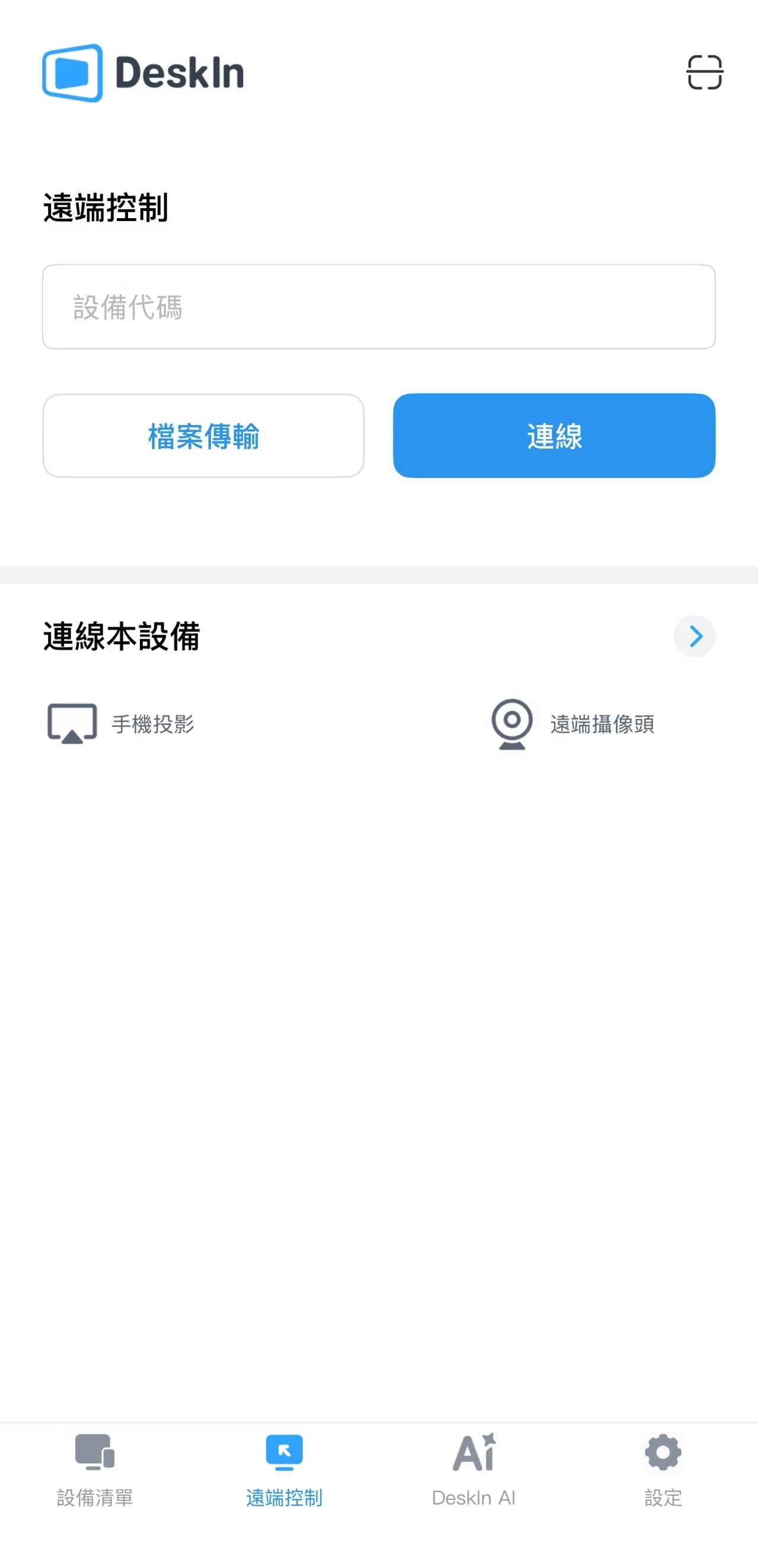
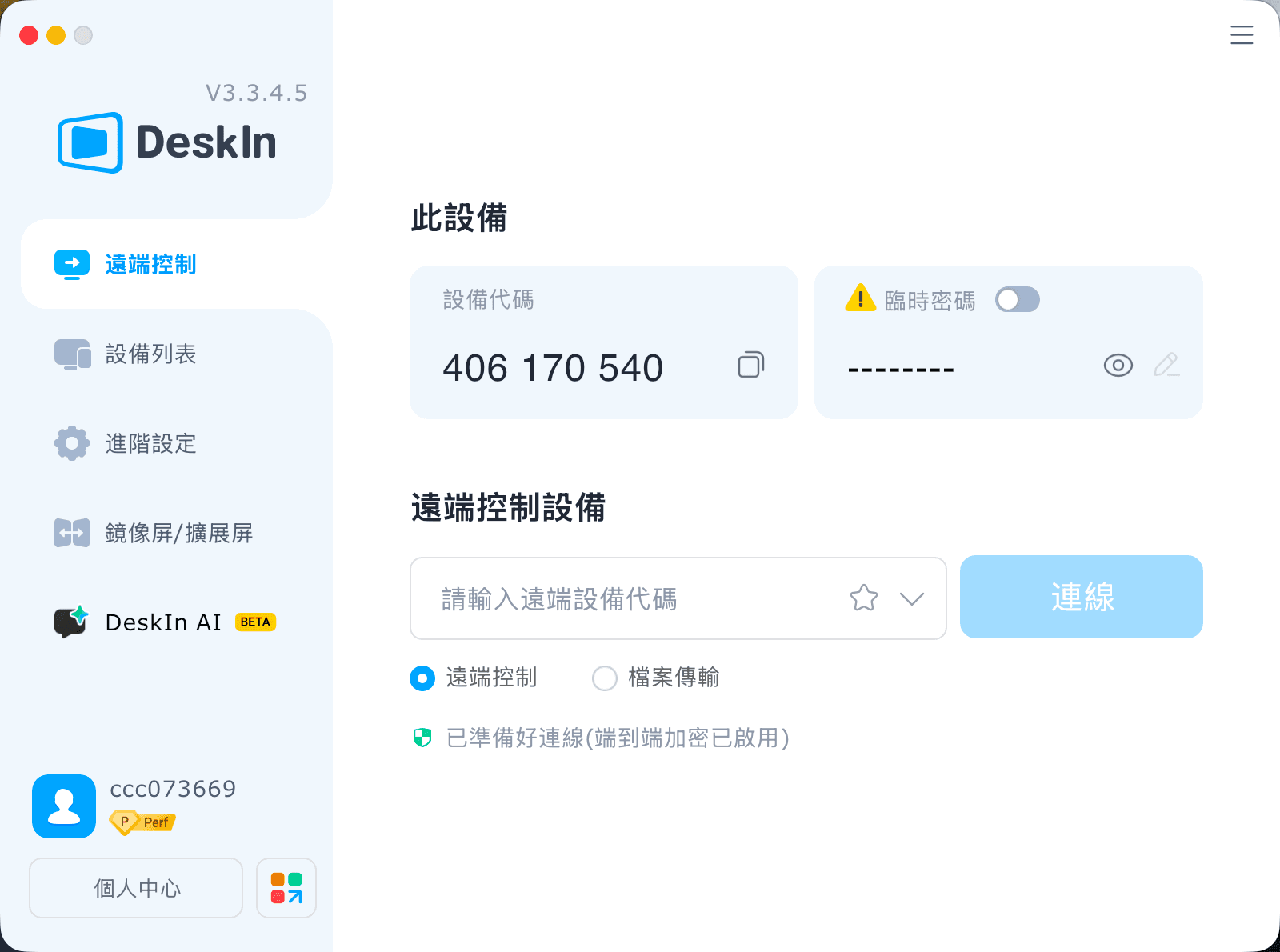
請留意,螢幕DeskIn的螢幕擴充功能,無需先進行遠端連缐!

若您在發起遠端連缐時出現了以下提示無法進行螢幕擴充,可能是因爲您的主控裝置或被控裝置正在遠端會話中,請先斷開正在進行的遠端連缐,再發起螢幕擴充請求。


狀況四:“當前版本不支持此功能”

當您看到此提示時,請前往 DeskIn 官方網站下載更新版本的 DeskIn:DeskIn Personal | 免費的遠程桌麵應用,擁有 4000 萬+ 用戶

注意:Mac App Store 版本 3.1.01 不支持擴展屏幕,請前往 DeskIn 官方網站下載完整版 3.1.0.1 以使用此功能。


如果您需要進一步的協助,請通過電子郵件聯繫 DeskIn 官方support@deskin.io

DeskIn支援免費進行螢幕擴充,但使用過程中可能會遇到一些狀況導致無法使用,本文整理了幾種可能會遇到的狀況以及解決辦法。

狀況一:進行螢幕擴充卻只有鏡像螢幕

當您發現進行了螢幕擴充,兩個螢幕畫面卻只有鏡像,無法操作延伸出來的螢幕,請在螢幕擴充進行過程中檢查您的系統顯示器設定。

Windows 系統設定:

前往Windows系統設定 >> 顯示器設定,將螢幕選項設定為「延伸這些顯示器」,你還可以根據您的使用習慣,透過拖拽修改1、2兩塊螢幕(主螢幕和延伸螢幕)的左右位置順序。


MacOS 系統設定:

點擊mac頂部工具列蘋果圖標前往系統設定 >> 顯示器設定,選中DeskIn螢幕(即延伸螢幕)將螢幕選項設定為「延伸的顯示器」,你還可以根據您的使用習慣,點擊「排列」調整兩塊螢幕(主螢幕和延伸螢幕)的左右位置順序。


狀況二:提示當前系統暫不支持

DeskIn螢幕擴充功能支援的最低Windows版本為1903,低於此版本可能會導致螢幕擴充失敗。另外若您的CPU内存本身比較小,或由於裝置的其他更新服務或程式運作占用CPU過高也可能導致螢幕擴充失敗。

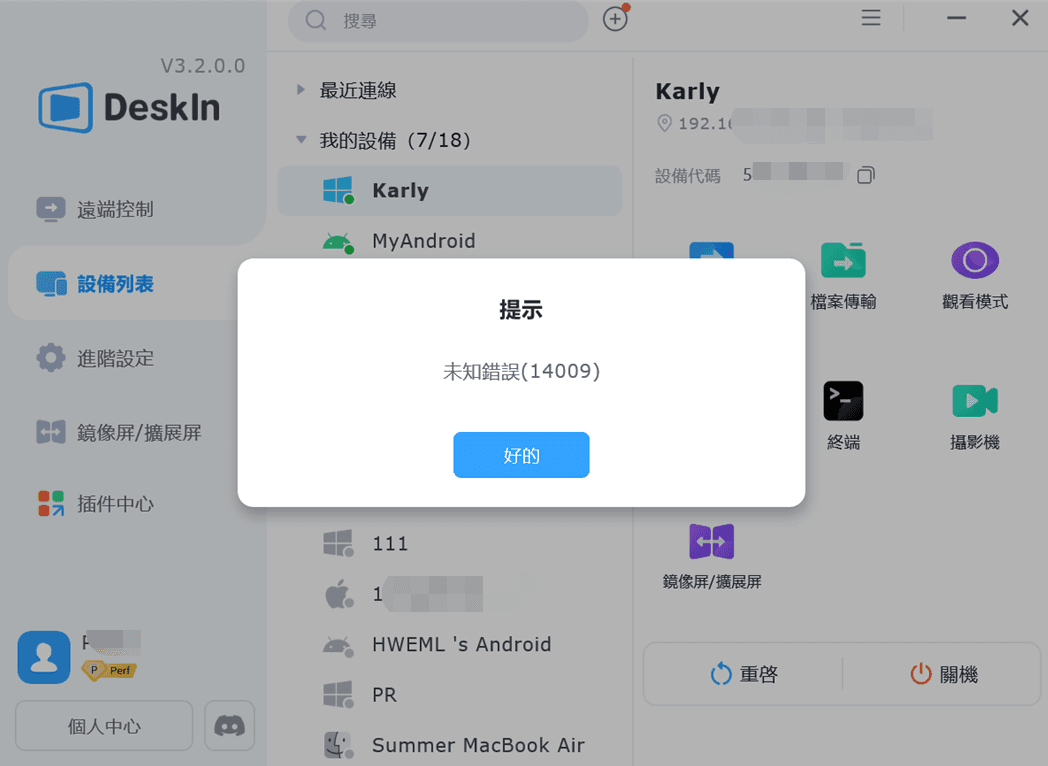
狀況三:提示無法發起螢幕擴充 或 未知錯誤

請留意,螢幕DeskIn的螢幕擴充功能,無需先進行遠端連缐!

若您在發起遠端連缐時出現了以下提示無法進行螢幕擴充,可能是因爲您的主控裝置或被控裝置正在遠端會話中,請先斷開正在進行的遠端連缐,再發起螢幕擴充請求。

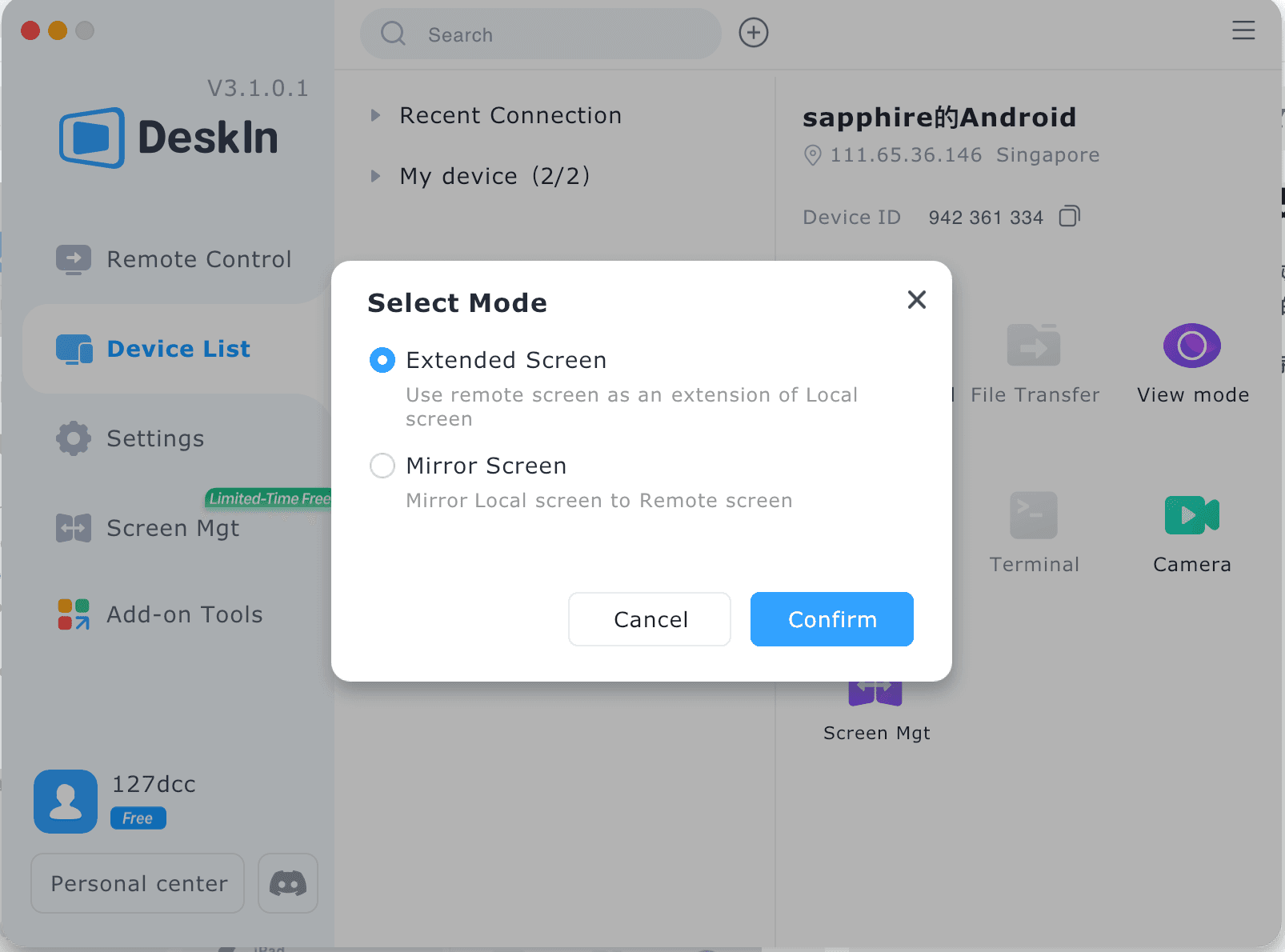
狀況四:“當前版本不支持此功能”

當您看到此提示時,請前往 DeskIn 官方網站下載更新版本的 DeskIn:DeskIn Personal | 免費的遠程桌麵應用,擁有 4000 萬+ 用戶

注意:Mac App Store 版本 3.1.01 不支持擴展屏幕,請前往 DeskIn 官方網站下載完整版 3.1.0.1 以使用此功能。

如果您需要進一步的協助,請通過電子郵件聯繫 DeskIn 官方support@deskin.io

Controlling a Windows PC from an iPad using Chrome Remote Desktop in Japan
deskin promo

What’s next?

Top 10 Splashtop Alternative Tools for Faster, More Reliable Remote Access (2026)

If your remote desktop tool has started to feel like a buffering video at the worst possible moment, you're not alone. Many users are actively searching for a better Splashtop alternative due to rising costs, laggy connections, and limited flexibility. Whether you're managing remote IT support or simply accessing your work computer from home, the right tool can turn frustration into seamless control. Let’s dive into the best options available today.

Key Features to Look for in a Splashtop Alternative

Before switching, it’s worth knowing what actually matters. A great remote desktop tool should offer:

  • Smooth performance with low latency and high frame rates

  • Strong security like AES-256 encryption and 2FA

  • Cross-platform compatibility (desktop + mobile)

  • Easy setup and intuitive interface

  • Transparent pricing without hidden increases

  • Stable unattended remote access

These factors define the best remote desktop experience in 2026.

Quick Comparison of the Best Splashtop Alternatives

Tool

Pros

Cons

Best For

DeskIn

High performance, affordable, smooth

Newer brand

High-quality remote work

AnyDesk

Lightweight, fast

Security limits

Quick sessions

TeamViewer

Secure, scalable

Expensive

Enterprises

Chrome Remote Desktop

Free, simple


Limited features

Personal use

Zoho Assist

Clean UI, integrations

Stability issues

IT support

RemotePC

Affordable

Performance inconsistency

SMBs

RealVNC

Secure

Occasional disconnects

Secure access

LogMeIn

Feature-rich

High cost

Enterprises

ScreenConnect

Powerful

Complex setup

MSPs

RustDesk

Open-source

Technical setup

Developers

1. Best Splashtop Alternative for High-Performance Remote Work - DeskIn

Pros

  • Up to 4K 60FPS/2K 240FPS ultra-smooth remote control

  • Low latency even across long distances

  • Competitive pricing with strong value

  • Cross-platform including mobile

Cons

  • Smaller brand awareness

Best for: Performance-driven users and remote professionals

Splashtop Alternative DeskIn

DeskIn is designed for users who are tired of lag and blurry screens. It delivers a near-local experience, making it ideal for developers, designers, and remote teams who rely on precision and speed. Compared to many traditional tools, it feels significantly more responsive.

Beyond performance, DeskIn balances cost and capability extremely well. If you're looking for a free alternative to Splashtop or a scalable upgrade, it offers a compelling mix of speed, security, and usability. Many users consider it a strong case where DeskIn is better than Splashtop, especially when stability matters.

2. AnyDesk - Lightweight and Fast for Quick Access

Pros

  • Very lightweight installation

  • Fast connections on low bandwidth

  • Easy to use interface

Cons

  • Limited advanced security features

  • Occasional connection instability

Best for: Quick remote support and simple workflows

Splashtop Alternative AnyDesk

AnyDesk is frequently recommended as a Splashtop alternative thanks to its exceptional speed and minimal system footprint. The installer is just a few megabytes, and the application runs smoothly even on older hardware. It performs particularly well in low‑bandwidth environments, where its proprietary video codec maintains responsive connections during quick troubleshooting sessions.

That said, users who require consistently high frame rates, crisp visuals for design work, or advanced session management may find AnyDesk’s simplicity limiting. While it handles basic tasks admirably, power users often need more stability and richer feature sets.

You may also be interested in:

3. TeamViewer - Enterprise-Grade Remote Access

Pros

  • Strong security (AES-256, 2FA)

  • Wide device compatibility

  • Mature ecosystem and features

  • Reliable remote support tools

Cons

  • Expensive pricing plans

  • Can feel heavy for small teams

Best for: Enterprises and large organizations

Splashtop Alternative TeamViewer

TeamViewer has long been a dominant force in remote desktop software, trusted by IT departments and enterprises worldwide. Its comprehensive feature set includes remote support, meeting tools, file transfer, and even augmented‑reality assistance, all secured with AES‑256 encryption and two‑factor authentication.

However, this power comes at a price—literally. TeamViewer’s licensing model can be prohibitively expensive for smaller businesses or individual users. The interface, while feature‑rich, can also feel cluttered for those who simply need unattended access to a few computers.

You may also be interested in:

4. Chrome Remote Desktop - Simple and Free

Pros

  • Completely free to use

  • Easy browser-based setup

  • Works across devices

Cons

  • Very limited features

  • Not suitable for business use

Best for: Individuals needing a free remote desktop

Chrome Remote Desktop is the ultimate choice for users seeking a straightforward, completely free remote access solution. Setup takes less than a minute: install the browser extension, authenticate with your Google account, and you can instantly access any computer from another device.

The trade‑off for this simplicity is a very limited feature set. There is no file transfer, multi‑monitor switching, remote printing, or session recording. Users who find themselves needing more than bare‑bones access will see a significant boost in efficiency and experience by upgrading to a dedicated tool like DeskIn, which retains ease of use while adding the features power users rely on.

You may also be interested in:

5. Zoho Assist - Clean and Business-Friendly

Pros

  • Intuitive interface

  • Good integrations with Zoho ecosystem

  • Cloud-based access

Cons

  • Occasional performance issues

  • Limited advanced features

Best for: IT helpdesk teams

Zoho Assist delivers a clean, well‑organized remote support experience that integrates naturally with the broader Zoho ecosystem. Its dashboard is intuitive, making it easy for helpdesk teams to manage clients, schedule sessions, and generate reports. For organizations already using Zoho CRM or other Zoho applications, the seamless integration streamlines workflows and reduces the need to switch between different tools.

Despite its polished interface, performance consistency can be an issue, especially during file transfers or when connecting to machines with slower internet connections. The feature set, while sufficient for standard helpdesk operations, lacks some of the advanced controls that IT professionals expect for more complex troubleshooting.

6. RemotePC - Budget-Friendly Alternative

Pros

  • Affordable pricing

  • Easy setup

  • Supports multiple devices

Cons

  • Performance can vary

  • Limited advanced capabilities

Best for: Small businesses and budget users

Splashtop Alternative RemotePC

RemotePC positions itself as a budget‑friendly alternative for users who need basic remote access without a steep learning curve. Setup is straightforward, and the pricing structure is refreshingly simple—affordable plans that allow connection to multiple computers without hidden fees. It covers essential features like remote printing, file transfer, and even a simple chat function, making it a practical choice for small businesses and individual users.

However, performance can vary depending on network conditions and the specific devices being connected. Some users report occasional lag or reduced frame rates, which can become frustrating during extended sessions.

7. RealVNC – Secure and Reliable

Pros

  • Strong encryption and security

  • Customisable setup

  • Reliable remote connections

Cons

  • Occasional login interruptions

  • Slight learning curve

Best for: Security-focused users

RealVNC has built a strong reputation for secure remote access. It uses robust encryption and offers granular permission controls, allowing administrators to tailor access levels for different users. The platform is highly customizable, supporting on‑premises deployments as well as cloud‑based options, which appeals to organizations with strict security requirements.

While security is clearly its strength, the user experience can sometimes feel less polished than newer competitors. Occasional login interruptions and a steeper configuration curve mean that getting the most out of RealVNC often requires technical expertise. For businesses that need both enterprise‑grade security and consistently high performance without complex setup, a more balanced solution, such as DeskIn, can deliver the best of both worlds, combining strong encryption with a streamlined, speed‑optimized experience.

8. LogMeIn - Feature-Rich but Expensive

Pros

  • Comprehensive feature set

  • Strong integrations

  • Good for collaboration

  • Reliable access

Cons

  • High pricing

  • Overkill for simple use cases

Best for: Enterprises needing all-in-one solutions

Splashtop Alternative LogMeIn

LogMeIn provides a comprehensive toolkit that extends far beyond simple remote desktop access. It includes robust file storage, collaboration features, and extensive integration options, making it well‑suited for enterprises that want an all‑in‑one remote work platform. The service is known for its reliability and strong customer support, which can be critical for large organizations managing hundreds or thousands of endpoints.

The main drawback is the cost. LogMeIn’s pricing plans are among the highest in the industry, and the feature set can be overwhelming for users who only need occasional remote access. Many of its advanced capabilities go unused by smaller teams, making it difficult to justify the expense.

9. ScreenConnect - Built for IT Professionals

Pros

  • Highly customizable

  • Remote support features

  • Multi-session support

Cons

  • Complex setup

  • Difficult to manage at scale

Best for: MSPs and IT teams

Splashtop Alternative ScreenConnect

ScreenConnect (now part of ConnectWise) is a powerful, highly customizable remote support platform built with IT professionals and managed service providers in mind. It excels at multi‑session management, allowing technicians to handle several concurrent connections from a single interface. The level of granular control, over permissions, session recording, and even the appearance of the client UI, makes it a favorite among those who need to tailor the software to specific operational workflows.

However, this flexibility comes with a steep learning curve. Initial setup and ongoing management can be complex, especially for smaller teams without dedicated IT administration. For teams seeking a powerful yet approachable solution, DeskIn offers a streamlined alternative that delivers professional‑grade reliability and speed without the administrative overhead.

10. RustDesk – Open-Source Flexibility

Pros

  • Free and open-source

  • Self-hosting options

  • Strong privacy control

Cons

  • Requires technical setup

  • Limited support

Best for: Developers and privacy-focused users

Splashtop Alternative RustDesk

RustDesk appeals to developers and privacy‑conscious users who want full control over their remote access infrastructure. As an open‑source solution, it allows self‑hosting on private servers, ensuring that no session data ever passes through third‑party servers. This transparency and autonomy are highly valued by organizations with strict data sovereignty requirements or those simply wishing to avoid vendor lock‑in.

The flip side is that RustDesk requires technical expertise to deploy and maintain. Users must manage their own servers, handle updates, and troubleshoot connection issues without dedicated commercial support. While the core software is free, the total cost of ownership in time and resources can be significant.

You may also be interested in:

FAQs About Best Splashtop Alternatives

1. What is the best Splashtop alternative?

DeskIn is one of the strongest options due to its balance of performance, pricing, and usability. TeamViewer and AnyDesk are also popular choices.

2. Is there a Splashtop alternative free?

Yes, Chrome Remote Desktop and RustDesk are free options. DeskIn also offers a competitive free plan with better performance.

3. What is the best remote desktop software in 2026?

The best remote desktop tools combine speed, security, and ease of use. DeskIn stands out for performance, while TeamViewer excels in enterprise environments.

4. Are there mobile-friendly options?

Yes, most tools support mobile, making them suitable as a Splashtop alternative for Android or a Splashtop alternative for iPad.

5. Why are users switching from Splashtop?

Many users cite high Splashtop pricing, lag issues, and limited scalability as reasons to explore alternatives.

Conclusion

Finding the right Splashtop alternative is less about replacing a tool and more about upgrading your workflow. While options like AnyDesk and TeamViewer each have their strengths, DeskIn stands out by combining high performance, smooth visuals, and cost efficiency in one package. If you want a remote desktop experience that feels fast, stable, and future-ready, DeskIn is easily one of the smartest choices you can make today.

Is DeskIn Safe to Use? Everything You Need to Know

When considering a remote desktop tool, one question always comes first: Is DeskIn safe? After all, you're not just accessing a device; you're potentially exposing files, data, and even real-time activity across networks.

The short answer is yes, DeskIn is designed with strong security measures in place. But understanding why it's safe, and how that safety actually works in real-world use, is what truly matters. This guide breaks it down in a clear, practical way so you can decide with confidence.

Free download DeskIn

What Does "Safe" Really Mean for Remote Desktop Software?

Before answering is DeskIn safe to use, it helps to define what "safe" actually means in the context of remote desktop software.

Security isn't just one feature. It's a layered system that protects different aspects of your connection. First, there's data security, which ensures that everything transmitted between devices is encrypted and unreadable to outsiders. Then comes access control, which determines who can connect to your device and under what conditions.

Privacy protection is another key layer. This includes features that prevent others from seeing your screen or accessing sensitive inputs without permission. Finally, account security ensures that even if someone tries to break in, additional verification steps stop unauthorized access. A remote desktop tool is only truly safe when all of these layers work together.

👀 What Is DeskIn Used For? (And Why Security Matters)

To fully understand whether DeskIn is safe, it helps to look at what DeskIn is used for. DeskIn is commonly used for remote work, IT support, cross-device file access, and even high-performance tasks like design or development. These scenarios often involve sensitive data, which makes security not just important, but essential.

Users benefit from DeskIn's stable connection and low-latency performance, but those advantages only matter if the connection is secure. That's why security features are deeply integrated into the platform rather than treated as optional extras.

How DeskIn Protects Your Data and Privacy

Is DeskIn Safe

DeskIn approaches security as a complete system with multiple protective layers, addressing common concerns about whether the platform is safe and legit for daily use. Here's how it keeps your data secure.

1. End-to-End Encryption

All connections use AES-256 encryption, the same standard trusted by banks and financial institutions. This ensures your data remains protected during transmission, even on public or unsecured networks.

2. Multi-Layered Access Control

Beyond passwords, DeskIn requires various verifications: user access, blacklisting IP and device verification. Even if login credentials are compromised, unauthorized users cannot access your device without passing these additional checks.

3. Privacy-Focused Features

Privacy screen mode lets you black out the host display during sessions, preventing anyone nearby from viewing your activity. Granular permission settings also give you control over file, audio, and input access.

4. Proven Reliability for Daily Use

These security layers work together to make DeskIn a safe choice for everyday workflows, whether you're accessing personal files or managing professional systems remotely.

👀 You may also be interested in

Is DeskIn Safe from Hackers? (Real Risk Analysis)

A more specific concern many users have is: Is DeskIn safe from hackers?

The reality is that no remote desktop software is completely risk-free, but the level of risk depends heavily on how the software is designed and how it's used.

DeskIn minimizes risk through encryption, authentication, and access controls. These features make unauthorized access extremely difficult. However, like any online tool, user behavior still plays a role. Weak passwords, sharing access credentials, or using unsecured devices can introduce vulnerabilities.

In practice, High-definition Remote Desktop App DeskIn provides the tools needed for a secure environment. As long as users follow basic security practices, the likelihood of unauthorized access remains very low.

Is DeskIn Safe on Mobile Devices (iPhone & Android)?

Mobile access introduces another layer of concern, especially for users asking is DeskIn safe for iPhone or is DeskIn safe for Android.

DeskIn is designed to maintain the same level of security across devices. Data transmitted between your phone and remote computer is still encrypted, and login protection remains in place through authentication features.

Unlike some remote tools, DeskIn does not require risky system modifications such as rooting or jailbreaking. This significantly reduces potential vulnerabilities on mobile devices. Whether you're accessing a work computer from an iPad or managing files through your phone, the security model remains consistent, making it a safe option for cross-device use.

Is DeskIn Free to Use? And Does Free Mean Less Secure?

Another common question is whether DeskIn is free to use, and more importantly, does free access affects security. DeskIn does offer a free version, but security features are not reduced or removed in lower-tier plans. Encryption, authentication, and access control remain in place regardless of pricing.

Security is part of the core infrastructure, not a premium add-on. This means users can still benefit from a secure connection even when using the free version.

Tips to Use DeskIn Safely (Best Practices)

Even with strong built-in protection, safe usage also depends on your own habits. Following a few key practices can help you maintain control over your account and devices:

  • Use strong passwords: Create unique, complex passwords for your DeskIn account to prevent unauthorized access through credential guessing.

  • Enable two-factor authentication: Adding this extra verification step ensures that even compromised passwords won't grant access to your device.

  • Never share access credentials: Keep your login details private and avoid sharing them with others, even temporarily.

  • Always log out after sessions: End remote connections when they're no longer needed to prevent unattended access to your system.

  • Keep devices updated: Regular updates ensure you have the latest security patches and protection against emerging vulnerabilities.

Final Verdict: Is DeskIn Safe and Reliable?

So, is DeskIn safe?

In most practical scenarios, the answer is yes. Its combination of encryption, authentication, and access control creates a secure environment for remote access, whether you're working from home or managing devices across locations.

At the same time, security is always a shared responsibility. DeskIn provides the foundation, but safe usage habits ensure the best protection. When both work together, DeskIn becomes a reliable and secure choice for remote desktop access.

Free download DeskIn
Controlling a Windows PC from a Mac using Chrome Remote Desktop

Control Windows from Your Mac with Chrome Remote Desktop: Setup Guide & Pitfalls | DeskIn Japan

Introduction: Getting Past the Mac–Windows Divide

For Mac users working in Japan, there's a recurring frustration: a piece of software you need exists only on Windows. Whether it's CAD tools, Japanese accounting software (kaikei sofuto, 会計ソフト) required by your company, Windows-exclusive business systems, or PC games — the need to run Windows doesn't go away just because you prefer Mac.

The good news is you don't need to buy a separate Windows machine. Google's free tool Chrome Remote Desktop lets you control a Windows PC remotely from your Mac, and the setup is simpler than most people expect.

This guide walks through the fastest path to getting connected, and then covers the cross-platform quirks that tend to catch Mac users off guard once they're actually in a session.

Setup: Connecting Your Mac to a Windows PC

Chrome Remote Desktop's configuration is straightforward, but it requires preparation on both machines — the Windows PC being controlled (the host) and the Mac doing the controlling (the client). Here's the fastest path to a working connection.

On the Windows PC (Host)

Start by allowing remote access on the Windows machine.

  1. Install the extension and host software
    Open Chrome and go to the Chrome Remote Desktop access page. Under "Set up remote access," click the blue download icon. Follow the prompts to add the Chrome extension and run the installer (.msi file).


  1. Name your PC and set a PIN
    After installation, give the PC a name you'll recognise. Then set a PIN of at least six digits — you'll need to enter this every time you connect from your Mac, so write it somewhere safe.


3. Important: Disable Sleep Mode
This is the step most people miss, and it will prevent connections entirely if skipped. A Windows PC in sleep mode cannot be reached remotely.

  • Go to Settings → System → Power & Battery

  • Under "Screen and Sleep," set "Put device to sleep after" to Never when plugged in


On the Mac (Client)

Once the Windows side is configured, connecting from your Mac is simple.

  1. Log in to the access site
    Open Chrome on your Mac and navigate to the same Chrome Remote Desktop access page. Make sure you're logged into the same Google account you used when setting up the Windows PC.


  1. Select your PC and authenticate
    Your Windows PC will appear under "Remote devices." Click it and enter your PIN — the Windows desktop will open inside your Chrome browser.


3. Connection complete
You can now control Windows using your Mac's keyboard and mouse.

Tip: For quicker access in the future, use Chrome's "Install as app" option to add Chrome Remote Desktop to your Mac's Dock — saves a few clicks every time.

H2: Cross-Platform Pitfalls: What Mac Users Run Into

Chrome Remote Desktop is easy to set up, but once you're inside a session, the Mac–Windows gap creates friction points that directly affect how much work you can actually get done. These are worth understanding before you depend on CRD for anything important.

H3: Keyboard Mapping Conflicts

The biggest source of frustration for Mac users is the modifier key difference.

  • Command key vs Control key: On Mac, you copy with Command + C. On Windows, it's Control + C.. In a remote session, Mac's Command key is sometimes interpreted as the Windows key rather than Control — meaning the shortcuts your hands have memorised simply don't work as expected.

  • The Command + Q problem: This one catches people regularly. If you're working in a Windows application and instinctively press Command + Q  to close it, you don't close the Windows app — you close Chrome on your Mac, ending the remote session entirely. It happens more than once before you break the habit.

Power Management: No Wake on LAN Support

This is a significant operational limitation, and worth understanding before you depend on CRD for regular remote access.

  • Wake on LAN (WoL) not supported: Chrome Remote Desktop cannot remotely power on or wake up a PC that is off or sleeping. To maintain reliable remote access, the Windows PC must be left powered on continuously.

  • Always-on requirement: For people living in Japan, where electricity costs are relatively high and there's a cultural awareness around energy waste (mottainai, もったいない — the Japanese concept of waste-aversion that runs through everyday life), leaving a PC running overnight when it doesn't need to be is a friction point both practically and psychologically.

No more struggling with key input or power management. Stop here and try DeskIn — built for Mac users. [Install DeskIn for free]

Trackpad and Mouse Feel

The smooth, precise feel that makes Mac trackpads enjoyable doesn't carry through to a remote Windows session cleanly.

  • Lost gestures: Mac-specific gestures — three-finger swipes to switch desktops, pinch-to-zoom — don't transmit to Windows correctly and either do nothing or trigger the wrong action.

  • Unnatural scrolling: Mac's inertial scrolling feels choppy in the remote environment. Right-click response has a slight lag. These are small things individually, but they add up over a full work session.

Performance and Latency

As a browser-based tool, Chrome Remote Desktop is constrained by what it can push through a browser window.

  • Frame rate cap: Chrome Remote Desktop typically runs at around 30FPS. For standard document editing this is fine, but anything with fast on-screen movement shows obvious lag and ghosting.

  • Not suited for demanding tasks: Video editing, FPS games, or any application requiring sub-second responsiveness — the latency is too significant to be practical.

Who Should Use Chrome Remote Desktop?

Based on everything above, here's an honest assessment of where CRD works well and where it doesn't. Use this as a checklist before you decide.

✓ Recommended — CRD is a good fit for:

  • Quick file checks: Accessing a document on your home PC from the office or a café

  • Occasional admin tasks: Restarting a server, running a quick software update

  • Light office work: Simple browser-based data entry, sending emails — tasks where speed isn't critical

  • Zero-cost access: When "free and connected" is the overriding priority over performance

✗ Not recommended — CRD is a poor fit for:

  • Daily remote work: Working remotely for several hours at a stretch. Keyboard friction and choppy performance become a real source of stress.

  • Creative work: Video editing, graphic design, CAD. Accurate mouse movement, colour fidelity, and smooth rendering are all compromised.

  • Latency-sensitive tasks (gaming etc.): Any application where split-second responsiveness matters.

  • Professionals who need native performance: Not "can I connect" — but "does it feel like my own machine?"

In short: Chrome Remote Desktop is best treated as an emergency backup tool, not a primary workflow. If any of the "not recommended" scenarios describe your situation, a more capable tool is worth exploring.

When You're Ready to Go Further: DeskIn

There's a gap between "it connects" and "it feels like my own machine." If you've spent time with Chrome Remote Desktop and found yourself in that gap — frustrated by keyboard confusion, the always-on power requirement, or choppy performance — DeskIn is the purpose-built solution for exactly those problems.

Smart Key Mapping: Command/Control Auto-Mapping for Mac

One of DeskIn's standout features is its intelligent key mapping that bridges the OS divide automatically.

The Command/Control confusion that CRD leaves unresolved — and the "Command + Q closes Chrome" problem that ends remote sessions unexpectedly — are both solved. Your Mac keyboard layout works as expected in Windows, without workarounds. You can type at full speed without stopping to think about which key does what.

Wake on LAN — Start Your PC Only When You Need It

"I want to connect from outside, but I don't want to leave my PC running all day..." — DeskIn solves this.

With Wake on LAN (WoL) support, you can remotely power on a Windows PC from your Mac — even if it's shut down or sleeping. Start it when you need it, work, then let it sleep again. Less electricity, less wear on hardware, and a smarter way to work.

4K/60FPS Performance: The "Local Machine" Feel

DeskIn streams at 4K resolution and up to 60FPS — far beyond what CRD's browser-based approach can achieve.

Whether you're doing fine-detail design work, editing video, or playing a game, the response feels close to native. The lag that makes CRD frustrating for demanding tasks effectively disappears.


iPad and Mobile: Fully Connected on the Go

DeskIn's performance advantage extends beyond Mac to mobile — connecting from an iPad or smartphone delivers the same quality experience.

Use your iPad as an extended display for Windows, or connect a mouse and keyboard for a complete remote work setup. Gesture support is optimised for touch in a way that CRD's mobile app isn't. If you move between Mac and iPad regularly, DeskIn handles both well.

Performance Comparison: Chrome Remote Desktop vs DeskIn

Feature

Chrome Remote Desktop

DeskIn

Primary use case

Occasional access / emergency use

Business, creative work, gaming

Display quality

Up to 30FPS (choppy)

4K / 60–144FPS (extremely smooth)

Keyboard mapping

Basic — Command/Ctrl conflicts

Auto-optimised for Mac/Windows (no conflicts)

Wake on LAN

Not supported — PC must stay on

Supported — start PC remotely

Input feel

Noticeable lag, gesture loss

Low latency, Mac-native feel

Cost

Free

Free tier available / Pro version

Summary

Chrome Remote Desktop earns its place as an entry-level tool. Its ease of use and zero cost make it a great starting point for quick file access, occasional light tasks, and situations where budget is the overriding factor.

But if you're using a remote desktop regularly — for work, creative projects, or gaming — the accumulated frustrations of keyboard conflicts, always-on power requirements, and performance caps start to outweigh the convenience of free.

When that point arrives, DeskIn is the obvious next step: a tool designed from the ground up for people who need remote access to actually feel like working locally. Whether you're at your apartment, in a café in Kichioji, or somewhere further afield — your Windows machine should feel like it's right in front of you.

Experience professional-grade performance now — [Download DeskIn free and try it]

Top 10 Splashtop Alternative Tools for Faster, More Reliable Remote Access (2026)

If your remote desktop tool has started to feel like a buffering video at the worst possible moment, you're not alone. Many users are actively searching for a better Splashtop alternative due to rising costs, laggy connections, and limited flexibility. Whether you're managing remote IT support or simply accessing your work computer from home, the right tool can turn frustration into seamless control. Let’s dive into the best options available today.

Key Features to Look for in a Splashtop Alternative

Before switching, it’s worth knowing what actually matters. A great remote desktop tool should offer:

  • Smooth performance with low latency and high frame rates

  • Strong security like AES-256 encryption and 2FA

  • Cross-platform compatibility (desktop + mobile)

  • Easy setup and intuitive interface

  • Transparent pricing without hidden increases

  • Stable unattended remote access

These factors define the best remote desktop experience in 2026.

Quick Comparison of the Best Splashtop Alternatives

Tool

Pros

Cons

Best For

DeskIn

High performance, affordable, smooth

Newer brand

High-quality remote work

AnyDesk

Lightweight, fast

Security limits

Quick sessions

TeamViewer

Secure, scalable

Expensive

Enterprises

Chrome Remote Desktop

Free, simple


Limited features

Personal use

Zoho Assist

Clean UI, integrations

Stability issues

IT support

RemotePC

Affordable

Performance inconsistency

SMBs

RealVNC

Secure

Occasional disconnects

Secure access

LogMeIn

Feature-rich

High cost

Enterprises

ScreenConnect

Powerful

Complex setup

MSPs

RustDesk

Open-source

Technical setup

Developers

1. Best Splashtop Alternative for High-Performance Remote Work - DeskIn

Pros

  • Up to 4K 60FPS/2K 240FPS ultra-smooth remote control

  • Low latency even across long distances

  • Competitive pricing with strong value

  • Cross-platform including mobile

Cons

  • Smaller brand awareness

Best for: Performance-driven users and remote professionals

Splashtop Alternative DeskIn

DeskIn is designed for users who are tired of lag and blurry screens. It delivers a near-local experience, making it ideal for developers, designers, and remote teams who rely on precision and speed. Compared to many traditional tools, it feels significantly more responsive.

Beyond performance, DeskIn balances cost and capability extremely well. If you're looking for a free alternative to Splashtop or a scalable upgrade, it offers a compelling mix of speed, security, and usability. Many users consider it a strong case where DeskIn is better than Splashtop, especially when stability matters.

2. AnyDesk - Lightweight and Fast for Quick Access

Pros

  • Very lightweight installation

  • Fast connections on low bandwidth

  • Easy to use interface

Cons

  • Limited advanced security features

  • Occasional connection instability

Best for: Quick remote support and simple workflows

Splashtop Alternative AnyDesk

AnyDesk is frequently recommended as a Splashtop alternative thanks to its exceptional speed and minimal system footprint. The installer is just a few megabytes, and the application runs smoothly even on older hardware. It performs particularly well in low‑bandwidth environments, where its proprietary video codec maintains responsive connections during quick troubleshooting sessions.

That said, users who require consistently high frame rates, crisp visuals for design work, or advanced session management may find AnyDesk’s simplicity limiting. While it handles basic tasks admirably, power users often need more stability and richer feature sets.

You may also be interested in:

3. TeamViewer - Enterprise-Grade Remote Access

Pros

  • Strong security (AES-256, 2FA)

  • Wide device compatibility

  • Mature ecosystem and features

  • Reliable remote support tools

Cons

  • Expensive pricing plans

  • Can feel heavy for small teams

Best for: Enterprises and large organizations

Splashtop Alternative TeamViewer

TeamViewer has long been a dominant force in remote desktop software, trusted by IT departments and enterprises worldwide. Its comprehensive feature set includes remote support, meeting tools, file transfer, and even augmented‑reality assistance, all secured with AES‑256 encryption and two‑factor authentication.

However, this power comes at a price—literally. TeamViewer’s licensing model can be prohibitively expensive for smaller businesses or individual users. The interface, while feature‑rich, can also feel cluttered for those who simply need unattended access to a few computers.

You may also be interested in:

4. Chrome Remote Desktop - Simple and Free

Pros

  • Completely free to use

  • Easy browser-based setup

  • Works across devices

Cons

  • Very limited features

  • Not suitable for business use

Best for: Individuals needing a free remote desktop

Chrome Remote Desktop is the ultimate choice for users seeking a straightforward, completely free remote access solution. Setup takes less than a minute: install the browser extension, authenticate with your Google account, and you can instantly access any computer from another device.

The trade‑off for this simplicity is a very limited feature set. There is no file transfer, multi‑monitor switching, remote printing, or session recording. Users who find themselves needing more than bare‑bones access will see a significant boost in efficiency and experience by upgrading to a dedicated tool like DeskIn, which retains ease of use while adding the features power users rely on.

You may also be interested in:

5. Zoho Assist - Clean and Business-Friendly

Pros

  • Intuitive interface

  • Good integrations with Zoho ecosystem

  • Cloud-based access

Cons

  • Occasional performance issues

  • Limited advanced features

Best for: IT helpdesk teams

Zoho Assist delivers a clean, well‑organized remote support experience that integrates naturally with the broader Zoho ecosystem. Its dashboard is intuitive, making it easy for helpdesk teams to manage clients, schedule sessions, and generate reports. For organizations already using Zoho CRM or other Zoho applications, the seamless integration streamlines workflows and reduces the need to switch between different tools.

Despite its polished interface, performance consistency can be an issue, especially during file transfers or when connecting to machines with slower internet connections. The feature set, while sufficient for standard helpdesk operations, lacks some of the advanced controls that IT professionals expect for more complex troubleshooting.

6. RemotePC - Budget-Friendly Alternative

Pros

  • Affordable pricing

  • Easy setup

  • Supports multiple devices

Cons

  • Performance can vary

  • Limited advanced capabilities

Best for: Small businesses and budget users

Splashtop Alternative RemotePC

RemotePC positions itself as a budget‑friendly alternative for users who need basic remote access without a steep learning curve. Setup is straightforward, and the pricing structure is refreshingly simple—affordable plans that allow connection to multiple computers without hidden fees. It covers essential features like remote printing, file transfer, and even a simple chat function, making it a practical choice for small businesses and individual users.

However, performance can vary depending on network conditions and the specific devices being connected. Some users report occasional lag or reduced frame rates, which can become frustrating during extended sessions.

7. RealVNC – Secure and Reliable

Pros

  • Strong encryption and security

  • Customisable setup

  • Reliable remote connections

Cons

  • Occasional login interruptions

  • Slight learning curve

Best for: Security-focused users

RealVNC has built a strong reputation for secure remote access. It uses robust encryption and offers granular permission controls, allowing administrators to tailor access levels for different users. The platform is highly customizable, supporting on‑premises deployments as well as cloud‑based options, which appeals to organizations with strict security requirements.

While security is clearly its strength, the user experience can sometimes feel less polished than newer competitors. Occasional login interruptions and a steeper configuration curve mean that getting the most out of RealVNC often requires technical expertise. For businesses that need both enterprise‑grade security and consistently high performance without complex setup, a more balanced solution, such as DeskIn, can deliver the best of both worlds, combining strong encryption with a streamlined, speed‑optimized experience.

8. LogMeIn - Feature-Rich but Expensive

Pros

  • Comprehensive feature set

  • Strong integrations

  • Good for collaboration

  • Reliable access

Cons

  • High pricing

  • Overkill for simple use cases

Best for: Enterprises needing all-in-one solutions

Splashtop Alternative LogMeIn

LogMeIn provides a comprehensive toolkit that extends far beyond simple remote desktop access. It includes robust file storage, collaboration features, and extensive integration options, making it well‑suited for enterprises that want an all‑in‑one remote work platform. The service is known for its reliability and strong customer support, which can be critical for large organizations managing hundreds or thousands of endpoints.

The main drawback is the cost. LogMeIn’s pricing plans are among the highest in the industry, and the feature set can be overwhelming for users who only need occasional remote access. Many of its advanced capabilities go unused by smaller teams, making it difficult to justify the expense.

9. ScreenConnect - Built for IT Professionals

Pros

  • Highly customizable

  • Remote support features

  • Multi-session support

Cons

  • Complex setup

  • Difficult to manage at scale

Best for: MSPs and IT teams

Splashtop Alternative ScreenConnect

ScreenConnect (now part of ConnectWise) is a powerful, highly customizable remote support platform built with IT professionals and managed service providers in mind. It excels at multi‑session management, allowing technicians to handle several concurrent connections from a single interface. The level of granular control, over permissions, session recording, and even the appearance of the client UI, makes it a favorite among those who need to tailor the software to specific operational workflows.

However, this flexibility comes with a steep learning curve. Initial setup and ongoing management can be complex, especially for smaller teams without dedicated IT administration. For teams seeking a powerful yet approachable solution, DeskIn offers a streamlined alternative that delivers professional‑grade reliability and speed without the administrative overhead.

10. RustDesk – Open-Source Flexibility

Pros

  • Free and open-source

  • Self-hosting options

  • Strong privacy control

Cons

  • Requires technical setup

  • Limited support

Best for: Developers and privacy-focused users

Splashtop Alternative RustDesk

RustDesk appeals to developers and privacy‑conscious users who want full control over their remote access infrastructure. As an open‑source solution, it allows self‑hosting on private servers, ensuring that no session data ever passes through third‑party servers. This transparency and autonomy are highly valued by organizations with strict data sovereignty requirements or those simply wishing to avoid vendor lock‑in.

The flip side is that RustDesk requires technical expertise to deploy and maintain. Users must manage their own servers, handle updates, and troubleshoot connection issues without dedicated commercial support. While the core software is free, the total cost of ownership in time and resources can be significant.

You may also be interested in:

FAQs About Best Splashtop Alternatives

1. What is the best Splashtop alternative?

DeskIn is one of the strongest options due to its balance of performance, pricing, and usability. TeamViewer and AnyDesk are also popular choices.

2. Is there a Splashtop alternative free?

Yes, Chrome Remote Desktop and RustDesk are free options. DeskIn also offers a competitive free plan with better performance.

3. What is the best remote desktop software in 2026?

The best remote desktop tools combine speed, security, and ease of use. DeskIn stands out for performance, while TeamViewer excels in enterprise environments.

4. Are there mobile-friendly options?

Yes, most tools support mobile, making them suitable as a Splashtop alternative for Android or a Splashtop alternative for iPad.

5. Why are users switching from Splashtop?

Many users cite high Splashtop pricing, lag issues, and limited scalability as reasons to explore alternatives.

Conclusion

Finding the right Splashtop alternative is less about replacing a tool and more about upgrading your workflow. While options like AnyDesk and TeamViewer each have their strengths, DeskIn stands out by combining high performance, smooth visuals, and cost efficiency in one package. If you want a remote desktop experience that feels fast, stable, and future-ready, DeskIn is easily one of the smartest choices you can make today.

Is DeskIn Safe to Use? Everything You Need to Know

When considering a remote desktop tool, one question always comes first: Is DeskIn safe? After all, you're not just accessing a device; you're potentially exposing files, data, and even real-time activity across networks.

The short answer is yes, DeskIn is designed with strong security measures in place. But understanding why it's safe, and how that safety actually works in real-world use, is what truly matters. This guide breaks it down in a clear, practical way so you can decide with confidence.

Free download DeskIn

What Does "Safe" Really Mean for Remote Desktop Software?

Before answering is DeskIn safe to use, it helps to define what "safe" actually means in the context of remote desktop software.

Security isn't just one feature. It's a layered system that protects different aspects of your connection. First, there's data security, which ensures that everything transmitted between devices is encrypted and unreadable to outsiders. Then comes access control, which determines who can connect to your device and under what conditions.

Privacy protection is another key layer. This includes features that prevent others from seeing your screen or accessing sensitive inputs without permission. Finally, account security ensures that even if someone tries to break in, additional verification steps stop unauthorized access. A remote desktop tool is only truly safe when all of these layers work together.

👀 What Is DeskIn Used For? (And Why Security Matters)

To fully understand whether DeskIn is safe, it helps to look at what DeskIn is used for. DeskIn is commonly used for remote work, IT support, cross-device file access, and even high-performance tasks like design or development. These scenarios often involve sensitive data, which makes security not just important, but essential.

Users benefit from DeskIn's stable connection and low-latency performance, but those advantages only matter if the connection is secure. That's why security features are deeply integrated into the platform rather than treated as optional extras.

How DeskIn Protects Your Data and Privacy

Is DeskIn Safe

DeskIn approaches security as a complete system with multiple protective layers, addressing common concerns about whether the platform is safe and legit for daily use. Here's how it keeps your data secure.

1. End-to-End Encryption

All connections use AES-256 encryption, the same standard trusted by banks and financial institutions. This ensures your data remains protected during transmission, even on public or unsecured networks.

2. Multi-Layered Access Control

Beyond passwords, DeskIn requires various verifications: user access, blacklisting IP and device verification. Even if login credentials are compromised, unauthorized users cannot access your device without passing these additional checks.

3. Privacy-Focused Features

Privacy screen mode lets you black out the host display during sessions, preventing anyone nearby from viewing your activity. Granular permission settings also give you control over file, audio, and input access.

4. Proven Reliability for Daily Use

These security layers work together to make DeskIn a safe choice for everyday workflows, whether you're accessing personal files or managing professional systems remotely.

👀 You may also be interested in

Is DeskIn Safe from Hackers? (Real Risk Analysis)

A more specific concern many users have is: Is DeskIn safe from hackers?

The reality is that no remote desktop software is completely risk-free, but the level of risk depends heavily on how the software is designed and how it's used.

DeskIn minimizes risk through encryption, authentication, and access controls. These features make unauthorized access extremely difficult. However, like any online tool, user behavior still plays a role. Weak passwords, sharing access credentials, or using unsecured devices can introduce vulnerabilities.

In practice, High-definition Remote Desktop App DeskIn provides the tools needed for a secure environment. As long as users follow basic security practices, the likelihood of unauthorized access remains very low.

Is DeskIn Safe on Mobile Devices (iPhone & Android)?

Mobile access introduces another layer of concern, especially for users asking is DeskIn safe for iPhone or is DeskIn safe for Android.

DeskIn is designed to maintain the same level of security across devices. Data transmitted between your phone and remote computer is still encrypted, and login protection remains in place through authentication features.

Unlike some remote tools, DeskIn does not require risky system modifications such as rooting or jailbreaking. This significantly reduces potential vulnerabilities on mobile devices. Whether you're accessing a work computer from an iPad or managing files through your phone, the security model remains consistent, making it a safe option for cross-device use.

Is DeskIn Free to Use? And Does Free Mean Less Secure?

Another common question is whether DeskIn is free to use, and more importantly, does free access affects security. DeskIn does offer a free version, but security features are not reduced or removed in lower-tier plans. Encryption, authentication, and access control remain in place regardless of pricing.

Security is part of the core infrastructure, not a premium add-on. This means users can still benefit from a secure connection even when using the free version.

Tips to Use DeskIn Safely (Best Practices)

Even with strong built-in protection, safe usage also depends on your own habits. Following a few key practices can help you maintain control over your account and devices:

  • Use strong passwords: Create unique, complex passwords for your DeskIn account to prevent unauthorized access through credential guessing.

  • Enable two-factor authentication: Adding this extra verification step ensures that even compromised passwords won't grant access to your device.

  • Never share access credentials: Keep your login details private and avoid sharing them with others, even temporarily.

  • Always log out after sessions: End remote connections when they're no longer needed to prevent unattended access to your system.

  • Keep devices updated: Regular updates ensure you have the latest security patches and protection against emerging vulnerabilities.

Final Verdict: Is DeskIn Safe and Reliable?

So, is DeskIn safe?

In most practical scenarios, the answer is yes. Its combination of encryption, authentication, and access control creates a secure environment for remote access, whether you're working from home or managing devices across locations.

At the same time, security is always a shared responsibility. DeskIn provides the foundation, but safe usage habits ensure the best protection. When both work together, DeskIn becomes a reliable and secure choice for remote desktop access.

Free download DeskIn

專業、穩定、安全。

專業、穩定、安全。

聯絡我們

電子郵件: support@deskin.io

總部: 991D Alexandra Road #02-17, Singapore 119972

版權所有 © 2026 Zuler Technology PTE. LTD. 保留所有權利。

聯絡我們

電子郵件: support@deskin.io

總部: 991D Alexandra Road #02-17, Singapore 119972

版權所有 © 2026 Zuler Technology PTE. LTD. 保留所有權利。

版權所有 © 2026 Zuler Technology PTE. LTD. 保留所有權利。