Pagsusuri ng mga problema
Pagsusuri ng mga problema
/
10 minuto
/
10 minuto
W. Ting
Na-update
Na-update
Na-update
Sa mga nakaraang taon, ang mga paglabag sa data ay naging labis na nakakabahala. Sa nakaraang taon lamang, higit sa 1 bilyong tala ang nakuha ng mga hacker — isang talagang nakakagulat na bilang. Ang mas nakababahala pa ay ang mga remote control attack sa mga computer ay mas madalas na ngayon kaysa dati.
Ayon sa isang pag-aaral ng Check Point Research, sa pagitan ng Agosto 2024 at Enero 2025, ang tatlong pangunahing target para sa mga cyberattack sa Taiwan ay mga tagapagtustos ng hardware, mga ahensya ng gobyerno at militar, at ang industriya ng pagmamanupaktura. Kung ikaw ay isang indibidwal o isang negosyo, panahon na upang seryosohin ang seguridad ng computer.
Kung ang iyong computer ay kumikilos ng kakaiba — halimbawa, ang iyong mouse ay kumikilos nang kusa, ang mga file ay mahiwagang nabago, o ang sistema ay biglang bumabagal — maaaring ito ay isang senyales ng pagpasok ng hacker. Kung minsan, ang isang remote desktop program na ginamit mo noon ay maaaring patuloy na tumatakbo nang lihim sa background. Kapag ang iyong sistema ay nasa ilalim ng mapanlinlang na remote control, hindi lamang maaaring makuha ang iyong personal na data, kundi ang iyong computer ay maaari ring magamit bilang kasangkapan upang atakihin ang iba.
Ang artikulong ito ay nagbibigay ng kumpletong gabay kung paano matukoy, harangan, at pigilan ang mga ganitong banta — tinutulungan kang makuha muli ang kontrol ng iyong computer.
Kaugnay na Pagbasa:
Kung pinaghihinalaan mong ang iyong computer ay ina-access nang remote, ang unang hakbang ay matutunan kung paano ito matutukoy. Sa kabutihang-palad, maaari mong gamitin ang mga built-in na tool at utos ng sistema upang mabilis na suriin kung may lihim na uma-access sa iyong aparato.
Ang Windows ay nagbibigay ng ilang mga built-in na tool para sa inspeksyon ng sistema. Ang sumusunod na tatlong pamamaraan ay makakatulong sa iyo na mabilis na makilala ang mga hindi karaniwang remote na koneksyon.
Paraan 1: Suriin ang Mga Nakalog-in na Gumagamit sa pamamagitan ng Command Prompt
Pindutin ang Win + R upang buksan ang Run dialog box, i-type ang cmd, at pindutin ang Enter.
Sa Command Prompt window, ipasok ang mga sumusunod na utos:
Code block
1 quser
2 query user
Surin ang mga resulta — kung makakita ka ng hindi pamilyar na mga account na kasalukuyang nakalog-in, maaaring ito ay nagpapahiwatig na ang iyong computer ay ina-access nang remote.
Paraan 2: Suriin ang Mga Aktibong Gumagamit sa pamamagitan ng Task Manager
Ito ay isang tuwirang at real-time na paraan upang makita ang lahat ng nakalog-in na gumagamit.
Pindutin ang Ctrl + Shift + Esc upang buksan ang Task Manager.
Pumunta sa tab na Users.
Surin ang listahan — sa normal na mga kalagayan, dapat mong makita lamang ang iyong kasalukuyang account.
Paraan 3: Subaybayan ang Kasaysayan ng Pag-log sa pamamagitan ng Event Viewer
Ang Event Viewer ay nagbibigay ng detalyadong mga log ng aktibidad ng sistema, na ginagawang perpekto para sa pagsubaybay sa pag-uugali ng pag-log.
Hanapin at buksan ang Event Viewer mula sa Start menu.
Pumunta sa Windows Logs > Security.
Tingnan ang Event ID 4624 (Matagumpay na Pag-log) at suriin ang mga kahina-hinalang remote na entry ng pag-login.
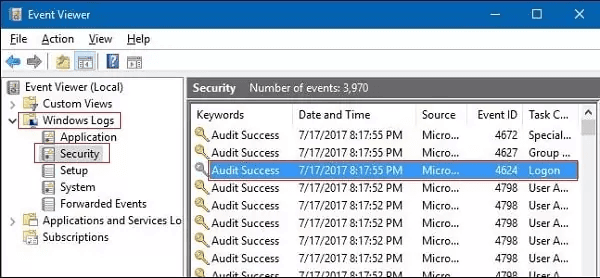
Habang ang macOS ay gumagamit ng ibang diskarte, ang batayang lohika ay pareho — pagtukoy sa mga senyales ng hindi awtorisadong pag-access.
Paraan 1: Suriin ang Mga Setting ng Screen Sharing
Pumunta sa System Preferences > Sharing.
Kumpirmahin na ang Screen Sharing at Remote Login ay naka-off.
Kung ang mga serbisyong ito ay pinagana nang walang iyong kaalaman, maaaring compromised ang iyong sistema — patayin ang mga ito agad.
Paraan 2: I-monitor ang Mga Koneksyon sa Network
Gamitin ang built-in na Activity Monitor upang obserbahan ang paggamit ng network at tukuyin ang anumang kakaibang aktibidad.
Kapag napatunayan mo na ang iyong computer ay nasa remote control, panahon na para sa agarang aksyon. Kung gumagamit ka ng Windows o Mac, ang mga pamamaraang ito ay makakatulong sa iyong putulin ang koneksyon at ihinto ang karagdagang kontrol.
Madaling sinasamantala ng mga hacker ang built-in na Remote Desktop at Remote Assistance na mga tampok ng Windows. Ang pag-disable ng mga ito ay ang unang hakbang patungo sa mas malakas na proteksyon.
Paraan 1: I-disable ang Remote Desktop at Remote Assistance
Ito ang pinakamadaling paraan upang harangan ang hindi awtorisadong pag-access.
Pindutin ang Win + R, i-type ang control, at pindutin ang Enter.
Pumunta sa System and Security > System > Remote settings.
Sa Remote tab, i-uncheck ang Payagan ang mga koneksyon ng Remote Assistance sa computer na ito.
Pumili ng Huwag payagan ang mga remote na koneksyon sa computer na ito at i-click ang OK.
Paraan 2: Ayusin ang Mga Setting ng Windows Firewall
Kahit na na-disable mo ang mga remote na tampok, maaari kang magdagdag ng karagdagang proteksyon sa pamamagitan ng firewall.
Buksan ang Windows Defender Firewall.
I-click ang Payagan ang isang app o tampok sa pamamagitan ng Windows Defender Firewall.
I-click ang Baguhin ang mga setting, pagkatapos ay i-uncheck ang Remote Assistance at Remote Desktop.
I-save ang iyong mga pagbabago.
Paraan 3: I-disable ang mga Hindi Kinakailangang Remote Services
Gamitin ang Services Manager upang ganap na i-disable ang mga remote-related na background services.
Pindutin ang Win + R, i-type ang services.msc, at pindutin ang Enter.
Hanapin at i-disable ang mga sumusunod na serbisyo:
Remote Desktop Services
Remote Registry
Telnet (kung naka-enable)
I-set ang kanilang startup type sa Disabled.
Ang macOS ay namamahala ng remote access nang sentral sa pamamagitan ng System Preferences.
Paraan 1: I-disable ang mga Tampok ng Remote Access
Pumunta sa System Preferences > Sharing.
I-uncheck ang mga sumusunod:
Screen Sharing
Remote Login
Remote Management
Remote Apple Events
Tiyakin na ang lahat ng pagpipilian sa remote access ay naka-off.
Paraan 2: Suriin at Alisin ang Hindi Kilalang Apps
Maaaring may mga remote control apps na na-install nang walang iyong pahintulot.
Pumunta sa Applications folder.
Hanapin ang mga hindi pamilyar na software ng remote control — tulad ng TeamViewer, AnyDesk, o Chrome Remote Desktop.
Kung hindi mo sila na-install, alisin ang mga ito agad.
Hindi sapat ang mga agarang aksyon lamang — ang pangmatagalang proteksyon ay susi. Ang pagbuo ng isang multi-layered security strategy ay makakapagpababa ng iyong panganib sa mga pag-atake ng remote access.
Gumamit ng kumplikadong at natatanging mga password na may uppercase, lowercase, mga numero, at mga simbolo.
I-enable ang two-factor authentication (2FA).
Palitan ang mga password nang regular at iwasan ang paggamit ng parehong password sa maraming serbisyo.
Noong 2024, sinamantala ng mga hacker ang 768 na kahinaan na may mga numero ng CVE — isang 20% na pagtaas mula 2023. Mahalagang panatilihing updated ang iyong sistema.
I-enable ang automated na mga update ng sistema.
Regular na i-install ang mga security patches.
Panatilihing updated ang iyong mga antivirus definitions.
Gumamit ng VPN upang i-encrypt ang iyong koneksyon, lalo na sa pampublikong Wi-Fi.
Iwasan ang mga hindi ligtas na pampublikong network.
Palitan ang default na password ng iyong router at i-review ang mga setting nang regular.
Mag-install ng mapagkakatiwalaang antivirus software na may real-time na proteksyon.
Magpatakbo ng buong system scans nang regular.
Gumamit ng secure remote desktop software na may encrypted connections.
Kung talagang kailangan mong ma-access ang iyong computer nang remote, pumili ng maingat sa iyong software. Maraming remote na tool ang nagdadala ng mga panganib sa seguridad — kaya't gamitin lamang ang mga may malalakas na tampok sa proteksyon.
Sa maraming mga opsyon, ang DeskIn ay namumukod-tangi para sa matibay na pundasyon ng seguridad nito. Gumagamit ito ng advanced AES-256 end-to-end encryption upang protektahan ang paglipat ng data, kasama ang two-factor authentication upang matiyak na ang mga awtorisadong gumagamit lamang ang maaaring kumonekta. Kung ikukumpara sa mga tool na kilala para sa mga kahinaan sa seguridad, nag-aalok ang DeskIn ng kapanatagan.
Mga Key Security Features ng DeskIn:
End-to-end AES-256 Encryption: Tinitiyak ang ligtas na paglipat ng data, pinipigilan ang pakikinig o man-in-the-middle na mga pag-atake.
Multi-factor Authentication: Suportado ang mga pansamantalang password, mga security code, o 2FA para sa nababaluktot na mga antas ng seguridad.
Whitelist/Blacklist na Access Control: Pamahalaan kung aling mga gumagamit o aparato ang maaaring kumonekta.
Privacy Screen at Auto-Lock: Awtomatikong nag-aaktibo ng privacy screen sa panahon ng mga remote session at nilalak ang screen pagkatapos.
Proteksyon ng Account: Awtomatikong nilalak ang DeskIn kapag may mga hindi awtorisadong account na sumusubok kumonekta.
I-download ang DeskIn lamang mula sa opisyal na website.
Magparehistro at mag-set ng malakas na password, pagkatapos ay i-enable ang 2FA.
I-configure ang mga pahintulot ng access at mga setting ng seguridad batay sa iyong mga pangangailangan.
Gumamit ng siguradong connection code o pamamaraan ng account binding para sa remote access.
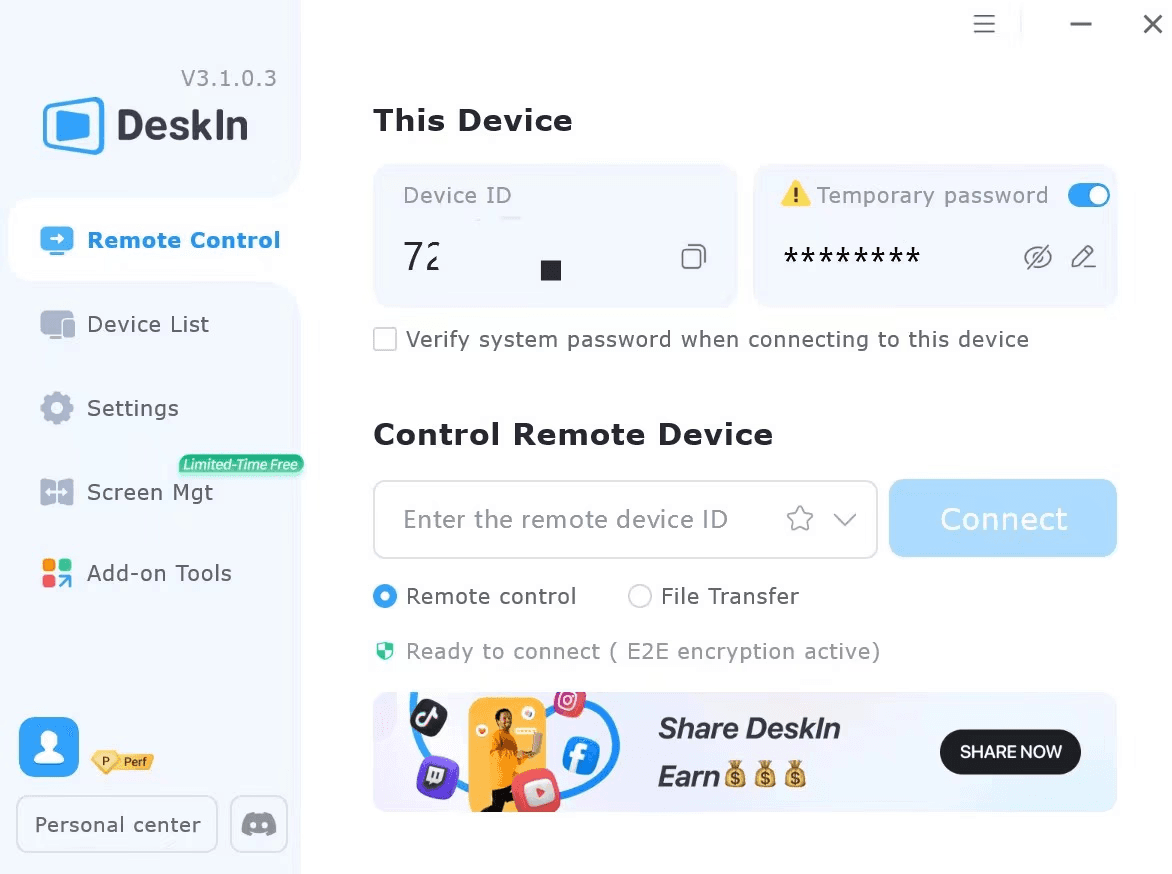
Pagdating sa cybersecurity, ang mga gawi ang pinakamahalaga. Walang permanenteng solusyon — nangangailangan ito ng patuloy na atensyon at regular na mga update. Ang pagiging mapagbantay at regular na pagsusuri sa iyong sistema ay makakatulong sa iyo na mag-enjoy ng digital convenience nang hindi nag-aalala tungkol sa mga paglabag sa data o pag-hack.
Kung kailangan mo ng remote access para sa trabaho, ang pagpili ng tamang tool ay mahalaga. Ang software tulad ng DeskIn, na may komprehensibong mekanismo ng seguridad, ay nagpapahintulot sa iyo na magtrabaho nang mahusay habang pinapaliit ang panganib ng pagiging remotely controlled.
Sa tamang pag-iisip at mapagkakatiwalaang mga tool, ang remote technology ay maaari mong maging Ally — hindi isang banta sa seguridad.
📥 Nais bang subukan ito? Nag-aalok ang DeskIn ng libreng bersyon — enterprise-grade na encryption, ligtas at secure na gamitin!
Sa mga nakaraang taon, ang mga paglabag sa data ay naging labis na nakakabahala. Sa nakaraang taon lamang, higit sa 1 bilyong tala ang nakuha ng mga hacker — isang talagang nakakagulat na bilang. Ang mas nakababahala pa ay ang mga remote control attack sa mga computer ay mas madalas na ngayon kaysa dati.
Ayon sa isang pag-aaral ng Check Point Research, sa pagitan ng Agosto 2024 at Enero 2025, ang tatlong pangunahing target para sa mga cyberattack sa Taiwan ay mga tagapagtustos ng hardware, mga ahensya ng gobyerno at militar, at ang industriya ng pagmamanupaktura. Kung ikaw ay isang indibidwal o isang negosyo, panahon na upang seryosohin ang seguridad ng computer.
Kung ang iyong computer ay kumikilos ng kakaiba — halimbawa, ang iyong mouse ay kumikilos nang kusa, ang mga file ay mahiwagang nabago, o ang sistema ay biglang bumabagal — maaaring ito ay isang senyales ng pagpasok ng hacker. Kung minsan, ang isang remote desktop program na ginamit mo noon ay maaaring patuloy na tumatakbo nang lihim sa background. Kapag ang iyong sistema ay nasa ilalim ng mapanlinlang na remote control, hindi lamang maaaring makuha ang iyong personal na data, kundi ang iyong computer ay maaari ring magamit bilang kasangkapan upang atakihin ang iba.
Ang artikulong ito ay nagbibigay ng kumpletong gabay kung paano matukoy, harangan, at pigilan ang mga ganitong banta — tinutulungan kang makuha muli ang kontrol ng iyong computer.
Kaugnay na Pagbasa:
Kung pinaghihinalaan mong ang iyong computer ay ina-access nang remote, ang unang hakbang ay matutunan kung paano ito matutukoy. Sa kabutihang-palad, maaari mong gamitin ang mga built-in na tool at utos ng sistema upang mabilis na suriin kung may lihim na uma-access sa iyong aparato.
Ang Windows ay nagbibigay ng ilang mga built-in na tool para sa inspeksyon ng sistema. Ang sumusunod na tatlong pamamaraan ay makakatulong sa iyo na mabilis na makilala ang mga hindi karaniwang remote na koneksyon.
Paraan 1: Suriin ang Mga Nakalog-in na Gumagamit sa pamamagitan ng Command Prompt
Pindutin ang Win + R upang buksan ang Run dialog box, i-type ang cmd, at pindutin ang Enter.
Sa Command Prompt window, ipasok ang mga sumusunod na utos:
Code block
1 quser
2 query user
Surin ang mga resulta — kung makakita ka ng hindi pamilyar na mga account na kasalukuyang nakalog-in, maaaring ito ay nagpapahiwatig na ang iyong computer ay ina-access nang remote.
Paraan 2: Suriin ang Mga Aktibong Gumagamit sa pamamagitan ng Task Manager
Ito ay isang tuwirang at real-time na paraan upang makita ang lahat ng nakalog-in na gumagamit.
Pindutin ang Ctrl + Shift + Esc upang buksan ang Task Manager.
Pumunta sa tab na Users.
Surin ang listahan — sa normal na mga kalagayan, dapat mong makita lamang ang iyong kasalukuyang account.
Paraan 3: Subaybayan ang Kasaysayan ng Pag-log sa pamamagitan ng Event Viewer
Ang Event Viewer ay nagbibigay ng detalyadong mga log ng aktibidad ng sistema, na ginagawang perpekto para sa pagsubaybay sa pag-uugali ng pag-log.
Hanapin at buksan ang Event Viewer mula sa Start menu.
Pumunta sa Windows Logs > Security.
Tingnan ang Event ID 4624 (Matagumpay na Pag-log) at suriin ang mga kahina-hinalang remote na entry ng pag-login.
Habang ang macOS ay gumagamit ng ibang diskarte, ang batayang lohika ay pareho — pagtukoy sa mga senyales ng hindi awtorisadong pag-access.
Paraan 1: Suriin ang Mga Setting ng Screen Sharing
Pumunta sa System Preferences > Sharing.
Kumpirmahin na ang Screen Sharing at Remote Login ay naka-off.
Kung ang mga serbisyong ito ay pinagana nang walang iyong kaalaman, maaaring compromised ang iyong sistema — patayin ang mga ito agad.
Paraan 2: I-monitor ang Mga Koneksyon sa Network
Gamitin ang built-in na Activity Monitor upang obserbahan ang paggamit ng network at tukuyin ang anumang kakaibang aktibidad.
Kapag napatunayan mo na ang iyong computer ay nasa remote control, panahon na para sa agarang aksyon. Kung gumagamit ka ng Windows o Mac, ang mga pamamaraang ito ay makakatulong sa iyong putulin ang koneksyon at ihinto ang karagdagang kontrol.
Madaling sinasamantala ng mga hacker ang built-in na Remote Desktop at Remote Assistance na mga tampok ng Windows. Ang pag-disable ng mga ito ay ang unang hakbang patungo sa mas malakas na proteksyon.
Paraan 1: I-disable ang Remote Desktop at Remote Assistance
Ito ang pinakamadaling paraan upang harangan ang hindi awtorisadong pag-access.
Pindutin ang Win + R, i-type ang control, at pindutin ang Enter.
Pumunta sa System and Security > System > Remote settings.
Sa Remote tab, i-uncheck ang Payagan ang mga koneksyon ng Remote Assistance sa computer na ito.
Pumili ng Huwag payagan ang mga remote na koneksyon sa computer na ito at i-click ang OK.
Paraan 2: Ayusin ang Mga Setting ng Windows Firewall
Kahit na na-disable mo ang mga remote na tampok, maaari kang magdagdag ng karagdagang proteksyon sa pamamagitan ng firewall.
Buksan ang Windows Defender Firewall.
I-click ang Payagan ang isang app o tampok sa pamamagitan ng Windows Defender Firewall.
I-click ang Baguhin ang mga setting, pagkatapos ay i-uncheck ang Remote Assistance at Remote Desktop.
I-save ang iyong mga pagbabago.
Paraan 3: I-disable ang mga Hindi Kinakailangang Remote Services
Gamitin ang Services Manager upang ganap na i-disable ang mga remote-related na background services.
Pindutin ang Win + R, i-type ang services.msc, at pindutin ang Enter.
Hanapin at i-disable ang mga sumusunod na serbisyo:
Remote Desktop Services
Remote Registry
Telnet (kung naka-enable)
I-set ang kanilang startup type sa Disabled.
Ang macOS ay namamahala ng remote access nang sentral sa pamamagitan ng System Preferences.
Paraan 1: I-disable ang mga Tampok ng Remote Access
Pumunta sa System Preferences > Sharing.
I-uncheck ang mga sumusunod:
Screen Sharing
Remote Login
Remote Management
Remote Apple Events
Tiyakin na ang lahat ng pagpipilian sa remote access ay naka-off.
Paraan 2: Suriin at Alisin ang Hindi Kilalang Apps
Maaaring may mga remote control apps na na-install nang walang iyong pahintulot.
Pumunta sa Applications folder.
Hanapin ang mga hindi pamilyar na software ng remote control — tulad ng TeamViewer, AnyDesk, o Chrome Remote Desktop.
Kung hindi mo sila na-install, alisin ang mga ito agad.
Hindi sapat ang mga agarang aksyon lamang — ang pangmatagalang proteksyon ay susi. Ang pagbuo ng isang multi-layered security strategy ay makakapagpababa ng iyong panganib sa mga pag-atake ng remote access.
Gumamit ng kumplikadong at natatanging mga password na may uppercase, lowercase, mga numero, at mga simbolo.
I-enable ang two-factor authentication (2FA).
Palitan ang mga password nang regular at iwasan ang paggamit ng parehong password sa maraming serbisyo.
Noong 2024, sinamantala ng mga hacker ang 768 na kahinaan na may mga numero ng CVE — isang 20% na pagtaas mula 2023. Mahalagang panatilihing updated ang iyong sistema.
I-enable ang automated na mga update ng sistema.
Regular na i-install ang mga security patches.
Panatilihing updated ang iyong mga antivirus definitions.
Gumamit ng VPN upang i-encrypt ang iyong koneksyon, lalo na sa pampublikong Wi-Fi.
Iwasan ang mga hindi ligtas na pampublikong network.
Palitan ang default na password ng iyong router at i-review ang mga setting nang regular.
Mag-install ng mapagkakatiwalaang antivirus software na may real-time na proteksyon.
Magpatakbo ng buong system scans nang regular.
Gumamit ng secure remote desktop software na may encrypted connections.
Kung talagang kailangan mong ma-access ang iyong computer nang remote, pumili ng maingat sa iyong software. Maraming remote na tool ang nagdadala ng mga panganib sa seguridad — kaya't gamitin lamang ang mga may malalakas na tampok sa proteksyon.
Sa maraming mga opsyon, ang DeskIn ay namumukod-tangi para sa matibay na pundasyon ng seguridad nito. Gumagamit ito ng advanced AES-256 end-to-end encryption upang protektahan ang paglipat ng data, kasama ang two-factor authentication upang matiyak na ang mga awtorisadong gumagamit lamang ang maaaring kumonekta. Kung ikukumpara sa mga tool na kilala para sa mga kahinaan sa seguridad, nag-aalok ang DeskIn ng kapanatagan.
Mga Key Security Features ng DeskIn:
End-to-end AES-256 Encryption: Tinitiyak ang ligtas na paglipat ng data, pinipigilan ang pakikinig o man-in-the-middle na mga pag-atake.
Multi-factor Authentication: Suportado ang mga pansamantalang password, mga security code, o 2FA para sa nababaluktot na mga antas ng seguridad.
Whitelist/Blacklist na Access Control: Pamahalaan kung aling mga gumagamit o aparato ang maaaring kumonekta.
Privacy Screen at Auto-Lock: Awtomatikong nag-aaktibo ng privacy screen sa panahon ng mga remote session at nilalak ang screen pagkatapos.
Proteksyon ng Account: Awtomatikong nilalak ang DeskIn kapag may mga hindi awtorisadong account na sumusubok kumonekta.
I-download ang DeskIn lamang mula sa opisyal na website.
Magparehistro at mag-set ng malakas na password, pagkatapos ay i-enable ang 2FA.
I-configure ang mga pahintulot ng access at mga setting ng seguridad batay sa iyong mga pangangailangan.
Gumamit ng siguradong connection code o pamamaraan ng account binding para sa remote access.
Pagdating sa cybersecurity, ang mga gawi ang pinakamahalaga. Walang permanenteng solusyon — nangangailangan ito ng patuloy na atensyon at regular na mga update. Ang pagiging mapagbantay at regular na pagsusuri sa iyong sistema ay makakatulong sa iyo na mag-enjoy ng digital convenience nang hindi nag-aalala tungkol sa mga paglabag sa data o pag-hack.
Kung kailangan mo ng remote access para sa trabaho, ang pagpili ng tamang tool ay mahalaga. Ang software tulad ng DeskIn, na may komprehensibong mekanismo ng seguridad, ay nagpapahintulot sa iyo na magtrabaho nang mahusay habang pinapaliit ang panganib ng pagiging remotely controlled.
Sa tamang pag-iisip at mapagkakatiwalaang mga tool, ang remote technology ay maaari mong maging Ally — hindi isang banta sa seguridad.
📥 Nais bang subukan ito? Nag-aalok ang DeskIn ng libreng bersyon — enterprise-grade na encryption, ligtas at secure na gamitin!



How to Play MapleStory Classic World on Mac
A lot of the players who are most excited about MapleStory Classic World grew up on 2005-era MapleStory — and a large share of that generation now does its computing on a MacBook. Nexon clearly knows this: a native macOS client was on the feature list for the second Closed Online Test, which ran August 4–12, 2026, alongside Ossyria and third job advancement. But as of this writing, that Mac client is still in development, not publicly available, and there's still no confirmed public launch date for the game itself.
So if you want to play MapleStory Classic World on a Mac right now — or want a reliable plan for when the game does launch — you've got two real options: run Windows in a virtual machine, or use DeskIn remote desktop to control an actual Windows PC from your Mac. This guide covers both, including a login-conflict issue that catches a lot of virtual machine users off guard.
Not yet, publicly. Nexon's May 2026 roadmap update confirmed macOS support is in development, and it appeared as a testable feature in the second Closed Online Test. Windows PC remains the confirmed launch platform, and Nexon hasn't said whether the Mac client will be ready at launch or arrive afterward. The game hasn't had a full public release on any platform — Nexon has said one more test is planned before launch.
Given that, Mac players currently have two ways in: a Windows virtual machine, or remote desktop software that connects to a real Windows PC.
Classic World is exclusive to GMS (Global MapleStory), covering North America, Europe, and most other regions without a local Nexon partner. Markets with their own official MapleStory service — Korea, China, Japan, Taiwan/Hong Kong, and Southeast Asia — aren't GMS-eligible, so Mac players in those regions would need a VPN to reach Classic World, which isn't recommended. Whether NA and EU will run as separate worlds hasn't been confirmed.
Tools like Parallels Desktop or VMware Fusion let you run a full Windows install inside macOS, and then install MapleStory Classic World the way a Windows user would. It works, but it asks a lot of your Mac's hardware.
RAM: 16GB minimum recommended; 8GB is genuinely tight, since macOS and Windows are both running at once and macOS alone can eat most of that before Windows gets a share. For a comfortable setup with guides or Discord open on the side, aim for 32GB.
CPU/GPU: Virtual machines can't pass hardware through at 100%; graphics get software-emulated, which typically costs 20–30% of the performance you'd get on native Windows hardware.
Thermals: Running two full operating systems under load generates real heat, and laptop-class Macs with limited cooling can throttle during longer grinding sessions.
Apple Silicon translation overhead: M-series Macs can only run Windows on ARM in a VM. If Classic World ships as an x86/x64 build, it needs an extra translation layer to run at all, stacking on top of the virtualization overhead already mentioned.
Anti-cheat compatibility is a real unknown: the original MapleStory has historically been hostile to virtualized environments because of its anti-cheat system, and Nexon hasn't said how Classic World's anti-cheat will treat VMs. Treat virtualization as a maybe, not a guaranteed plan.
There's also the practical overhead: setting up a VM means downloading a Windows image, allocating dozens of gigabytes of disk space, installing display drivers, and — on Apple Silicon — dealing with ARM compatibility quirks that don't show up on a real x86 PC. Keyboard shortcuts can also conflict, since macOS system shortcuts (Control, Option, Command) don't always play nicely with a Windows game's default keybinds.
Instead of building a Windows environment inside your Mac, DeskIn lets you connect directly to a Windows PC you already have — your desktop at home, a work machine, or a spare laptop — and control it from your Mac in real time. The game runs on genuine Windows hardware the whole time, so there's no emulation tax, no ARM translation layer, and no anti-cheat guessing game.
A virtual machine makes sense if:
You don't have access to any Windows PC at all, so a Mac VM is your only option.
Your Mac has strong specs — 16GB+ RAM, ideally 32GB, and a higher-end M-series chip that can absorb the performance loss.
You're comfortable with a fairly technical setup process.
You rarely need to switch between devices, so the single-login limitation isn't a practical issue for you.
DeskIn makes more sense if:
You already have a Windows PC (or another Mac) that can run MapleStory Classic World, and you just want to reach it from your MacBook.
You're traveling or away from your desk often and want to pick up where you left off without re-downloading anything.
You don't want to deal with logging out of one device every time you switch to another.
Your Mac has more modest specs, and you'd rather not risk stutters, crashes, or a game that won't launch at all.
If you already own a Windows machine, DeskIn is generally the lower-effort, lower-risk choice. A VM is really a fallback for players with no Windows access and a Mac powerful enough to absorb the overhead.
Step 1: Set up the Windows PC. Install MapleStory Classic World on a Windows PC and create your character, then install DeskIn on that same PC, sign in, and enable unattended access with a connection password so you can reach it later without anyone at the keyboard.
Step 2: Install DeskIn on your Mac. Download the macOS version of DeskIn, sign in with the same account, and your Windows PC will appear in your device list.
Step 3: Connect. Select the PC, enter the connection password, and you'll get a live view of the Windows desktop that you control with your Mac's mouse and trackpad — the same session, the same login, no conflicts.
Step 4: Tune quality for your connection. On a stable connection, push quality up to enjoy Classic World's remastered pixel art in full detail; on the road, prioritize smoothness to cut down on input lag.
Step 5: Log in and play. Open the game inside the remote session and log in as usual — grinding, party quests, and shopping all work exactly as they would sitting at the PC directly.
Resolution and quality: Free-tier users should start around 720p/30fps for a stable baseline; paid-tier users can push up to 4K 60FPS or 2K 240FPS on a strong connection to get the most out of Classic World's art.
Screen scaling: If your Mac and Windows PC have very different display sizes, use DeskIn's automatic scaling option in the toolbar, or adjust the remote PC's resolution to match your Mac's screen more closely.
Keyboard and mouse mapping: DeskIn maps your Mac's keyboard directly to the remote PC. Turning on Game Mouse mode prevents the keyboard from getting locked mid-session.
Controller support: If Mac keyboard controls feel awkward, pair a controller to your Mac and enable controller mapping from the toolbar — DeskIn will pass those inputs straight through to the remote PC.
Simple Setup:No Windows installation required — connect and start playing within minutes.
Doesn't tax your Mac's hardware. All the actual computation happens on the remote Windows PC; your Mac just displays the stream and sends inputs.
Performance and compatibility match native Windows, because that's exactly what's running — no ARM translation layer to worry about.
No account login conflicts, since DeskIn connects to the same existing session instead of creating a new device.
Cross-device flexibility. The same account lets you connect from Mac, iPhone, iPad, or Android, and it's always the same underlying session — no juggling logins between devices.
Not publicly yet. Nexon has confirmed a macOS client is in development and tested it in the second Closed Online Test, but Windows remains the confirmed launch platform and no public Mac release has shipped.
Yes. DeskIn uses end-to-end encryption and two-factor login, and since you're remotely operating a PC you already control, your credentials never pass through a third party.
Technically you can install one, but the experience will be rough. With 8GB split between macOS and Windows, there's very little left over for Windows, and stutters or crashes become likely during longer sessions. DeskIn is the more stable option here, since the remote PC handles all the processing — your Mac's RAM isn't a bottleneck.
Real-world performance depends on both ends' network quality, but since DeskIn connects to native Windows hardware with no virtualization overhead, and its low-latency streaming keeps end-to-end delay under 40ms on a good connection, it typically feels smoother than a resource-constrained VM.
No. DeskIn controls the same PC and the same already-active session rather than logging in as a new device, so it doesn't trigger MapleStory's single-session login limit — this is exactly the conflict that trips up VM users switching between two separate Windows installs.
DeskIn needs a Windows (or other supported platform) machine to connect to. If you don't have one, consider borrowing access to a friend's or family member's PC, or renting a cloud Windows machine as your connection target.
DeskIn supports Windows, macOS, iOS, and Android. A Mac can connect to a Windows PC, and a Windows PC can just as easily connect to and control a Mac.
MapleStory Classic World doesn't have a public Mac client yet, but that doesn't mean Mac players have to gamble on a resource-hungry virtual machine and hope the anti-cheat cooperates. If you already have access to a Windows PC that can run the game — or even another Mac — connecting to it through DeskIn gets you native Windows performance, none of the virtualization overhead, and none of the account-login headaches that come with running a second "device." Set it up once, and you'll be ready to log in the moment Classic World opens its doors.

How to Play MapleStory Classic World on Mobile Before the Official App Arrives
MapleStory Classic World has turned into one of the most-searched topics in the MapleStory community this year. Nexon's pre-Big Bang server pulled in roughly 5,000 players for its first Closed Online Test back in April 2026, and thousands more signed up for the second test that ran August 4–12, 2026. With Ossyria, third job advancement, and controller support now confirmed, interest has never been higher — and a lot of that interest is coming from players who want to know one thing: can you play MapleStory Classic World on your phone?
Short answer: not with an official app, not yet. This guide breaks down exactly what Nexon has confirmed about platforms so far, then walks through how DeskIn remote desktop lets you play MapleStory Classic World on mobile right now, without waiting on an app that hasn't been announced.
As of this writing, Nexon has not announced a mobile or console version of MapleStory Classic World. The confirmed platforms are Windows PC and macOS — macOS support was specifically added as a testable feature during the second Closed Online Test in August 2026, alongside Ossyria and third job advancement, but it's still listed as "in development" rather than publicly available.
There's also no full public launch date yet. Nexon has run two Closed Online Tests so far and has said one more test is planned before release, so most community trackers currently estimate a launch window in late 2026 or early 2027 — but that's community speculation, not an official date.
Put simply: if you want to play MapleStory Classic World on a phone or tablet today, a native app isn't an option. The only practical route is streaming the PC version from a Windows machine you already have access to.
Classic World is exclusive to GMS (Global MapleStory), Nexon's English-language service for North America, Europe, and most other regions without a local Nexon partner. Players in markets with their own official MapleStory service — Korea, China, Japan, Taiwan/Hong Kong, and Southeast Asia — aren't eligible for GMS accounts, so Classic World isn't accessible there without a VPN, which isn't recommended. It's not yet confirmed whether NA and EU will run as separate worlds within Classic World.
DeskIn is a cross-platform remote desktop app built specifically with PC gaming in mind, and it maps well onto exactly the problem MapleStory Classic World mobile players are trying to solve.
Stable, low-latency connections. DeskIn's ZeroSync® engine keeps end-to-end latency under 40ms on a good connection and automatically reroutes around congested paths, so grinding, dodging, and skill combos in Classic World's classic-era combat don't feel delayed.
Up to 4K 60FPS / 2K 240FPS streaming. Classic World's remastered pixel art holds up well when it isn't compressed into mush — DeskIn's streaming keeps text and sprites sharp even on a phone screen.
You're connecting to your own PC, not emulating one. DeskIn doesn't run Windows inside your phone; it streams the display of a Windows computer you control and sends your inputs back in real time. That means full compatibility and full performance — no emulation layer to fight with.
End-to-end encryption and two-factor login. Sessions are encrypted end-to-end, and you can set an allowlist of authorized devices, so only you can connect to your own PC.
Flexible, per-character keybinds. Classic World's Warrior, Magician, Bowman, and Thief classes each use very different skill layouts. DeskIn's on-screen game keyboard lets you build a custom key layout and save it as its own profile, so you can switch between characters without re-mapping keys every time.
Built-in virtual mouse. In pointer mode, DeskIn adds virtual left/right mouse buttons over the stream, which makes precise UI clicks — inventory, cash shop, trade windows — far easier than tapping blindly on a touchscreen.
Once you're connected, mobile play through DeskIn covers pretty much everything you'd do sitting at your PC:
Daily quests and login rewards — knock these out on your commute instead of waiting until you're home.
Cash shop browsing — scroll and preview cosmetics with touch gestures just like any shopping app.
Grinding and leveling — use the virtual directional pad and skill-key layout to keep training in familiar maps.
Party quests — latency low enough to keep up with a party's pacing on runs like Kerning City PQ.
Trading and the marketplace — check prices and list items using the virtual mouse for precise clicks.
Guild chat and messaging — reply to your guild or party the moment something comes up.
Step 1: Set up DeskIn on the Windows PC running Classic World. Install DeskIn on the PC where you've registered for testing (or where the game is installed once it launches), sign in, and turn on unattended access so the PC can be reached without anyone sitting in front of it.
Step 2: Install the DeskIn app on your phone. Download DeskIn from the App Store or Google Play, sign in with the same account, and your PC will show up in the device list.
Step 3: Connect and switch to pointer mode. Tap your PC to connect, then switch the control mode from touch to pointer — this unlocks the customizable virtual keyboard and virtual mouse.
Step 4: Browsing the cash shop. Drag to move the cursor and tap the virtual mouse buttons to click through menus and item previews, exactly like using a mouse on a desktop.
Step 5: Grinding. Open the game keyboard menu, build a layout with your movement keys and skill keys, and save it as a profile. Pull it up any time you start a grinding session.
Step 6: Pick the right streaming quality for your connection. On mobile data, prioritize smoothness over resolution to cut down on input delay; on Wi-Fi, bump the quality up to enjoy Classic World's remastered art at full clarity.
A tablet's bigger screen is a natural fit for content that needs either more reading room or more precision — daily quest text and boss encounters both qualify.
Step 1: Same setup as mobile. Install DeskIn on your iPad or Android tablet and sign in — connection steps are identical to the phone app.
Step 2: Daily quests. The larger display makes quest text, item descriptions, and map markers easier to read at a glance, so you're less likely to misread an objective mid-run.
Step 3: Boss fights. Bosses demand precise dodges and timing that touch controls alone can struggle with — pair your tablet with a Bluetooth keyboard and mouse, or a controller (see below), instead of relying on the virtual keyboard.
Step 4: Bump the frame rate for boss content. Choose a higher refresh setting in DeskIn's connection options so skill telegraphs and boss patterns read clearly in real time.
Step 5: Use split-screen for guide lookups. Run DeskIn alongside a browser or notes app in split view to check attack patterns without leaving the fight.
If virtual buttons don't feel precise enough, DeskIn supports Bluetooth controllers, including Xbox, PlayStation, and several third-party pads.
Step 1: Pair the controller with your phone. Use your phone's Bluetooth settings to pair the controller first.
Step 2: Connect through DeskIn. Once connected to your PC, DeskIn automatically detects the paired controller — no extra driver install needed.
Step 3: Test your inputs. Head into a training map first and confirm movement, attacks, and skills map to the buttons you expect before jumping into content that matters.
Step 4: Favor smoothness for fast-paced play. When you're actively grinding or fighting with a controller, prioritize DeskIn's smoothness setting over max resolution for the most responsive feel.
Running a Warrior and a Bowman means running two very different skill bars. Here's how to keep them separate in DeskIn instead of re-mapping keys every login:
Step 1: Switch to pointer mode and open the game keyboard menu. After connecting, switch to pointer mode and open DeskIn's game keyboard settings.
Step 2: Create a new keyboard layout. Tap "New Keyboard" and add your movement pad, skill keys, and item keys to match your current character's build.
Step 3: Name it by character or class. Label the layout something identifiable — "Bowman" or "Main Warrior" — and save it.
Step 4: Load the right profile when you switch characters. Before logging into a different character, select its saved layout from the game keyboard menu instead of rebuilding it from scratch.
Step 5: Update layouts as skills change. When a class gets rebalanced or you unlock new skills after a job advancement, go back into that profile and add the new keys.
No. Nexon has not announced a mobile or console version. Confirmed platforms are Windows, with a macOS client currently in development.
Nexon hasn't announced a public release date. Two Closed Online Tests have run so far (April 16–24 and August 4–12, 2026), with one more test planned before launch. Community estimates point to late 2026 or early 2027, but that isn't official.
No. DeskIn remotely operates your own PC and sends the same mouse and keyboard input you'd normally use — it isn't a macro, bot, or memory-editing tool, so it doesn't behave like the automation that anti-cheat systems are built to catch.
DeskIn's low-latency streaming keeps things playable on a stable connection, generally noticeably smoother than trying to force a browser workaround. Real-world latency still depends on both ends' network quality, so Wi-Fi is recommended over cellular when possible.
For checking dailies or browsing the shop occasionally, the free plan typically covers it. If you plan to grind for long sessions, use a controller regularly, or manage several devices, a paid plan unlocks higher streaming quality and additional features.
Setup and connection steps are identical. The difference is screen size — phones are handy for quick, single-hand tasks like dailies and the shop, while tablets are better suited to boss fights and content where you want a controller or external keyboard.
Until Nexon ships a mobile client — if one ever gets announced — DeskIn is the most practical way to keep playing MapleStory Classic World away from your desk. Install it on both your gaming PC and your phone or tablet, set up a keybind profile per character, and you can knock out dailies, grind, and even tackle boss fights without being tied to a monitor.

Gawing Pangalawang Monitor ang iPad Para sa Windows at Mac Computers
Para sa mga multitasking na manggagawa, ang pagkakaroon ng pangalawang monitor ay maaaring greatly increase ng productivity. Kung ikaw ay isang tao sa home office o isang estudyante na walang dual screen. Narito kung paano mo madaling gawing pangalawang monitor ang iyong idle iPad para sa iyong computer.
1. Taasan ang espasyo ng screen upang ipakita ang higit pa sa parehong oras. Para sa mga multi-task users, maiiwasan nilang magpalipat-lipat ng mga bintana, na nakakatipid ng oras.
2. Ang bawat screen ay gumagana nang hiwalay, ginagawang mas organisado ang workspace.
Kapag nag-e-edit ng mga video, isang screen ang ginagamit para sa pag-e-edit at ang isa para sa paglalagay ng mga materyales. Kapag sumusulat ng papel, isang screen para sa pagsusulat, ang isa para sa paghahanap ng impormasyon atbp.
3. Ang laki ng screen ng iPad ay sapat na malaki, at ang kalidad ng display ay medyo maganda. Para sa mga gumagamit na may mga pangangailangan sa disenyo o gumagamit ng MacBook, mas nagiging cost-effective ito kaysa sa pagbili ng karagdagang screen, at wala nang problema sa pagkakaiba ng kulay.
4. Maraming tao ang may mga iPad sa bahay. Sa pamamagitan ng paggamit ng device na mayroon ka bilang isang dual screen, nakakatipid ka sa gastos ng pagbili ng isa pang screen at ng espasyong ilalagay ito.
Ang sariling tampok ng Apple na Apple Sidecar ay nagbibigay-daan sa iyo na gamitin ang iPad bilang isang external display para sa MacBook at iMac. Gumawa lamang ng ilang simpleng setting at maaari mong makamit ang seamless connection sa pagitan ng iyong iPad at computer.
Paalala: Upang magamit ang Apple Sidecar, ang dalawang device ay dapat nakalog sa parehong Apple ID o nasa parehong network. Dapat i-on ang Bluetooth at Wi-Fi sa parehong device, at hindi dapat lumagpas ang distansya ng 10 meters (tungkol sa 10 meters).
Buksan ang Mac System Settings >> I-click ang "Display" sa sidebar >> I-click ang "+" pop up menu sa kanan at piliin ang iyong iPad.
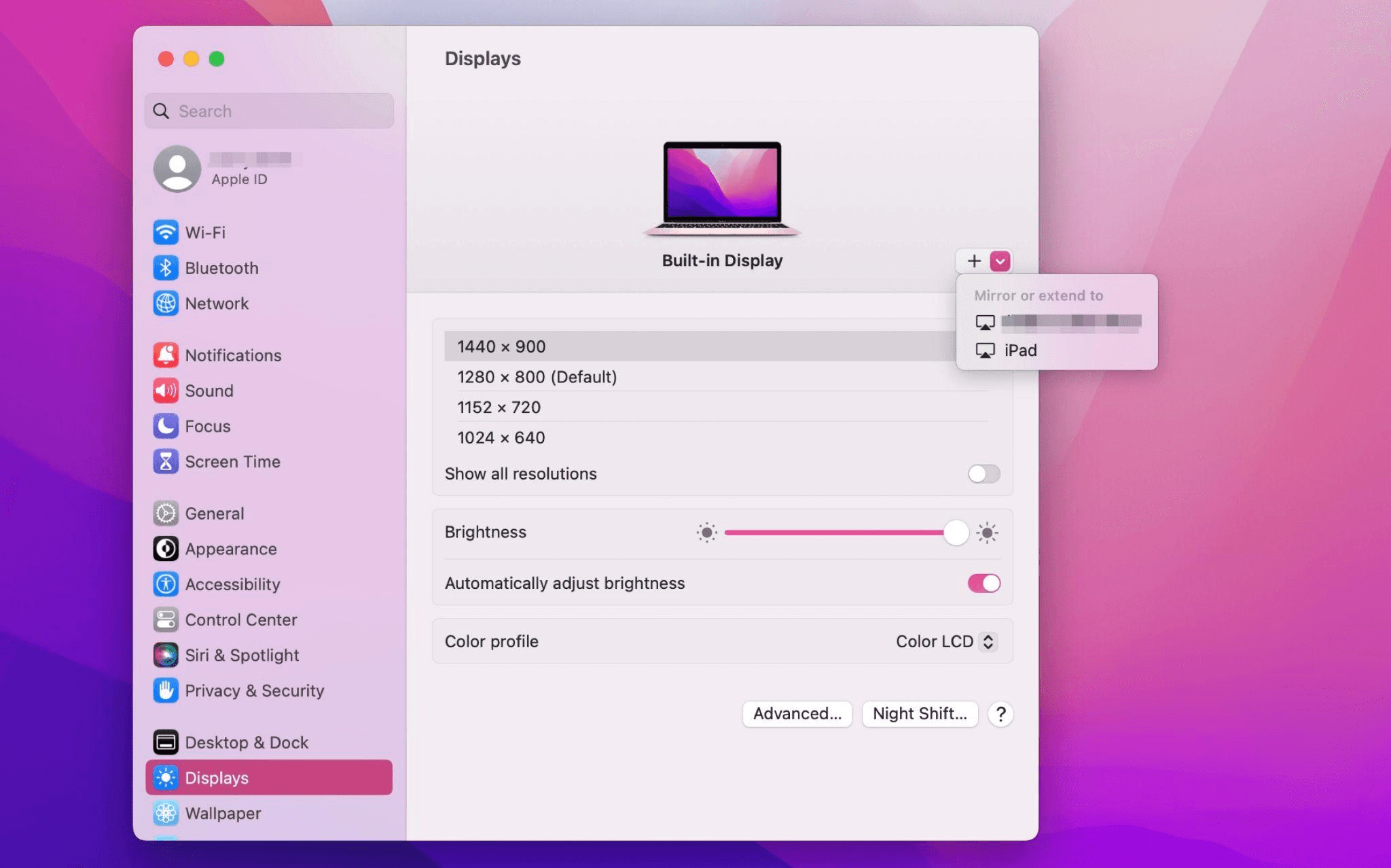
Piliin ang iPad, baguhin ang Use as settings sa "Extended Display". Suriin ang Airplay settings sa itaas na toolbar ng Mac at itakda ang iPad bilang "Use As Separate Display".
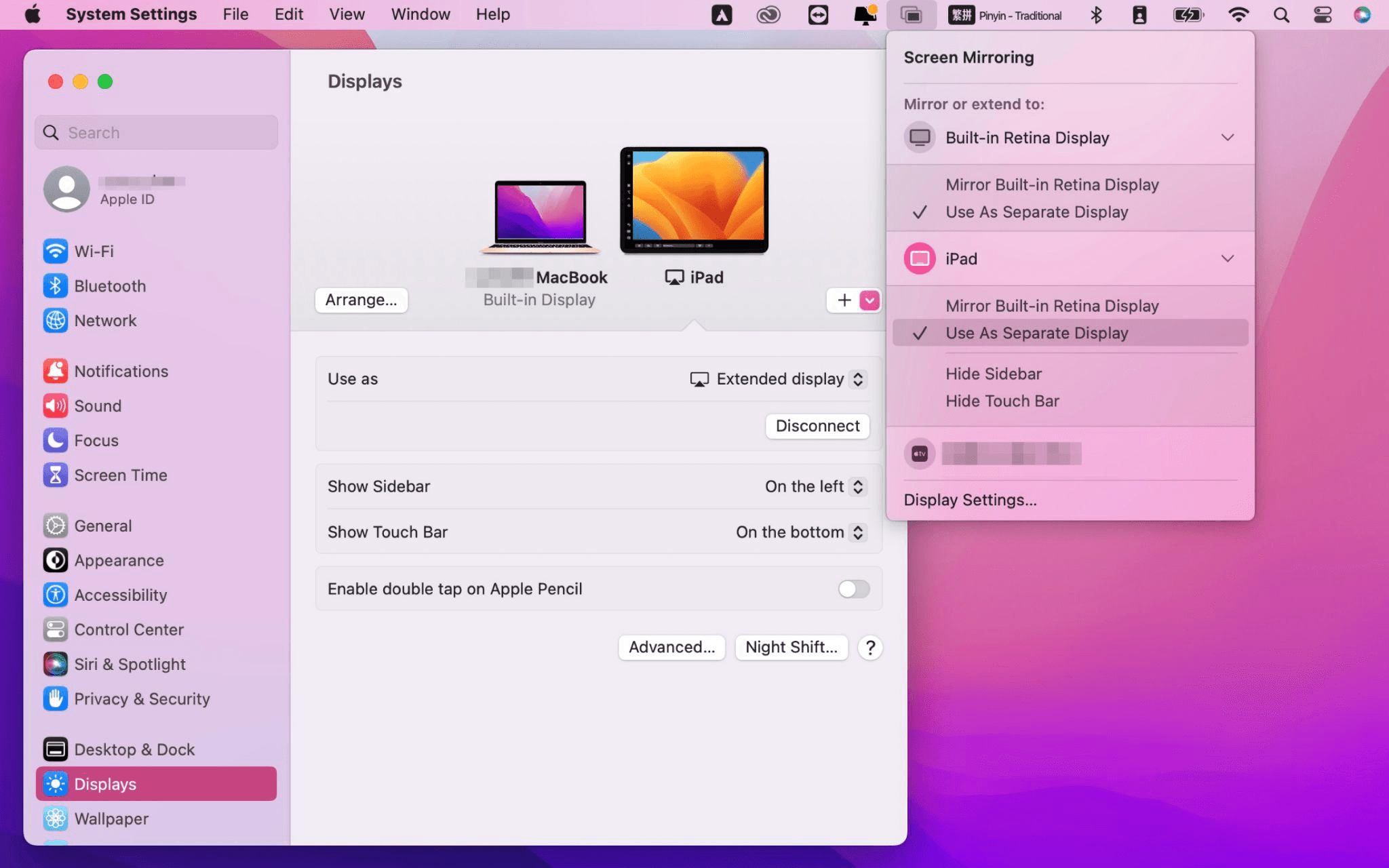
Matapos makumpleto ang mga setting, ang iyong iPad ay magiging pangalawang display para sa iyong Mac. Maaari mong ilipat ang mga bintana mula sa iyong Mac papunta sa iyong iPad nang maayos. Maaari mo ring gamitin ang sidebar sa iPad o baguhin ang posisyon ng sidebar sa system display settings.
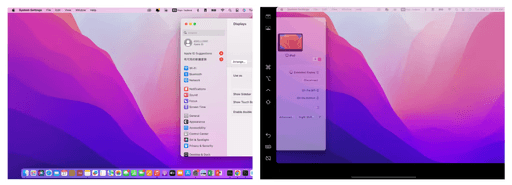
MacBook Screen (Kaliwa) at iPad Screen (Kanan)
Ang Apple Sidecar ay sumusuporta lamang sa mga Mac na inilabas pagkatapos ng 2016 at iPadOS13 o bago. Kung gumagamit ka ng lumang Apple device o Windows device, maaari mo pa ring gamitin ang DeskIn remote software upang gawin ang screen extension. Sinusuportahan nito ang paggamit ng iPad bilang pangalawang display para sa Mac at Windows, at ang smoothness ay hindi mas mababa sa sidecar.
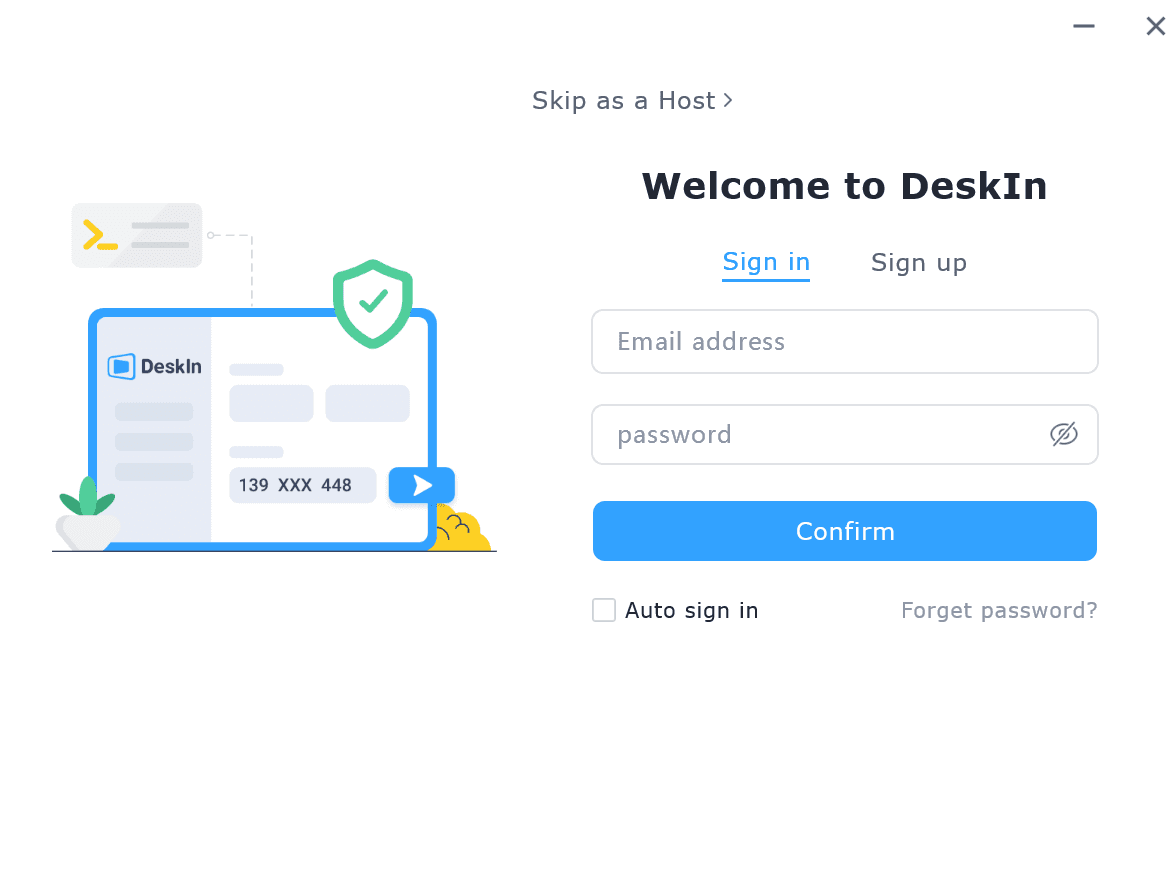
I-download ang DeskIn sa iyong computer at iPad, magrehistro para sa isang libreng account at mag-log in nang hiwalay.

Paalala: Sa iyong unang pag-log in sa isang bagong device, kailangan mong kumpletuhin ang email verification, na naglalayong protektahan ang seguridad ng iyong account.
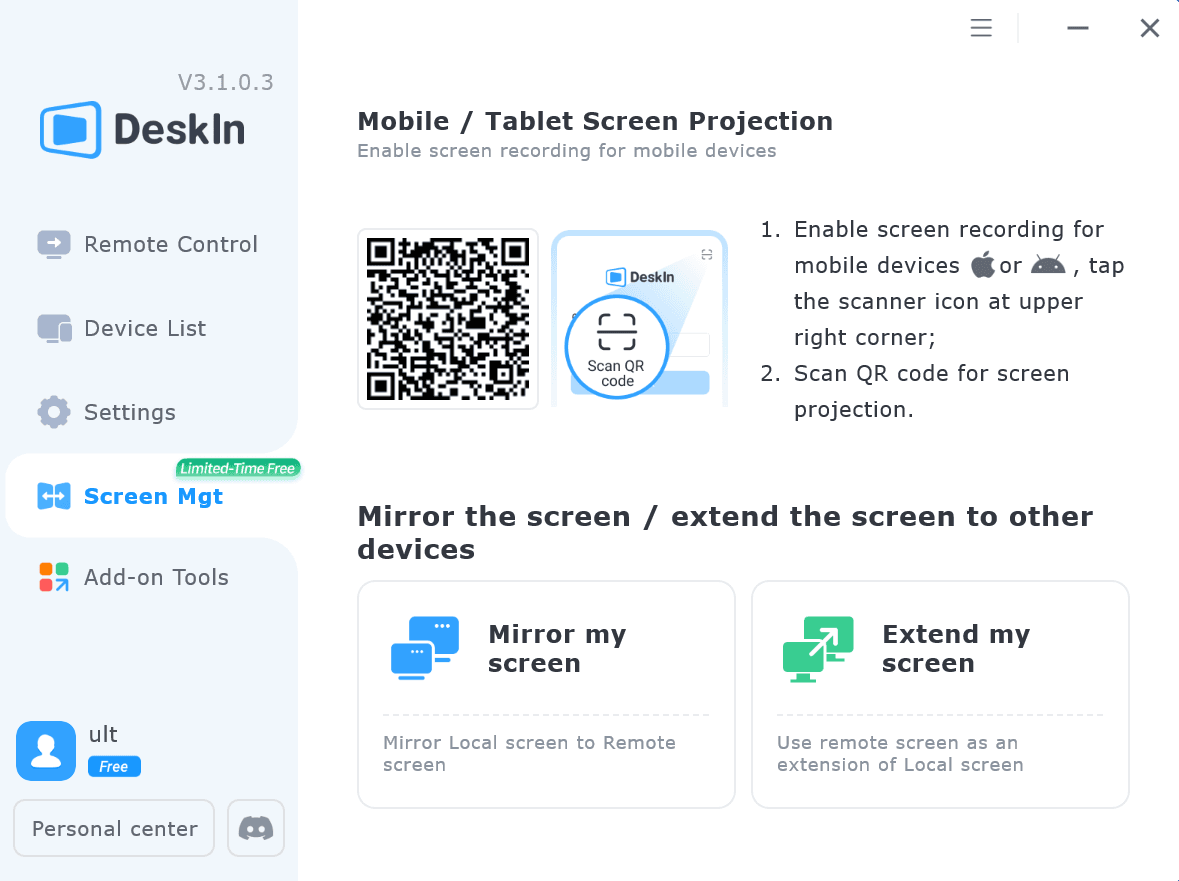
Buksan ang DeskIn app sa iyong Windows/Mac computer >> Pumunta sa "Screen Mgt" Tab >> I-click ang "Extend my screen"
Piliin ang iyong iPad, at i-click ang "Start Extending". Kapag nakakonekta, ang iyong iPad ay magiging pangalawang display ng iyong Windows/Mac computer, maaari mong ilipat ang mga bintana sa pagitan ng dalawang screen na para bang nasa isa lamang ito.
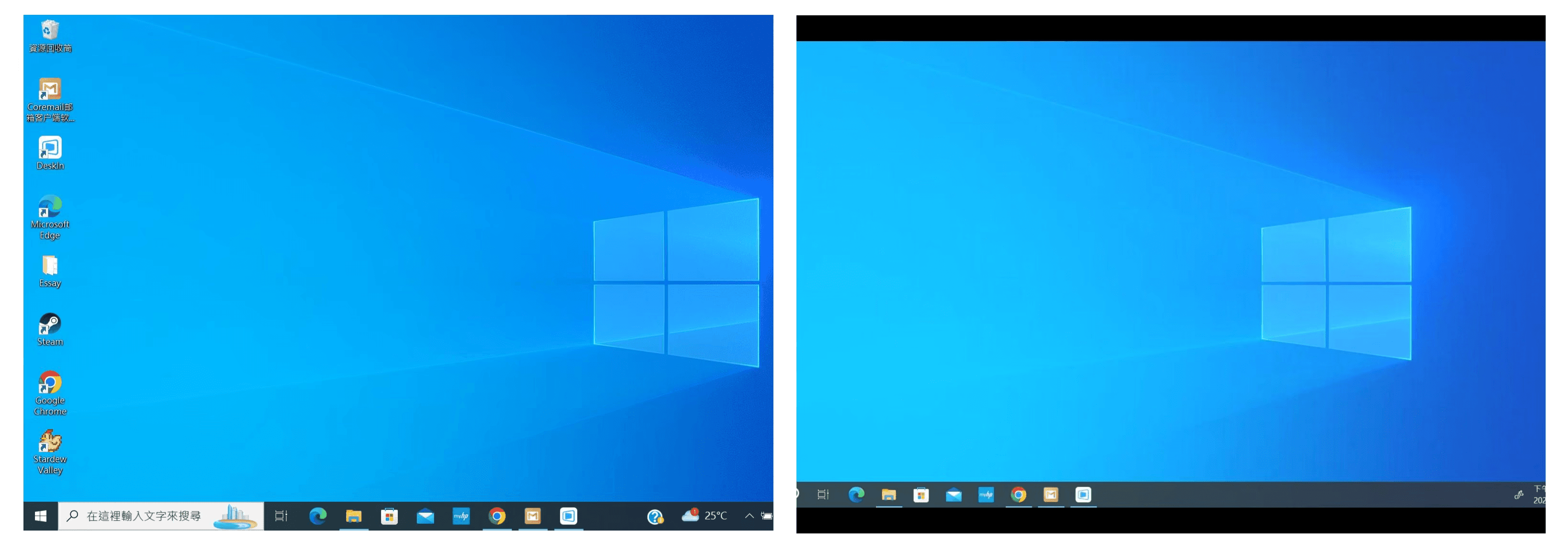
Computer Screen (Kaliwa) at iPad Screen (Kanan)
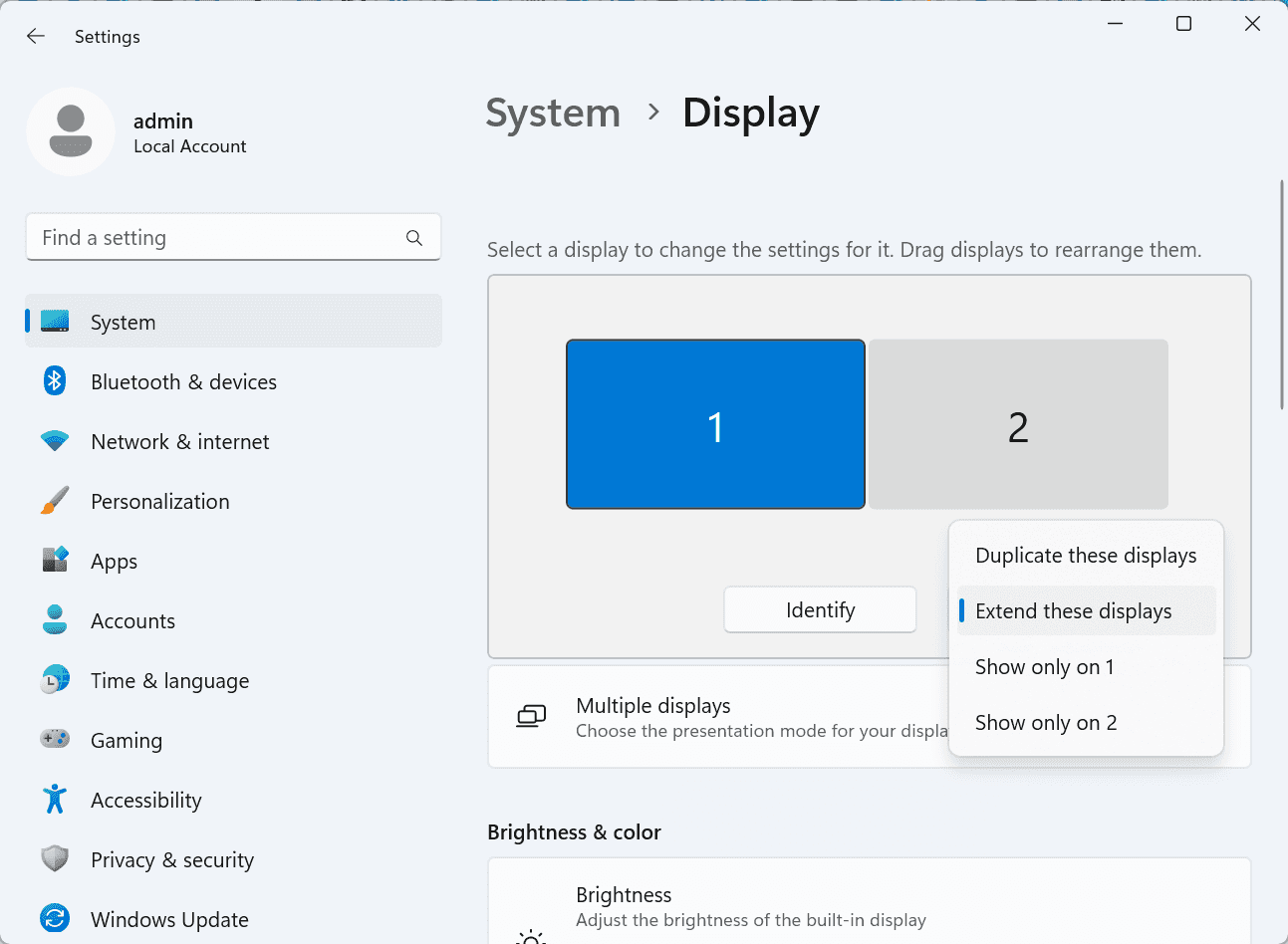
Matapos ang extension, kung napansin mong ang iyong iPad ay nagmi-mirror lamang ng nilalaman sa iyong computer screen, mangyaring pumunta sa Windows System Settings >> Display Settings at baguhin ang screen option sa "Extend these displays". Maaari mo ring baguhin ang posisyon ng screen sa pamamagitan ng pag-drag ng 2 screens.
Ang artikulong ito ay nagpapakita kung paano gamitin ang DeskIn remote desktop software upang gawing "pangalawang screen" ang isang iPad para sa Mac at Windows computers. Ito ay lalong kapaki-pakinabang para sa mga tao na kailangang hawakan ang maraming gawain nang sabay-sabay at nais na mapabuti ang productivity. Kung naghahanap ka ng screen extension tool na gumagana sa iyong MacBook, iPad, Android Tablet at Windows PC, ang DeskIn remote desktop ay ang pinakamainam na solusyon para sa iyo. I-download ang DeskIn at subukan ito ngayon!
How to Play MapleStory Classic World on Mac
A lot of the players who are most excited about MapleStory Classic World grew up on 2005-era MapleStory — and a large share of that generation now does its computing on a MacBook. Nexon clearly knows this: a native macOS client was on the feature list for the second Closed Online Test, which ran August 4–12, 2026, alongside Ossyria and third job advancement. But as of this writing, that Mac client is still in development, not publicly available, and there's still no confirmed public launch date for the game itself.
So if you want to play MapleStory Classic World on a Mac right now — or want a reliable plan for when the game does launch — you've got two real options: run Windows in a virtual machine, or use DeskIn remote desktop to control an actual Windows PC from your Mac. This guide covers both, including a login-conflict issue that catches a lot of virtual machine users off guard.
Not yet, publicly. Nexon's May 2026 roadmap update confirmed macOS support is in development, and it appeared as a testable feature in the second Closed Online Test. Windows PC remains the confirmed launch platform, and Nexon hasn't said whether the Mac client will be ready at launch or arrive afterward. The game hasn't had a full public release on any platform — Nexon has said one more test is planned before launch.
Given that, Mac players currently have two ways in: a Windows virtual machine, or remote desktop software that connects to a real Windows PC.
Classic World is exclusive to GMS (Global MapleStory), covering North America, Europe, and most other regions without a local Nexon partner. Markets with their own official MapleStory service — Korea, China, Japan, Taiwan/Hong Kong, and Southeast Asia — aren't GMS-eligible, so Mac players in those regions would need a VPN to reach Classic World, which isn't recommended. Whether NA and EU will run as separate worlds hasn't been confirmed.
Tools like Parallels Desktop or VMware Fusion let you run a full Windows install inside macOS, and then install MapleStory Classic World the way a Windows user would. It works, but it asks a lot of your Mac's hardware.
RAM: 16GB minimum recommended; 8GB is genuinely tight, since macOS and Windows are both running at once and macOS alone can eat most of that before Windows gets a share. For a comfortable setup with guides or Discord open on the side, aim for 32GB.
CPU/GPU: Virtual machines can't pass hardware through at 100%; graphics get software-emulated, which typically costs 20–30% of the performance you'd get on native Windows hardware.
Thermals: Running two full operating systems under load generates real heat, and laptop-class Macs with limited cooling can throttle during longer grinding sessions.
Apple Silicon translation overhead: M-series Macs can only run Windows on ARM in a VM. If Classic World ships as an x86/x64 build, it needs an extra translation layer to run at all, stacking on top of the virtualization overhead already mentioned.
Anti-cheat compatibility is a real unknown: the original MapleStory has historically been hostile to virtualized environments because of its anti-cheat system, and Nexon hasn't said how Classic World's anti-cheat will treat VMs. Treat virtualization as a maybe, not a guaranteed plan.
There's also the practical overhead: setting up a VM means downloading a Windows image, allocating dozens of gigabytes of disk space, installing display drivers, and — on Apple Silicon — dealing with ARM compatibility quirks that don't show up on a real x86 PC. Keyboard shortcuts can also conflict, since macOS system shortcuts (Control, Option, Command) don't always play nicely with a Windows game's default keybinds.
Instead of building a Windows environment inside your Mac, DeskIn lets you connect directly to a Windows PC you already have — your desktop at home, a work machine, or a spare laptop — and control it from your Mac in real time. The game runs on genuine Windows hardware the whole time, so there's no emulation tax, no ARM translation layer, and no anti-cheat guessing game.
A virtual machine makes sense if:
You don't have access to any Windows PC at all, so a Mac VM is your only option.
Your Mac has strong specs — 16GB+ RAM, ideally 32GB, and a higher-end M-series chip that can absorb the performance loss.
You're comfortable with a fairly technical setup process.
You rarely need to switch between devices, so the single-login limitation isn't a practical issue for you.
DeskIn makes more sense if:
You already have a Windows PC (or another Mac) that can run MapleStory Classic World, and you just want to reach it from your MacBook.
You're traveling or away from your desk often and want to pick up where you left off without re-downloading anything.
You don't want to deal with logging out of one device every time you switch to another.
Your Mac has more modest specs, and you'd rather not risk stutters, crashes, or a game that won't launch at all.
If you already own a Windows machine, DeskIn is generally the lower-effort, lower-risk choice. A VM is really a fallback for players with no Windows access and a Mac powerful enough to absorb the overhead.
Step 1: Set up the Windows PC. Install MapleStory Classic World on a Windows PC and create your character, then install DeskIn on that same PC, sign in, and enable unattended access with a connection password so you can reach it later without anyone at the keyboard.
Step 2: Install DeskIn on your Mac. Download the macOS version of DeskIn, sign in with the same account, and your Windows PC will appear in your device list.
Step 3: Connect. Select the PC, enter the connection password, and you'll get a live view of the Windows desktop that you control with your Mac's mouse and trackpad — the same session, the same login, no conflicts.
Step 4: Tune quality for your connection. On a stable connection, push quality up to enjoy Classic World's remastered pixel art in full detail; on the road, prioritize smoothness to cut down on input lag.
Step 5: Log in and play. Open the game inside the remote session and log in as usual — grinding, party quests, and shopping all work exactly as they would sitting at the PC directly.
Resolution and quality: Free-tier users should start around 720p/30fps for a stable baseline; paid-tier users can push up to 4K 60FPS or 2K 240FPS on a strong connection to get the most out of Classic World's art.
Screen scaling: If your Mac and Windows PC have very different display sizes, use DeskIn's automatic scaling option in the toolbar, or adjust the remote PC's resolution to match your Mac's screen more closely.
Keyboard and mouse mapping: DeskIn maps your Mac's keyboard directly to the remote PC. Turning on Game Mouse mode prevents the keyboard from getting locked mid-session.
Controller support: If Mac keyboard controls feel awkward, pair a controller to your Mac and enable controller mapping from the toolbar — DeskIn will pass those inputs straight through to the remote PC.
Simple Setup:No Windows installation required — connect and start playing within minutes.
Doesn't tax your Mac's hardware. All the actual computation happens on the remote Windows PC; your Mac just displays the stream and sends inputs.
Performance and compatibility match native Windows, because that's exactly what's running — no ARM translation layer to worry about.
No account login conflicts, since DeskIn connects to the same existing session instead of creating a new device.
Cross-device flexibility. The same account lets you connect from Mac, iPhone, iPad, or Android, and it's always the same underlying session — no juggling logins between devices.
Not publicly yet. Nexon has confirmed a macOS client is in development and tested it in the second Closed Online Test, but Windows remains the confirmed launch platform and no public Mac release has shipped.
Yes. DeskIn uses end-to-end encryption and two-factor login, and since you're remotely operating a PC you already control, your credentials never pass through a third party.
Technically you can install one, but the experience will be rough. With 8GB split between macOS and Windows, there's very little left over for Windows, and stutters or crashes become likely during longer sessions. DeskIn is the more stable option here, since the remote PC handles all the processing — your Mac's RAM isn't a bottleneck.
Real-world performance depends on both ends' network quality, but since DeskIn connects to native Windows hardware with no virtualization overhead, and its low-latency streaming keeps end-to-end delay under 40ms on a good connection, it typically feels smoother than a resource-constrained VM.
No. DeskIn controls the same PC and the same already-active session rather than logging in as a new device, so it doesn't trigger MapleStory's single-session login limit — this is exactly the conflict that trips up VM users switching between two separate Windows installs.
DeskIn needs a Windows (or other supported platform) machine to connect to. If you don't have one, consider borrowing access to a friend's or family member's PC, or renting a cloud Windows machine as your connection target.
DeskIn supports Windows, macOS, iOS, and Android. A Mac can connect to a Windows PC, and a Windows PC can just as easily connect to and control a Mac.
MapleStory Classic World doesn't have a public Mac client yet, but that doesn't mean Mac players have to gamble on a resource-hungry virtual machine and hope the anti-cheat cooperates. If you already have access to a Windows PC that can run the game — or even another Mac — connecting to it through DeskIn gets you native Windows performance, none of the virtualization overhead, and none of the account-login headaches that come with running a second "device." Set it up once, and you'll be ready to log in the moment Classic World opens its doors.
How to Play MapleStory Classic World on Mobile Before the Official App Arrives
MapleStory Classic World has turned into one of the most-searched topics in the MapleStory community this year. Nexon's pre-Big Bang server pulled in roughly 5,000 players for its first Closed Online Test back in April 2026, and thousands more signed up for the second test that ran August 4–12, 2026. With Ossyria, third job advancement, and controller support now confirmed, interest has never been higher — and a lot of that interest is coming from players who want to know one thing: can you play MapleStory Classic World on your phone?
Short answer: not with an official app, not yet. This guide breaks down exactly what Nexon has confirmed about platforms so far, then walks through how DeskIn remote desktop lets you play MapleStory Classic World on mobile right now, without waiting on an app that hasn't been announced.
As of this writing, Nexon has not announced a mobile or console version of MapleStory Classic World. The confirmed platforms are Windows PC and macOS — macOS support was specifically added as a testable feature during the second Closed Online Test in August 2026, alongside Ossyria and third job advancement, but it's still listed as "in development" rather than publicly available.
There's also no full public launch date yet. Nexon has run two Closed Online Tests so far and has said one more test is planned before release, so most community trackers currently estimate a launch window in late 2026 or early 2027 — but that's community speculation, not an official date.
Put simply: if you want to play MapleStory Classic World on a phone or tablet today, a native app isn't an option. The only practical route is streaming the PC version from a Windows machine you already have access to.
Classic World is exclusive to GMS (Global MapleStory), Nexon's English-language service for North America, Europe, and most other regions without a local Nexon partner. Players in markets with their own official MapleStory service — Korea, China, Japan, Taiwan/Hong Kong, and Southeast Asia — aren't eligible for GMS accounts, so Classic World isn't accessible there without a VPN, which isn't recommended. It's not yet confirmed whether NA and EU will run as separate worlds within Classic World.
DeskIn is a cross-platform remote desktop app built specifically with PC gaming in mind, and it maps well onto exactly the problem MapleStory Classic World mobile players are trying to solve.
Stable, low-latency connections. DeskIn's ZeroSync® engine keeps end-to-end latency under 40ms on a good connection and automatically reroutes around congested paths, so grinding, dodging, and skill combos in Classic World's classic-era combat don't feel delayed.
Up to 4K 60FPS / 2K 240FPS streaming. Classic World's remastered pixel art holds up well when it isn't compressed into mush — DeskIn's streaming keeps text and sprites sharp even on a phone screen.
You're connecting to your own PC, not emulating one. DeskIn doesn't run Windows inside your phone; it streams the display of a Windows computer you control and sends your inputs back in real time. That means full compatibility and full performance — no emulation layer to fight with.
End-to-end encryption and two-factor login. Sessions are encrypted end-to-end, and you can set an allowlist of authorized devices, so only you can connect to your own PC.
Flexible, per-character keybinds. Classic World's Warrior, Magician, Bowman, and Thief classes each use very different skill layouts. DeskIn's on-screen game keyboard lets you build a custom key layout and save it as its own profile, so you can switch between characters without re-mapping keys every time.
Built-in virtual mouse. In pointer mode, DeskIn adds virtual left/right mouse buttons over the stream, which makes precise UI clicks — inventory, cash shop, trade windows — far easier than tapping blindly on a touchscreen.
Once you're connected, mobile play through DeskIn covers pretty much everything you'd do sitting at your PC:
Daily quests and login rewards — knock these out on your commute instead of waiting until you're home.
Cash shop browsing — scroll and preview cosmetics with touch gestures just like any shopping app.
Grinding and leveling — use the virtual directional pad and skill-key layout to keep training in familiar maps.
Party quests — latency low enough to keep up with a party's pacing on runs like Kerning City PQ.
Trading and the marketplace — check prices and list items using the virtual mouse for precise clicks.
Guild chat and messaging — reply to your guild or party the moment something comes up.
Step 1: Set up DeskIn on the Windows PC running Classic World. Install DeskIn on the PC where you've registered for testing (or where the game is installed once it launches), sign in, and turn on unattended access so the PC can be reached without anyone sitting in front of it.
Step 2: Install the DeskIn app on your phone. Download DeskIn from the App Store or Google Play, sign in with the same account, and your PC will show up in the device list.
Step 3: Connect and switch to pointer mode. Tap your PC to connect, then switch the control mode from touch to pointer — this unlocks the customizable virtual keyboard and virtual mouse.
Step 4: Browsing the cash shop. Drag to move the cursor and tap the virtual mouse buttons to click through menus and item previews, exactly like using a mouse on a desktop.
Step 5: Grinding. Open the game keyboard menu, build a layout with your movement keys and skill keys, and save it as a profile. Pull it up any time you start a grinding session.
Step 6: Pick the right streaming quality for your connection. On mobile data, prioritize smoothness over resolution to cut down on input delay; on Wi-Fi, bump the quality up to enjoy Classic World's remastered art at full clarity.
A tablet's bigger screen is a natural fit for content that needs either more reading room or more precision — daily quest text and boss encounters both qualify.
Step 1: Same setup as mobile. Install DeskIn on your iPad or Android tablet and sign in — connection steps are identical to the phone app.
Step 2: Daily quests. The larger display makes quest text, item descriptions, and map markers easier to read at a glance, so you're less likely to misread an objective mid-run.
Step 3: Boss fights. Bosses demand precise dodges and timing that touch controls alone can struggle with — pair your tablet with a Bluetooth keyboard and mouse, or a controller (see below), instead of relying on the virtual keyboard.
Step 4: Bump the frame rate for boss content. Choose a higher refresh setting in DeskIn's connection options so skill telegraphs and boss patterns read clearly in real time.
Step 5: Use split-screen for guide lookups. Run DeskIn alongside a browser or notes app in split view to check attack patterns without leaving the fight.
If virtual buttons don't feel precise enough, DeskIn supports Bluetooth controllers, including Xbox, PlayStation, and several third-party pads.
Step 1: Pair the controller with your phone. Use your phone's Bluetooth settings to pair the controller first.
Step 2: Connect through DeskIn. Once connected to your PC, DeskIn automatically detects the paired controller — no extra driver install needed.
Step 3: Test your inputs. Head into a training map first and confirm movement, attacks, and skills map to the buttons you expect before jumping into content that matters.
Step 4: Favor smoothness for fast-paced play. When you're actively grinding or fighting with a controller, prioritize DeskIn's smoothness setting over max resolution for the most responsive feel.
Running a Warrior and a Bowman means running two very different skill bars. Here's how to keep them separate in DeskIn instead of re-mapping keys every login:
Step 1: Switch to pointer mode and open the game keyboard menu. After connecting, switch to pointer mode and open DeskIn's game keyboard settings.
Step 2: Create a new keyboard layout. Tap "New Keyboard" and add your movement pad, skill keys, and item keys to match your current character's build.
Step 3: Name it by character or class. Label the layout something identifiable — "Bowman" or "Main Warrior" — and save it.
Step 4: Load the right profile when you switch characters. Before logging into a different character, select its saved layout from the game keyboard menu instead of rebuilding it from scratch.
Step 5: Update layouts as skills change. When a class gets rebalanced or you unlock new skills after a job advancement, go back into that profile and add the new keys.
No. Nexon has not announced a mobile or console version. Confirmed platforms are Windows, with a macOS client currently in development.
Nexon hasn't announced a public release date. Two Closed Online Tests have run so far (April 16–24 and August 4–12, 2026), with one more test planned before launch. Community estimates point to late 2026 or early 2027, but that isn't official.
No. DeskIn remotely operates your own PC and sends the same mouse and keyboard input you'd normally use — it isn't a macro, bot, or memory-editing tool, so it doesn't behave like the automation that anti-cheat systems are built to catch.
DeskIn's low-latency streaming keeps things playable on a stable connection, generally noticeably smoother than trying to force a browser workaround. Real-world latency still depends on both ends' network quality, so Wi-Fi is recommended over cellular when possible.
For checking dailies or browsing the shop occasionally, the free plan typically covers it. If you plan to grind for long sessions, use a controller regularly, or manage several devices, a paid plan unlocks higher streaming quality and additional features.
Setup and connection steps are identical. The difference is screen size — phones are handy for quick, single-hand tasks like dailies and the shop, while tablets are better suited to boss fights and content where you want a controller or external keyboard.
Until Nexon ships a mobile client — if one ever gets announced — DeskIn is the most practical way to keep playing MapleStory Classic World away from your desk. Install it on both your gaming PC and your phone or tablet, set up a keybind profile per character, and you can knock out dailies, grind, and even tackle boss fights without being tied to a monitor.
Products
Download
Resources
Contact Us
Email: support@deskin.io
Office: 991D Alexandra Road #02-17, Singapore 119972
Copyright © 2026 Zuler Technology PTE. LTD. All rights reserved.
Contact Us
Email: support@deskin.io
Office: 991D Alexandra Road #02-17, Singapore 119972
Products
Download
Resources
Copyright © 2026 Zuler Technology PTE. LTD. All rights reserved.
Products
Download
Resources
Contact Us
support@deskin.io
991D Alexandra Road #02-17
Singapore 119972
Copyright © 2026 Zuler Technology PTE. LTD. All rights reserved.
【New User Special Offer】
Save
Extra 20%
on your first order|4K60FPS
Extra
20% Off
|For
New Users
【New User Special Offer】
Save
Extra 20%
on first order


